SBI Mutual Fund files DRHP for ₹13,000 crore IPO; SBI and Amundi to sell stakes

SBI Mutual Fund files DRHP for ₹13,000 crore IPO; SBI and Amundi to sell stakes


SBI Mutual Fund, India’s largest asset management company, has filed its DRHP to raise around ₹13,000 crore through an IPO. Promoters State Bank of India and Amundi will offload stakes in the offer.

India’s largest asset management company, SBI Mutual Fund, has filed its Draft Red Herring Prospectus to raise about ₹13,000 crore.

The fund house is a joint venture between the State Bank of India and France-based Amundi. While SBI will offload 128,334,397 equity shares, Amundi India Holding will sell 75,374,842 equity shares in the IPO, as per the DRHP filed with the SEBI.

Currently, SBI owns 61.98 per cent in SBI MF, while Amundi has a 36.40 per cent stake.

Market leadership and assets under management

SBI MF manages assets worth ₹16.32 lakh crore and holds a market share of 15.55 per cent in the mutual fund industry.

The fund house will become the seventh AMC to list on the stock exchange after Nippon Life India Asset Management, HDFC AMC, ICICI Prudential AMC, Aditya Birla Sun Life AMC, Canara Robeco AMC and UTI Asset Management Company.

The second-largest asset manager, ICICI Prudential AMC, commends a market capitalisation of ₹1.39 lakh crore. The fund house got listed last year.

In all, 9 investment banks, including Kotak Mahindra Capital, Axis Capital, Jefferies, SBI Capital, ICICI Securities, Motilal Oswal, HSBC Securities, JM Financial, and BofA Securities, will be managing the issue. Kfin Technologies will be the registrar for the offer.

Valuation and unlisted market buzz

SBI Fund Management aims to raise around ₹1.3 lakh crore through the IPO, translating to a price-to-earnings ratio of approximately 51 times, said an analyst.

In the unlisted market, the company’s shares are currently valued at about ₹1.5 lakh crore.

Published on March 19, 2026


Source link

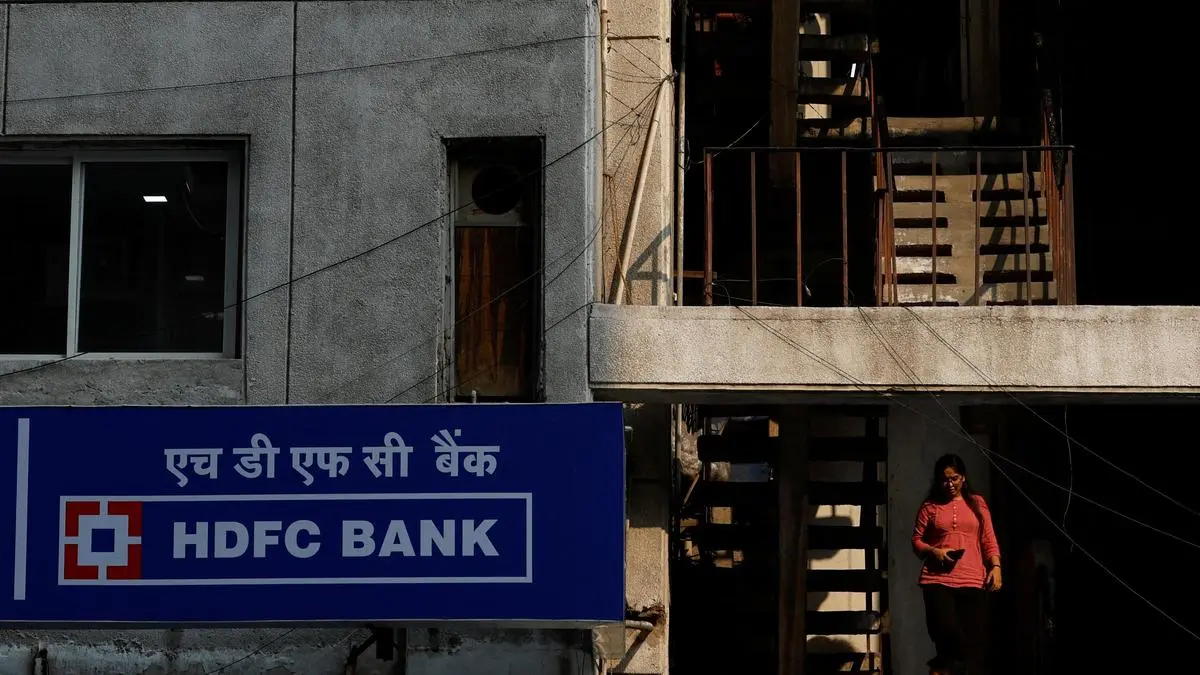
HDFC Bank has been repeatedly hauled up by regulators on compliance issues

HDFC Bank has been repeatedly hauled up by regulators on compliance issues


HDFC Bank has had several run-ins with regulators on compliance issues:

In June 2019, The RBI had imposed a penalty of ₹1 crore for non-compliance with directions on KYC/Anti-Money Laundering norms and on reporting frauds

* In December 2020, the RBI had directed HDFC Bank to temporarily suspend digital launches and stop onboarding new credit card customers, following persistent technical glitches over two years that resulted in outages. The restrictions were lifted in 2022

* In September 2024, it was fined ₹1 crore by the RBI, which found it had violated regulations relating to interest rates of deposits, recovery agents and customer services

* In December 2024, Securities and Exchange Board of India issued an administrative warning to the bank for non-compliance with merchant banking regulations

* In September 2025, the Dubai Financial Services Authority stopped the bank’s Dubai-based entity from onboarding new clients, on concerns over financial services being offered to clients not onboarded by the branch and issues with onboarding practices

* In November 2025, it was again fined ₹91 lakh by the RBI for using multiple benchmarks for the same loan category and KYC violations

Published on March 19, 2026


Source link

Attack on gas facility in Qatar, impact will be felt in India too

Attack on gas facility in Qatar, impact will be felt in India too


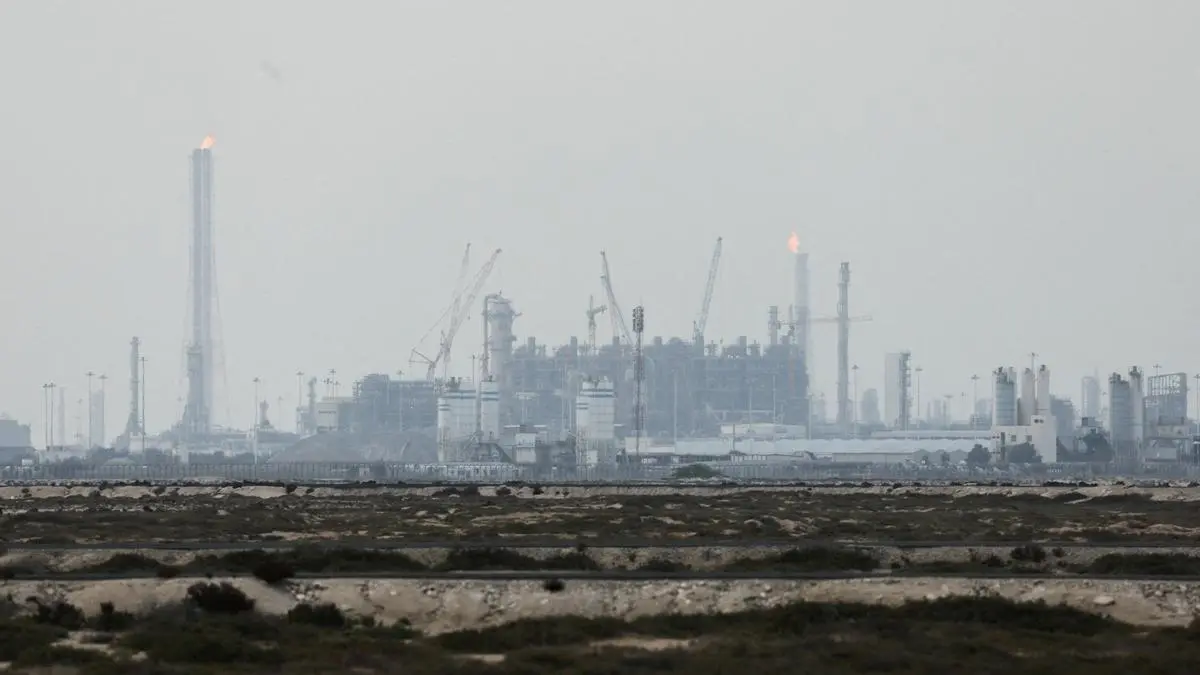
A file photo of QatarEnergy’s liquefied natural gas (LNG) production facilities, amid the U.S.-Israeli conflict with Iran, in Ras Laffan Industrial City, Qatar March 2, 2026. REUTERS/Stringer/File Photo
| Photo Credit:
STRINGER

Extensive damage to what is known as world’s largest liquefied natural gas (LNG) hub — Qatar’s Ras Laffan Industrial City – meant deliveries to major Indian players in the sector such as Petronet LNG, GAIL, and GSPC being severely disrupted or ceased entirely.

Qatar is India’s single largest supplier, providing nearly 40–50 per cent of its total LNG imports.

The partnership between Petronet LNG and QatarEnergy has been seen as the cornerstone of India’s energy security for sometime now. In February 2024, Petronet renewed its contract with QatarEnergy for another 20 years (2028–2048). The agreement ensures a supply of 7.5 million tonnes per annum (mtpa) of LNG. The 2024 renewal was signed at significantly lower rates than previous terms, projected to save India approximately $6 billion over the contract period, according to reports.

GAIL (India) Ltd is currently facing a total suspension of its Qatari LNG supply. As the primary offtaker for gas imported via Petronet LNG, GAIL is the main conduit for this disruption into the Indian domestic market.

The ongoing conflict is also having an impact on natural gas and LNG prices. To meet the supply gap left by Qatar, India is scouting for cargoes from distant suppliers, which incur additional logistical and premium costs.  

Cost pressure

According to analysts, for every $10 increase in LNG prices, India’s energy import bill faces significant pressure, contributing to a broader $13–14 billion increase in total energy costs when combined with rising crude prices. The government is facing a massive spike in fertilizer subsidies, as the cost of gas (the primary feedstock for urea) has tripled. Many price-sensitive industrial consumers in the ceramics and glass sectors are being forced to switch to costly alternatives like LPG or fuel oil as spot LNG becomes unviable.

“Natural gas and LNG prices are headed sharply higher in the short-term, with Asian spot prices already doubling to $24-25 per MMBtu amid the supply shock and forward contracts for 2026 averaging around $13 per MMBtu the highest levels since 2022 as the Qatar outage offsets much of the projected global surplus,” Umud Shokri, energy strategist and senior visiting fellow at George Mason University told businessline.

However, if the production halt resolves within weeks and new capacities from the US and delayed Qatar expansions come online later in the year or 2027, prices could moderate toward a buyer’s market by year-end, though sustained regional tensions may keep volatility elevated through 2026, he said.

Let us look at the price. According to information available prices for fuel from the US and Norway are currently hovering around $15–18 per MMBtu at the source, but long shipping times (up to two months) and high freight costs make the delivered price much higher. Spot or emergency purchases as high as $23.08 to $28.28 per MMBtu for immediate March delivery.

While geographically closer than the US, Australian spot volumes are also tracking the surged JKM index ($25/MMBtu).

“The recent attacks on QatarEnergy’s LNG facilities in Ras Laffan and Mesaieed have halted production at the world’s largest export complex, triggering force majeure declarations and immediate supply disruptions to India, which relies on Qatar for 40-50 per cent of its LNG imports (around 10-11 mtpa out of total annual imports of 25-27 mtpa). This has forced Indian importers such as Petronet LNG to cut deliveries by up to 40 per cent, leading to reduced gas allocations for industries, city gas distribution networks, power generation and fertilizer plants,” Shokri said.

“The fallout includes higher operational costs, potential industrial slowdowns, and strain on energy security, as shipments through the Strait of Hormuz are also affected, exacerbating India’s dependence on imported gas for over 55 per cent of its needs,” he added.

Options for India

While New Delhi has been maintaining that it continues to closely monitor developments in Gulf and West Asia region and also working on various options, it is time to act and not watch, said industry observers.

“The options before India include urgently diversifying LNG sourcing from non-Middle Eastern suppliers such as the US, Australia, Papua New Guinea, and Russia via spot cargoes and new long-term contracts, with two alternative shipments already en route as per government updates,” Shokri said.

“Domestically, authorities are redirecting available natural gas and regasified LNG to priority sectors like power and fertilizers while rationing supplies to less critical users, alongside exploring increased domestic production and coal switching in some power plants. Longer-term strategies involve accelerating pipeline imports, expanding regasification terminals and negotiating flexible deals to build resilience against geopolitical risks,” he said.

Whatever efforts are being taken or done by New Delhi the situation will dent the economy.

“Bombings on producing gas fields in the Persian Gulf are a terrible news. It has shaken the oil and gas industry to the core globally. Needless to say, it will have devastating impact on prices for months to come. No oil and gas importing economy is insulated .. everyone is going to get seriously hurt,” said Narendra Taneja, Energy expert.

Published on March 19, 2026


Source link

India’s corn exports may gain due to Iran war, other factors

India’s corn exports may gain due to Iran war, other factors


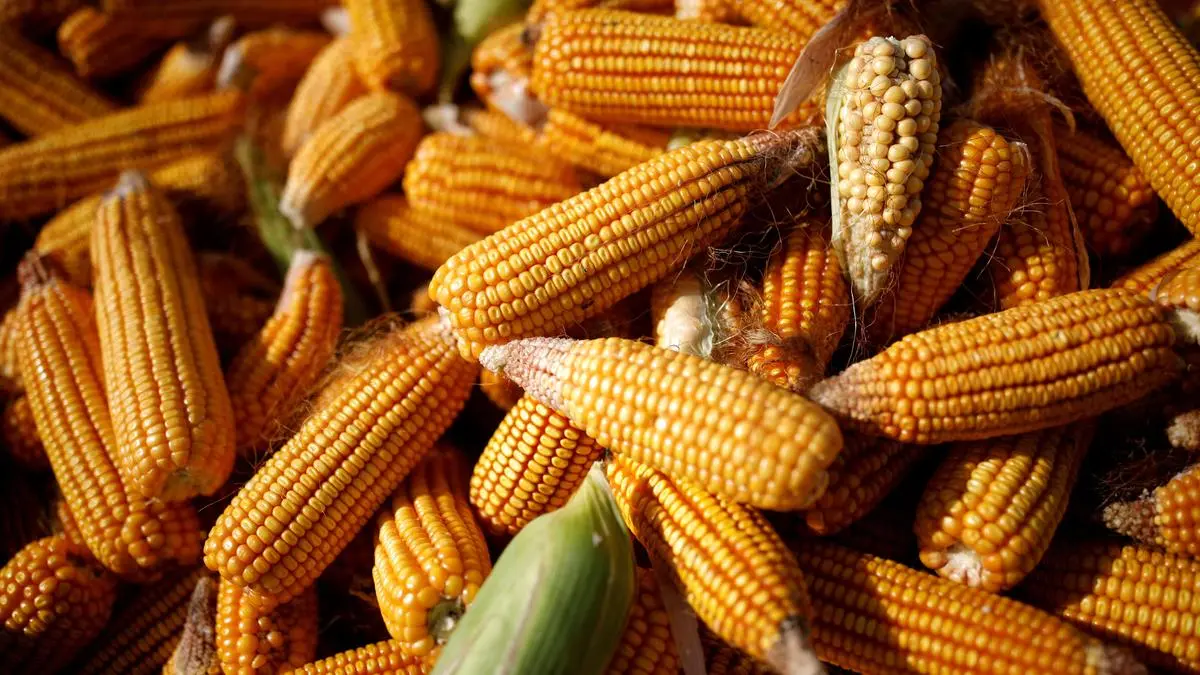
India will likely export 6.5 lakh tonnes of corn (maize) during the current marketing year to September
| Photo Credit:
REUTERS

India will likely export 6.5 lakh tonnes of corn (maize) during the current marketing year to September due to a slew of factors and the Iran war.

According to the US Department of Agriculture, projections of corn exports have been raised from 3.5 lakh tonnes in view of competitive pricing, strong regional demand, higher production and a change in the use of grains for ethanol.  

“Between October and December 2025, India exported about 400,000 tonnes of corn, double the volume for the same period in the last 2 years,” it said in its latest “Grains: World Markets and Trade” report.

Already higher than last fiscal

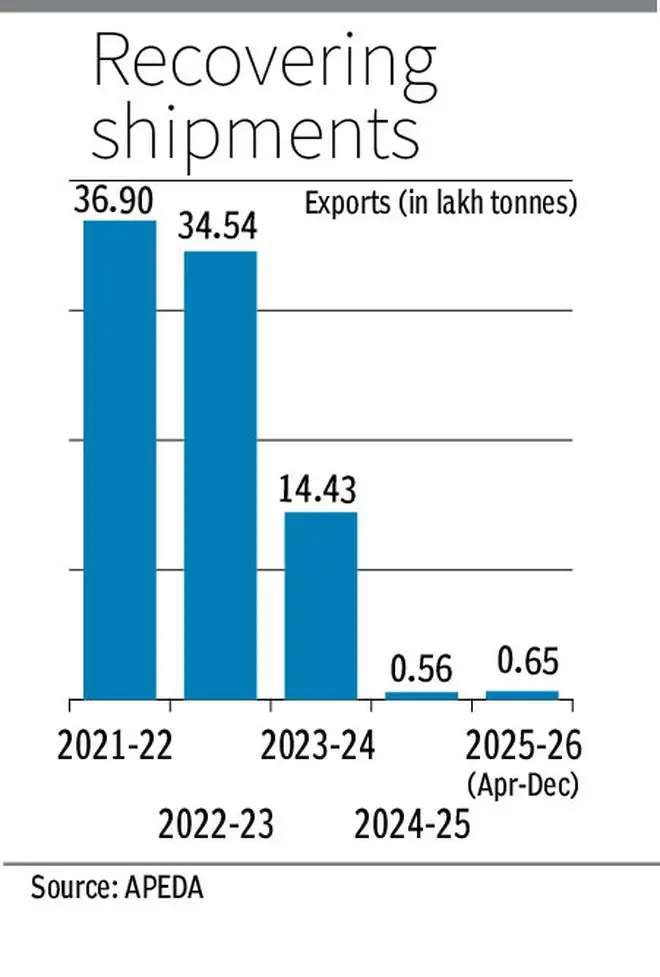
Corn exports surged to 3.69 million tonnes (mt) in the 2021-22 fiscal year before declining to 0.56 mt last fiscal, according to data from the Agricultural and Processed Food Products Export Development Authority. This year, shipments were pegged at 0.65 lakh tonnes in the first nine months of the current fiscal. 

“Indian corn is offered to Bangladesh at $220-230 a tonne. Brazil’s offers are at $260 a tonne,” said Harish Bengani,  Director of Kolkata-based Bengani Commodities Private Limited.

Bangladesh is looking for cheaper corn and is comfortable with Indian prices, he said.

Lower than MSP

M Madan Prakash, Director at Chennai-based Rajathi Group, said corn is delivered from the Nashik area to Mumbai port and from the southern region to the Tuticorn port at ₹19,000 a tonne. “At Mumbai, it is the old crop, while at Tuticorn, it is the new crop which is in demand,” he said. 

Data from Agmarknet, a unit of the Ministry of Agriculture, the weighted average price of wheat is currently ₹1,734.78 a quintal against the minimum support price of ₹2,400 fixed by the Government. During the same period last year, the price was ₹2,284.90.

The USDA said India’s corn harvest is forecast at a record 43 mt, up 1 mt more than 2024-25 and 5.3 mt higher than in 2023-24. 

Record harvests

According to the second advance estimates of the Ministry of Agriculture and Farmers’ Welfare, corn production during the current crop year to June is pegged at a record high of 30.25 mt in the kharif season and at a new high of 15.9 mt in the rabi season.

At least another 3.5 mt could be harvested during the summer or Zaid season. This year, the area under corn in the Zaid season, as of March 13, is 22,000 hectares lower than last year at 2.96 lakh hectares. 

A New Delhi-based trade analyst said corn is witnessing a rise in prices as the crop in Bihar has been delayed.

Awaiting Bihar crop

Bengani said exporters to Bangladesh are particularly awaiting the Bihar corn crop. “Bihar usually produces 2.2-2.5 mt of corn,” he said.

In addition, Telangana and Andhra Pradesh have reported good harvests, he said, adding that carryover stocks are ensuring ample supplies.

“We are getting enquiries from Vietnam and Colombo (Sri Lanka,” said the Kolkata-based firm’s director.

Prakash said demand for corn from Vietnam has increased after the Iran war broke out. 

The USDA said corn production has increased due to the growth of grain ethanol programme. Before 2023-24, most ethanol was made using sugarcane. 

Rebounding rice output impact

“To meet a 2025 deadline for E20 implementation, India began sourcing significant amounts of ethanol feedstock from grains, particularly corn, which formed around 46 per cent of new ethanol feedstocks in 2024-25,” it said. 

However, as rice supplies rebounded in 2025-26, the Indian government removed restrictions on the use of rice in ethanol production, shifting feedstock demand away from corn use. 

This year, corn with 35 per cent moisture was sold at ₹12,000-13,000 a tonne in Madhya Pradesh and Maharashtra. “You wouldn’t believe that there were no takers for it then,” said Bengani. 

The USDA said this helped buyers in Vietnam to get corn at $230 a tonne in December. “India is expected to play a larger role in South and South-East Asia this year,” it said. 

Published on March 19, 2026



Source link

CBI questions Anil Ambani in ₹2,929 cr cheating case

CBI questions Anil Ambani in ₹2,929 cr cheating case


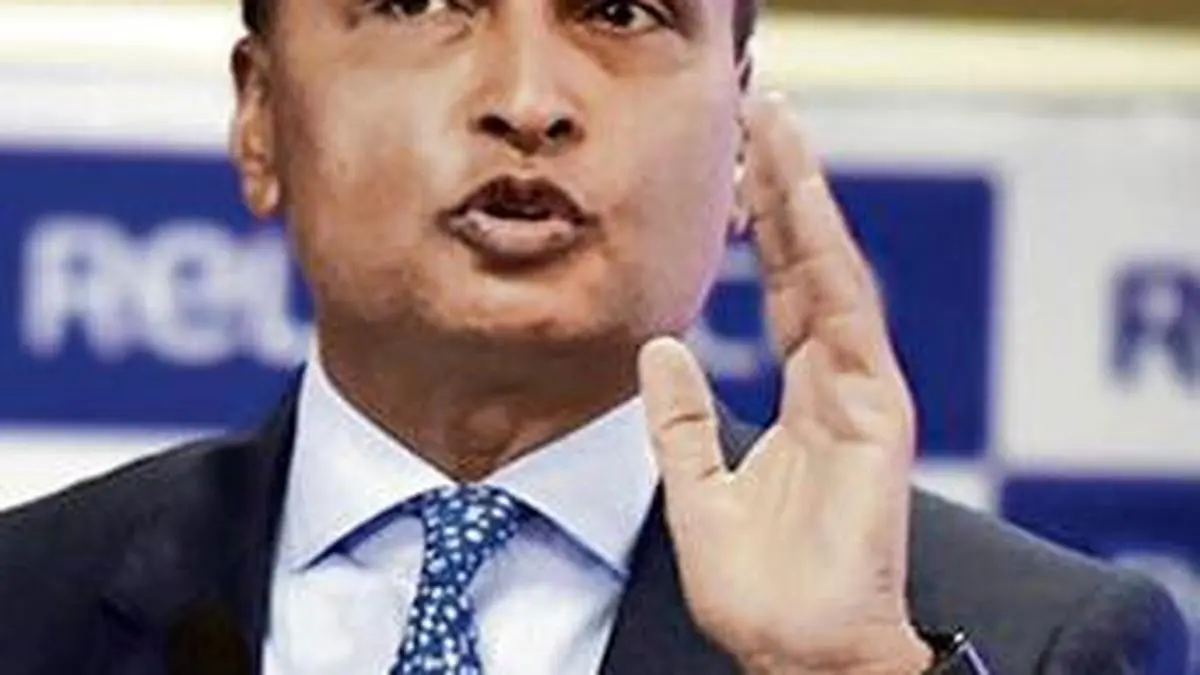
Anil Ambani
| Photo Credit:
th-online Administrator

The Central Bureau of Investigation (CBI) on Thursday questioned industrialist Anil Ambani in connection with an alleged ₹2,929 crore cheating case involving Reliance Communications, officials said.

Ambani appeared at the agency’s headquarters, in the morning, for examination in the case that stems from a complaint filed by State Bank of India.

The CBI has alleged diversion and misappropriation of loan funds, along with other irregularities, in credit facilities extended by the bank to the company.

In a statement, Ambani’s spokesperson said he would appear before the agency in Delhi on March 19 and 20 “for examination in connection with the FIR registered on the basis of a complaint filed by the State Bank of India.”

“The appearance is in furtherance of Ambani’s commitment to extend full cooperation with all agencies,” the statement added.

The CBI had registered the case in August last year, alleging that Ambani and the company defrauded SBI of ₹2,929.05 crore.

According to the SBI complaint, now part of the FIR, Reliance Communications had outstanding dues exceeding ₹40,000 crore to multiple lenders, with SBI alone incurring a loss of ₹2,929.05 crore, based on 2018 figures.

The agency has booked Ambani and the company on charges of criminal conspiracy, cheating and criminal breach of trust. “It is alleged that the accused, in criminal conspiracy, misrepresented facts to secure credit facilities from SBI in favour of Reliance Communications Ltd,” a CBI spokesperson said earlier.

denies allegations

Ambani has denied all allegations. “Anil D Ambani denies all allegations and charges, and will duly defend himself,” the spokesperson said.

Sources said the agency had also conducted searches at Ambani’s Mumbai residence, ‘Sea Wind’, located at Cuffe Parade.

The spokesperson further noted that the SBI complaint pertains to matters over a decade old, and that Ambani was a non-executive director at the time, with no role in day-to-day operations.

“The matter remains sub judice before the NCLT and other judicial forums, including the Supreme Court, for the past six years,” the statement said, adding that Ambani has challenged SBI’s declaration before the appropriate legal forum.

Anil Ambani, however, has not appeared before the Enforcement Directorate (ED) despite being summoned in connection with a money laundering probe under the Prevention of Money Laundering Act (PMLA).

Published on March 19, 2026



Source link

HDFC Bank: Chakraborty’s sudden exit as Part-time Chairman stirs hornet’s nest

HDFC Bank: Chakraborty’s sudden exit as Part-time Chairman stirs hornet’s nest


The sudden departure of Atanu Chakraborty as Part-time Chairman and Independent Director of HDFC Bank with immediate effect has stirred a hornet’s nest, with its stock taking a beating amid reports of a “power struggle”, which the bank’s board strongly refuted. The RBI, backed the bank, stated that there are no material concerns on record about its conduct or governance.

Chakraborty, who was Part-time Chairman of India’s largest private sector bank since May 2021, put in his papers citing “certain happenings and practices within the bank, that I have observed over last two years, are not in congruence with my personal values and ethics”, as the basis for his decision to step down.

In his resignation letter, the Gujarat-cadre IAS officer, who retired as the Department of Economic Affairs Secretary in the Government of India in 2020, also observed that the benefits of the 2023 merger (of HDFC with HDFC Bank) are yet to fully fructify.

Banking sector experts say the bank’s board may approach M Rajeshwar Rao, former Deputy Governor of RBI, to replace Chakraborty. The role of Deputy Managing Director, Kaizad Bharucha is also set to expand, according to Keki Mistry, who said that he would be getting more responsibilities, in addition to his current functions.

The bank, in a regulatory filing, said based on its application the Reserve Bank of India on March 18, has granted its approval for the appointment of Keki Mistry as interim Part-time Chairman of the bank with effect from March 19 for three months.

HDFC Bank’s stock hit a 52-week low at ₹772 per share on Thursday on BSE. It closed at ₹779.70 apiece, down 5.13 per cent (or ₹43.25)

Addressing analysts, Mistry emphasised that there is no “power struggle” in HDFC Bank, and some relationship issues will always be there between individuals in any organisation. Chakraborty’s exit comes amid reports that he insisted on a review of the bank chief’s tenure before recommending a further extension of his tenure, and alleged strain in relationship between some of the CXOs.

Sashidhar Jagdishan has been helming the bank as MD & CEO since October 27, 2020. His second three-year term ends in October 2026. Mistry said: “And believe me…at the age of 71, I would not take on this responsibility [as Interim Chairman] for three months if the systems, processes and governance practices in the bank do not align with my principles and my level of integrity…RBI gave their approval for making me Interim Chairman for a period of three months just to stabilise things and then move on.”

Replying to a specific question on the possibility of a “power struggle” in an analyst call, Mistry said: “Differences on minor issues do come up from time to time, but there was nothing material whatsoever..There will always be some relationship issue between individuals. Those kind of things happen. There was no power struggle in the bank, as you put it”.

Renu Sud Karnad, Non-Executive (Non-Independent) Director, said: “In fact, we repeatedly asked him [Chakraborty] to tell us why, what had triggered this [resignation], and if there was anything we have to do to get it right. But he said there was nothing. And that was a bit baffling.”

Mistry observed that there has never ever been any kind of discussion at the board level on any matter that is contentious in terms of governance.

“If there have been any minor issues here and there, those have been tackled appropriately. .What caused that [resignation] letter to be sent yesterday is something which really, to my mind, defies logic,” he said.

The RBI emphasised that HDFC Bank is a Domestic Systemically Important Bank (D-SIB) with sound financials, professionally run board and competent management team.

“Basis our periodical assessment, there are no material concerns on record as regards its conduct or governance. The bank remains well-capitalized and the financial position of the bank remains satisfactory with sufficient liquidity.

“Reserve Bank will continue to engage with the Board and management on the way forward,” the central bank said in a statement.

Published on March 19, 2026


Source link

YouTube
Instagram
WhatsApp