ट्रंप टैरिफ के रिफंड से अब कंपनियों की होगी भरपाई, लेकिन अमेरिकी जनता का क्या होगा?

ट्रंप टैरिफ के रिफंड से अब कंपनियों की होगी भरपाई, लेकिन अमेरिकी जनता का क्या होगा?


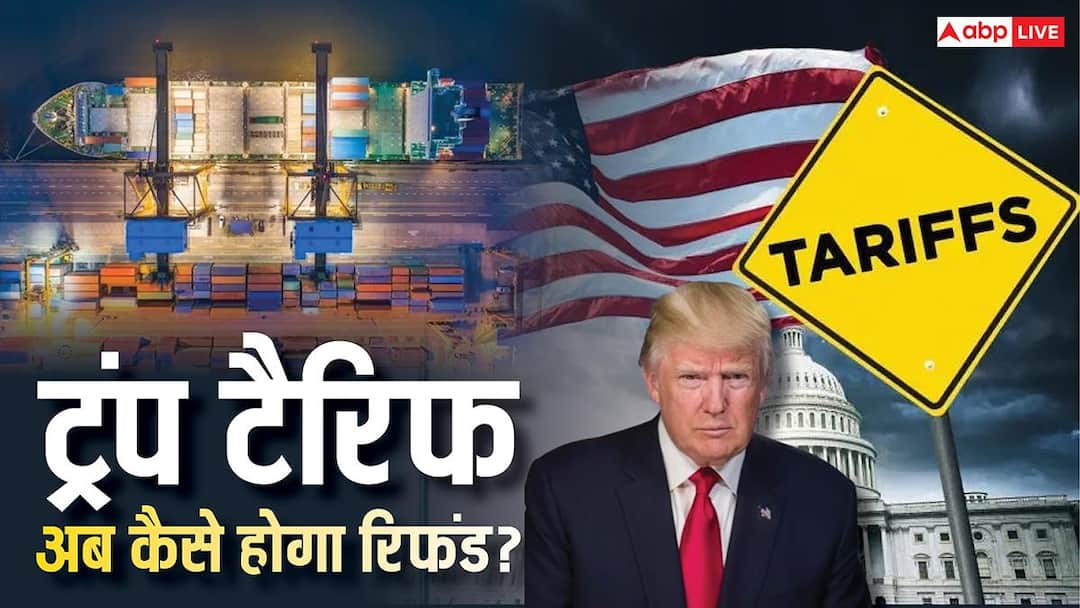
US Trump Tariffs: अमेरिकी राष्ट्रपति Donald Trump को उस समय बड़ा झटका लगा जब Supreme Court of the United States ने उनके द्वारा लगाए गए कई उच्च आयात शुल्क (टैरिफ) को अमान्य करार दे दिया. इन टैरिफ के जरिए अमेरिकी प्रशासन ने लगभग 134 अरब डॉलर का राजस्व जुटाया था. अब सबसे बड़ा सवाल यह है कि यह रकम किसे और कैसे वापस की जाएगी?

टैरिफ सीधे आम अमेरिकी नागरिकों से वसूला गया कर नहीं था. यह आयातित वस्तुओं पर लगाया गया शुल्क था, जिसे अमेरिका में सामान मंगाने वाली कंपनियों जैसे Walmart और Costco ने सीमा शुल्क विभाग को चुकाया. यानी कानूनी रूप से भुगतानकर्ता कंपनियां थीं. हालांकि व्यवहारिक रूप से कंपनियां यह अतिरिक्त लागत अपने उत्पादों की कीमतों में जोड़ देती हैं, जिससे अंतिम बोझ उपभोक्ताओं पर पड़ता है.

उदाहरण के लिए, अगर किसी इलेक्ट्रॉनिक सामान पर 15% टैरिफ लगा, तो आयातक कंपनी ने सरकार को वह शुल्क दिया, लेकिन बाद में उसी अनुपात में कीमत बढ़ाकर उपभोक्ता से वसूला.

रिफंड किसे मिलेगा?

कानूनी दृष्टि से रिफंड उसी इकाई को दिया जाता है जिसने सरकार को भुगतान किया हो. चूंकि सीमा शुल्क का भुगतान कंपनियों ने किया था, इसलिए यदि रिफंड की प्रक्रिया शुरू होती है तो वह कंपनियों को ही मिलेगा, न कि सीधे उपभोक्ताओं को. उपभोक्ताओं को सीधे भुगतान करना संभव नहीं है, क्योंकि उन्होंने सरकार को कोई सीधा कर नहीं चुकाया.

रिफंड की प्रक्रिया आसान नहीं है. कंपनियों को यह साबित करना होगा कि उन्होंने किस अवधि में कितना टैरिफ जमा किया था और वह अदालत के फैसले के तहत अमान्य श्रेणी में आता है. इसके बाद कस्टम अथॉरिटी की समीक्षा, दस्तावेज़ी जांच और कानूनी प्रक्रियाएं होंगी. इसमें ब्याज भुगतान का मुद्दा भी शामिल हो सकता है.

कितना समय लग सकता है?

राष्ट्रपति ट्रंप ने संकेत दिया है कि पूरी प्रक्रिया में करीब पांच साल तक का समय लग सकता है. कारण यह है कि हजारों कंपनियों और करोड़ों आयात लेनदेन की समीक्षा करनी होगी. इसके अलावा सरकार यह भी देख सकती है कि क्या किसी वैकल्पिक कानूनी प्रावधान के तहत नए टैरिफ लागू कर पहले के राजस्व की भरपाई की जा सकती है. उपभोक्ताओं पर असर भले ही कंपनियों को रिफंड मिल जाए, यह जरूरी नहीं कि वे वह रकम उपभोक्ताओं को लौटाएं.

कंपनियां उस पैसे को अपने घाटे की भरपाई, बैलेंस शीट मजबूत करने या भविष्य के निवेश में लगा सकती हैं. इसलिए आम जनता को सीधे तौर पर रिफंड मिलने की संभावना बेहद कम मानी जा रही है.

ये भी पढ़ें: यूएस के ग्लोबल टैरिफ से बेखौफ भारतीय करेंसी, डॉलर को 6 बार पटका, देखते रह गए ट्रंप


Source link

FedEx joins US companies seeking refund after Trump tariffs are ruled illegal

FedEx joins US companies seeking refund after Trump tariffs are ruled illegal


The Treasury had collected more than $133 billion from the import taxes the president has imposed under the emergency powers law as of December, federal data shows. The impact over the next decade has been estimated at some $3 trillion.
| Photo Credit:
REUTERS/BENOIT TESSIER

FedEx is suing the US government, requesting a full refund on what it paid for tariffs set by President Donald Trump last year after the Supreme Court ruled that the tariffs are illegal.

FedEx said in a filing with the US Court of International Trade that it has “suffered injury” from having to pay the tariffs and that the relief they’re seeking from the court would redress those injuries.

Other companies have already launched efforts to recoup costs from the illegal tariffs, including large US corporations like Costco and Revlon.

The National Retail Federation said in a statement on Friday that the Supreme Court’s ruling provided certainty for US businesses and manufacturers.

“We urge the lower court to ensure a seamless process to refund the tariffs to US importers,” it said. “The refunds will serve as an economic boost and allow companies to reinvest in their operations, their employees and their customers.” The Supreme Court struck down President Donald Trump’s far-reaching global tariffs on Friday. Trump said he was “absolutely ashamed” of some justices who ruled 6-3 against him, calling them “disloyal to our Constitution” and “lapdogs.” At one point, he even raised the spectre of foreign influence without citing any evidence.

The court’s ruling found tariffs that Trump imposed under an emergency powers law were unconstitutional, including the sweeping “reciprocal” tariffs he levied on nearly every other country.

The Treasury had collected more than $133 billion from the import taxes the president has imposed under the emergency powers law as of December, federal data shows. The impact over the next decade has been estimated at some $3 trillion.

Trump has vowed to collect tariffs through other means. He reached for a stopgap option immediately after his defeat Friday at the Supreme Court: Section 122 of the Trade Act of 1974 allows the president to impose tariffs of up to 15 per cent for up to 150 days. But any extension beyond 150 days must be approved by a Congress likely to baulk at passing a tax increase as November’s midterm elections loom.

Published on February 25, 2026


Source link

India accelerates protein supply chain risk management: Report

India accelerates protein supply chain risk management: Report


Animal welfare is similarly underdeveloped with most companies lacking a policy let alone species-specific standards, measurable targets or timelines. Only a small minority reference higher-welfare sourcing such as tether-free or cage-free, and few currently disclose measurable progress. These gaps mirror challenges seen across Asia, underscoring a persistent disconnect between awareness of protein-related risks and demonstrable execution.
| Photo Credit:
istock.com

India’s listed food companies are accelerating improvements in how they manage protein-related supply chain risks across meat, dairy, poultry and seafood supply chains, broadly matching Asia’s average performance, but significant gaps remain on climate and animal welfare, according to the ‘Asian Protein Buyers (APB) 100: An assessment of responsible and sustainable sourcing’ released by Asia Research and Engagement (ARE).

A media statement said that the APB100 is an investor-backed benchmark assessing how 100 of Asia’s largest listed protein-buying companies — headquartered or operating across Mainland China, Hong Kong and Taiwan, Japan, South Korea, India, Thailand, the Philippines, Malaysia, Indonesia, Vietnam and Singapore — manage environmental, social and governance considerations embedded in meat, dairy, poultry and seafood supply chains.

Mentioning that India stands out as one of the faster-moving markets in the benchmark, the statement said the average score for Indian companies more than doubled, rising from around 7 per cent in 2023 to 16 per cent in 2025. The findings are based on an assessment of 13 listed Indian food companies, spanning food manufacturing and restaurant chains. Eleven of the 13 companies improved year-on-year, and collectively they play a significant role in shaping domestic protein sourcing and demand.

India’s overall performance in 2025 is broadly in line with the Asia-wide average score, but the pace of improvement stands out with a higher proportion of Indian companies improving year-on-year. As with Asia overall, progress in India is still evolving. Gains are concentrated in foundational disclosures, while supply chain execution continue to lag, it said.

India’s strongest performance is in traceability, sourcing and labour, reflecting wider adoption of supplier codes, sourcing policies and due-diligence frameworks. This suggests that many Indian food companies are beginning to put foundational supply-chain governance in place. However, disclosure remains largely process-led with limited evidence of outcome-based monitoring, remediation or full supply-chain coverage or consideration of a just protein transition.

Climate and animal welfare

Despite overall improvement, climate and animal welfare remain areas where many Indian companies are at an early stage of their journey. More than half of the Indian companies are yet to begin disclosing against climate-related indicators, including Scope 3 emissions exposure, targets or transition planning. References to recognised disclosure frameworks remain limited, and commitments to absolute emissions reduction are rare, the statement said.

Animal welfare is similarly underdeveloped with most companies lacking a policy let alone species-specific standards, measurable targets or timelines. Only a small minority reference higher-welfare sourcing such as tether-free or cage-free, and few currently disclose measurable progress. These gaps mirror challenges seen across Asia, underscoring a persistent disconnect between awareness of protein-related risks and demonstrable execution.

Quoting Rituj Sahu, ARE Director, Protein Transition (India), the statement said: “India can become a reference point for how emerging markets manage protein transition at scale across meat, dairy, poultry and seafood systems. Early progress on supply-chain governance is encouraging. What matters now is converting that momentum into measurable action across sourcing, climate, responsible antibiotic use, and animal welfare.”

Praveer Srivastava, Executive Director of Plant Based Foods Industry Association, said: “India stands at an inflection point where responsible protein sourcing is becoming central to climate resilience and long-term food‑system stability. The APB100 findings underscore that diversifying protein sources — including scaling plant-based and other sustainable alternatives — is not just an environmental priority, but a strategic imperative for industry readiness and risk management.”

Major Indian companies assessed in the APB100 include Devyani International, Jubilant FoodWorks, Mrs Bector’s Food Specialities, Nestlé India, Parag Milk Foods, Sapphire Foods, Tata Consumer Products, Hindustan Unilever, and other key buyers shaping India’s protein supply chains.

Published on February 25, 2026


Source link

Crude oil futures gain on supply concerns before US-Iran talks

Crude oil futures gain on supply concerns before US-Iran talks


US inventory numbers from the American Petroleum Institute (API) were bearish, with US crude oil inventories increasing by 11.4 million barrels over the week.

Crude oil futures traded higher on Wednesday morning as markets feared supply risks if scheduled talks between the US and Iran fail on Thursday.

At 9.57 am on Wednesday, May Brent oil futures were at $71.08, up by 0.71 per cent, and April crude oil futures on WTI (West Texas Intermediate) were at $66.08, up by 0.69 per cent. March crude oil futures were trading at ₹6,021 on Multi Commodity Exchange (MCX) during the initial hour of trading on Wednesday against the previous close of ₹6,008, up by 0.22 per cent, and April futures were trading at ₹6,031 against the previous close of ₹6,020, up by 0.18 per cent.

In their Commodities Feed for Wednesday, Warren Patterson, Head of Commodities Strategy of ING Think, and Ewa Manthey, Commodities Strategist, said oil prices weakened on Tuesday, with ICE Brent settling a little more than 1 per cent lower amid hopes that the US and Iran will reach a diplomatic solution. There were reports that Iran is ready to strike a deal as soon as possible. This noise comes ahead of another round of planned talks between the US and Iran on Thursday.

“At the same time, the US continues to build up military assets in the region. So, without a deal, the probability of military action is high and growing,” they said, adding, US President Donald Trump’s 10-to-15-day deadline for Iran works out to a date sometime in very early March. This uncertainty means the market will continue to price in a large risk premium and remain sensitive to any fresh developments.

US inventory numbers from the American Petroleum Institute (API) were bearish, with US crude oil inventories increasing by 11.4 million barrels over the week. This is well above the 1.9 million barrels the market was expecting. Meanwhile, gasoline and distillate stocks fell by 1.5 million barrels and 2.8 million barrels, respectively. The more widely followed US Energy Information Administration report will be released later on Wednesday. A similar crude oil stock build to the API would be the largest build since February 2024, they said.

The next OPEC+ meeting is scheduled for March 1, and given the broader market strength, the group is likely to resume supply increases from April. This is despite the oil balance sheet suggesting that the market doesn’t need additional supply, they added.

March natural gas futures were trading at ₹259.60 on MCX during the initial hour of trading on Wednesday against the previous close of ₹262.10, down by 0.95 per cent.

On the National Commodities and Derivatives Exchange (NCDEX), April dhaniya contracts were trading at ₹11,638 in the initial hour of trading on Wednesday against the previous close of ₹11,330, up by 2.72 per cent.

April turmeric (farmer polished) futures were trading at ₹16,186 on NCDEX in the initial hour of trading on Wednesday against the previous close of ₹16,092, down by 0.58 per cent.

Published on February 25, 2026


Source link

Indian IT stocks shed .6 billion in February as AI fears trigger worst rout in 23 years

Indian IT stocks shed $68.6 billion in February as AI fears trigger worst rout in 23 years


Investor concerns intensified after aggressive AI pushes by U.S. firms like Anthropic and Palantir Technologies, raising fears of pricing pressure and shrinking billable hours.

Indian shares have lagged their Asian
and emerging market peers so far in February, pressured by a
$68.6 ​billion rout in the market value of information technology
stocks, as investors fretted ‌over disruptions linked to
artificial intelligence.

The Nifty 50 index has ​risen 0.4% so far this month,
while the Sensex ⁠edged 0.1% lower, underperforming both
the MSCI Asia ex-Japan and MSCI Emerging Markets indexes.

The 10 Nifty IT constituents have lost a combined
$68.6 billion in market ‌capitalisation in February, as of the
last close, with the index down 21% and on course for its worst
monthly ‌performance in nearly 23 years.

All 10 index members have ‌fallen ⁠between 16.8% and 27% in
February to date. Coforge is ⁠the steepest percentage
decliner, down 26.8%, while Tata Consultancy Services
and Infosys have led the value erosion, losing about
$21.9 billion and $16.3 billion in market value, respectively.

The selloff reflects ​growing concerns that rapidly ‌advancing
automation tools could compress project timelines and disrupt
the labour-intensive delivery model underpinning India’s roughly
$300-billion IT services industry.

Investors have zeroed in on the AI-driven automation push
from U.S. firms such as Anthropic ‌and Palantir, heightening
concerns over faster project execution, pricing pressure and
reduced ​billable hours.

Brokerages warn the Indian IT sector could face further
pressure if AI starts to eat into application ⁠services revenue,
which typically accounts for 40% to 70% of total revenue for
these companies.

“There are no easy answers to whether AI eventually renders
IT ‌services obsolete over the long term,” said analysts led by
Abhishek Pathak of Motilal Oswal.

“The narrative that AI is coming for not just IT but large
swathes of the economy could be too strong to shake, at least in
the short term,” Motilal Oswal analysts said.

A slowdown or contraction in India’s IT sector, whether
through layoffs ‌or reduced hiring, can have immediate
consequences on both residential and commercial real ​estate
demand. The Nifty Realty index has risen roughly 2%
in February, following a nearly 18% decline over the past ⁠three
months.

Concerns over Indian IT companies have also accelerated
foreign selling in the ⁠sector in 2026 so far.

While FPIs have turned buyers of Indian stocks in February
on an overall basis, they pulled ‌out about 110 billion rupees
($1.21 billion) from IT stocks in the first half of February,
following a record 750 billion rupees ​of net selling in 2025.

Published on February 25, 2026


Source link

IDFC FIRST Bank repays ₹583 crore to Haryana govt after fraud at Chandigarh branch

IDFC FIRST Bank repays ₹583 crore to Haryana govt after fraud at Chandigarh branch


IDFC FIRST Bank highlighted that it remains financially strong and well-capitalised.

IDFC FIRST Bank has repaid 100 per cent of the principal amount claimed by departments of the Government of Haryana following a fraud incident at one of its branches in Chandigarh, the bank said in an official statement.

The bank said the incident involved certain accounts of departments of the Government of Haryana, where preliminary findings indicated that certain employees of the branch acted fraudulently in clearing forged instruments and payment instructions, potentially in collusion with external parties.

The matter is currently under investigation by the relevant authorities.

Despite the investigation being ongoing, the bank said it has immediately honoured the full amount claimed by the concerned government departments.

“The Bank has immediately honored 100 per cent of the principal and interest claimed by the relevant departments of the Government of Haryana, amounting to ₹583 crore. Final amount may change depending on any further claims or reconciliation,” the company said in its statement.

The bank further stated that, with the full support of the Haryana Government and law enforcement agencies, it is determined to fight the perpetrators of fraud and bring them to justice.

IDFC FIRST Bank highlighted that it remains financially strong and well-capitalised. As of December 31, 2025, the bank is rated AAA by CRISIL for fixed deposits and holds AA+ long-term ratings from CRISIL, ICRA, India Ratings, and CARE.

The bank’s total customer business, including loans and deposits, stood at ₹5,62,090 crore, registering a growth of 22.6 per cent year-on-year. Asset quality remains healthy, with Gross Non-Performing Assets (GNPA) at 1.69 per cent and Net Non-Performing Assets (Net NPA) at 0.53 per cent.

The bank’s capital adequacy ratio stood at 16.22 per cent, while its CASA ratio was 51.6 per cent. Its Net Interest Margin remained healthy at 5.76 per cent in Q3FY26.

The bank said it is currently in an investment phase and is investing in building products, technology, distribution, branches, ATMs, rural banking, corporate banking, cash management, trade, NRI, credit cards, and other universal banking solutions to become a large and diversified bank in the future.

IDFC First Bank reported a fraud at its Chandigarh branch involving unauthorized transactions in Haryana government accounts. The incident occurred through internal collusion where a few employees allegedly used forged cheques and physical debit instructions to siphon funds to external parties.

Published on February 25, 2026



Source link

YouTube
Instagram
WhatsApp



