Fractal Analytics IPO 2026: ₹857-900 Price Band, 35% Funds for AI and R&D

Fractal Analytics IPO 2026: ₹857-900 Price Band, 35% Funds for AI and R&D


Fractal plans to leverage its Cogentic platform to expand margins and enhance AI solutions for industries like healthcare, BFSI, and consumer goods. The IPO will be open from February 9 to 11, with anchor investor bids starting February 6.

Announcing the launch of its initial public offering (IPO) on Monday at a price band of ₹857-900 per equity share of face value ₹1 each, Fractal Analytics said it will allocate over a third of the capital raised to AI and research and development.

On Tuesday, the company reduced its IPO size from ₹4,900 crore to around ₹2,834 crore. Speaking to businessline, Fractal said it lowered pricing in line with stronger investor confidence.

“Based on a lot of good advice from some of the top funds in the country, we agreed on the ₹857 to ₹900 price range. Then some of the selling shareholders wanted to stay on instead of selling at that price, because saying they are pretty confident on where Fractal is going,” said Co-Founder, Group Chief Executive & Executive Vice-Chairman, Fractal Analytics.

About ₹355 crore, or 35 per cent of the capital raised from this IPO, is earmarked for AI revenue, R&D, and alpha-related investments. According to Velamakanni, AI revenue and R&D are crucial for Fractal’s future success, as the space is evolving and “only the most innovative companies willing to invest in AI, R&D have a strong chance of success.” The rest of the IPO proceeds will be used for loan repayment and some basic capex.

The anchor investor bidding date is February 6. The offer will be open from February 9 to February 11. Bids can be made for a minimum of 16 Equity Shares of face value of ₹ 1 each, and multiples of 16 thereafter.

Margin expansion plans

Fractal will primarily focus on the homegrown Cogentic platform to build AI solutions for margin expansion, such as an invoice-to-cash solution, customer experience, and revenue growth, and to make the platform a greater contributor to company revenue. Cogentic revenues have a significantly higher margin than the rest of the business, thereby improving our overall margin.

“We have a long way to go in terms of making people understand AI and AI companies, and having a few public AI companies is going to help market understanding,” he said.

India AI Mission

With regard to the India AI Mission, Fractal is planning to build an AI system for the healthcare sector by releasing a model that matches and exceeds global healthcare AI benchmarks, and then use that to launch healthcare AI for all. However, those expenses will not be budgeted in the IPO proceeds. Currently, consumer products and goods contribute to 37.5 per cent of the revenue, followed by telecommunication and media (27.2 per cent) followed by healthcare at 17 per cent. BFSI only contributes 12.2 per cent.

Macroeceonomics

When asked, Velamakanni said he viewed the US-India trade developments as a positive for companies like Fractal, since the settling of trade wars means less inflationary pressure and less uncertainty for companies.

“This is good for Fractal specifically because it has direct impact on our potential growth,” he said, adding how the favourable macro-environment encourages client companies on discretionary spending.

Published on February 4, 2026


Source link

TReDS-related Budget announcements to give major boost to volumes, M1xchange CEO says

TReDS-related Budget announcements to give major boost to volumes, M1xchange CEO says


Sundeep Mohindru, Founder & Promoter, M1xchange

The proposals made in the Union Budget for FY27, including mandating TReDS platforms to be transaction settlement platforms for all purchases made from MSMEs by CPSEs (central public sector undertakings) and linking of government e-market place (GeM) will give a major fillip to business volumes of TReDS platforms, Sundeep Mohindru, founder and CEO of M1xchange, told businessline in an interaction. Even as the Centre is yet to share the finer details on credit guarantee support mechanism for invoice discounting on TReDS platform and using TReDS receivables as asset-backed securities, M1xchange is confident of achieving ₹1.25-1.30 lakh crore of volumes in FY26 and around ₹1.75 lakh crore next fiscal.

Edited excerpts:

The Centre has announced ₹10,000 crore SME growth fund and ₹2,000 crore top-up to self-reliant Indian fund. Will these schemes have large impact on small enterprises?

All these funds that government sets up are very active. The government allocates funds to private equity and venture capital (PE, VC) funds who in-turn distribute funds to SMEs. These players have a good mechanism to spot star-performers, guide on right usage of capital, and new-age technology. In fact, M1 had also used this equity from SIDBI in 2017 and that is how it got set up. This is a very useful tool which will enhance equity capital for SMEs, which is not easy to come by. SMEs don’t have much access to PE/VC funds otherwise.

Centre has mandated TReDS to be transaction settlement platform for all purchases made from MSMEs by CPSEs. How many CPSEs already use TReDS and how many are expected to start using?

Almost 100 CPSEs are already registered on TReDS platforms. When a CPSE is onboarded, its entire supplier base is mapped onto the platform and invoices approved by the CPSE are uploaded. However, only suppliers who are aware of the platform and choose to avail invoice discounting actively onboard themselves on TReDS.

The key benefit of the new change is that awareness and access to the facility can now reach 100 per cent of the CPSEs supplier ecosystem. Once suppliers know that their payments are being routed through TReDS, they can opt for early payment by paying a nominal discounting fee without recourse, the platform will see higher participation from these vendors. Currently, this awareness is limited, as CPSEs typically inform only a select set of suppliers.

This awareness process has already begun with three CPSEs last week and is showing early results, with all their vendor payments being routed through the M1xchange TReDS platform.

Do you expect material up-tick in invoice discounting/financing due to linking of GeM with TReDS?

There is a lot of traffic coming in from this platform. A significant volume of PSU Purchases happens through GeM. As mentioned 75-100 CPSEs that are live on TReDS, purchases made by these CPSEs through GeM currently follow GeM’s mandatory payment mechanism and cannot be routed through TReDS. With the proposed integration, this payment flow can also be enabled on TReDS, allowing vendors selling through GeM to access early payment options by discounting their invoices.

With these Budget-related announcements, are you expecting pick-up in volumes?

This fiscal, we should be doing around ₹1.25-₹1.30 lakh crore in volumes. These announcements will give us an opportunity to do at least about ₹1.75 lakh crore next fiscal.

Published on February 4, 2026



Source link

Gold, silver gain for second consecutive day on fears over geopoltical developments

Gold, silver gain for second consecutive day on fears over geopoltical developments


In India, the spot price of gold in the Mumbai market ended at ₹1,56.625 per 10 gm compared with ₹1,51,529 on Tuesday
| Photo Credit:
PTI

The precious metals complex continued to gain for the second day in a row, as geopolitical uncertainties over the US shooting down an Iranian drone worried investors.

Prices in the domestic market followed the global trend with spot and futures prices rising.

“Geopolitical tensions added to haven demand (for gold and silver) after the US Navy shot down an Iranian drone in the Arabian Sea, even as markets await a fresh round of nuclear talks scheduled for Friday,” said Renisha Chainani, head of research at Augmont. 

Gold crossed $5,000 an ounce in early trade before sashaying around the region. At 2025 hours IST, gold was quoted at $5,009.07 an ounce, while gold April futures on Comex ruled at $5,032.24 an ounce. 

Indian prices

In India, the spot price of gold in the Mumbai market ended at ₹1,56.625 per 10 gm compared with ₹1,51,529 on Tuesday. On MCX, gold April futures ruled at ₹1,57,323 against ₹1,53,809 in the previous trade.

Silver topped $90 an ounce but dropped to $89.82. On COMEX, silver March futures were $89.61. In the Mumbai spot market, silver ended at ₹2,82,462 a kg against ₹2,63,965. On MCX, silver March futures quoted at ₹2,86.000 a kg against ₹2,68,015 on Wednesday.

Chinese silver price

On the Shanghai Futures Exchange, silver March futures increased to 24,018 yuan per kg ($107.57 per ounce).

Platinum gained nearly one per cent at $2,255 an ounce, and palladium was up nearly 3 per cent at $1,807 an ounce.

Jateen Trivedi, VP Research Analyst – Commodity and Currency, LKP Securities, said Going ahead, ₹1,61,000 to ₹1,63,000 remains the strong resistance point. On COMEX, $5,100 will be a strong resistance point. At the lower end, support lies at around ₹1,45,000 to ₹1,50,000.

Published on February 4, 2026



Source link

Setback for sugar mills in India’s largest cane growing State UP as January output dips

Setback for sugar mills in India’s largest cane growing State UP as January output dips


Industry experts said the average drop in yield could be 15-20 per cent in ratoon crop, whereas it is too early to estimate the yield of the plant crop
| Photo Credit:
REUTERS

Sugar production in Uttar Pradesh, the country’s largest sugarcane grower, has dropped for the first time this season in January due to lower crushing. One mill of the biggest-producing firm Bajaj group, has closed its crushing operation on January 27 due to a lack of cane availability. Besides, farmers are complaining about lower yield this time as high as 30 per cent in some areas for old crop and 10 per cent in fresh crop.

“There will be lower production in Uttar Pradesh this year from what was earlier estimated. But it will be in line with last year’s production,” said Vijay S Banka, President of UP Sugar Mills Association. Banka, who is also MD of Dwarikesh Sugar Industries, also said that one has to wait how the plant crop comes out.

Farmers in western Uttar Pradesh complain about up to 30 per cent drop in the yield of the ratoon crop and about 10 per cent drop during the initial harvest of the plant crop. “I harvested 38 quintals per bigha ratoon sugarcane crop this year against 55 quintals last season,” said Pramajeet Singh Hooda, a farmer in Shamli district.

Too early to estimate

Industry experts said the average drop in yield could be 15-20 per cent in ratoon crop, whereas it is too early to estimate the yield of the plant crop. Ratoon is the old crop that grows automatically from the previous crop, whereas plant crop is from the seed planted in 2024-25.

“The rains in summer normally brings down the cane yield. Last year, there were good rains in western UP in April-May and it is the main cause for the reduced productivity,” said noted sugarcane breeder Bakshi Ram. He also said such summer rains affect plant crop more than ratoon.

According to a survey by a private firm, out 52 sugar mills in Uttar Pradesh from which data was gathered, 67 per cent are using the C-Heavy route and the remaining 33 per cent are using the B-Heavy route to process sugar. The CH route gives higher sugar as there is hardly any sucrose content in the CH molasses, when compared with B-Heavy molasses.

119 mills operational

Sugar production in January was 19.45 lakh tonnes (lt) against 20.1 lt, taking the total output this season to 55.10 lt during October-January, against 52.70 lt year-ago in Uttar Pradesh, according to data compiled by the National Federation of Cooperative Sugar Factories Ltd (NFCSF), the industry body of cooperatives. It also shows that mills in the state had crushed 191.86 lt cane in January as against 212.83 lt year-ago.

Data also show that there were 119 mills operational in UP until January 15 and 118 mills were crushing cane as of January 31. Trade sources said that the Pratappur sugar mill in Deoria district having 6,000 tcd capacity, owned by Bajaj group has closed operation on January 27, after crushing 1,42,052 tonnes this year against 1,80,980 tonnes until February 2, 2025. Query sent to Bajaj Hindusthan was not replied.

According to the first advance estimate of Indian Sugar & Bio-Energy Manufacturers Association (ISMA), pan India gross sugar production is estimated to be 343.5 lt in 2025–26 season, as against 349 lt in 2024-25. The net sugar output has been pegged at 309.5 lt after considering diversion of 34 lt (in terms of sucrose) for ethanol.

It had also said in November last year that in Uttar Pradesh, the gross sugar production (before diversion) may be 103.2 lt in 2025-26, compared with 101.01 lt despite 3 per cent drop in acreage as both yield and recovery were likely to drive the higher output.

Published on February 4, 2026


Source link

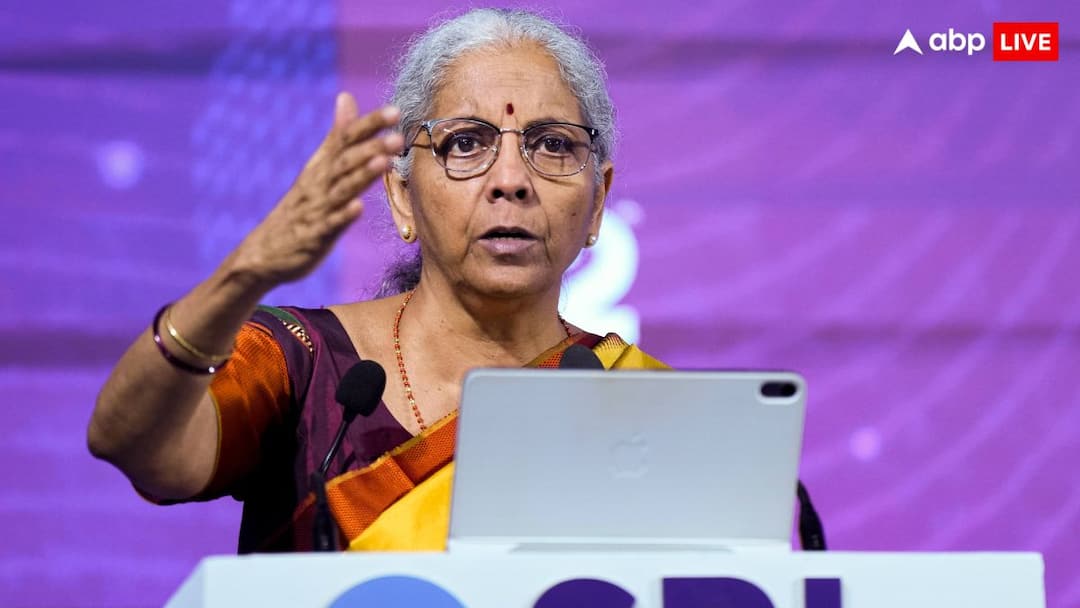
रुस से तेल की खरीद, ट्रेड डील और एग्रीकल्चर का बाजार… वित्त मंत्री निर्मला सीतारमण ने क्या कहा

रुस से तेल की खरीद, ट्रेड डील और एग्रीकल्चर का बाजार… वित्त मंत्री निर्मला सीतारमण ने क्या कहा


Nirmala Sitharaman On India US Trade Deal: केन्द्रीय वित्त मंत्री निर्मला सीतारमण ने कहा है कि वर्ष 2026 का बजट ‘विकसित भारत 2047’ के लक्ष्य की दिशा में पहला ठोस कदम है. भारत-अमेरिका ट्रेड डील और कृषि क्षेत्र को खोले जाने को लेकर उठ रहे सवालों पर उन्होंने साफ किया कि अमेरिका की ओर से किए गए दावों पर वाणिज्य मंत्री पीयूष गोयल पहले ही स्थिति स्पष्ट कर चुके हैं. उन्होंने कहा कि कृषि क्षेत्र के हितों को पूरी तरह ध्यान में रखा गया है और इस बात को पीयूष गोयल ने संसद में भी स्पष्ट रूप से रखा है.

एबीपी न्यूज से बातचीत में वित्त मंत्री ने कहा कि इस ट्रेड डील से जुड़ी पूरी तस्वीर आधिकारिक समझौता सामने आने के बाद ही साफ होगी. उन्होंने यह भी बताया कि अमेरिका ने भारत पर लगाए गए टैरिफ को 50 प्रतिशत से घटाकर 18 प्रतिशत कर दिया है, जो बांग्लादेश, कंबोडिया और अन्य देशों की तुलना में काफी कम है. इसे भारत के लिए सकारात्मक संकेत बताते हुए उन्होंने कहा कि फिर भी अंतिम निष्कर्ष तभी निकाला जा सकता है जब समझौते पर औपचारिक रूप से हस्ताक्षर हो जाएंगे.

किसान और डेयरी सेक्टर पर कोई समझौता नहीं

निर्मला सीतारमण ने जोर देकर कहा कि किसान और डेयरी क्षेत्र के हितों से किसी तरह का समझौता नहीं किया गया है. उन्होंने प्रधानमंत्री नरेंद्र मोदी के बयान का हवाला देते हुए कहा कि सरकार का फोकस सिर्फ उत्पादन बढ़ाने पर नहीं, बल्कि गुणवत्ता पर भी है. अगर ‘मेड इन इंडिया’ उत्पादों की गुणवत्ता बेहतरीन होगी तो लोग उन्हें गर्व के साथ अपनाएंगे.

वित्त मंत्री ने आगे कहा कि प्रधानमंत्री मोदी की कोशिश है कि भारत में बनने वाली हर चीज वैश्विक स्तर की गुणवत्ता वाली हो. यही सोच ‘मेक इन इंडिया’ को मजबूती देगी और भारत को एक भरोसेमंद वैश्विक विनिर्माण केंद्र के रूप में स्थापित करेगी.

रुस से तेल खरीद बंद का क्या असर?

जब वित्त मंत्री निर्मला सीतारमण से यह सवाल किया गया कि अगर भारत रूस से कच्चा तेल नहीं खरीदेगा तो क्या देश को महंगा तेल खरीदना पड़ेगा, तो उन्होंने जवाब में कहा कि प्रधानमंत्री नरेंद्र मोदी देशहित में जो भी फैसला लेंगे, वह देश के लिए बेहतर ही होगा. उन्होंने इस मुद्दे पर भरोसा जताते हुए कहा कि सरकार हर कदम राष्ट्रीय हित को ध्यान में रखकर उठाती है.

वहीं बजट को लेकर रेटिंग दिए जाने के सवाल पर वित्त मंत्री ने कहा कि यह कोई ऐसा बजट नहीं है जिसे नंबरों में आंका जाए. उन्होंने कहा कि यह बजट जनता की आवाज और जरूरतों को ध्यान में रखकर तैयार किया गया है, इसलिए इसके ऊपर रेटिंग देना उचित नहीं है.

ये भी पढ़ें: एआई का डर? टेक शेयरों में भारी वैश्विक बिकवाली के बीच लुढ़के टीएसएस और इन्फोसिस के शेयर


Source link

Broker’s call: Firstsource (Buy)

Broker’s call: Firstsource (Buy)


Target: ₹415

CMP: ₹305.05

Firstsource Solutions Ltd (FSL) continued to deliver a strong performance in Q3FY26 with CC revenue rising by 4.6 per cent q-o-q and 10.6 per cent y-o-y (8.6 per cent y-o-y in organic CC). EBIT margin rose 120 bps q-o-q to 12.8 per cent (excluding other operating income), aided by execution, due to an accelerated move towards offshore/nearshore delivery (43.4 per cent; + 180 bps q-o-q); and mix (active pruning of low-margin/low-growth payer accounts).

Telecom and the UK with contribution from PastDue acquisition led growth among verticals and geographies, respectively. Demand remained solution-led with the clients prioritising compliance, customer experience (CX) and cost takeout. Deal momentum (pipeline of over $1 billion) remained healthy with five large deals (annual contract value of over $5 million) and new logo wins across CX/onboarding/account servicing and operations outsourcing, reinforcing demand for its differentiated commercial constructs.

About 80 per cent of gross hiring is now happening offshore/nearshore with the mix is expected to improve further.

At CMP, the stock trades at FY27/28e P/E of 23.4/20.2x. We maintain Buy rating on the stock with a 12-month target price of ₹415.

Key Risks: Weakness in UK demand environment and delay in ramp-up of large HLS win.

Published on February 4, 2026


Source link

YouTube
Instagram
WhatsApp