Why Silver price are rising today?

Why Silver price are rising today?


Every cloud has a silver lining, they say. For investors in the white metal, that lining has turned into a gleaming profit sheet. Silver prices surged to fresh all-time highs on Tuesday, touching $94.75 per ounce globally before settling around $93.25-$93.30, while Indian markets saw prices consolidate above the historic ₹3 lakh per kilogram mark.

The metal has delivered a stunning 30 per cent return in less than three weeks of 2026. For those watching from the sidelines, the question is no longer whether silver is rising, but why, and whether this momentum can sustain.

Four forces driving silver higher

The current rally rests on four distinct pillars. First, global central banks have been reducing interest rates to support growth as inflation moderates. When cash becomes cheaper to hold, precious metals gain appeal as stores of value.

Second, geopolitical tensions continue to simmer. From US-Europe trade disputes to ongoing conflicts, investors are hedging against structural fragility in the global economy.

Third, and perhaps most transformative, is silver’s evolving identity as a “Green Metal.” “Silver stands out with its dual demand: monetary protection plus explosive industrial use in solar panels, EVs, data centers, and electrification, now over half of total consumption,” said Akshat Garg, Head of Research & Product at Choice Wealth. The metal’s superior conductivity makes it indispensable in solar panels, electric vehicle batteries, and semiconductor components.

Fourth is speculation – traders buying because prices are rising, creating self-reinforcing momentum.

What the charts say

Ponmudi R, CEO of Enrich Money, outlined the technical picture on Tuesday morning. “COMEX Silver has surged to fresh all-time highs near $94.75 and is currently consolidating around $93.25–$93.30 after minor profit booking. The breakout above the critical $90–$92 psychological zone now stands confirmed,” he said.

For Indian investors, “MCX Silver has staged a strong breakout and continues to show high-beta outperformance. Sustained trade above ₹3,10,000 keeps the momentum extremely bullish. Next major upside targets are placed at ₹3,20,000–₹3,25,000 in the near term, with scope to extend toward ₹3,35,000–₹3,50,000 over the next few months.”

The investment question

For those considering entry at these elevated levels, experts emphasize structure over timing. “New investors should consider taking positions in Silver ETFs as part of building a diversified multi-asset portfolio,” Garg said. “Target 5-10 per cent allocation to silver or gold ETFs within a broader multi-asset framework, treat as diversification, not a momentum play.”

For existing holders, “Existing Silver ETF holders should avoid exiting at current levels, as the supportive forces remain intact. Discipline beats timing, focus on conviction over short-term noise,” Garg advised.

However, the same factors driving silver higher could reverse. If interest rate cut expectations moderate, geopolitical tensions ease, or speculative fervor cools, the metal could face sharp corrections. Long-term investors should view silver as a portfolio diversifier rather than a substitute for growth assets, maintaining exposure through ETFs while avoiding leveraged speculation on short-term price movements.

Published on January 20, 2026


Source link

Brent crude futures rise as operations halt in Kazakhstan oil fields

Brent crude futures rise as operations halt in Kazakhstan oil fields


Brent crude oil futures traded higher on Tuesday morning amid a temporary halt of operations in Kazakhstan’s oil fields.

At 9.58 am on Tuesday, March Brent oil futures were at $64.11, up by 0.27 per cent, and March crude oil futures on WTI (West Texas Intermediate) were at $59.42, down by 0.02 per cent. February crude oil futures were trading at ₹5,431 on Multi Commodity Exchange (MCX) during the initial hour of trading on Tuesday against the previous close of ₹5,422, up by 0.17 per cent, and March futures were trading at ₹5,451 against the previous close of ₹5,440, up by 0.20 per cent.

In their Commodities Feed for Tuesday, Warren Patterson, Head of Commodities Strategy of ING Think, and Ewa Manthey, Commodities Strategist, said Tengizchevroil temporarily stopped production at its Tengiz and Korolev fields in Kazakhstan, after two fires broke out at power generators. The producer pumped around 890,000 barrels a day over the first three quarters of 2025. Kazakhstan has faced several supply disruptions in recent months, including exports from the CPC terminal in Russia, which were impacted by drone strikes.

They said that ICE Brent edged lower on Monday, settling 0.3 per cent lower on the day. It held up relatively well amid the broader risk-off move in markets. This follows the re-emergence of trade tensions between the US and Europe over US President Donald Trump’s Greenland demands.

“A weaker US dollar provided some support to oil and the broader commodities complex. Continued firmness in ICE Brent timespreads will also help buoy the market, as it suggests a tighter spot physical market,” they said.

Market players are now waiting for the release of International Energy Agency’s (IEA) monthly report on Wednesday. This will give an insight into the global supply and demand scenario of crude oil.

February natural gas futures were trading at ₹268.40 on MCX during the initial hour of trading on Tuesday against the previous close of ₹273.20, down by 1.76 per cent.

On the National Commodities and Derivatives Exchange (NCDEX), February castorseed contracts were trading at ₹6,467 in the initial hour of trading on Tuesday against the previous close of ₹6,446, up by 0.33 per cent.

April dhaniya futures were trading at ₹11,740 on NCDEX in the initial hour of trading on Tuesday against the previous close of ₹11,752, down by 0.10 per cent.

Published on January 20, 2026


Source link

UST acquires Texas-based Tailwind, enhances play in digital banking solutions

UST acquires Texas-based Tailwind, enhances play in digital banking solutions


Leading AI and technology transformation solutions company UST has acquired Texas-based fintech companyTailwind Business Ventures, for an unclosed sum.

A UST spokesman said here this would strengthen its position in a dynamic sector while also expanding presence in South America. 

As digital banking solutions market continues to expand, demand for implementation and services is expected to grow, the spokesman said.

With this acquisition, UST will be able to increase its share of digital banking solutions implementation and support services for banks and credit unions. 

Portugal, Sri Lanka presence

Tailwind was founded in 2003 as Integritas Solutions Group. with offices in Austin, Texas, US; and Rio de Janeiro, Brazil. In 2009, it expanded operations to Sri Lanka, with a Portugal delivery centre added in 2019. With over 220 employees globally, it boasts proven expertise in banking and financial services domain. 

It currently provides a range of advanced technological services to prominent financial institutions worldwide. Core offerings include implementation of AI-based digital banking solutions; modernisation of legacy systems; and customisation of products to meet specific client requirements. 

Taking on challenges

The company also delivers product and project management services, guiding clients through stages of their technology journey. Manu Gopinath, President, UST, said Tailwind’s core banking expertise, combined with UST’s strengths in modernisation, AI, and enterprise transformation, will provide scale and depth to tough challenges in banking.

“We bring to bear hyper-personalisation, integrated systems architecture, and security by design to improve customer journeys and rebuild trust and confidence across the ecosystem.”

Partners sought

UST is “now positioned to drive end-to-end banking transformation in emerging and high-growth markets – Latam, APAC, and Africa – where mid-market and large regional banks seek partners who understand their needs. We are deepening presence in North America too with a complete, modern platform and services story that helps banks compete and innovate faster,” Gopinath stated. 

Enhancing value

Vijay Padmanabhan, Chief Financial Officer, UST, said acquisition of Tailwind marks a significant investment as UST strengthens banking and financial services platforms and solutions.

“Tailwind’s deep expertise in core banking, delivered through advanced digital banking solutions, enables financial institutions to provide exceptional customer experiences.”

Its partnerships with leading providers such as Temenos and Q2 further enhance value we deliver to our clients, Padmanabhan added.

Writing next chapter

Paulo Vieira, Co-founder, Tailwind, said becoming part of UST represents is an exciting next chapter for the company.

“Together, we can scale our Software as a Relationship (SAAR) approach globally while staying focused on long-term client partnerships. Our shared values and cultural alignment make this a natural fit. We feel confident together we will build – and launch – a new global software development standard.” 

Published on January 20, 2026


Source link

TN Governor walks out of Assembly without reading his customary address over National Anthem ‘disrespect’

TN Governor walks out of Assembly without reading his customary address over National Anthem ‘disrespect’


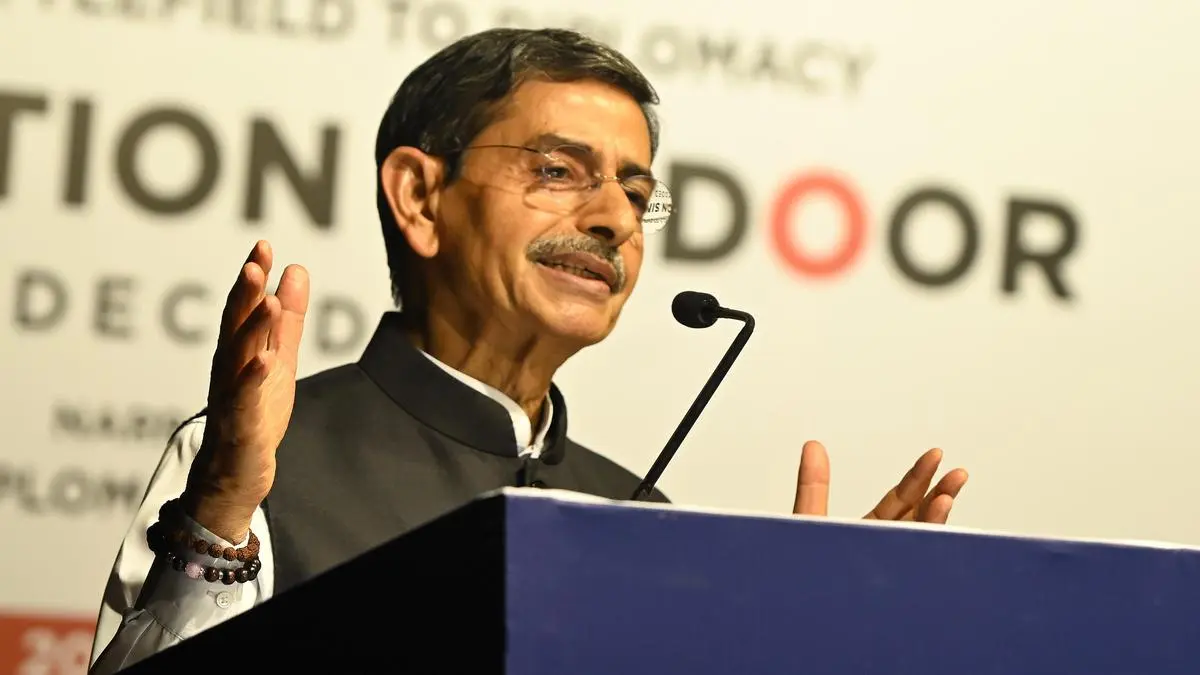
File Photo: Governor RN Ravi
| Photo Credit:
RAGU R

For the second year in a row, Tamil Nadu Governor RN Ravi left the Assembly without giving his customary address in protest against the House not playing the National Anthem immediately after the Tamil Thai Vaazhthu. He entered the House at 9.29 am and left at 9.36 am.

In 2025 too, he walked out without reading his address on the same issue.

As the Governor was speaking, Speaker M Appavu requested the Governor to deliver his customary speech and not to change the House’s customs. He also said that the National Anthem is played only at the end of the proceedings.

However, the Governor objected to not playing the National Anthem, and left without reading his address, which was later read by the speaker.

A few minutes after the Governor left the House, the members of the AIADMK walked out stating they were not allowed to speak on the issue.

The Lok Bhavan release on reasons why the Governor declined reading the Governor’s address in the Assembly said, “National Anthem is yet again insulted and the Fundamental Constitutional Duty disregarded.”

“Governor’s mike was repeatedly switched off and he was not allowed to speak. The speech contains numerous unsubstantiated claims and misleading statements. Several crucial issues troubling the people are ignored,” the statement said.

The release also pointed out various other issues troubling the people are ignored.

The release said the claim that the State attracted huge investments to the tune of over ₹12 lakh crore is far from the truth. Many of the MoUs with prospective investors remain only on paper, actual investment is hardly a fraction of it. Investment data show that Tamil Nadu is becoming less attractive for investors. Until four years ago Tamil Nadu, among the states, was the fourth largest recipient of foreign direct investment. Today it is struggling to remain at the sixth.

MSME sectors are under huge stress due to visible and invisible costs of running the industry. They are the crucial sector for employment and growth. However, as against over 55 million registered MSMEs in the country Tamil Nadu has only about 4 million despite enormous potential for growth. Entrepreneurs from Tamil Nadu are forced to locate their enterprises in other states. The issue is completely ignored, the release added.

There is widespread discontentment among lower rung employees in almost all sectors. They are restive and frustrated. No mention of ways to address their genuine grievances, the release said.

In 2024, the Governor expressed inability to read out the address, saying it contained passages with misleading claims and facts and reading them would have amounted to the Governor’s address “becoming a constitutional travesty”.

In 2023, the Governor omitted certain portions and added extempore remarks to the address and subsequently walked out.

In 2022, the Governor read the address.

Published on January 20, 2026



Source link

Flattish open seen for Sensex, Nifty

Flattish open seen for Sensex, Nifty


Domestic markets are likely to open on a flat note, as analysts see some value buying at lower levels despite volatile global sentiment. Gift Nifty 25,600 signals a flattish opening.

Ponmudi R, CEO of Enrich Money, said Indian equities are set to open with a cautious undertone as global trade uncertainties, driven by aggressive use of tariffs by the US administration, continue to trigger a risk-off mood across global markets. “Heightened geopolitical tensions, along with persistent foreign investor selling and continued weakness in the rupee, are weighing on confidence and likely to cap any meaningful upside in domestic equities even during short-term recoveries,” he said.

Steady buying by domestic institutional investors continues to act as a key stabiliser, absorbing selling pressure and helping prevent deeper drawdowns in the market, he further said.

Technically, the market is in oversold position and analysts expect a pull-back or relief rally.

Nilesh Jain, Head – Technical and Derivatives Research Analyst (Equity Research), Centrum Broking Ltd., said: “The markets remained under pressure once again as the Nifty, after opening with a gap-down, faced persistent selling at higher levels throughout the session. However, it managed to close above its 100-DMA placed near 25,575, which is acting as an immediate support, followed by the recent swing low around 25,473. The overall market structure continues to look weak, with the MACD indicating a sell crossover on both the daily and weekly charts. While a short-term pullback cannot be ruled out, the index needs to decisively cross above 25,700 to trigger any meaningful short-covering rally towards the 25,900 zone. Conversely, a breakdown below 25,575 could open the door for further downside towards the 25,450 levels.”

Ponmudi said pre–Union Budget 2026 expectations are driving selective optimism around potential capex support, tax adjustments and fiscal measures, but Q3 FY26 earnings remain mixed — particularly in banking and IT — keeping price action largely stock-specific. Weekly expiry positioning is also adding to intraday volatility. “Overall, domestic resilience is partly offsetting global caution, resulting in a range-bound to mildly negative bias unless fresh positive triggers emerge,” he cautioned.

Published on January 20, 2026



Source link

Shadowfax raises Rs 856 crore from anchor investors ahead of IPO

Shadowfax raises Rs 856 crore from anchor investors ahead of IPO


The anchor book saw strong participation from domestic and global institutional investors, including mutual funds, insurance firms and foreign institutions.
| Photo Credit:
iStockphoto

Logistics services provider Shadowfax on Monday said it has collected Rs 856 crore from anchor investors, a day before the opening of its initial share sale for public subscription.

The anchor book attracted participation from a wide range of domestic and global investors, including mutual funds, insurance companies, pension funds and foreign institutions.

Key anchor investors

The top investors in the anchor round include Nippon India Mutual Fund (MF), ICICI Prudential MF, JM Financial MF, Motilal Oswal MF, Government Pension Fund Global, ICICI Prudential Life Insurance Company, Societe Generale, HSBC Global Investment Funds, Eastspring Investments and Jupiter India Fund, according to a circular uploaded on BSE’s website.

Shares allocated to anchor investors

The company allocated 6.90 crore equity shares to anchor investors at a price of Rs 124 per share, which is also the upper end of the IPO price band. This takes the total fundraising to Rs 856 crore, the circular noted.

Domestic MFs’ share

Of the total shares allotted to anchor investors, around 3.68 crore shares, or 53.24 per cent, were allocated to nine domestic mutual funds through 20 schemes, reflecting strong institutional interest ahead of the public issue.

Shadowfax’s Rs 1,907-crore maiden public offering will be available for subscription from January 20 to 22. The price band has been fixed at Rs 118-124 apiece for its upcoming IPO, valuing the company at over Rs 7,100 crore at the higher end.

The IPO will comprise a fresh issue of shares worth Rs 1,000 crore and an offer for sale (OFS) of Rs 907.27 crore by existing shareholders. This takes the total issue size to Rs 1,907.27 crore.

Selling shareholders in OFS

As a part of the OFS, Flipkart Internet, Eight Roads Investments Mauritius II Ltd, NewQuest Asia Fund IV (Singapore) Pte Ltd, Nokia Growth Partners IV, LP, International Finance Corporation, Mirae Asset, Qualcomm Asia Pacific Pte Ltd, and Snapdeal founders — Kunal Bahl and Rohit Kumar Bansal — would offload shares.

Valuation reset

Market experts said Shadowfax has reduced its post-market valuation to over Rs 7,100 crore, lower than previous estimates of Rs 8,500 crore, in what is being positioned as a more conservative pricing approach aimed at attracting long-term institutional investors.

The company proposes to utilise proceeds from the fresh issue towards enhancing capacity in terms of network infrastructure, funding of lease payments for new first-mile and last-mile, and sort centres, as well as towards branding, marketing, and communication initiatives, unidentified inorganic acquisitions, and general corporate purposes.

Shadowfax is backed by marquee investors such as Flipkart, TPG, Eight Roads Ventures, Mirae Asset Ventures and Nokia Growth Funds. It is India’s leading logistics service provider for e-commerce express parcel and value-added services. It has a service network encompassing 14,758 Indian pin codes as of September 2025.

Client base and services

The company serves a wide range of enterprise clients, including horizontal and non-horizontal e-commerce, quick commerce, food marketplaces, and on-demand mobility companies. It offers express forward parcel deliveries, reverse pickups, and on-demand hyperlocal and critical logistics solutions.

Shares of Shadowfax are expected to list on January 28 on the bourses.

The company said that 75 per cent of the issue size has been reserved for qualified institutional buyers, 15 per cent for non-institutional investors and the remaining 10 per cent for retail investors.

Financial performance

For the first half of FY26, Shadowfax reported a revenue of about Rs 1,800 crore, marking a 68 per cent year-on-year increase. Its total revenue stood at Rs 2,485 crore in FY25.

Revenue mix

The e-commerce express parcel segment is the major revenue contributor, accounting for around 70 per cent of the company’s business and around 20 per cent of revenue comes from hyperlocal and quick commerce logistics.

Shadowfax’s express parcel market share rose to about 21 per cent in Q1 FY26, up sharply from around 8 per cent in FY22, according to data from Redseer.

The firm filed draft papers in late June with the markets regulator Sebi for an IPO through a confidential pre-filing route and had received Sebi’s approval in October.

The company opted for the confidential pre-filing route, which allows it to withhold public disclosure of IPO details under the DRHP until later stages. This route is gaining traction among Indian firms aiming for flexibility in their IPO plans.

Published on January 19, 2026


Source link

YouTube
Instagram
WhatsApp