India’s physically backed gold exchange-traded funds (ETFs) recorded their first net monthly outflow in a year in May, as investors booked profits following a sharp rise in prices triggered by higher import duties, data showed on Thursday.
The outflow could reduce import demand in the world’s second-largest gold consumer, helping narrow the trade deficit and support the rupee, one of Asia’s worst-performing currencies.
Gold ETFs registered net outflows of $61 million, equivalent to 0.4 metric tonnes, in May, reducing total holdings to 116.3 tonnes, data from the World Gold Council showed.
Despite May’s outflow, gold ETFs have attracted net inflows of $3.48 billion so far this year.
On May 13, India raised import duties on gold and silver to 15 per cent from 6 per cent as part of efforts to curb overseas purchases of the precious metals and ease pressure on the country’s foreign exchange reserves.
Following the announcement, domestic gold prices surged to ₹164,497 ($1,717) per 10 grams, their highest level in more than two months.
Last month, Zepto received initial approval from markets regulator SEBI for its confidential initial public offering and is reportedly in the process of filing an updated draft prospectus.
| Photo Credit:
Dado Ruvic
Quick commerce platform Zepto is likely to cross the $1 billion-mark in terms of net order value (NOV) by the end of June quarter as it eyes a public listing. This comes at a time when the company has been focusing sharply on profitabilty and financial discipline strategy.
Sources said that the quick commerce platform’s net order value is expected to grow to over $1 billion in June quarter from about $500 million in late 2025 and has been scaling up despite growing competitive intensity in the sector. Zepto has been focusing on reducing cash burn per order while focusing sharper focus on stronger unit economics and profitability, they added. The platform had reported a cash burn per order of about Rs 200 in the early half of 2025.
Initial approval
Last month, Zepto received initial approval from markets regulator SEBI for its confidential initial public offering and is reportedly in the process of filing an updated draft prospectus.
In October last year, the pure play quick commerce platform had raised about $450 million in a funding round led by California Public Employees’ Retirement System (CalPERS) and General Catalyst, valuing it at about $ 7 billion. Other existing investors, including Avenir, Avra, Lightspeed and Glade Brook had also participated in the round.
“ As of April 2026 based on data collected from public sources, there are about 1,255 Zepto dark stores across India. Zepto is the 2nd largest player in India Quick Commerce space today in terms of MAUs(monthly active users), dark-store network size and estimated number of orders processed per day after having raised over $2 billions since inception,” a recent report by Bernstein noted. The report further highlighted that that the platform seems to have adopting a strategy of focusing on serving 61 cities with with a higher focus on metros.
The EB segment comprises affordable housing finance and small-ticket loans
Sundaram Home Finance on Thursday said it now plans to open another 25 new Emerging Business (EB) branches in South India this year. These new branches will come up in tier-3 and -4 towns in Tamil Nadu, Karnataka, Andhra Pradesh and Telangana, the company said. The company crossed the milestone of 100 EB branches last year
The EB segment comprises affordable housing finance and small-ticket loans. The company, which had registered disbursements of ₹590 crore in the Emerging Business segment last year, is targeting disbursements of around ₹1,000 crore in this segment this year.
As part of its expansion, the company also plans to hire around 300 people in this segment this year to add to its existing 800 employees.
D Lakshminarayanan, MD, Sundaram Home Finance, said, “We believe there are a number of opportunities in the affordable housing segment in smaller towns in South India. Our plan is to leverage the growing demand for affordable housing by setting up new branches in tier-3 and -4 towns.”
Sundaram Home Finance registered net profit of ₹282 crore on disbursements of ₹6,842 crores in FY26. Assets under management grew 14 per cent last year.
Sundaram Home Finance, the wholly-owned subsidiary of Sundaram Finance, provides home loans, plot loans, home improvement & extension loans, affordable housing finance, loans against property and small ticket loans to entrepreneurs.
Meesho on Thursday said its proprietary AI system PRISM — Personalised Ranking & Intent Signal Module — now powers more than 75 per cent of all orders placed on the platform, as the Bengaluru-based e-commerce company disclosed fresh scale metrics for the technology it has been building for India’s next wave of online shoppers.
The platform, which reported 264 million annual transacting users and 717 million placed orders in the fourth quarter of FY26, said PRISM processes close to 100 million inferences per second during peak sale events and runs over 6 trillion inferences daily. The system draws on a network of more than 100 AI ranking models trained on over 400 trillion input signals.
Unlike conventional search-bar driven e-commerce, PRISM is designed around browsing and discovery behaviour — what Meesho describes as the dominant shopping pattern among first-time and vernacular internet users. The system supports more than 10 languages including Hindi, Bengali, Tamil, Telugu, and Odia, and is underpinned by BharatMLStack, Meesho’s in-house machine learning infrastructure built to run high-throughput workloads at lower costs than standard cloud setups.
The company also highlighted Trendpulse, a large language model-powered engine within PRISM that tracks emerging demand patterns across regions and consumer clusters to surface relevant products ahead of formalised search intent.
Debdoot Mukherjee, Chief Data Scientist and Head of AI at Meesho, said the next hundred million Indians coming online would not search but discover, calling it the most significant shift in consumer internet India has seen.
Shares of Meesho Limited, listed on the NSE since December 2025 and part of the Nifty Smallcap 100 index, fell 5.01 per cent to ₹166.62 by mid-afternoon on June 4, dragging the stock to near the lower end of its ₹125.56–₹254.40 fifty-two-week range. Total market capitalisation stood at approximately ₹76,620 crore.
The Consumer Affairs Ministry is planning to develop machine-readable, SMART standards using artificial intelligence tools to reduce compliance burden on industry, a senior official said on Thursday.
Machine-readable standards translate regulatory requirements into structured digital rules that computer systems can process directly, enabling automatic compliance verification without manual intervention.
SMART (Standard Machine Accessible, Readable and Transferable) formats go a step further by being dynamic, constantly updated and integrated into software and manufacturing lifecycles.
Addressing a FICCI-organised event here, Consumer Affairs Secretary Nidhi Khare said the department was looking at ways to leverage emerging technologies, particularly AI, to modernise the country’s standards ecosystem.
“We also understand that the emerging technologies which are coming up in a big way, especially the AI, it may be creating a lot of disruption, and it could be creating more challenges. But we need to understand how to use it to our advantage,” she said.
Khare said India stood at a “transformative moment” in its economic journey and that quality would be central to achieving the vision of Viksit Bharat 2047.
She also said the Bureau of Indian Standards (BIS) was evolving from a regulator to a facilitator, with the government promoting private sector testing infrastructure to support industrial expansion while maintaining consumer trust.
The secretary called on industry to actively participate in standards formulation and said the government was in the process of replacing obsolete testing methods with quicker and more accurate processes.
“Quality is not just a pathway to development, it is also a destination in itself,” she added.
कंपनी ने फर्जी कंपनियां बनाईं, प्रमोटर को पैसे भेजे.
निवेशकों की चिंता बढ़ी, कंपनी के शेयर 90% टूटे.
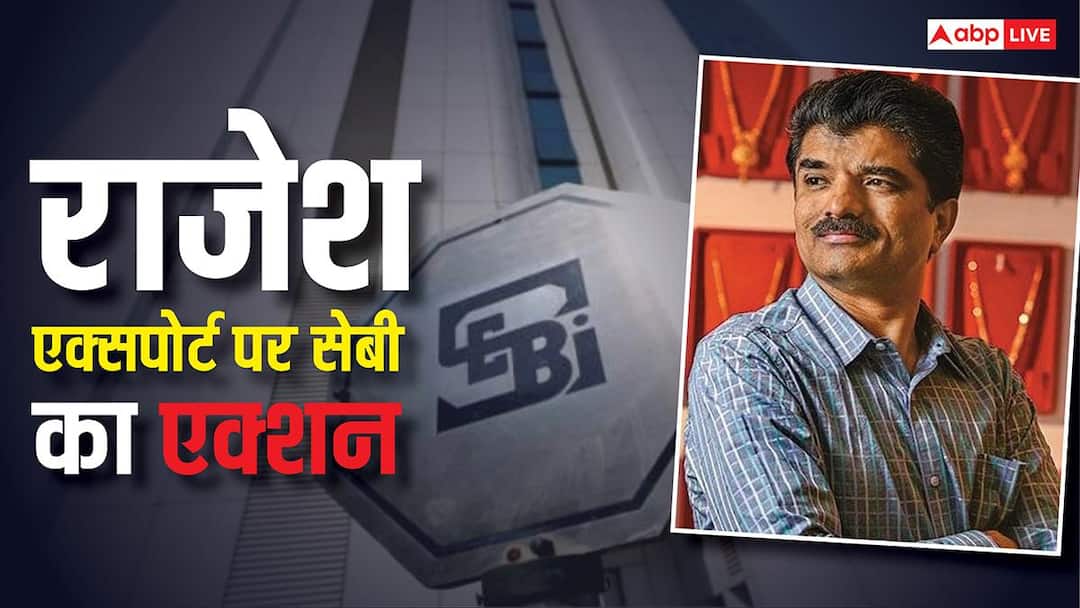
Rajesh Export Shares: सोने और ज्वेलरी के कारोबार से जुड़ी कंपनी रोजश एक्सपोर्ट और उसके प्रोमोटर राजेश मेहता पर मार्केट रेगुलेटर सेबी (SEBI) ने तगड़ा एक्शन लिया है. इसके चलते कंपनी के शेयर गुरुवार, 4 जून को 5% के लोअर सर्किट पर पहुंच गए.
बीएसई और एनएसई पर यह शेयर गिरकर 103.92 रुपये से 104.65 रुपये के स्तर पर आ गया. कंपनी के शेयरों में यीह गिरावट उस समय आई, जब सेबी ने कंपनी के प्रोमोटर और चेयरमैन राजेश मेहता पर गंभीर वित्तीय अनियमितताओं का आरोप लगाया और शेयर बाजार में उनके कारोबार पर रोक लगा दी.
क्या है आरोप?
सेबी के अंतरिम आदेश के मुताबिक, कंपनी ने कारोबारी साल 2021 से 2025 के बीच अपने कंसोलिडेटेड रेवेन्यू को करीब 15.35 लाख करोड़ रुपये तक का बढ़ा-चढ़ाकर पेश किया. इसमें से 15.15 लाख करोड़ यानी कि लगभग 98.7% का रेवेन्यू पूरी तरह से फर्जी पाया गया. असल रेवेन्यू 20111 करोड़ रुपये का था. सेबी की जांच में और भी कई गंभीर बातें सामने आई हैं.
कंपनी के कागजों पर फर्जी कंपनियां बनाई. राजेश एक्सपोर्ट्स खुद ही माल खरीदकर खुल को ही सामान बेचा. इससे घूम-फिरकर अपनी ही कंपनियों को सामान बेचकर रेवेन्यू को बढ़ा-चढ़ाकर दिखाया. कंपनी ने अपने स्टैंडअलोन बुक्स में FY22 से FY24 के बीच ‘एफलुएंस’ नाम की एक यूनिट के साथ करीब 11,487 करोड़ रुपये की बिक्री और लगभग 11,488 करोड़ रुपये की खरीद दर्ज की. यह कंपनी के कुल कारोबार का एक बहुत हिस्सा था.
जब सेबी ने जांच की, तो ‘एफलुएंस’ ने साफ कह दिया कि राजेश एक्सपोर्ट्स उसका ग्राहक कभी था ही नहीं और उनके साथ कॉर्पोरेट स्तर पर कोई लेनदेन भी नहीं हुआ. ‘एफलुएंस’ ने खुलासा किया कि उनकी डिलिंग व्यक्तिगत स्तर पर सिर्फ राजेश मेहता के साथ हुई थी. जांच में पाया गया कि कंपनी का पैसा बिना बोर्ड याद ऑडिट कमेटी की मंजूरी के बिना प्रोमोटर के पर्सनल बैंक अकाउंट्स में ट्रांसफर किए गए और नियमों का उल्लंघन किया गया.
शेयर बाजार के नियमों के मुताबिक, पब्लिक लिस्टेड कंपनी का पैसा शेयरधारकों का होता है. प्रमोटर बिना उचित खुलासे या मंजूरी के कंपनी के कैश को शॉर्ट या लॉन्ग टर्म लोन की तरह अपने प्राइवेट अकाउंट्स में रूट नहीं कर सकते. इस तरह के ‘आने-जाने वाले ट्रांजैक्शन’ अकसर वित्तीय धोखाधड़ी छिपाने के लिए किए जाते हैं.
कैसे हुआ खुलासा?
मार्च 2024 में एक शेयरहोल्डर से मिली शिकायत के आधार पर सेबी ने कंपनी के खिलाफ अपनी जांच शुरू की थी. शेयरधारक ने शिकायत में मुख्य रूप से यह मुद्दा उठाया था कि राजेश एक्सपोर्ट्स की बुक्स में बहुत बड़ी रकम ‘Trade Receivables’ के रूप में सालों से अटकी दिख रही है.
सेबी ने जब इस शिकायत के आधार पर कंपनी के शुरुआती डेटा को खंगाला, तो उसे कुछ गड़बड़ी दिखी. कंपनी लगातार अपना टर्नओवर बड़ा बता रही थी, लेकिन उसका कैश फ्लो और बैंक बैलेंस उससे मेल नहीं खा रहे थे. जांच के लिए सेबी ने एक जांच टीम का गठन किया. फिर मामले की फॉरेन्सिक ऑडिट के लिए एक ऑडिटर भी नियुक्त किया गया.
शेयर बाजार और निवेशकों पर असर
सेबी के लगाए गए इन आरोपों के बाद राजेश एक्सपोर्ट्स के भविष्य को लेकर निवेशकों की चिंताएं बढ़ गई हैं. इसमें देश की सबसे बड़ी बीमा कंपनी भारतीय जीवन बीमा निगम (LIC) का भी इस पर दांव लगा हुआ है. मार्च 2026 तक एलआईसी की कंपनी में 10.8% तक की हिस्सेदारी है. इससे संस्थागत निवेशकों को तगड़ा झटका लगा है. यह शेयर अपने ऑल-टाइम हाई से करीब 90% तक टूट चुका है.