Roy Black attends a book signing for his his wife, Lea Black, on April 21, 2015, in Coral Gables, Florida. (Photo by Johnny Louis/FilmMagic via Getty Images)
Criminal defense lawyer Roy Black, known for representation of defendants who included multimillionaire financier Jeffrey Epstein and physician William Kennedy Smith, a member of the Kennedy family, died Monday at age 80.
One of Black’s law partners, Howard Srebnick of Black Srebnick in Miami, told Law.com and the Miami Herald that his colleague “was the greatest criminal lawyer of our generation, perhaps in American history.”
Black won acquittals “in some of the most challenging and notorious cases of all time,” Srebnick said.
“He really was the GOAT of criminal defense lawyers,” wrote criminal defense trial and appellate lawyer David Oscar Markus at the Southern District of Florida Blog. Markus told the Associated Press in an email that Black “worked harder than any lawyer I know. And he outlawyered every prosecutor who he ever went up against.”
Other high-profile clients besides Epstein and Smith included singer Justin Bieber, conservative political commentator Rush Limbaugh, race car driver Helio Castroneves and Columbian drug lord Fabio Ochoa.
Black represented Smith, the nephew of former President John F. Kennedy, when he was acquitted on a rape charge in 1991.
He was among several lawyers who represented Epstein, helping secure a plea deal in 2008, according to the Independent. In the plea deal, prosecutors agreed to drop federal charges against Epstein if he pleaded guilty to state charges. The guilty plea resulted in a 13-month sentence.
Black was also “a fixture” on NBC’s Today show and Larry King Live, according to the Miami Herald.
Black is survived by two children and his wife, Lea Black. She was a juror in the Smith trial, and she also appeared on The Real Housewives of Miami.
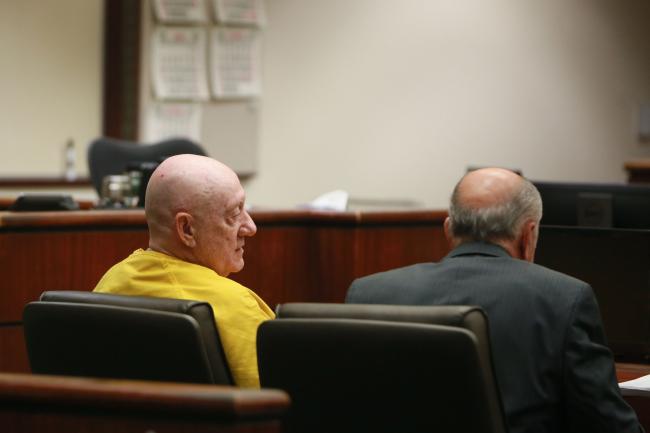
A Riverside County, California, judge on Friday sentenced disbarred lawyer David Replogle, 76, (left) for a 2008 murder of a Palm Springs, California, art dealer and a plot to steal the slain man’s money and possession. (Photo from the Riverside County, California, district attorney’s office’s July 18 press release)
A disbarred lawyer has been sentenced to life in prison without possible parole after his conviction in a retrial for his role in a 2008 murder of a Palm Springs, California, art dealer and a plot to steal the slain man’s money and possessions.
Former lawyer David Replogle, 76, was sentenced in the Riverside County Superior Court in California on July 18, according to a July 18 press release.
Prosecutors said Replogle was part of a six-person scheme in which the art dealer, 74-year-old Clifford Lambert, was fatally stabbed and his bank account drained of more than $185,000. Replogle forged power-of-attorney paperwork that allowed co-conspirators to take the money and tried to liquidate Lambert’s home and art collection, prosecutors said.
The home sale wasn’t completed after Lambert’s personal lawyer saw grant deeds transferring the property, according to previous coverage.
Lambert’s body had been buried off a mountainside in Los Angeles.
Replogle was convicted of eight felonies in the August 2022 retrial, including first-degree murder, criminal conspiracy, burglary, grand theft, identity theft and forgery.
Replogle and two other co-defendants were retried after a judge in the initial trial was caught on a co-defendant’s laptop saying he feared catching HIV from envelopes containing pro se motions because they had been licked closed.
“Lord knows where his tongue has been,” the judge reportedly said, referring to a co-defendant who was gay and HIV positive. The co-defendant, Kaushal Niroula, was killed in prison before his retrial.
The two other retried defendants, including the man who allegedly carried out the stabbing, have been sentenced to life in prison without parole, according to the Bay Area Reporter. A fourth co-defendant pleaded guilty to manslaughter and a fifth pleaded guilty to fraud, the Desert Sun reports via Yahoo News.
Replogle was the final defendant to be sentenced. He told the Bay Area Reporter in a previous interview that the trial was unfair, and he was not allowed to call witnesses that would have helped his case. He has said he acted under duress, ABC 7 News reports.
One of the co-defendants, Miguel Bustamante, told the Bay Area Reporter that he thinks that Replogle acted under threat from Niroula, who implied that he would harm Replogle’s mother if he didn’t cooperate.
Bustamante was accused of carrying out the fatal stabbing after Niroula let him and Bustamante’s roommate into Lambert’s home. Niroula had posed as an attorney who had information about an inheritance.
Replogle has indicated that he will appeal, according to the Desert Sun.
Replogle had previously represented one of the co-defendants in a sexual molestation case and obtained a $10 million settlement, according to previous coverage.
Some BigLaw firms are reluctant to oppose administration policies after President Donald Trump pursued disfavored law firms with punitive executive orders. But others outside BigLaw are willing to litigate. (Image from Shutterstock)
Updated: Some BigLaw firms are reluctant to oppose administration policies after President Donald Trump pursued disfavored law firms with punitive executive orders. But others outside BigLaw are willing to litigate, the New York Times reports.
“An army of solo practitioners, former government litigators and small law firms stepped up to volunteer their time to challenge the administration’s agenda,” the article says.
Some lawyers are volunteering to help through the Pro Bono Litigation Corps, a new group launched by the legal nonprofit Lawyers for Good Government.
The Pro Bono Litigation Corps “is a new, relatively small entrant in the battle against portions of the Trump agenda,” the article reports.
Other larger groups involved in litigation include Democracy Forward, the Democracy Defenders Fund, Protect Democracy, Public Citizen and the American Civil Liberties Union.
One volunteer with the Pro Bono Litigation Corps is Morristown, New Jersey, solo practitioner Michael H. Ansell, who handles small business disputes. He helped interview plaintiffs in a federal lawsuit contesting the Environmental Protection Agency’s decision to end its Environmental and Climate Justice Block Grants program.
“We’re the last line of defense, it seems,” he told the New York Times.
Heidi Burakiewicz, whose labor boutique handles federal sector cases, is helping Norman Eisen, who founded the Democracy Defenders Fund.
“I have three daughters,” she told the New York Times. “When this is all said and done, I need to look them in the face and know I did everything I could.”
Eisen is collaborating with Abbe Lowell, who left Winston & Strawn to defend people targeted by the Trump administration, according to a May story by Reuters.
Also willing to help is Karen C. Burgess, a commercial litigator with a firm in Austin, Texas. She told her undergraduate alma mater Rice University that she was willing to help if there is a federal court case over the administration’s investigation of diversity initiatives at Rice University, one of four dozen universities facing such inquiries.
Burgess said only a fraction of the 1.3 million lawyers in the United States work for large firms.
“We’re small and mighty in numbers and willing to cause discomfort if necessary,” she told the New York Times.
Updated July 23 at 4:30 p.m. to report that the Pro Bono Litigation Corps is a new group.
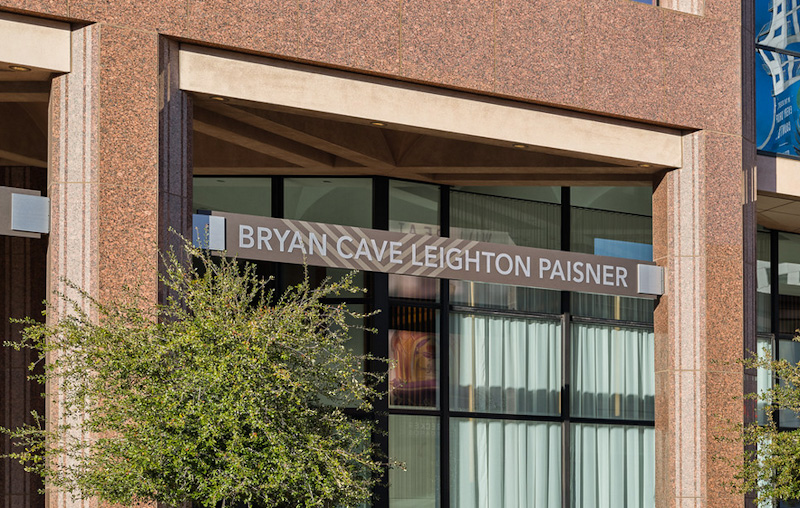
A former partner at Bryan Cave Leighton Paisner has been disbarred after his sentencing for exchanging sexual messages with an undercover investigator who he thought was a 14-year-old girl. (Photo by Tony Webster, CC BY 2.0, via Flickr)
A former partner at Bryan Cave Leighton Paisner has been disbarred after his sentencing for exchanging sexual messages with an undercover investigator who he thought was a 14-year-old girl.
The lawyer, Daniel Philip Waxman, had led the tort group of the law firm’s New York office. The Legal Profession Blog noted the disbarment in a July 17 opinion by the Appellate Division’s First Judicial Department of the New York Supreme Court.
Waxman pleaded guilty in April 2024 to attempted dissemination of indecent materials to minors, according to the disbarment opinion and a June 2023 press release by the Rockland County, New York, district attorney’s office. He was sentenced to probation for five years in July 2024 and ordered to pay fees for a DNA databank and sex offender registration.
Waxman admitted that he used a messaging app in May 2023 to communicate with the person. The disbarment was automatic as a result of the guilty plea to a felony.
The disbarment is retroactive to the date of Waxman’s conviction in April 2024.
Bryan Cave placed Waxman on indefinite leave after his May 2023 arrest. He was taken into custody when he arrived in Rockland County to meet with the person who he thought was a 14-year-old girl, according to the June 2023 press release.
RollOnFriday reported in July 2024 that it “understands that [Waxman] exited the firm, not entirely willingly, in February this year.”
Bryan Cave told RollOnFriday that it took the allegations seriously.
“When we learned of the allegations, Daniel Waxman was immediately suspended from the firm, never worked since the suspension and is no longer a partner or otherwise associated with the firm,” Bryan Cave said in a statement to the publication.
Waxman was admitted to practice in New York in 1993. Phone numbers listed online for Waxman are no longer working.
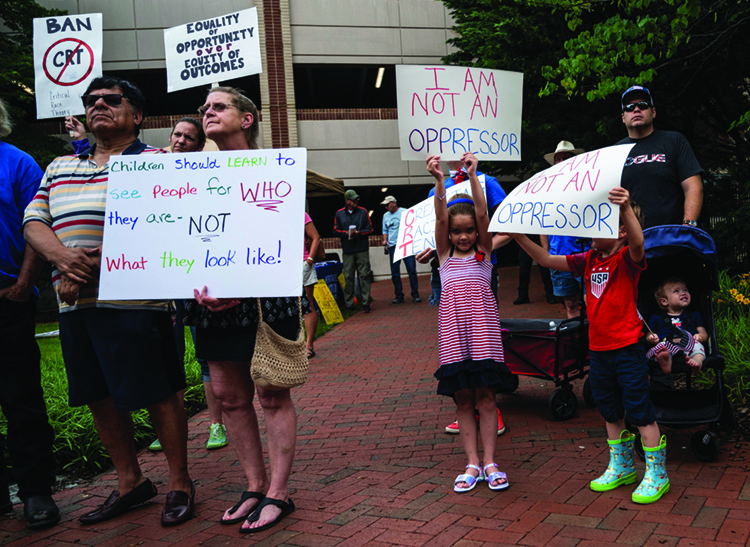
Critical race theory protesters in Leesburg, Virginia (Getty Images).
Students challenging a ban on the teaching of critical race theory in Arkansas public schools are unlikely to succeed in their First Amendment challenge to the law, a federal appeals court ruled Wednesday.
The St. Louis-based 8th U.S. Circuit Court of Appeals allowed enforcement of the law in a July 16 opinion by Judge L. Steven Grasz, an appointee of President Donald Trump.
Critical race theory focuses on how racism and inequality are embedded within society. Several Republican-led states ban critical race theory and restrict how race is taught in public schools, the Associated Press reports in its story on the decision.
The right to receive information from a private speaker “cannot be used to require the government to provide a message it no longer is willing to say,” Grasz wrote. “The government is ultimately accountable to its citizens for its speech through elections, so the government may change the message it promotes in response to the political process.”
Students don’t have “a supercharged right to receive information in public schools” that changes those principles, Grasz said.
The appeals court lifted a May 2024 preliminary injunction granted to the students by U.S. District Judge Lee Rudofsky that prevented enforcement of the ban.
“With its ruling today,” Arkansas Attorney General Tim Griffin said in a press release, “the 8th Circuit continues to ensure that the responsibility of setting curriculum is in the hands of democratically elected officials who, by nature, are responsive to voters.”
A lawyer for the plaintiffs expressed disappointment in the ruling but said the impact is limited because the state committed to a narrow reading of the law during the litigation, according to the Arkansas Advocate.
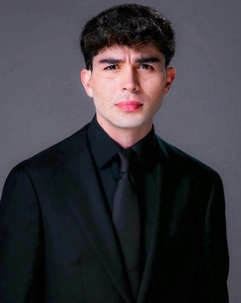
Updated: A Davis Polk associate says he was fired four hours after presenting the law firm with a column he intended to publish on the Trump administration’s ability to track protesters.
Ryan W. Powers says he wrote the column on June 12, the day after he was told his previous newspaper columns on legal issues violated an internal policy at the law firm. The policy apparently gave the law firm wide discretion to block employee speech on topics it viewed as relevant to its interests, he says.
Many large law firms have policies similar to Davis Polk’s, according to employment lawyer Jonathan Pollard of Fort Lauderdale, Florida. “Lots of law firms won’t publicly talk about their content creation or publishing polices—because they know that’s a bad look,” he tells the ABA Journal in an email. “But it is widespread.”
According to University of Virginia School of Law professor J.H. (Rip) Verkerke, it is “standard practice” for law firms to bar employees from making unauthorized public comments about clients or the subject matter of any representations. Some may even prohibit speech that could harm the interests of the firm or its reputation.
“I believe, however, that it is quite unusual for a firm to interpret these policies and retained rights as a license to fire an associate for any political speech of which they disapprove,” says Verkerke, who teaches employment law, in an email. “Based on the information that is publicly available, perhaps the most likely motivation for the firm’s action was a desire to avoid offending the Trump administration.”
Powers started writing columns for local newspapers after the Trump administration cracked down on the legal profession with executive orders targeting disfavored law firms and pressure on bar associations to change policies.
“So, I started writing—on my own time, completely outside of work,” Powers wrote. “If the law was becoming harder to trust, I figured it should at least be easier to understand.”
When he was warned about the law firm’s publishing policy, Powers wrote, “No explanation was given—only that something had been flagged, and I was expected to stop. I refused.”
Powers received the warning after writing another column on privacy issues. It concerned the dangers of unchecked federal surveillance and how companies like Palantir Technologies had built tools that could be used to profile and monitor Americans. Two weeks later, the New York Times reported that at least four federal agencies were using a Palantir product that could allow the Trump administration to merge their information, raising concerns that the government would compile a master list of personal information.
Davis Polk had represented the financial advisers to Palantir in an initial public offering.
Powers sent the column he intended to publish to three law firm leaders in an email reviewed by Law360. He wrote that if the law firm rejected his request to publish, he would like a written explanation of the reason.
“Instead of any answer,” he told the Parnas Perspective, “I got a knock on my door about four hours after the article was sent to them.” He was fired immediately and given only a few minutes to pack his personal belongings.
Powers views the Davis Polk publishing policy as ambiguous. Punishing speech without a clear explanation preserves power and silences lawyers who are “the first line of defense in a constitutional crisis,” he writes.
In his interview with the Parnas Perspective, Powers said the law firm’s publishing policy is “morally weak and poorly justified.” He believes enforcement of the policy “compromises the integrity of the institution and every attorney in it.”
“This isn’t just about one firm,” Powers wrote in his Substack article. “It’s about BigLaw: an industry increasingly beholden to power, where employers are quietly deciding what their lawyers are allowed to say—not just in the office, but in their lives beyond it. When sharing legal knowledge is treated as a problem and silence becomes the expectation, the danger isn’t just to lawyers who speak up. It’s to the rule of law itself.”
Powers, a Harvard law graduate, was a tax associate who was hired at Davis Polk in October 2023.
Davis Polk is declining to comment, a spokesperson told the ABA Journal.
Story updated on July 17 at 1 p.m. to include comment from Pollard. Story updated at 3:10 a.m. on July 18 to include comment from Verkerke.