William Neukom, former ABA president with influence ‘from boardrooms to ballparks to courtrooms,’ dies at 83

William Neukom, former ABA president with influence ‘from boardrooms to ballparks to courtrooms,’ dies at 83


Obituaries

William Neukom, former ABA president with influence ‘from boardrooms to ballparks to courtrooms,’ dies at 83

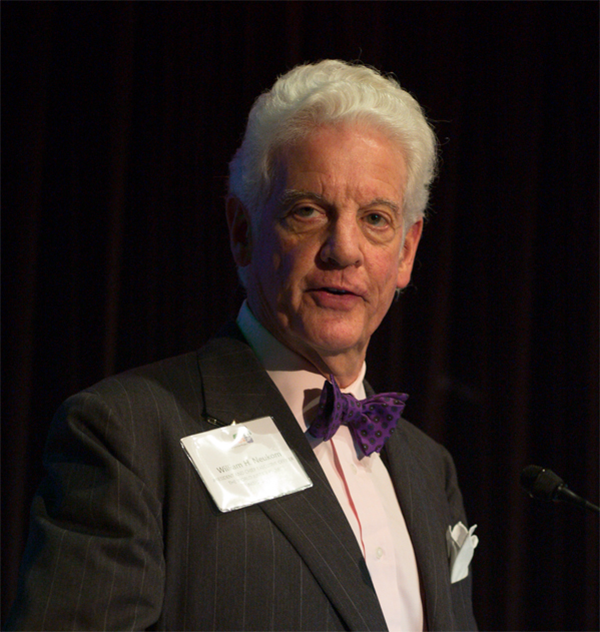
William H. “Bill” Neukom (ABA Photo)

Former ABA President William H. “Bill” Neukom, formerly the chief lawyer for Microsoft and the ex-CEO of the San Francisco Giants, has died at the age of 83.

Neukom, known for the bow ties he wore, served as president of the American Bar Association for the 2007 to 2008 term. During his presidency, Neukom established the ABA Commission on Sexual Orientation and Gender Identity and organized an ABA members’ march on Washington, D.C., to support protesting Pakistani lawyers seeking to reinstate the rule of law.

Neukom was also a retired partner at K&L Gates and the co-founder and chief executive officer of the World Justice Project, an organization that promotes the rule of law. He and his children founded the Neukom Family Foundation, which supports nonprofits in the fields of education, the environment, human services, justice and public health.

“If you don’t have the rule of law, you can’t have human rights,” Neukom told the ABA Journal in 2020 when he won the ABA Medal, the association’s highest honor. “If you don’t have the rule of law, you can’t have open, participatory governments. If you don’t have the rule of law, you can’t have an inclusive economy. And if you don’t have the rule of law, you can’t have a peaceful existence.”

Former ABA President Bob Carlson called Neukom “a true lawyer leader…He dedicated his time, treasure and considerable talent to making the world a more just place.”

Current ABA President William R. Bay said that Neukom showed that the law is a calling rooted in service to others and a commitment to strengthen justice and freedom.

“From boardrooms to ballparks to courtrooms, Bill’s integrity and vision were deeply influential across the globe,” Bay said.

Neukom served the ABA in several capacities. He was chair of the ABA Young Lawyers Division, chair of the Fund for Justice and Education, and chair of an ABA task force to advance the rule of law. He was association secretary and a member of the Board of Governors and the House of Delegates. He is also a former member of the ABA Journal Board of Editors.

According to the ABA, Neukom started his career with a diverse practice that dealt with civil rights cases and representation of community organizations. He was dedicated to the importance of education and in addition to his work with Stanford, also was a trustee emeritus of University of Puget Sound and Dartmouth College, his undergraduate alma mater, where he served as chair of the board from 2004 to 2007

Neukom lived in Seattle with his wife Sally, according to K&L Gates. Together they had five children and 16 grandchildren.


Source link

In ‘pervasive’ trend, some law firms reward partners by creating new tiers or more shares

In ‘pervasive’ trend, some law firms reward partners by creating new tiers or more shares


Law Firms

In ‘pervasive’ trend, some law firms reward partners by creating new tiers or more shares

Some law firms are adding more certainty and equity for top rainmakers by creating new tiers or more shares to boost their base compensation, according to a report by Law.com.

The changes to compensation structure are “one of the most pervasive trends” right now, says law firm pay consultant Blane Prescott, who spoke with Law.com earlier this year.

One firm making a change is Paul, Weiss, Rifkind, Wharton & Garrison, the article says. Under its prior system, top performers received 500 shares in the firm and were eligible for a bonus in addition to their share compensation. Last year, the firm changed the system to award more than 500 shares to top partners while reducing eligible bonus amounts. That tied higher compensation to equity and made it more predictable.

Another example is Latham & Watkins, which uses a points-based compensation system. Previously partners were assigned 300 to 900 points. The law firm created two new tiers of points so that top performers get 1,300 or 1,700 points, leading to an increase in base pay, according to a prior Law.com report on the change.

Increasing base compensation for top performers can leave more money in the bonus pool for other partners, said law firm consultant Lisa Smith in an interview with Law.com. She warned of a downside, however.

As partners scramble to be placed in higher equity tiers, firms could fall victim to a kind of grade inflation, she said. Firms will need to be very clear about what kind of performance is needed to attain the top levels.

“Managing those kinds of expectations becomes important,” Smith told Law.com.


Source link

You can talk about your mental illnesses. It’s good for business

You can talk about your mental illnesses. It’s good for business


“You can’t talk about your mental illnesses. It’s bad for business.”

I’ve heard this countless times in various forms. And for a long time, I listened.

I bought into the idea that silence was safer, that vulnerability was a liability and honesty could cost me everything.

Eventually, I couldn’t be quiet any longer.

I bought into the idea that silence was safer, that vulnerability was a liability and honesty could cost me everything.

Eventually, I couldn’t be quiet any longer.

The legal profession clings to an outdated belief that vulnerability undermines professionalism.

It doesn’t. In fact, professionalism demands vulnerability.

Vulnerability—when handled with intention—is not weakness. It’s maturity. It’s leadership. It’s human. And in a fast-evolving profession and world, we can’t afford to cling to a culture that punishes the human experience.

According to the National Alliance on Mental Illness, 1 in 5 U.S. adults experiences mental illness each year. For lawyers, the numbers are even worse: we’re 3.6 times more likely to suffer from depression than the general population. I know those numbers aren’t abstract. I’ve lived them. I know firsthand what it’s like to live with mental illness and I’m here to say: Silence is not strength. Silence is suffocation.

The legal industry has operated on a belief system that equates strength with stoicism, success with self-sacrifice and vulnerability with weakness. In that world, showing signs of mental illness isn’t just uncomfortable—it feels like career sabotage. Admitting you’re struggling becomes a risk to your reputation, your competence, and your future. It breeds a constant fear: If they knew the truth, would they still trust me?

I know that fear intimately.

Outwardly, I was composed and reliable. But behind the scenes, I was unraveling—hiding panic attacks behind closed doors, wiping tears away in bathroom stalls and spending precious energy managing the mask of “togetherness” to maintain the outdated image of how a lawyer should be.

The emotional labor of that concealment is exhausting. It’s a second job layered on top of an already demanding profession. It breeds burnout, isolation, diminished productivity and a creeping sense of inadequacy. And those are just the internal effects. When we normalize silence, we don’t just hurt ourselves—we enable a culture that harms everyone, including our clients.

Here’s the irony: A profession built on advocacy should not demand self-erasure.

But the profession is changing.

We use technology to work smarter, not longer. We leverage social media to build community and share truth. We’re beginning to prioritize people over pure productivity. New crops of lawyers are changing the tides. They value connection and imperfections as a way to stand out, not hide. The best lawyers I know today are not the ones who hide behind robotic professionalism. They’re the ones who lead with empathy, communicate with clarity, and show up with authenticity. They’re not afraid to say, “I’m human, and I’m still excellent at what I do.”

Mental health advocacy is not a deviation from professionalism: It reflects where the profession needs to go. And lawyers who embrace that role aren’t liabilities. They’re leaders. They are human.

For me, the turning point came slowly, then all at once.

I reached a place where the dissonance between how I felt and how I was “supposed” to act became unbearable. I started opening up—first to close colleagues, then more publicly. And the response? Not what I feared.

Clients didn’t run away, they ran towards me. They said, “It’s refreshing.”

Colleagues confided in me, “I have the same thoughts”, they said.

Instead of diminishing my credibility, sharing my truth deepened my relationships and enhanced my work. Sharing my vulnerabilities has given me more opportunities and a platform to speak. Transparency didn’t make me weaker. It made me real. It made me trustworthy.

People are desperate for authenticity in this profession. They want permission to be honest. Sometimes, they just need someone to go first.

So here it is: a call to lawyers, law firms and legal institutions. The legal profession stands at a defining crossroads and we as a collective group can decide how we want to proceed.

A 2022 survey conducted by the American Bar Association indicated that 81% of attorneys who reported a decline in their wellbeing were experiencing anxiety and 43% were dealing with depression. A 2023 study conducted by the University of Chicago found that almost half of the surveyed lawyers considered leaving the legal profession due to burnout or stress in the last three years.

We must do better.

And doing better means taking action:

Make space for honesty. Create environments where speaking up is safe—not brave.

Redefine professionalism. Let it include vulnerability, not deny it.

Break the silence. Normalize open conversations about mental health at every level.

Build protective policies. Formalize mental health protections into firm structures and industry standards.

Back words with infrastructure. Provide universal access to EAPs, flexible schedules, sabbaticals and mental health stipends.

Lead by example. Partners and leaders: Take off the mask. Set boundaries. Rest publicly. Model the balance you want others to believe in.

When lawyers thrive—mentally, emotionally, and physically—our entire profession becomes stronger:

• Clients get sharper advocacy, grounded in empathy.

• Firms increase retention and reduce the hidden costs of burnout.

We can’t keep pretending mental illness doesn’t exist. And we can’t keep punishing the people who dare to name it. The next generation of lawyers are watching, and they’re asking for better.

Be the reason they believe the law can be a place where people matter as much as the work.

You can talk about your mental illnesses. It’s good for business.


Allie Levene is the founder of Levene Legal, which specializes in providing affordable and accessible legal services to small businesses and nonprofits.


ABAJournal.com is accepting queries for original, thoughtful, nonpromotional articles and commentary by unpaid contributors to run in the Your Voice section. Details and submission guidelines are posted at “Your Submissions, Your Voice.”





Source link

Money for court-appointed federal criminal defense lawyers is depleted; some lawyers leave program

Money for court-appointed federal criminal defense lawyers is depleted; some lawyers leave program


Public Defenders

Money for court-appointed federal criminal defense lawyers is depleted; some lawyers leave program

Criminal defendants in federal court are at risk of losing legal representation. (Shutterstock)

Court-appointed lawyers representing indigent criminal defendants in federal court are working without pay after the federal judiciary ran out of money for the program.

The funding shortfall that began on July 3 has spurred concern that the panel attorneys could decline new cases, leaving some defendants without representation, according to a U.S. Courts press release. Absent supplemental funding from Congress, the judiciary won’t be able to pay the lawyers until Oct. 1 at the start of the new budget year.

Also affected are investigators, interpreters, expert witnesses and other specialists who are hired by the defense.

The court-appointed private lawyers, who are known as panel attorneys, handle about 40% of cases in which federal defendants receive free lawyers. Federal defender organizations handle the other 60%. Those organizations can’t pick up the slack because of a hiring freeze in effect for 17 of the last 24 months.

About 10 panel attorneys in North Dakota have withdrawn from the program because of the shortfall, the North Dakota Monitor reports, citing information from Jason Tupman, the federal public defender for North and South Dakota. Usually about 100 attorneys are available for the cases in North Dakota.

“The vast majority of our panel are either very small [firm] lawyers and oftentimes solo practitioners,” Tupman told the publication. “Anytime you’re saying, ‘Hey, you’re not going to get a paycheck for three months for money we owe you,’ that’s going to have an impact on them.”

North Dakota panel attorneys were collectively owed $110,000 as of Tuesday.

Other publications covering the shortfall include Law360, WMUR and the Indiana Lawyer.

Panel attorneys are paid $175 an hour in noncapital cases and up to $223 an hour in death-penalty cases. The judiciary has asked congressional appropriators for $116 million in supplemental funding that would allow payments to begin flowing again.

The funding shortfall stems from a decision by Congress to hold funding this fiscal year to the same level it was the previous year. The judiciary is seeking a 21% funding increase for federal defenders next fiscal year, according to previous news coverage.

Among those criticizing the underfunding is U.S. District Judge Daniel M. Traynor of the District of North Dakota. “This is no way to run a railroad much less the U.S. government,” he told the North Dakota Monitor.


Source link

Florida lawyer suspended after conviction for embezzlement while a paralegal

Florida lawyer suspended after conviction for embezzlement while a paralegal


Lawyer Discipline

Florida lawyer suspended after conviction for embezzlement while a paralegal

A Florida lawyer has been suspended following her conviction for embezzling from a law firm where she once worked as a a paralegal.

The Florida Supreme Court suspended lawyer Amaris Marie Delapena in a July 9 decision, Law360 reports.

Jurors convicted Delapena of 15 counts of wire fraud and 22 counts of bank fraud in a June retrial. U.S. District Judge Paul G. Byron of the Middle District of Florida set sentencing for Sept. 3.

A superseding indictment alleges Delapena obtained at least $193,000 through the fraud scheme that involved illegal PayPal transfers and diversion of third-party checks written to her law firm.

The wire-fraud counts accused Delapena of opening two PayPal accounts in the name of her law firm, and then diverting firm funds from those accounts to PayPal accounts owned by her then-boyfriend and now-husband, according to a Jan. 31 decision overturning Delapena’s initial conviction.

The law firm’s only lawyer relied on Delapena to run his bankruptcy firm’s Orlando office and gave her authority to outsource work preparing bankruptcy petitions. Delapena hired the boyfriend to prepare petitions, the defense said, and the boyfriend earned the money the firm paid him through PayPal.

Byron overturned Delapena’s initial conviction because the government failed to include PayPal native files in an exhibit that was moved into evidence. As a result, the defense was not able to cross-examine a PayPal representative about whether the files included notations by the boyfriend on PayPal requests for payment.

Delapena earned her law degree between the time of the alleged offenses and her trial, according to a press release announcing the initial conviction. The release described Delapena as a Windermere lawyer; the Florida Bar lists Clermont as the location for her law office.

Delapena, who also went by Amaris Miller, according to the superseding indictment, is represented in the ethics case by lawyer Warren W. Lindsey. Neither Lindsey nor Delapena immediately replied to email requests for comment by the ABA Journal. Delapena also did not immediately respond to a voice mail left with her law firm.


Source link

How agentic artificial intelligence could shake up the legal industry

How agentic artificial intelligence could shake up the legal industry


Image from Shutterstock.

What is agentic artificial intelligence? According to IBM, it refers to “AI systems that are designed to autonomously make decisions and act, with the ability to pursue complex goals with limited supervision.” That definitely sounds like it could be really exciting. Or really scary. Or maybe both.

For lawyers, AI agents could completely change the way that they do their jobs, handling things such as legal research, document creation and managing workflows with little human supervision. But if we’ve learned anything since the dawn of the generative AI revolution, the potential benefits of agentic AI come with risks and possible consequences, as well.

In this episode of the Legal Rebels Podcast, Tom Martin, the founder and CEO of LawDroid, an automation company that creates chatbots for lawyers and law firms, talks to the ABA Journal’s Victor Li. They discuss agentic AI, what it is and what we can expect from it now and in the not-so-distant future.

Rebels podcast logo

Want to listen on the go? Legal Rebels is available on several podcast listening services. Subscribe and never miss an episode.
Apple | Spotify | Google Play

In This Podcast:

<p>Tom Martin</p>

Tom Martin

Tom Martin is the founder and CEO of LawDroid, an automation company that creates chatbots for lawyers and law firms. Martin is also the CEO and founder of Deep Legal Consulting and a co-founder of the Academy of Legal Innovation. He recently was an adjunct professor at the Suffolk University Law School, where he taught generative artificial intelligence legal services to students. He’s also a 2022 ABA Journal Legal Rebel.


Source link

YouTube
Instagram
WhatsApp




