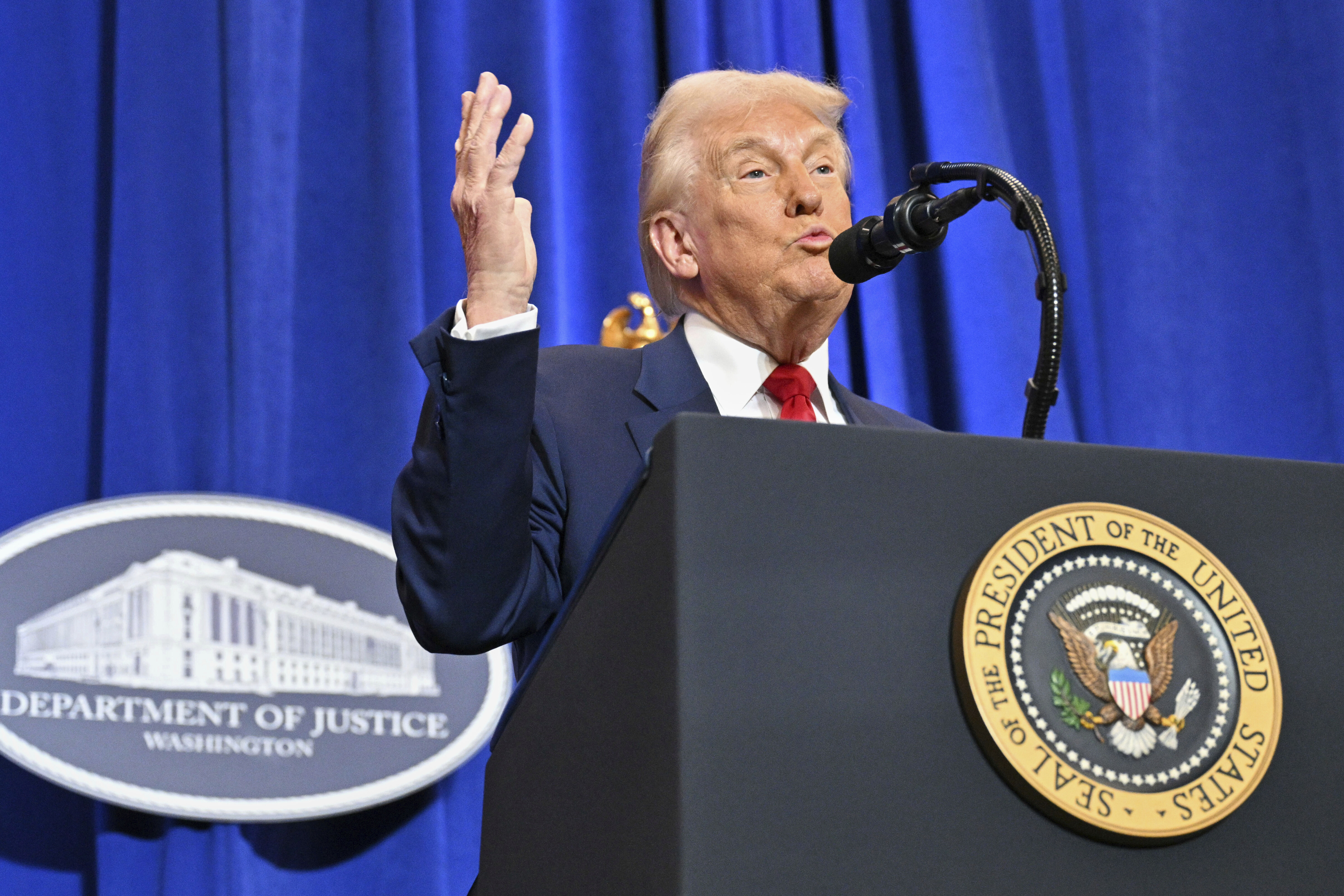
President Donald Trump speaks at the Justice Department in Washington. (Pool via AP)
Sixty-nine out of about 110 lawyers who defend Trump administration policies at the Justice Department have voluntarily left or are planning to leave, according to a list reviewed by Reuters.
Reuters was able to confirm the departure of all but four of the lawyers on the list through court records and LinkedIn. The list of the departing lawyers, who work at the Federal Programs Branch, was compiled by former Justice Department lawyers.
Some lawyers in the unit had become exhausted and demoralized, according to seven unnamed lawyers who spoke with Reuters.
A Justice Department spokesperson said the unit is handling an “unprecedented number of lawsuits” challenging President Donald Trump’s agenda but did not comment on the departures or morale.
“The department has defeated many of these lawsuits all the way up to the Supreme Court and will continue to defend the president’s agenda to keep Americans safe,” the spokesperson said.
Education Secretary Linda McMahon during a June 2025 Senate Appropriations hearing. (AP Photo/Julia Demaree Nikhinson, File)
A lawsuit filed Monday by Democratic officials in 24 states and the District of Columbia seeks the release of billions of dollars in federal education funding that has been frozen by the U.S. Department of Education and the Office of Management and Budget.
The decision to withhold $6.8 billion for a review of consistency with presidential priorities “is contrary to law, arbitrary and capricious, and unconstitutional,” according to the July 14 lawsuit, filed in U.S. District Court for the District of Rhode Island. A motion for a preliminary injunction was filed the same day.
The freeze affects adult education and students through the 12th grade. The frozen funds include money for immigrant children and English learners, after-school care, teacher recruitment and training, and bullying and suicide prevention.
States are in “chaos” after making plans for the upcoming academic year in reliance on the money, the suit says.
Withholding the funds violates “multiple statutory and regulatory commands,” the suit says. They include the Impoundment Control Act, which limits agencies’ ability to withhold appropriated funds; and the Administrative Procedure Act, which prohibits arbitrary and capricious agency conduct.
Freezing the funds also violates the separation of powers doctrine and the presentment clause, which outlines the process for bills to become law, according to the suit.
“It is Congress, not the executive branch, that possesses the power of the purse,” the suit says. “The Constitution does not empower the executive branch to unilaterally refuse to spend funds appropriated by Congress and enacted into law.”
The Trump administration plans to test the Impoundment Control Act by refusing to spend mandated funds, the Washington Post has previously reported.
Joining the lawsuit are the attorneys general of Arizona, California, Colorado, Connecticut, Delaware, Hawaii, Illinois, Maine, Maryland, Massachusetts, Michigan, Minnesota, Nevada, New Jersey, New Mexico, New York, North Carolina, Oregon, Rhode Island, Vermont, Washington, Wisconsin and the District of Columbia, as well as the governors of Pennsylvania and Kentucky.
The U.S. Supreme Court allowed mass firings at the U.S. Education Department
The U.S. Supreme Court on Monday allowed mass firings to proceed at the U.S. Education Department, prompting a vigorous dissent from the court’s three liberal justices.
The Supreme Court stayed a May 22 preliminary injunction that ordered the department to restore nearly 1,400 fired employees to their jobs. Acting in response to an emergency request by the Trump administration, the court allowed the firings while a legal challenge continues.
The lifted injunction had also blocked an executive order seeking the department’s shutdown and a plan to transfer some department functions, including student-loan administration, to other agencies.
The majority’s decision “is indefensible,” Justice Sonia Sotomayor said in a dissent joined by Justices Ketanji Brown Jackson and Elena Kagan.
Only Congress has the power to eliminate the U.S. Education Department, yet Trump ordered Education Secretary Linda McMahon to take steps to facilitate its closure “by executive fiat,” Sotomayor said. Consistent with the order, McMahon “gutted the department’s work force, firing over 50 percent of its staff overnight,” Sotomayor said.
“When the executive publicly announces its intent to break the law, and then executes on that promise, it is the judiciary’s duty to check that lawlessness, not expedite it,” Sotomayor wrote.
Instead, the majority “hands the executive the power to repeal statutes by firing all those necessary to carry them out. The majority is either willfully blind to the implications of its ruling or naive, but either way the threat to our Constitution’s separation of powers is grave.”
The government had argued the firings were intended to “cut bureaucratic bloat.”
U.S. District Judge Myong J. Joun had ordered the employees’ reinstatement in a May 22 decision. She ruled in two lawsuits, one by 20 states and the District of Columbia and the other by five labor organizations and two school districts. The Boston-based 1st U.S. Circuit Court of Appeals kept the injunction in place in a June 4 decision.
The department cut 2,183 out of 4,133 jobs, Sotomayor said. The reduction in force included 578 people who voluntarily left, Education Week explains.
According to the New York Times, the Supreme Court’s latest order “comes after a decision by the justices last week that cleared the way for the Trump administration to move forward with cutting thousands of jobs across a number of federal agencies, including the Departments of Housing and Urban Development, State and Treasury.”
A federal judge imposed a significant sanction for alleged misrepresentations about the need for Natera Inc. to introduce a supplemental expert report shortly before a jury trial. Sipa via AP Images
Updated: A federal judge in San Francisco ordered the payment of nearly $3 million in legal fees to a medical diagnostics company and appointed a special master to determine whether individual lawyers at Quinn Emanuel Urquhart & Sullivan should be at least partly responsible for payment.
Senior U.S. District Judge Edward M. Chen awarded more than $2.9 million in attorney fees to Guardant Health in a July 9 opinion.
Chen, a judge in the Northern District of California, imposed the sanction for alleged misrepresentations about the need for defendant Natera Inc. to introduce a supplemental expert report shortly before a jury trial, report Reuters and Law360.
Quinn Emanuel represented Natera in the litigation accusing its client of false advertising and unfair competition.
“But for the deliberate misrepresentation made to this court, the court would not have postponed trial and reopened discovery,” said Chen, a judge in the Northern District of California.
The supplemental report was based on a clinical study known as the COBRA study that examined Guardant’s colorectal cancer screening product. The misrepresentations left the impression that information on the COBRA study “was late breaking and seemingly new,” Chen wrote in an October 2024 decision.
But the expert actually had earlier knowledge of test information, something that came to light based on emails provided by the Rutgers Cancer Institute of New Jersey. The institute was involved in the study and was the expert’s employer. The expert maintained he was not able to find any communications with COBRA investigators.
Jurors awarded more than $292 million in damages to Guardant Health in November 2024 in its suit accusing Natera of making misleading claims about their competing tests for colorectal cancer.
Natera has said it disagrees with the jury decision and will seek to overturn it. The company has filed a motion for judgment as a matter of law or for a new trial.
Chen initially ruled on sanctions in the October decision. “The court grants in part and defers in part Guardant’s motion and finds sanctions are warranted due to both Natera’s (through its counsel at Quinn Emanuel) and [the expert’s] own deliberate misrepresentations to [U.S. Magistrate Judge Sallie Kim] and the undersigned of this court,” he wrote.
The sanctions included evidentiary sanctions in the form of excluding any mention of the COBRA study at trial. And, if the expert testified, jurors would be given an adverse instruction on the expert’s credibility.
Chen also said in October that monetary sanctions were “likely appropriate” for Quinn Emanuel after its correspondence with the expert suggested the law firm misled the court about the timing of the expert’s knowledge.
Guardant then sought attorney fees and costs of $2,985,909 as well as punitive sanctions—including a referral to state ethics regulators—against Quinn Emanuel lawyers “who appear to have had a hand in this conduct,” Chen said.
The Quinn Emanuel lawyers told Chen in declarations that their representations to the court were made in a good-faith belief of their truthfulness after relying on the expert witness.
“These declarations largely continue with the same narrative Natera’s counsel previously stated—they all relied on [the expert’s] representations,” Chen said. “Natera’s counsel states they were ‘shocked’ upon the discovery that [the expert] actually had emails and had received an initial draft of the COBRA study results. The court previously found this line of argument more than foolish.”
The lawyers’ declarations don’t warrant a deviation from a prior finding of bad faith, Chen said. The number of requested attorney-fee hours by Guardant is reasonable as is its requested billing rate, according to him.
Chen wrote that “the court may award the attorneys’ fees and costs to Guardant, either against Natera (the client), Natera’s counsel, Quinn Emanuel the firm (under the court’s inherent authority), or against specific attorneys under Section 1927,” which allows sanctions against attorneys “unreasonably and vexatiously” multiply case proceedings.
Chen said he is deferring questions on apportionment for resolution by the special master. He is also deferring to the special master Guardant’s request for a personal fine against the lawyers and a referral to the State Bar of California.
Quinn Emanuel released this statement to the ABA Journal: “We respectfully disagree with the court’s findings because we have always conducted ourselves with candor and in good faith. We look forward to presenting the full facts surrounding this matter to the special master.”
A Natera spokesperson also released a statement to the ABA Journal. “There has been no allegation that Natera or its employees knew about or participated in the alleged conduct described in the court’s order,” the statement said.
Story updated at 11:50 a.m. on Tuesday to add the word “individual” to the lede and to state that Chen found the misrepresentations were made by Natera through its counsel. Story also updated to add Natera’s statement. Story updated on July 16 at 8:28 a.m. to include specifics from Chen’s opinion on his sanction findings.
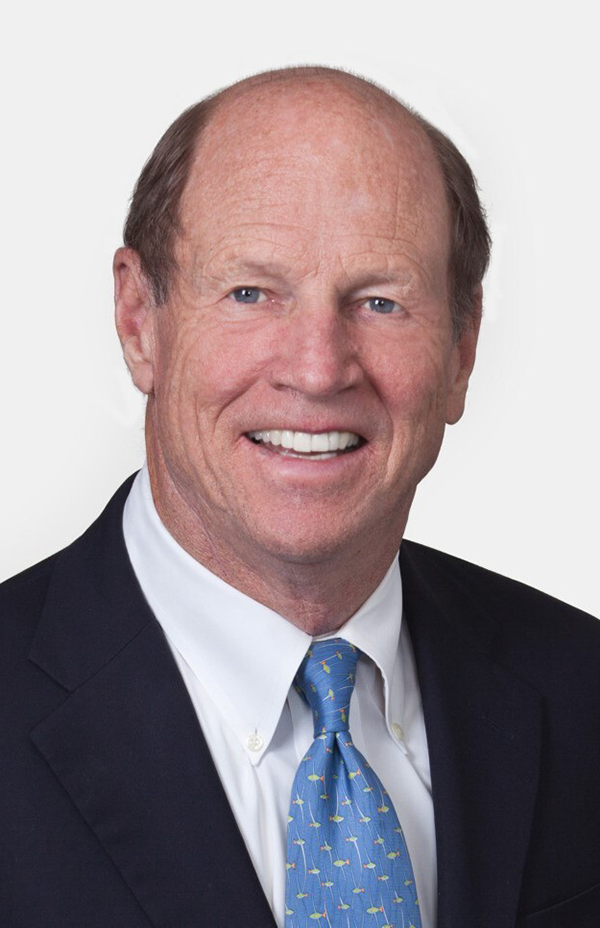
Atlanta lawyer R. William (Bill) Ide III, who served as president of the American Bar Association for the 1993 to 1994 term, died on July 8 at the age of 85.
Ide “was a towering figure in the legal community and a fierce advocate for civil rights, a fair and just legal system, and the rule of law,” according to an online obituary.
As ABA president, Ide focused on judicial independence and integrity, legal access, and legal ethics reform, according to an ABA press release.
Ide also promoted alternative dispute resolution, advocated for pro bono work and strengthened the ABA’s commitment to ethics in a way that promoted public service over financial gain, the press release states. New model ethics reforms under his leadership dealt with lawyer advertising and lawyer transparency. He also addressed racial and social bias in the justice system, “laying the groundwork for future ABA diversity initiatives,” the statement says.
Besides serving as ABA president, Ide was a member of the ABA Board of Governors and the ABA House of Delegates. He was vice chair of the ABA Task Force for American Democracy and was chair of the ABA Rule of Law Initiative from 1997 to 2009.
More recently, Ide served as vice chair of the ABA’s Task Force for American Democracy, which mobilized members to protect the right to vote ahead of the 2024 presidential election.
“Bill Ide was dedicated to a fair and just legal system,” ABA President William R. Bay said in the press release. “He was a passionate advocate for judicial independence and access to justice for all. He had a love and respect for democracy and defended it both at home and around the world. We will miss him.”
Ide had “an unwavering love and commitment” to family and friends, the online obituary says. His “ABA friends are too numerous to name, but the ‘Mafia’ and extended ABA circle became part of the Ide family; meetings doubled as family vacations and opportunities to spend time with ABA ‘aunts’ and ‘uncles.’ ”
According to the online obituary, Ide’s great-great grandfather was a former law partner of Abraham Lincoln.
Ide had “a slow start academically” before law school, earning the nickname “C Average Ide” from his mother, according to the online obituary. He excelled after switching majors from engineering to history.
“Bill’s grandmother believed that he also studied at the Sorbonne in Paris—because she had paid his tuition. But in actuality, he cashed out his school fees and bought a Vespa to tour Europe” with a friend, the obituary says.
A graduate of the University of Virginia School of Law, Ide was a former law clerk for Judge Griffin Bell of the New Orleans-based 5th U.S. Circuit Court of Appeals.
Ide would later tell his grandchildren that witnessing an end to desegregation was a formative experience. He left his 5th Circuit position “with a clear understanding of the law as a sacred tool and protector of constitutional rights,” according to his obituary.
Ide formerly worked at King & Spalding, Kutak Rock, Long Aldridge and a law firm he founded, Huie, Brown & Ide. After leading the ABA, he joined Monsanto as general counsel.
Ide married Gayle Marie Oliver in 1967. They had three children: Logan, Jennifer and Lucie. After Gayle’s death, Ide “was lucky enough to find a soulmate again,” in Lucy Vance, the obituary states.
Financing law school will become more difficult for many students as a result of federal loan restrictions in the budget megabill signed by President Donald Trump on July 4.
Law.com has the story on the changes, which begin July 1, 2026.
The bill caps unsubsidized federal loans to law students and other professional students at $50,000 a year and $200,000 in a lifetime, the article explains. With caps on undergraduate borrowing, the lifetime limit is $257,500 for professional students, according to CNBC.
Currently the annual cap on professional loans is $20,500 a year, but students can take out Direct PLUS loans to make up the difference.
Under the new bill, the Direct PLUS loans are available only to parents borrowing for undergraduate students. Law students who have Direct PLUS loans before July 2026, however, can continue to access them for three years or the time remaining in the program.
Annual tuition is above $50,000 at 33 of 50 law schools on Law.com’s list of 2025 Go-To Law Schools. The list ranks schools based on the percentage of graduates who join the largest 500 law firms as associates.
The changes may force some law students to apply for private loans with more stringent requirements and higher interest rates and fees.
The Law School Admission Council is holding webinars on the restrictions for students and admissions professionals.
“Our initial impression is that those students who rely most heavily on federal financial aid will be particularly impacted in their choice of schools and perhaps whether to attend law school at all,” an LSAC spokesperson told Law.com.
_.jpg "Education funding freeze violates ‘multiple statutory and regulatory commands,’ says suit by Democratic states")