Water-biodiesel cocktail cuts greenhouse gas emissions

Water-biodiesel cocktail cuts greenhouse gas emissions


Using biodiesel to run truck engines can help reduce automotive greenhouse gas emissions, but the problem is that biodiesel releases more nitrogen oxide emissions than fossil diesel does. It further has a lower calorific value, which means you need more of it in your tank.

Scientists say mixing water with biodiesel addresses these problems. You get better engine performance, lower emissions and less soot. A recent scientific paper published in  Fuel magazine describes this in scientific terms: “Early vaporisation of water inside the fuel droplet increases its temperature, thus resulting in a phenomenon called ‘micro-explosion’, which in turn results in small fuel fragments, thus improving air-fuel mixing and reducing soot formation.”

But mixing water with diesel — bio or otherwise — is counter-intuitive, because the two don’t mix.

However, getting them together is not an insurmountable problem — you need an emulsifier, which is usually one of the chemicals that are called surfactants. Usually, a mixture of surfactants called Span80 and Tween80 is used for this purpose, says the paper, which is titled ‘Novel surfactants for stable biodiesel-water’, authored by Sudarshan Gowrishankar and Prof Anand Krishnasamy of the Department of Mechanical Engineering, IIT-Madras.

But Span80-Tween80 is for diesel — you’d need a different concoction for biodiesel. The stability of the emulsifier is critical because you can’t afford to have water separate from the oil, which would bring its own problems such as corrosion, Prof Krishnasamy told  Quantum.

So, Gowrishankar and Krishnasamy prepared a new emulsifier — a cocktail of Span80-Tween80 and two novel surfactants, polyglycerol poly ricinoleate (PGPR) and raw karanja oil (RKO). The karanja ( Pongamia pinnata) tree’s merits were earlier discussed in these columns.

PGPR is a commercially available low-cost food ingredient. RKO is a tree product. The novel surfactant is, therefore, a viable one. First, the researchers tested the stability of the surfactant. “We carried out experiments with the new emulsions on a light-duty diesel engine at rated speed and varying loads,” Prof Krishnasamy said. The researchers found that their cocktail worked well.

Next, the challenge is to find the optimum mix of water and biodiesel, with the surfactant thrown in. More water means reduced tailpipe emissions, but also lower heat content of the fuel.

They found that the optimum water concentration is 18 per cent, which reduced nitrogen oxide by 40 per cent, smoke by 52 per cent and carbon monoxide by 69 per cent.


Source link

Fusion energy may not be too far away

Fusion energy may not be too far away


The ‘breakthrough’ announced by the US National Ignition Facility has focused the spotlight on nuclear fusion. NIF reported a net energy gain (more output than input), which is deduced to have come from two nuclei of hydrogen atoms fusing to form a helium nucleus. But this is a baby step; there is a lot of runway to cover before nuclear fusion takes off, experts say.

But developments elsewhere seem to challenge this view.

Headquartered in Cambridge, Massachusetts, USA, Commonwealth Fusion Systems (CFS) was set up in 2018 “on the basis of decades of MIT (Massachusetts Institute of Technology) fusion research”. It has raised $2 billion from the likes of Bill Gates, Google, Eni, Khosla Ventures, Soros Fund Management, and Temasek.

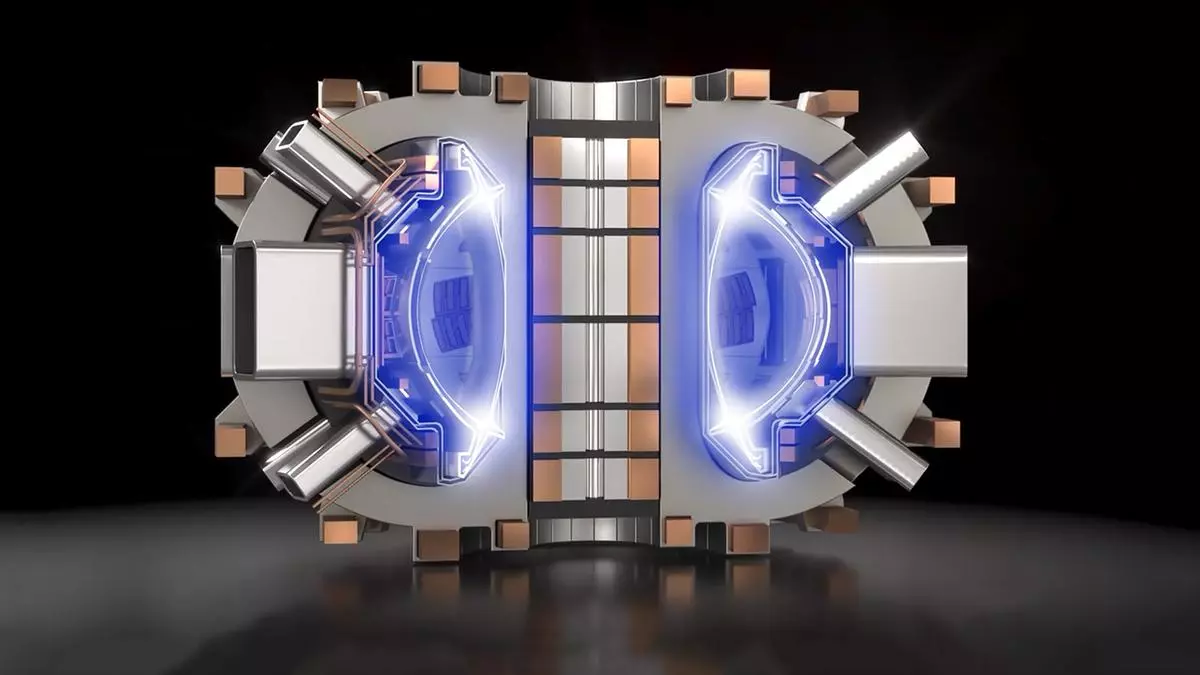
In collaboration with MIT’s Plasma Science and Fusion Center, CFS is building “the world’s first fusion device that produces plasmas which generate more energy than they consume, becoming the world’s first net-energy fusion machine”. The device, named SPARC, is for demonstration but a commercial plant is expected to follow.

CFS says its technology is similar to that of ITER, a multi-country collaborative research on fusion underway in France. Like ITER, CFS uses magnetic fields to confine the fusion process. However, CFS “will use a new high-temperature superconducting (HTS) magnet to enable a similar performance as ITER, but built more than 10 times smaller”, according to information provided by CFS.

Investors’ backing

CFS aims to build the demonstration plant, SPARC, by 2025 and the commercial plant by 2030.

Claims like this are usually not taken seriously, especially after the experience with the Italian engineer Andrea Rossi, who maintains that he has a device that can produce a net energy gain. Rossi made a big splash a decade ago, but nobody talks about him today.

However, CFS’s claims deserve attention because the company has the backing of investors and energy companies. Claudio Descalzi, CEO of Eni, is quoted in a January 2021 press release from CFS as saying, “Thanks to their monumental breakthroughs, a commercial fusion plant is soon going to be within reach.”

The press release also quotes Randy Glein, Partner, DFJ Growth, as saying, “The team at CFS has finally done it, breaking through longstanding technological barriers with an innovative design that promises to provide a safe, sustainable, and scalable source of clean fusion power.”

In October 2022, the United Kingdom Atomic Energy Authority (UKAEA) selected CFS to support work on the magnetic confinement system for its spherical tokamak for energy production (STEP). Describing the HTS magnets as “groundbreaking technology”, Paul Methven, Director of STEP, noted, “We believe superconducting magnets are a key part of putting fusion electricity on the grid, both economically and reliably.”

Low-energy fusion

Moving from Cambridge, Massachusetts, to Berkeley, California, you find another company that raises hopes for fusion energy.

Within nuclear fusion, there are two segments — hot and cold. While NIF, ITER and CFS work on hot fusion, where the temperature needs to be six times hotter than the core of the sun, you also have low-energy nuclear reactions, or LENR.

Brillouin Energy of Berkeley says it is building a commercial reactor that “can use the hydrogen in a glass of water to power 30,000 homes a year.” Sounds too fantastic, but the company demonstrated its ‘hydrogen hot tube’ (HHT) machine at an international conference, ICCF24, in July. Brillouin says that SRI International, a US-based not-for-profit research institute, has “independently validated the technology and heat output of the HHT boiler”.

In a press release in August, Brillouin Energy CFO David Firshein said the company “is now ready to enter into the next phase: commercialisation”.

“The HHT test system that we are demonstrating at ICCF24 is the first ever licensable system that is transportable — it can be packed up and shipped to potential OEM license partners for further testing and evaluation,” the release said.

Unexpected benefits

Perhaps fusion energy is not as far off as commonly believed.

The world is still very sceptical about LENR (for good reason, because it is still a poorly understood phenomenon), but is not ready to dismiss it either. In September, the US Advanced Research Projects Agency–Energy (ARPA-E) announced $10 million funding to “establish clear practices to determine whether LENR could be the basis for a potentially transformative carbon-free energy source”.

While some termed it a “waste of money”, others were more charitable, noting that when billions of dollars are thrown into hot fusion research, a few millions into cold fusion might be worth it.

A 2019 paper titled ‘Revisiting the cold case of cold fusion’, by a group of American scientists, noted that “the search for a reference experiment for cold fusion remains a worthy pursuit”. Also, there seem to be spin-off benefits from LENR experiments. “We set out looking for cold fusion, instead benefited contemporary research topics in unexpected ways,” the paper says.

Closer home, a team of researchers at IIT-Kanpur are working on LENR experiments, not to achieve net energy gain, but to see if transmutation can be achieved.


Source link

Database on medicinal plants

Database on medicinal plants


A group of scientists from the North East Institute of Science and Technology, Jorhat, Assam, have created a database of 6,959 medicinal plants found across India.

The database sources information under four sections — traditional knowledge, geographical indications, phytochemicals, and chemoinformatics. The traditional knowledge section contains the plant taxonomy, including its vernacular names. A total of 27,440 unique phytochemicals associated with these plants were curated.

However, due to non-availability of general information like IUPAC (International Union of Pure and Applied Chemistry) names and InChI (International Chemical Identifier) key, only 22,314 phytochemicals have been reported in the database, say Kikrusenuo Kiewhuo, et al, in a paper published in the  Computational Biology and Chemistry magazine.

The antiviral potency of the phytochemicals was predicted using two machine learning models — Random Forest and XGBoost. The database can be accessed at https://neist.res.in/osadhi/.

Drone cleans solar panels

The next time you visit a solar farm, don’t be surprised to see a drone cleaning the panels. Garuda Aerospace’s Surya automated drone cleans solar panels using only 100 ml of water, as compared to traditional manual methods that require 4 litres or more.

The Surya drone can fly at 10 metres per second and is powered by a 16,000 mah battery. The brush and wiper fixed to the drone are 1 metre wide each. The 6-bar external pressure pump has a flat fan nozzle. The control distance is 1,000 metres. The operations require less equipment maintenance downtime as zero set-ups are required and this, in turn, lowers maintenance labour and insurance costs.

Garuda is working on drones of multiple sizes, including some very large ones, to suit different requirements in the domestic and international markets.

Garuda Aerospace says it provides 99.5 per cent richness and accuracy in data collection on the asset’s condition, easier data structuring and information sharing, and maintenance inspection tasks including visual, thermal, and UT.

Steel roof-turned-solar cell

An organic solar cell made up of an organic polymer and a PCBM (organic semiconductor) developed on steel substrates can potentially convert a steel roof into an energy-producing device. The potential of third-generation solar cell technologies lies in their integration with flexible and conformal surfaces. However, this requires developing new transparent conducting top electrodes as alternatives to indium tin oxide, the optoelectronic material currently in use that has limitations due to its brittleness and whose optoelectronic efficiency varies with temperature.

Researchers at IIT-Kanpur have developed organic solar cell devices consisting of a blend of organic polymer PTB7 as a donor and PCBM as a receiver. The devices were fabricated on opaque steel substrates with a molybdenum trioxide-gold-molybdenum trioxide top electrode. The research at the laboratory of Prof Ashish Garg in IIT-Kanpur demonstrated the integration of the multilayered electrodes with the organic solar cells. It was published in the journal  Energy Technology.


Source link

Red seaweed promises a green alternative to plastic

Red seaweed promises a green alternative to plastic


Can the red seaweed growing off the coast of Tamil Nadu, Andhra Pradesh and Gujarat be a biodegradable alternative to plastic? While synthetic polymers cannot be completely replaced in the foreseeable future, research at the Marine Biotechnology Division, National Institute of Ocean Technology (NIOT), Chennai, holds out hope that biopolymers from red seaweed ( Kappaphycus alvarezii) incorporated with nanoparticles could substitute plastic in certain applications.

These include bioplastic films for packaging, biomedical scaffolds/grafts, 3D printing ink, controlled drug delivery, biosensor, and microbial fuel cell for electric vehicles.

Biopolymers are derived from any plant-based biomass that is renewable, biodegradable, and eco-friendly. Polysaccharide extracts from seaweed — carrageenan biopolymers — are already in use by the food industry. But such extraction uses solvents and chemicals, which also generates waste.

Explains Dr MP Sudhakar, Project Scientist at NIOT: “One advantage in our study is that the use of the whole biomass does not generate waste during material fabrication, but commercial carrageenan needs to be extracted using different solvents and chemicals.”

In the NIOT study, the whole seaweed  Kappaphycus alvarezii (containing carrageenan) was used in preparing the bio-nanocomposite film by blending with metal oxide nanoparticles such as zinc oxide, cupric oxide and silicon dioxide. Then its properties were compared with standard refined commercial-grade carrageenan.

The results were promising, as detailed in a paper published in the  International Journal of Biological Macromolecules. The nanoparticles improved the properties of films made from commercial carrageenan as well as whole seaweed. The Kappaphycus-based bio-nanocomposite films performed on par with commercial carrageenan-based bio-nanocomposite films on parameters such as wettability, water vapour properties, thermal stability, anti-bacterial activity, and degradation. Overall, the study concluded that whole seaweed can be used directly for multiple industrial applications without need for solvents and chemicals at the extraction stage.

Notes Sudhakar: “The carrageenan obtained from red seaweed was found suitable for different applications such as packaging, biomedical applications… We incorporated nanoparticles and plasticiser to enhance physical and mechanical properties for specific applications. The bioplastic film degrades within two weeks.”

But how did the researchers zero in on red seaweed? According to Sudhakar, it is easy to extract biopolymer from seaweeds and in higher quantities, too. Also, seaweeds are renewable biomass, cultivable using seawater on shore and offshore. The samples for the study were obtained from the Gulf of Mannar coast in Tamil Nadu.

Following the publication of the study, a few start-ups have approached NIOT for technical help. The three other scientists who contributed to the research were Dr S Venkatnarayanan, Dr NV Vinithkumar, and Dr G Dharani.


Source link

Midas in a lab coat

Midas in a lab coat


Alchemists of yore laboured in vain to find a way of converting “inferior” metals such as iron and copper into gold. They did not know that each element is distinguished from the others by the number of protons their nuclei hold. Each element has a fixed number of protons. So, if you want to turn one element into another, you have to add or subtract protons. For example, to turn iron into gold, you’d have to inject 53 protons into every nucleus of iron — not an easy task.

So, you can imagine how wide-eyed a group of scientists at IIT-Kanpur were when, during a research on transmutation of elements using electrolysis (with a graphite anode and nickel cathode), they found that some of body of the cathode had transmuted into copper. Guess what the tip of the cathode had become? Gold!

When Shyam Sunder Lakesar presented this finding at an international conference in July, he and his professor, Raj Ganesh Pala of IIT-Kanpur, were understandably mobbed.

Apparently, the quantity was a wee bit better than what a 1980 experiment at the Lawrence Berkeley Lab in California had yielded, yet miles from being economically viable. Still, it was a foot forward for scientific research and, after all, gold is gold.


Source link

Deciphering drug dosages

Deciphering drug dosages


Doctors prescribe medicines, we take them. Neither the doctor nor the patient knows exactly how much of the drug is needed to cure the ailment, as this would differ from case to case. Today, to be on the safe side, doctors tend to slightly overdose the drug — because anything less than required cannot do the job well. But the excess drug, if any, mixes with the bloodstream and remains floating in the body, producing side-effects.

This problem will go away if the doctor can determine exactly how much drug is needed for each patient.

A group of researchers led by Dr Chandramouli Subramaniam, Associate Professor at the Department of Chemistry, IIT-Bombay, have devised a mobile app-based method to detect excess drugs in the bloodstream. It involves placing a blood sample on a film developed by the team and scanning it using the app, which then flashes a number.

How does this work?

Chemicals called fluorophores have molecules that absorb light and emit it at a higher wavelength. In higher concentrations they are bright and easy to detect. But low concentrations are difficult to detect.

Dr Subramaniam developed a coating by mixing carbon nanoparticles with a fluorophore. The carbon nano florets enhance the fluorophore’s emissions 1,000-fold. However, in the presence of a drug molecule, the intensity of the emissions falls. By comparing the intensities of the fluorophores in the vicinity of the drug molecules (3-5 nano-metres distance), you can tell how much residual drug molecule is floating in the bloodstream. Even a single molecule can be detected. The emissions can be detected using mobile apps such as Color Grab.

While Subramaniam’s team tested for perindopril erbumine, a drug used to treat blood pressure and prevent heart attack, the approach will work for any drug by using an appropriate fluorophore.


Source link

YouTube
Instagram
WhatsApp