CSR sparks R&D spends

CSR sparks R&D spends


Corporate social responsibility regulations mandate that companies fulfilling one of three criteria — net worth, turnover or profit — must spend 2 per cent of the average net profit of preceding three years on CSR activity.

A recent study by Shubhashis Gangopadhyay and Swarnodeep Homroy of the Department of Economics, Econometrics and Finance, University of Groningen, The Netherlands, has turned in an insight: companies just under the net profit threshold have been trying to avoid CSR spending by increasing their own R&D expenditure (to depress profits).

Here again, only companies with a proclivity for spending on R&D have increased their expenditure under the head; others have opted for CSR. This is because the R&D-minded companies have already incurred the high-cost, long-term expenditure on R&D infrastructure. As such, they only had to step up R&D spends to avoid CSR. The others, in contrast, would have to start from scratch to set up research labs.

Now, the nub of the issue is that companies that stepped up R&D spends, even if only to avoid CSR, have done well because today’s R&D expenditure nourishes tomorrow’s business. “Firms reduce pre-tax profits beneath the threshold by increasing R&D expenses,” the report says.

They note that the increase in R&D expenses has tangible innovation impacts in the following years. “Firms proximate to the threshold that increases R&D expenses apply for one additional patent and announce two new products in the next three years than similar firms that did not increase their R&D expenses. This effect is particularly pronounced in firms with a prior history of innovation and firms in innovative industries,” the report says.

CSR regulations have also aided R&D more than direct incentives, the authors say. Firms can, and do relabel other operational expenses as R&D to take advantage of fiscal incentives like tax credits for innovations. Therefore, direct fiscal incentives can incentivise misleading information about innovation activities.

“Our results show a pathway through which indirect incentives generated by social policies can foster ‘real’ innovation without such relabelling concerns,” the report says.


Source link

How close are we to an insulin tablet?

How close are we to an insulin tablet?


In 2021, approximately 537 million people had diabetes; this number is set to rise to 643 million by 2030 and 783 million by 2045, data from the International Diabetes Federation (IDF) shows.

Diabetes can lead to multiple health issues and is a leading cause of mortality globally, along with cardiovascular disease (CVD), respiratory disease, and cancer.

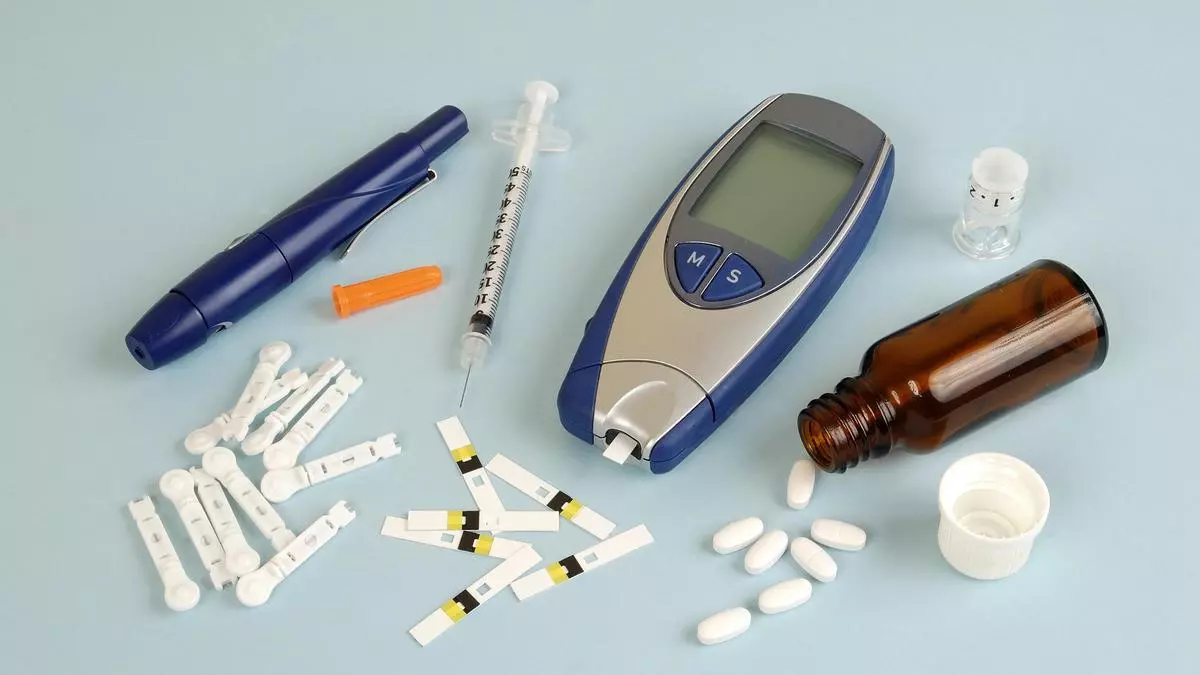
Insulin, a hormone that regulates blood sugar levels, is injected to help manage diabetes. The insulin — in the form of a liquid solution or a suspension — is injected subcutaneously (under the skin). Depending on prescription, it may be taken several times a day. However, the discomfort of needle use and the cost of injectable insulin could impede patient compliance. Research is on to find alternative delivery of insulin through inhalation, or rectal, buccal or oral routes.

Of these, oral insulin delivery is the most convenient. However, since insulin is a peptide (short chain of amino acids) it is acted upon by the enzymes in the body that break down macromolecules in food into smaller molecules fit for metabolism. When insulin is broken down by enzymes its ‘bioavailability’ — the time it remains available for use by the body — is reduced.

“The human physiological system acts as a formidable barrier to insulin, limiting its bioavailability,” says a scientific paper titled ‘An overview of oral insulin delivery strategies’, by scientists from Institute of Chemical Technology (ICT), Mumbai.

The paper, a review of literature, focuses on oral insulin delivery strategies (OIDS) for increasing the bioavailability of oral insulin, including nanoparticles, microparticles, nano-in-microparticles, hydrogels, tablets, capsules, intestinal patches, and ionic liquids.

A viable option

Oral insulin can enhance patient compliance and drive down prices significantly, but its development has been a challenge for the scientific community.

“Oral insulin is one of the most researched subjects… Unfortunately, none of the products have reached commercial stage or success yet,” says Ratnesh Jain, Associate Professor at ICT. However, “such an option can be viable in the future,” he told  Quantum.

Since insulin is sensitive to the acids and enzymes in our digestive system, which break it down, the challenge is in ensuring the drug makes its way unaffected to the intestinal lining.

The strategy is to temporarily block the enzyme action through alternative chemical agents.

“Sufficient bioavailability is needed for drugs to function. We are trying to suppress acid/enzyme mixture and, at the same time, create temporary pores for the peptides to pass through in the stomach or intestinal barriers, so bioavailability can increase,” he said.

The intestinal lining also contains various pores for water, vitamins and nutrients to enter the blood stream. However, these pores are too small for drugs like insulin. Permeation agents (chemical agents) are used to increase the pore size.

These pores, together with the reduced activity of enzyme, allow faster transfer of drugs from intestine to blood. This is known as the ‘trojan horse’ approach.

“Oral peptide delivery is a major research topic in our lab,” Jain said.

Advancing technology

At ICT, researchers have successfully used nanomaterials, chemicals and excipients to increase the bioavailability of insulin.

“Formulation components are key to control this challenge,” Jain says. Formulation components like sugars, fatty acids, and polymers interact with acids and enzymes differently and they inhibit the enzymes and create temporary small pores in the barriers. “A large number of components need to be screened for this activity and, sometimes, a right ‘recipe’ needs to be created which can work for oral delivery of peptides. We are still screening various recipes that can work for insulin,” he said.

There has been limited success so far. “One of the most successful strategies is the oral delivery of semaglutide, where the patent technology of formulation components has allowed higher bioavailability.” He added that there are drugs in various clinical stages of development.

An added challenge he points out is that early development is expensive and the Indian pharma industry can only fund late-stage developments. “Early-stage development requires government support,” Jain says. Another major issue is the need for a regulatory path for the researchers.

“In our lab, we have established an industry-acceptable regulatory path and this is one of the major reasons why industry has come forward to collaborate with us,” he said.

This collaboration will, hopefully, soon enable thousands of diabetics to put down their insulin syringes and pop a tablet instead.


Source link

A used sanitary napkin that is gone in 15 days!

A used sanitary napkin that is gone in 15 days!


It looks like a flat loofah, as big as an A5 paper, and it’s a sanitary napkin. Its creator, a freshly minted PhD from Anna University, Chennai, says it’s “India’s first and the world’s fastest biodegradable sanitary napkin”.

Dr Preethi Ramadoss says the napkin devised by her degrades completely in soil in just 15 days, if left undisturbed. What started in 2015 as her PhD project, under her guide Dr Arivuoli Dakshanamoorthy, culminated in the product by 2018 and received patent in 2020.

“The top and bottom layers of the napkin have to be hydrophobic to give a dry feel to the wearer and ensure it doesn’t leak. And the middle layer, in contrast, should be very absorbent. All these layers come from cellulose,” says Ramadoss, adding, “I was adamant that the layers must come from plant sources and was thinking of herbal extracts that have high levels of antibacterial properties. That’s when I zeroed in on turmeric, vetiver and neem. The super-absorbent middle layer is made of hydrophilic cellulose polymer mixed with natural fibres.”

How this Chennai researcher came up with ‘India’s first and fastest biodegradable sanitary napkin’

Preethi Ramadoss, a Chennai researcher has produced a sanitary pad that is super-absorbent, all-natural, and fast-decomposing. Here’s all about it.Video Credit: Story: Parvathi Benu
Video: Bijoy Ghosh
Production: V Nivedita

Elaborating on the absorbency of the layer, she says, “The layer can absorb fluids up to 1,700 times its weight. The natural fibres help spread the fluids evenly along the length of the napkin. Also, the super-absorbent middle layer contains deodorising lemon extracts.” The researcher adds that the napkin is quite breathable, hence preventing bacterial growth and infection.

On regular flow days, around three of these napkins would suffice, according to Ramadoss.

So, what exactly sets this product apart from the hundreds other sanitary napkin brands in the market? Ramadoss says that a lot of the feminine hygiene products that are marketed as ‘biodegradable’ contain polylactic acid (PLA) instead of plastic.

“It will not degrade completely. Even after a couple of years, if you dig up the spot where you buried it, you would still find bits of PLA,” she says, adding, “It is compostable, but the process of making PLA itself is quite polluting.”

Ramadoss is now seeking funding to sell the napkins commercially.

It currently costs Ramadoss ₹20 to produce each napkin since she uses research-grade products. “But the price will come down massively, on par with commercially available napkins, once I use industrial-grade raw materials,” she says. While napkins from major brands cost ₹10-12 each, those produced by the social entrepreneur ‘Padman’ Arunachalam Muruganantham cost ₹2.13.


Source link

11,247 million litres of ethanol needed by 2030

11,247 million litres of ethanol needed by 2030


The government of India has brought forward its target of blending ‘20 per cent ethanol’ with petrol from 2030 to 2025. But what is it 20 per cent of? This obviously depends upon petrol consumption. However, there is no reliable year-wise forecast for gasoline or ethanol demand in India till 2030.

Now a group of scientists from the National Institute of Technology Mizoram, Aizawl, have used statistical methods to estimate the demand for petrol in 2030, and, thence, for ethanol. Their study used various linear and non-linear regression models; autoregressive integrated moving average (ARIMA) models are developed and compared for forecasting gasoline demand in India. Historical gasoline consumption data from 1997 to 2021 was used to develop and evaluate these models.

In the end, the study forecast that the gasoline demand in 2030 will be 56,236.632 million litres. Therefore, 11,247.326 million litres of ethanol will be required to meet the blending target of 20 per cent. However, the current domestic ethanol production falls way behind. “So, a huge shortage of ethanol will be experienced if effective measures are not taken to increase domestic ethanol production,” the study says.

Shellac vs plastic

A paper authored by scientists at the Central Scientific Instruments Organisation, Chandigarh, says that shellac is a good substitute for single-use plastics, making it a desirable, eco-friendly material for food packaging.

Shellac, or  Laccifer lacca, is the refined version of lac, a resin secreted by lac insects. Lac is secreted by female lac bugs, most commonly of the species  Kerria lacca. Shellac is an edible resin and is used in both food and non-food end-use industries. In India, Burma, Thailand, and southern China, Shellac has been recognised for about 4,000 years and was originally used as a natural dye for architecture, silk, and leather dyeing. Shellac is a low-molecular-weight resin mainly composed of oxyacid polyesters. The oxyacids are divided into aleuritic acids and cyclic terpene acids linked by ester bonds, which, respectively, constitute the hydrophobic and hydrophilic components of Shellac. Therefore, Shellac possesses the additional advantage of excellent amphiphilicity. Shellac wax and shellac dye are also used in the food industry, especially in post-harvesting. India is a leading producer and processor of shellac.

Polymer electrolyte

Methyl cellulose-based solid polymer electrolytes with dispersed zinc oxide nanoparticles is a promising candidate for battery applications, according to a group of researchers from the universities of Manipal, Mangalore and Dharwad, Karnataka

They took a good conducting polymer electrolyte system and doped it with different amounts of zinc oxide nanoparticles to assess their effect on the polymer’s properties. The dispersal of zinc oxide nanoparticles served to enhance the conductivity, a paper authored by them, and published in The Journal of Physics and Chemistry of Solids, says. “A primary battery has been fabricated, and its open-circuit potential and discharge characteristics have been studied. Overall, the prepared electrolytes have excellent properties and may thus be promising candidates for energy storage devices,” the paper says.


Source link

Posthumous progeny

Posthumous progeny


There is the story of the parents of a teenager killed in an accident badly wanting their own grandchild. Where did they go? To the court. For legal permission to collect the boy’s sperms.

It is not known whether Peter Zhu’s parents have got their grandchild yet, but there is little doubt that they can. Today there is technology to collect and preserve sperms and eggs from dead persons and make babies with them. There are millions of eggs and embryos already in storage. If a couple decides to preserve their sperms and eggs, their grandchildren can have uncles and aunts whenever they wish.

As a report in  MIT Technology Review notes, the issue (pun intended) is not one of science, but law. The law is yet to catch up with technology. The fundamental question is whether sperms and eggs are property and, if they are, who owns them? Even if the question of ownership is decided, another stands up: can the property be bequeathed and inherited?

For the parents of a dead son or daughter, technology gives them the pleasure of holding in their arms a grandchild — a representative of the dead offspring. But wild use of the technology could lead to uncomfortable situations. The issue moves from biotechnologist to bioethicist.


Source link

New-gen superabrasive tools 

New-gen superabrasive tools 


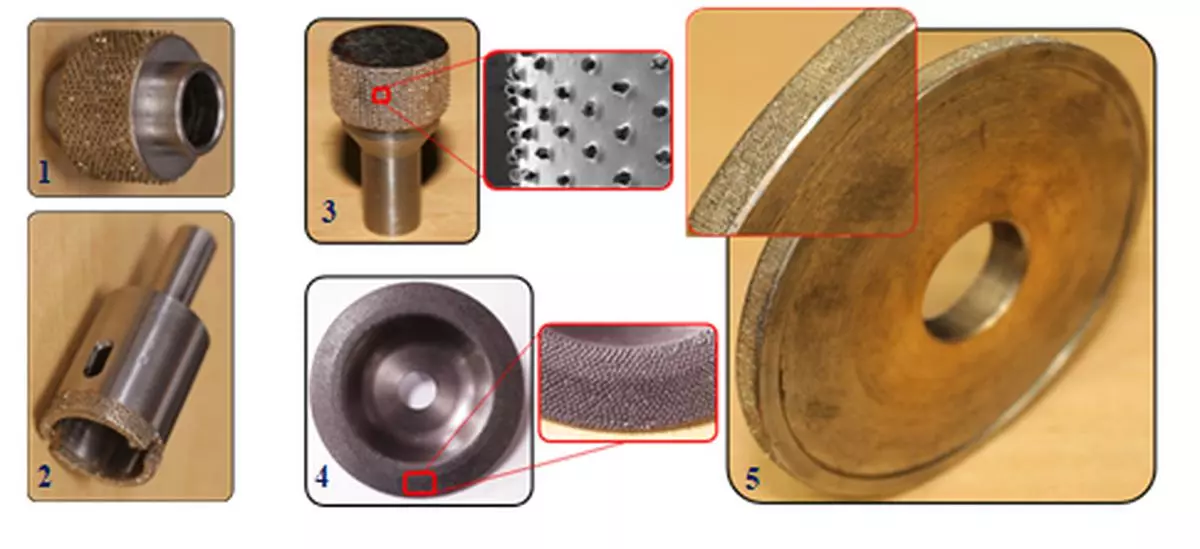
A new technology that can produce a new-generation of multi-point/single-layer, superabrasive tools for advanced grinding applications to meet high productivity and energy-efficient material removal requirements, has been developed by a research team headed by Dr Amitava Ghosh of IIT Madras. These tools also have an enhanced tool life. The team used advanced chemical bonding technology with an application-specific novel formulation of filler material and controlled spacing of grits on the tools by using an indigenously developed semi-automatic grit-printing machine.

The team recommends using application-specific advanced coatings to develop such new-generation superabrasive tools. This novel formulation offers an excellent blend of strength, wear resistance, and wetting characteristics (the ability to spread well in a liquid state with low contact angle during brazing). The grit-planting (planting/placing of grits in a pre-defined co-ordinate position on grinding wheel’s working surface) setup allows a manufacturer to print the grits in customised pattern to suit the requirement of an application. The recommended coating enhances the durability of the bond thus adding life to the developed tools.

These tools can be produced using active brasing technology with striking attributes of high crystal exposure above the bond level. The joint strength and wear-resistant characteristics of the bonds in these tools are superior to those of their commercial counterparts. These tools can withstand more grinding force, offer significantly higher tool life, and execute load-free grinding of advanced materials with extremely high material removal rates, says a press release.

2D nanos for low cost LCDs

A new easier technique of manufacturing liquid crystal displays (LCDs) which can reduce the cost of the devices has been developed. An essential requirement of these LCDs is the uni-directional planar alignment of the constituent liquid crystals (LC) over large areas.

Although the conventional polymer rubbing method yields quality LC alignment, it possesses unavoidable and undesirable drawbacks such as production of electrostatic charges and dust particles that interfere with display operation, and even cause damage to the electronic components of the display. While electrostatic charges increase the failure rate, dust creates defects which seriously compromises with the performance of the device. Other problems include multistep process for coating and the necessity for high-temperature curing. This has led to a surge in demand to replace this rubbing method with new non-contact techniques.

The latest among these techniques is to employ 2D nanomaterials — graphene, hexagonal boron nitride (h-BN), transition metal dichalcogenides, and so on — as alignment layers. But this requires high deposition temperature, precursors and yields hazardous by-products. Besides, when the CVD method is used, unidirectional LC alignment is observed over only small regions.

A team of scientists from the Centre for Nano and Soft Matter Sciences (CeNS), Bengaluru, has developed a novel way of employing 2D materials to overcome the drawbacks of current methods. Using h-BN nanoflakes as the specific material, the group comprising Gayathri Pisharody, Priyabrata Sahoo, Dr DS Shankar Rao, Dr HSSR Matte and Dr S Krishna Prasad employed a solution-processed deposition technique and found it to be effective in getting the LC alignment over a much larger area. They also found the resultant crystals to be quite robust with no evidence of decay in LC orientation over several months.


Source link

YouTube
Instagram
WhatsApp