America will send an Indian astronaut to International Space Station by year-end: US envoy

America will send an Indian astronaut to International Space Station by year-end: US envoy


America will send an Indian astronaut to the International Space Station by the end of the year, US envoy to India Eric Garcetti said on Wednesday.

He said the NISAR project, a joint Earth-observing mission between US space agency NASA and the Indian Space Research Organization (ISRO), is also likely to be launched by the end of the year.

“We are going to put an Indian astronaut into the International Space Station this year.

“We promised when PM Narendra Modi came (to the US in 2023) that by the end of this year, we will do this and our mission is still on track to be able to go in space this year,” he said.

The US ambassador was speaking on the sidelines of an event to mark the 248th Independence Day of the United States.

He said both India and the US should look at coordinating research and critical emerging technology so that they can increasingly leverage each other’s strengths.

The diplomat said India landed ‘Chandrayaan 3’ on the Moon last year at a fraction of the cost that the US incurred on a similar lunar mission.

“The US has some capacities that India still doesn’t have today. When the two are combined, both countries have those capacities,” he said.

On the civilian nuclear energy arena, Garcetti said post elections, the Indian government can address outstanding liability issues and move forward “arm in arm and hand in hand”.

Two sites in India – Mithi Virdhi in Gujarat and Kovadda in Andhra Pradesh – have been earmarked for US companies to build nuclear reactors.

However, the companies have raised concerns over the Civil Liability Nuclear Damage Act 2010, which provides for prompt compensation to the victims for damage caused by a nuclear incident through a no-fault liability regime.


Source link

Reddit Forges Pact With OpenAI to Bring Content to ChatGPT

Reddit Forges Pact With OpenAI to Bring Content to ChatGPT


Reddit Inc. forged a partnership with OpenAI that will bring its content to the chatbot ChatGPT and other products, while also helping the social media company add new artificial intelligence features to its forums. 

Shares of Reddit, which had their initial public offering in March, jumped as much as 15% in late trading following the announcement.

The agreement “will enable OpenAI’s AI tools to better understand and showcase Reddit content, especially on recent topics,” the companies said Thursday in a joint statement. The deal allows OpenAI to display Reddit’s content and train AI systems on its partner’s data.

Reddit will also offer its users new AI-based tools built on models created by OpenAI, which will place ads on its partner’s site. Financial terms of the deal were not disclosed.

Reddit content has long been a popular source of training data for making AI models — including those of OpenAI. Last week, Reddit released new policies governing the use of its data, part of an effort to increase revenue through licensing agreements with artificial intelligence developers and other companies. 

“Our data is extremely valuable,” Chief Executive Officer Steve Huffman said at the Bloomberg Technology Summit earlier this month. “We’re seeing a ton of interest in it.”

Finding new moneymaking opportunity was part of Reddit’s pitch in the lead-up to its IPO. The company also signed an accord in January with Alphabet Inc.’s Google worth $60 million to help train large language models, the technology underpinning generative AI.

Huffman previously declined to discuss the specifics of the Google deal but said typical terms can govern how long a Reddit summary can show up in a Google search or whether a licensee has to display Reddit branding in AI-generated results. The San Francisco-based social network has signed licensing deals worth $203 million in total, with terms ranging from two to three years, and has been in talks to strike additional licensing agreements. 

OpenAI, for its part, is increasingly forging partnerships with media companies to help train its AI systems and show more real-time content within its chatbot. The ChatGPT maker also penned deals with Dotdash Meredith earlier this month and the Financial Times in April.

Backed by Microsoft Corp., the startup has emerged as a driving force in the development of AI. Sam Altman, CEO of OpenAI, has a long history with Reddit. He was one of the company’s largest shareholders at the time of its IPO earlier this year and briefly served as Reddit’s interim CEO in 2014.

The companies noted in the statement that their partnership was led by OpenAI Chief Operating Officer Brad Lightcap and was approved by its independent directors.

The shares of Reddit, which had declined 5.5 per cent to $56.38 in regular New York trading Thursday, soared as high as $64.75 after the partnership was announced. The stock has gained 66 per cent since its IPO.

More stories like this are available on bloomberg.com


Source link

Solar storms that caused pretty auroras can create havoc with technology — here’s how

Solar storms that caused pretty auroras can create havoc with technology — here’s how


At the weekend, millions of people around the world were treated to a mesmerising display of the aurora borealis and aurora australis, better known as the northern and southern lights. The lights, usually seen in crown-like regions surrounding the Earth’s poles, were pushed to mid-latitudes by heightened activity from the Sun.

The same geomagnetic storms causing the auroras can cause havoc with our planet’s human-made infrastructure. These storms, caused by high energy particles from the Sun hitting our atmosphere, have the potential to knock out electrical grids and satellites. So what were the impacts of this recent burst of stormy space weather? Around May 8, an active region of the Sun exploded, flinging a billion-tonne cloud of magnetised and electrically charged material known as a coronal mass ejection (CME) towards the Earth. This turned out to be the first of several successive CMEs, which later merged to form a single, massive structure.

This crashed into our planet’s magnetosphere, the region of space near Earth that is dominated by the terrestrial magnetic field. As sub-atomic particles from the CME are funnelled downward, channels of electrical current flowing through part of the atmosphere known as the ionosphere, are intensified.

Apart from triggering the auroral displays, this can cause powerful magnetic fluctuations at the Earth’s surface. As a result, electrical currents can flow through power grids, pipelines and railway lines, potentially interfering with normal operations.

The sub-atomic particles from the CME can cause damage to the solar panels and electronics of satellites. On Saturday, Elon Musk said that his company SpaceX’s Starlink internet satellites were “under a lot of pressure,” because of the storm, “but holding up so far”.

The disturbances in the ionosphere were compounded by a series of bright eruptions called “flares” on the Sun that poured high energy radiation across the Earth’s sunlit face. Flare activity is associated with radio blackouts that can interfere with high-frequency radio communications, such as those required by aircraft on trans-oceanic flights. There are indications that the storm caused some disruption on transatlantic flights, but these reports are still being assessed.

Shawn Dahl, service coordinator for the Space Weather Prediction Center at the National Oceanic and Atmospheric Administration (NOAA) in Colorado, told US National Public Radio that power grid operators had been busy “working to keep proper, regulated current flowing without disruption”.

He also added that some GPS systems had struggled to lock locations and had offered incorrect positions. These GPS problems appear to have caused disruption to navigational systems in farming equipment in the US. Many tractors use GPS to plant precise rows in a field, avoid gaps and overlaps. The problems happened during the height of planting season in the midwest and Canada.

Some of this may sound a bit like a Hollywood disaster movie. Yet, while the GPS problems caused significant disruption in agriculture, impacts do not appear to have been widespread across the Earth. For many or most, life seems to have carried on, regardless. How come? Awareness and preparedness certainly helped. What we just experienced was, without question, an unusually strong space weather event. It’s early days and scientists will be analysing the storm of May, 2024 for years to come. However, early indications are that last weekend’s geomagnetic storm was the most powerful since the “Halloween storm” of October, 2003. Beyond the beautiful lights in the sky, the negative impacts of the 2024 storm aren’t yet completely clear.

At this stage, it doesn’t look like there were any catastrophic failures, but infrastructure operators will be taking stock to understand if, and how, their systems were affected. Behind the scenes, national agencies such as NOAA and the Met Office in the UK were monitoring the activity, issuing forecasts and alerts to interested parties, and liaising with experts and governments. In response, infrastructure operators took steps to ensure the continuity of services and safeguard their equipment.

Even bigger storms

However, what we’ve just experienced wasn’t the biggest such event ever seen. That honour goes to the “Carrington Event” of September, 1859, in which a massive CME (or most likely a pair of CMEs) triggered a huge geomagnetic storm that pushed the aurora borealis as far south as the Caribbean, and induced such powerful currents in copper telegraph lines that at least one operator suffered a severe electric shock – though he lived.

By some metrics, the Carrington event was two to three times more powerful than the storm we have just witnessed. Such massive events are rare, probably occurring once every couple of hundred years, in contrast to the May 2024 storm which was of a scale seen once every couple of decades.

Human technology is able to cope with relatively powerful space weather events, but modern technologies and infrastructure have never experienced anything like the Carrington event. This is why researchers strive to better understand space weather and work with agencies and government to predict and mitigate its impact on our society and develop better forecasting tools.

Jim Wild, Professor of Space Physics, Lancaster University


Source link

OpenAI co-founder Ilya Sutskever departs ChatGPT maker

OpenAI co-founder Ilya Sutskever departs ChatGPT maker


OpenAI co-founder and chief scientist Ilya Sutskever is leaving the startup at the center of today’s artificial intelligence boom.

“OpenAI would not be what it is without him,” OpenAI CEO Sam Altman wrote in a message to the company, which OpenAI posted on its blog.

Microsoft-backed OpenAI makes the popular ChatGPT chatbot, which sparked a race among the world’s largest tech companies for dominance in the emerging generative AI field.

Jakub Pachocki will be the company’s new chief scientist, the company said on its blog.

Pachocki has previously served as OpenAI’s director of research and led the development of GPT-4 and OpenAI Five.

“After almost a decade, I have made the decision to leave OpenAI,” Sutskever said in a post on X.

Sutskever posted that he is working on a new project “that is very personally meaningful to me about which I will share details in due time.”

Sutskever played a key role in Altman’s dramatic firing and rehiring in November last year. At the time, Sutskever was on the board of OpenAI and helped to orchestrate Altman’s firing.

Days later, he reversed course, signing onto an employee letter demanding Altman’s return and expressing regret for his “participation in the board’s actions.”

After Altman returned, Sutskever was removed from the board and his position at the company became unclear.

Sutskever’s exit comes a day after the company said at an event on Monday that it would release a new AI model called GPT-4o, capable of realistic voice conversation and able to interact across texts and images.

Shortly after launching in late 2022, ChatGPT was called the fastest application ever to reach 100 million monthly active users. However, worldwide traffic to ChatGPT’s website has been on a roller-coaster ride in the past year and is only now returning to its May 2023 peak, according to analytics firm Similarweb.

Sutskever has long been a prominent researcher in the AI field. Before founding OpenAI, he worked as a researcher at Google Brain, and was a postdoctoral researcher at Stanford, according to his personal website. He started his career working with Geoffrey Hinton, one of the so-called “godfathers of AI”.


Source link

Bio-taxis for cancer treatment

Bio-taxis for cancer treatment


Lymph nodes in our bodies are sites of activation of cells involved in disease-fighting antibodies. Antigens are molecules that trigger antibody response—a sort of siren for soldiers to come out and fight the invaders. You can develop antigens that can prod the immune system into producing antibodies. But how to take the antigens to the lymph nodes?

Researchers at the Indian Institute of Science, Bengaluru, have developed an antigen that can hitch-hike on a natural protein called serum albumin in blood and ride all the way to the nearest lymph node.

This development opens up a new way to bring out cancer vaccines, says a write-up put up on IISc website.

Cancer cells are very clever—they shut down the production of antibodies that target and eliminate them. Developing a cancer vaccine, therefore, “involves modifying or creating a mimic of an antigen found on the surface of cancer cells to turn up or turn on this antibody production,” says the article. In recent years, scientists have turned to carbohydrates found on cancer cell surfaces to develop these antigens.

“Carbohydrate-based antigens have enormous importance and relevance in cancer vaccine development,” explains N Jayaraman, Professor at the Department of Organic Chemistry and senior author of the study published in Advanced Healthcare Materials. “One major reason is that both normal and abnormal [cancer] cells have large amounts of carbohydrates coating their surfaces. But the abnormal cells carry carbohydrates that are very heavily truncated.”

Scientists have earlier tried ferrying such antigens into the body using an artificial protein or virus particle as the carrier. But these carriers can be bulky, lead to side-effects, and sometimes reduce antibody production against cancer cells. The IISc team, instead, decided to exploit the carrying ability of a natural protein called serum albumin, the most abundant protein in blood plasma.

To design the compound, Jayaraman and his PhD student, Keerthana TV, zeroed in on a truncated carbohydrate called Tn found on the surface of a variety of cancer cells, and synthesised it in the lab. Then, they combined it with a long-chain, oil-loving chemical – unlike carbohydrates which are water-loving – to form bubble-like micelles. They found that the combination is able to bind strongly to human serum albumin.

“The moment it latches on to albumin, the micelle breaks, and all the individual [antigen] molecules bind to the available albumin,” Jayaraman explains. “This opens up the idea that one doesn’t necessarily need to search for a virus or a protein or other types of carriers. Serum albumin is sufficient to carry it forward.”

Powering the future of sodium-ion batteries

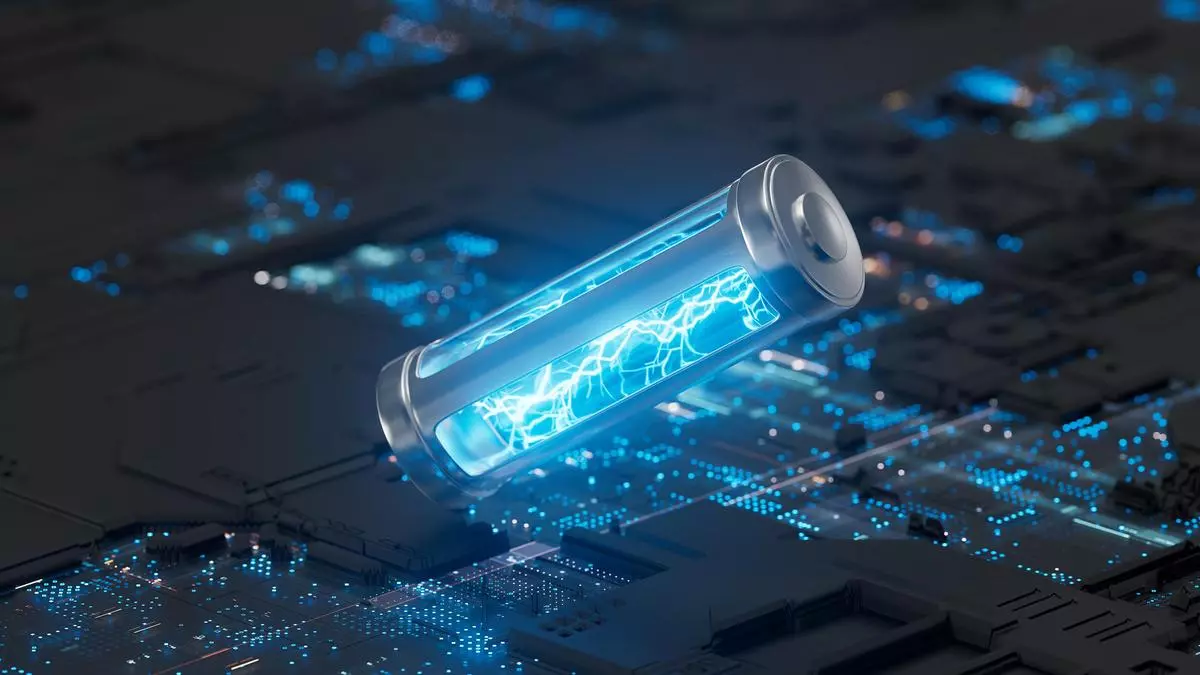
In a lithium-ion battery, a compound of lithium is the cathode (electron donor) and graphite is the anode (electron acceptor). Sodium-ion batteries are considered among the alternatives for lithium-ion based ones—sodium, unlike lithium, is available everywhere. But the sodium-ion is bigger than lithium-ion, it does not easily go and embed itself within the graphene-layered structure of graphite-based electrodes.

A group of Italian scientists have suggested that biomass-derived biochar (BC) might be a good alternative to graphite. BC has “highly disordered and microporous carbons, known as ‘hard carbons’ and are considered the anode material of choice for sodium-ion batteries,” they say in a paper published in Renewable and Sustainable Reviews.


Source link

How to make ‘cold brew’ coffee using science

How to make ‘cold brew’ coffee using science


If you are a coffee junkie and love to drink your cuppa to your exacting specifications, you probably don’t like to drink it cold, even though the chilled version sliding down your throat and creating that soothing sensation in your gut is very welcome in these hot summers. Cold coffee isn’t ‘coffee’, because it is the hot version made cold by adding ice cubes or chilling it in a refrigerator.

Truly cold coffee is made by ‘cold brew’ — steeping the grounds in water that is either at room temperature or lower, for about 24 hours. But few take the trouble of this immersion brewing.

Now scientists are experimenting with newer methods of brewing coffee. One — this sounds truly crazy — is to pump ultrasounds into the coffee basket of an espresso machine. Several scientists have attempted this and produced scientific literature.

When high intensity sound waves pass through the liquid (any liquid), it creates regions of compression and rarefaction. In the rarefaction regions, due to fall in pressure, gas or vapour pockets form, creating bubbles. These bubbles grow bigger and explode, creating a force that fractures the cell walls of coffee grounds, releasing the intracellular content. You can have a nice ‘cold brew’ coffee in minutes.

The coffee that comes out of the process is, according to scientists, “tasty”.


Source link

YouTube
Instagram
WhatsApp