Ionic latch against cancer

Ionic latch against cancer


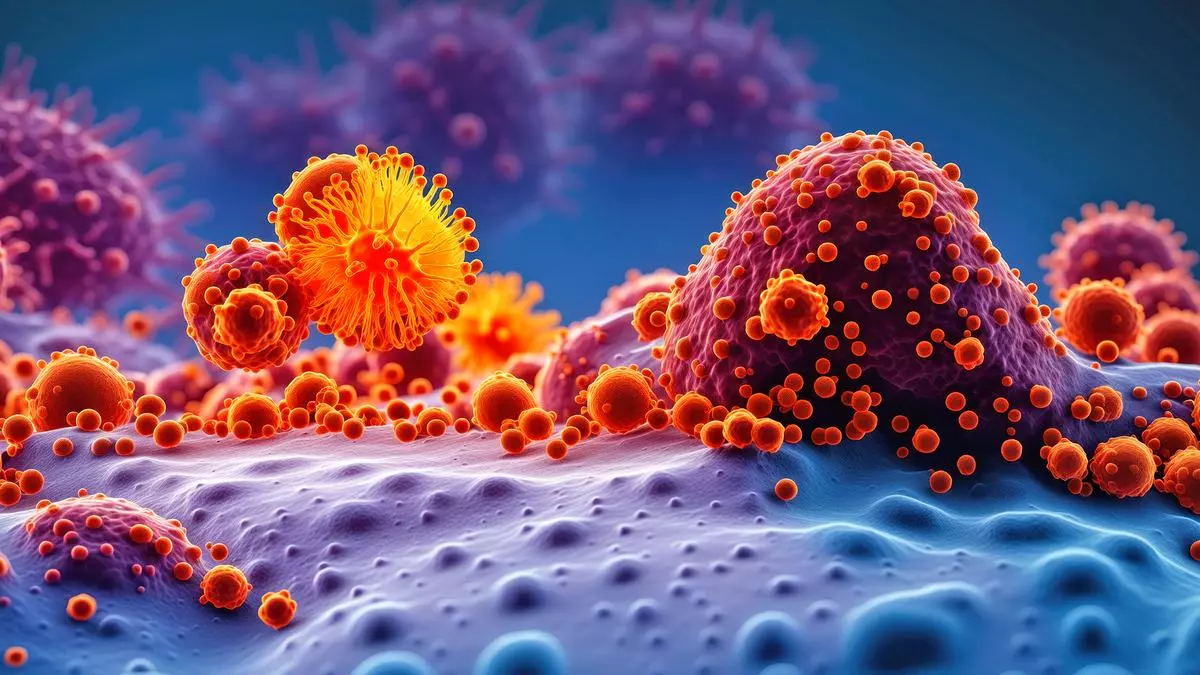
Researchers at IISER, Kolkata, have discovered how a cell surface receptor, part of a group of enzymes that interact with growth factors to control cell functions like growth, survival and movement, can help prevent cancers.

This receptor, called VEGFR1, remains inactive when it doesn’t have a ligand (a molecule that binds to it, like a hormone). Cell surface receptors, like Receptor Tyrosine Kinases (RTKs), are crucial for converting signals from outside the cell (like growth factors) into responses within the cell. When a ligand binds to these receptors, it activates enzymes inside the cell, which then add phosphate groups to other molecules, helping to regulate various cell functions such as growth and immune response. When RTKs activate on their own, without ligands, it can cause diseases like cancer, diabetes and autoimmune disorders. Researchers are studying how cells keep these enzymes inactive and what causes them to become active in diseases.

Dr Rahul Das of IISER, Kolkata, studied VEGFR, a receptor that regulates blood vessel formation, wound healing and tumour growth. They noticed that its two receptors, VEGFR1 and VEGFR2, act differently. VEGFR2 can activate on its own, but VEGFR1 cannot, even when there is a lot of it in cells. VEGFR1 binds more strongly to its ligand, VEGF-A, than VEGFR2 does, but this binding only briefly activates VEGFR1.

Activation of VEGFR1 was found to be linked to cancer-related pain and the survival and movement of cancer cells. Das has discovered a unique “ionic latch” in VEGFR1 which keeps it inactive by holding part of the receptor in place. By studying this inactive state, researchers proposed that a cell enzyme called tyrosine phosphatase plays a key role in regulating VEGFR1 activity. Their research suggests that targeting this mechanism could help treat diseases where new blood vessels form abnormally, like in cancer.


Source link

MAB for hydrogen storage

MAB for hydrogen storage


Researchers at IIT-Madras have synthesised a tough, ceramic material that can conduct electricity and heat, which could possibly be used for storing hydrogen too.

A crystal structure found in certain materials called ‘MAB Phase’ gives them special properties such as high strength. In this M stands for a transition metal, like zirconium, molybdenum or titanium; A for either aluminium or silicon; and B for Boron.

Prof Somnath Bhattacharyya of the Department of Metallurgical and Materials Engineering and his team have developed a MAB phase layered ceramic — using tungsten, aluminium and boron — called WAlB. While WAlB is not a new material, known to be useful in nuclear shielding, Bhattacharyya and his team have developed a new process for making it, in a medium of molten salt. The resultant material is also of very high purity — about 98 per cent.

Bhattacharyya explained to Quantum that the material is a layered ceramic, with 2D layers of tungsten and boron, with aluminium in between. WAlB has been synthesised earlier at temperatures of 1400o C, but Bhattacharyya could do it at 800oC, at ambient pressure.

Calling the work a “breakthrough”, Dr Varun Natu, scientist at National Chemical Laboratory, Pune, observes that synthesising WAlB has traditionally proven difficult, resulting in only small crystals with low yield. However, “Bhattacharyya’s team has demonstrated not only large-scale synthesis of WAlB but also a method that uses a molten salt as a sheath. This approach significantly reduces production costs and simplifies potential future scaling, making WAlB a much more viable candidate for real-world applications.”

This material could be used as a semiconductor or for hydrogen storage, he said. Asked if the industry could take up production of this MAB at scale, Bhattacharyya said it was possible, as repeated synthesis by his students got the same, high purity material.


Source link

Improving solar generation forecasting with ensemble of deep learning models

Improving solar generation forecasting with ensemble of deep learning models


For forecasting electricity generation from fickle renewable energy sources like wind and solar, there is help coming from artificial intelligence. Machine learning and (its subset) deep learning are beginning to replace conventional, weather and satellite data based forecasting or statistical prediction models.

Deep learning models — from simple artificial neural networks to complex ‘long short-term memory’ (LSTM, which is an architecture particularly effective for making predictions based on sequential data) — are coming into play, improving the accuracy of forecasting.

Now three researchers from the Indian Institute of Engineering Science and Technology, Kolkata, Rakesh Mondal, Surajit Kumar Roy and Chandan Giri, have come up with an improved AI technique for forecasting solar generation. Instead of using a simple deep learning model, these scientists employed an ensemble of deep learning models, which they describe as “one step more advanced than simple deep learning models.” The result, they say, is higher accuracy.

The AI advantage

Not that ensemble models, which combine predictions from multiple individual deep learning models, are entirely new. In a paper published in Energy, the authors acknowledge that other researchers have tried the ensemble model method but say that they have “included features that enhance accuracy of prediction” in their own research. These features include parameters like physical characteristics of solar panels including the number of cells in a panel, the maximum working temperature of the panel, the material type and ambient temperature. “None of the existing techniques has considered these parameters for solar power prediction,” the authors say.

Mondal, Roy and Giri have used a technique called ‘Bi-directional Long Short-term Memory’ or BI-LSTM — a type of recurrent neural network (RNN) designed to handle sequential data. Unlike standard LSTM, which processes data in one direction (past to future), BI-LSTM processes data in both directions (past to future and future to past). This allows the model to have a better understanding of the context by considering both past and future information.

The researchers prepared a dataset by combining weather parameters and solar generation data and then enriched the dataset by bringing in meteorological data as well as physical characteristics of the solar panels deployed in the respective solar plants. The BI-LSTM model, they say, can predict the future solar power generation of a specific solar plant on both short and long horizons regardless of the geographical position of the solar plant.

“For short-term prediction, we can predict the generation of solar power for fifteen minutes to one hour ahead, and for long-term forecasting, we are able to predict PV power generation for 1-3 days ahead with noticeable accuracy,” the paper says.

Mondal, Roy and Giri compared the results of the proposed model with the existing dataset and multiple standard deep learning models and found that “our model produced better performance than traditional models.” They also validated their model using different solar plants in Durgapur, India. “For long-term forecasting, our model also outperformed the base model.”

From data to decisions

In an emailed response to quantum’s questions, Dr Giri said the researchers used a time series dataset containing 14 independent features and one dependent feature. The dataset contained data for every 15 minutes from January 1 to December 31, 2022. “We tested our trained model with other datasets collected from solar plants situated in Durgapur, West Bengal. Then we tested our model with a published dataset collected from Denmark. We found our model gives similar results.”

No model is flawless. “We faced some limitations during the test,” Dr Giri said, noting that when there were abrupt changes in the weather parameters, they got slightly different results.

Asked if the ensemble model would call for high computational power, Dr Giri said that their model “is quite light weight” containing only 1.2 million parameters. “We believe that it will not be an issue during large-scale implementation,” he said.

“We believe that our model is trained with a very small amount of data,” he said, adding that they were trying to extend our work with a large amount of data to improve the efficiency of our model.

This work will help the researchers explore the other dimensions rather than a specific dataset but also the scientific knowledge of specific domains, Dr Giri told quantum.


Source link

Incipient metals

Incipient metals


A study conducted by the Jawaharlal Nehru Centre for Advanced Scientific Research, Bengaluru, has unravelled the electronic mechanisms governing chemical bonding of a new class of materials called ‘incipient metals’, which can boost energy harvesting and power generation.

Sourcing new materials with unique properties can help in the advancement of current technology. Recently, scientists are turning to a class of compounds called group IV chalcogenides that have intriguing properties, making them suitable candidates for technological applications. These compounds contain an element from group VI of the periodic table combined with an element from group III–V of the periodic table, like PbTe, SnTe and GeTe, says a press release from the Department of Science and Technology, Government of India.

Chalcogenides can transition reversibly between amorphous and crystalline phases in response to changes in temperature, pressure, or electrical fields. This unique characteristic has practical applications in rewritable optical discs and electronic memory devices due to the contrasting optical responses of the two phases. Additionally, these chalcogenides are valuable in energy harvesting and power generation applications, thanks to their high electrical conductivity and effective conversion of thermal energy into electrical energy through the thermoelectric effect.

The study, by Professor Umesh Waghmare from the Theoretical Sciences Unit, explored the possibility of introducing the recently introduced metavalent bonding (MVB) within a single 2D layer of Group IV chalcogenides, investigating its mechanisms and the resulting consequences on material properties.

The theoretical work conducted by Prof Waghmare and his team has significant implications and promising applications across industries, the release says. The chalcogenides explored in this study are already employed in computer flash memories, utilising their ability to change optical properties during the transition from crystalline to amorphous states. Additionally, the potential use of these materials in energy storage, especially as phase change materials, opens avenues for more sustainable and efficient energy solutions.

Furthermore, the research connects with the emerging field of quantum materials, aligning with the goals of India’s national mission on quantum technology. These materials, with their distinct electronic structures and properties, offer a prototypical example of quantum topological materials, a critical component in advancing quantum technologies.

High entropy alloys

The reason stainless steel is useful is because the chromium in it forms an oxide layer that protects it from rusting. Today, scientists the world over are toying with multiple-metal alloys — more than five as opposed to two or three in conventional alloys — to make materials of desired properties. Under this ‘High Entropy Alloys’ are of interest because of their extreme sturdiness, which comes from the way the atoms are arranged in the alloys. One difficulty with developing HEAs is that you have to make them and test them.

Now a group of researchers at the Pacific Northwest National University has developed a tool to predict how HEAs will behave under high temperature oxidative environments. The tool helps investigate the arrangement of atoms within samples, using in situ atom probe tomography. This will fast-track development of complex alloys with exceptional high-temperature properties.

The group of researchers predominantly consists of people of Indian origin — Arun Devaraj, Bharat Gwalani, Anil Krishna Battu, Thevuthasan Suntharampillai and Aniruddha Malakar. “This work sheds light on the mechanisms of oxidation in complex alloys at the atomic scale,” says Bharat Gwalani, co-corresponding author of the study.

“Right now there are no universally applicable governing models to extrapolate how a given complex, multi-principal element alloy will oxidize and degrade over time in a high-temperature oxidation environment,” says Devaraj. The ultimate goal is to choose a combination of elements that favour the formation of an adherent oxide, he said. “You know oxide formation will happen, but you want to have a very stable oxide that will be protective, that would not change over time, and would withstand extreme heat inside a rocket engine or nuclear reactor.”


Source link

Brewing beer, the Egyptian way

Brewing beer, the Egyptian way


In 1873, a German Egyptologist called Georg Ebers purchased something remarkable — a 3,000-year-old papyrus. The scroll is about 20 meters long and contains about 110 pages of text. Since Egyptian hieroglyphics has been fully deciphered, we know what the papyrus says. It is said to be the oldest and most comprehensive medical compendium dealing with a wide range of diseases, diagnosis and remedies — and even surgical procedures.

Dated around 1550 BC, today, it lies in the library of the University of Leipzig, Germany. Since it was in the possession of Georg Ebers, it is called Ebers Papyrus.

For sure, if you go to the library to have a look, you’d stand stupefied not only by the papyrus’ antiquity but also by the wealth of knowledge it holds. You’d also no doubt be awestruck by the advancement in Egyptian civilization. Ebers Papyrus is no less awesome than the biggest symbol of that civilization — the pyramids.

But you’d probably come back happy and do nothing more than to speak about it to your friends or post about it on social media. That is exactly where Dylan McDonnell, who has a master’s in Middle Eastern studies and lives in Salt Lake City, US, distinguished himself.

He spotted in the Ebers Papyrus a recipe for brewing beer and lost no time in securing the ingredients — which included rare sycamore figs sourced from a 1,400-year-grove and a strain of yeast gleaned from an 850 BC pottery in Israel — and brewed ten gallons of the beer in his backyard. He got himself and his friends a 3000-year-old beer. The ‘Utah man who brewed 3000-old beer with yeast from ancient pottery’, now all over YouTube, has much to thank Georg Ebers for.


Source link

A low-carbon leap in ammonia production

A low-carbon leap in ammonia production


Nitrogen exists in nature as molecules of two atoms; the (triple) bond between them is extremely hard to break. To make ammonia, the bedrock of fertilizers and many other chemicals, you need a single atom of nitrogen to combine with three of hydrogen to form the NH3 molecule. The Haber-Bosch process, invented in 1909, still remains the singular method of producing industrial scale ammonia. While ammonia has been the panacea for the world’s food requirements, the Haber-Bosch method of making it has a deleterious flipside — it requires a heck of a lot of heat, mostly obtained from burning stuff that emits carbon dioxide, mankind’s biggest enemy today. The bonding energy of the N2 molecule is 945 KJ/mol — in other words, it takes burning 1.4 kg of coal to split one kg of molecular nitrogen into single atom nitrogen.

For decades, scientists have been scratching their heads over an alternative for Haber-Bosch, yet in vain.

And now, scientists at the Lawrence-Berkeley lab in California, USA, have announced that they have figured out a room-temperature alternative to separate the two atoms of a nitrogen molecule. This, if taken to the industry, can be the holy grail that mankind has been searching for.

What the L-B lab scientists did is truly the stuff of Harry Potter. Short of the swish of a magic wand, it has everything — powders, potions, gas and all. The group of five scientists, led by Polly Arnold, Director, Chemical Sciences Division, used rare earth metals, potassium and chemicals called phenolates to break the bond between two nitrogen atoms that form the nitrogen molecule.

How it works is something like this. It has been known for some decades that rare earth metals (of the lanthanide series in the periodic table, or even zirconium and titanium) can combine with molecular nitrogen — this has something to do with a peculiar way the electrons fill in their orbitals. Arnold and her team put this knowledge to work. They took phenolates and used them as a sort of a glue to link two rare earth metals at the molecular level to form a sort of a rectangle, or a ‘complex’. Then they diffused molecular nitrogen (N2) into the cavity of the rectangle. When they did this, each of the two atoms of the nitrogen molecules got linked to different molecules of the rare metals on either side, thereby “activating” the nitrogen (weakening the N-N bond). Then they introduced the villain that broke the love between the two nitrogen atoms — potassium. Post their divorce, the nitrogen atoms were free to join hands with someone else. When hydrogen becomes the new suitor, you get ammonia or amines.

At the heart of the whole process (which, by the way, happens at room temperature) is the trick employed to make the rectangular complexes with rare earth metals, into the cavity of which nitrogen molecules could be trapped and their bonds cleaved. “This new family of complexes upturned 90 years of accepted wisdom by proving that rare earths can bind and reduce dinitrogen,” says a paper by Arnold et al, published in Chem Catalysis.

In the process, potassium was used as a source of electrons. In a write-up published on L-B lab’s website, Arnold has said that her next step would be to use electrodes instead of potassium as a source of electrons, as these electrodes can supply electrons from, say, solar cells.

So, does all this mean that the world is ready to dump the century-old Haber-Bosch process and seize Polly Arnold’s method? Not at all. One chemistry professor at IIT-Madras, told quantum, that he suspects the yield rate would be poor in the L-B method. Even the L-B website does not believe that this could be so instantly transformative. However, the L-B route does open up an interesting pathway that could one day lead mankind to low-cost, low-carbon ammonia. The L-B scientists indeed have said that they are willing to licence the technology.


Source link

YouTube
Instagram
WhatsApp