
How chatbots help avoid embarrassment online

How chatbots help avoid embarrassment online


Imagine shopping online for a personal item you’d rather keep private. Would you prefer talking to a human or a chatbot?

Recent researches show that chatbots — when clearly identified and not overly humanised — help consumers feel less embarrassed during such purchases. The paper “Avoiding Embarrassment Online: Response to and Inferences about Chatbots when Purchases Activate Self-Presentation Concerns” by Jianna Jin, Jesse Walker, and Rebecca Walker Reczek, published in the Journal of Consumer Psychology investigates this question.

Role of ambiguity

The rise of artificial intelligence (AI) in customer service has revolutionised how people shop online. Chatbots, a type of conversational AI, often operate behind the scenes, sometimes with ambiguous identities that can lead consumers to believe that they are interacting with a human. This ambiguity becomes particularly relevant when self-presentation concerns are at play.

Self-presentation is about controlling the impressions others form of us, especially during potentially embarrassing purchases. Jianna Jin and her colleagues explored how these concerns affect consumer interactions with chatbots versus human agents. They hypothesised that consumers with high self-presentation concerns would see an ambiguous chat agent to be human to brace for potential embarrassment.

The study confirmed this hypothesis: consumers with higher self-presentation concerns were more likely to assume an ambiguous agent was human. This inference serves as a psychological buffer, allowing them to prepare for any potential judgment, even if the agent turns out to be a bot. This aligns with the principles of Error Management Theory, which suggests that people make biased inferences under uncertainty to avoid more costly errors.

Comfort of Knowing

The research also examined consumer responses to clearly identified chatbots. Contrary to earlier findings suggesting negative reactions to known chatbots, Jin and her team found that consumers preferred clearly identified chatbots over human agents when self-presentation concerns were active. This preference stems from the perception that chatbots possess less “mind”— less capacity for consciousness and emotional judgment — compared to humans.

When consumers know they are interacting with a chatbot, they feel less embarrassed because they believe chatbots lack the emotional and cognitive depth to judge them. However, the study reveals a crucial nuance: the design of the chatbot matters. Anthropomorphised chatbots, which exhibit human-like qualities, increase consumers’ feelings of embarrassment. Thus, less human-like chatbots are better suited for sensitive purchases.

The Perfect Chatbot

The findings have significant implications for businesses aiming to improve customer experience, particularly in sensitive contexts. Clearly identifying chatbots can reduce consumer embarrassment and facilitate interactions that might otherwise be avoided.

Businesses should consider avoiding overly humanising chatbots in scenarios where self-presentation concerns are likely to be high, such as online pharmacies or stores selling personal care products.

Using non-anthropomorphised chatbots makes customers feel more at ease. By balancing clear identification and minimal human traits, companies can create a more comfortable and judgment-free shopping experience for their customers.

This approach can lead to practical benefits, such as increased consumer engagement. For example, consumers were more likely to leave their email addresses after interacting with a clearly identified, non-anthropomorphised chatbot compared to a human agent, indicating higher trust and comfort levels.





Source link

How chatbots help avoid embarrassment online

Chatbots: How they help avoid embarrassment online


Imagine shopping online for a personal item you’d rather keep private. Would you prefer talking to a human or a chatbot?

Recent researches show that chatbots — when clearly identified and not overly humanised — help consumers feel less embarrassed during such purchases. The paper “Avoiding Embarrassment Online: Response to and Inferences about Chatbots when Purchases Activate Self-Presentation Concerns” by Jianna Jin, Jesse Walker, and Rebecca Walker Reczek, published in the Journal of Consumer Psychology investigates this question.

Role of ambiguity

The rise of artificial intelligence (AI) in customer service has revolutionised how people shop online. Chatbots, a type of conversational AI, often operate behind the scenes, sometimes with ambiguous identities that can lead consumers to believe that they are interacting with a human. This ambiguity becomes particularly relevant when self-presentation concerns are at play.

Self-presentation is about controlling the impressions others form of us, especially during potentially embarrassing purchases. Jianna Jin and her colleagues explored how these concerns affect consumer interactions with chatbots versus human agents. They hypothesised that consumers with high self-presentation concerns would see an ambiguous chat agent to be human to brace for potential embarrassment.

The study confirmed this hypothesis: consumers with higher self-presentation concerns were more likely to assume an ambiguous agent was human. This inference serves as a psychological buffer, allowing them to prepare for any potential judgment, even if the agent turns out to be a bot. This aligns with the principles of Error Management Theory, which suggests that people make biased inferences under uncertainty to avoid more costly errors.

Comfort of Knowing

The research also examined consumer responses to clearly identified chatbots. Contrary to earlier findings suggesting negative reactions to known chatbots, Jin and her team found that consumers preferred clearly identified chatbots over human agents when self-presentation concerns were active. This preference stems from the perception that chatbots possess less “mind”— less capacity for consciousness and emotional judgment — compared to humans.

When consumers know they are interacting with a chatbot, they feel less embarrassed because they believe chatbots lack the emotional and cognitive depth to judge them. However, the study reveals a crucial nuance: the design of the chatbot matters. Anthropomorphised chatbots, which exhibit human-like qualities, increase consumers’ feelings of embarrassment. Thus, less human-like chatbots are better suited for sensitive purchases.

The Perfect Chatbot

The findings have significant implications for businesses aiming to improve customer experience, particularly in sensitive contexts. Clearly identifying chatbots can reduce consumer embarrassment and facilitate interactions that might otherwise be avoided.

Businesses should consider avoiding overly humanising chatbots in scenarios where self-presentation concerns are likely to be high, such as online pharmacies or stores selling personal care products.

Using non-anthropomorphised chatbots makes customers feel more at ease. By balancing clear identification and minimal human traits, companies can create a more comfortable and judgment-free shopping experience for their customers.

This approach can lead to practical benefits, such as increased consumer engagement. For example, consumers were more likely to leave their email addresses after interacting with a clearly identified, non-anthropomorphised chatbot compared to a human agent, indicating higher trust and comfort levels.



Source link

Kudos to crows: They can count

Kudos to crows: They can count


It is not uncommon to play with toddlers by raising a certain number of fingers on a hand and asking them to tell the number. A group of scientists tried the trick with crows.

The results amazed them. Crows can count.

Well, the scientists — led by neuroscientist Diana Liao of the University of Tubingen, Germany — didn’t exactly put up their fingers, but trained the crows with visual and auditory cues, making the connection between what they saw and what they heard (like four objects and four sounds, for number 4). The birds would produce a certain “vocalization” for each number (up to 4). They were trained to peck at an “enter button” to signify they were done. If they picked the number correctly, they were given a treat.

After 160 sessions of training the students passed the exam. They did produce a different vocalization for each number, showing they could recognize the numbers, says their paper published in Science.

This is not the first time that the university is researching crow intelligence — its researchers had done it at least once earlier, in 2015. But in this study, scientists have shown that the birds can count aloud, producing a different sound for a different number.

These studies show that crows can count, rather than understand “less” and “more”.


Source link

Kudos to crows: They can count

Kudos to crows


It is not uncommon to play with toddlers by raising a certain number of fingers on a hand and asking them to tell the number. A group of scientists tried the trick with crows.

The results amazed them. Crows can count.

Well, the scientists — led by neuroscientist Diana Liao of the University of Tubingen, Germany — didn’t exactly put up their fingers, but trained the crows with visual and auditory cues, making the connection between what they saw and what they heard (like four objects and four sounds, for number 4). The birds would produce a certain “vocalization” for each number (up to 4). They were trained to peck at an “enter button” to signify they were done. If they picked the number correctly, they were given a treat.

After 160 sessions of training the students passed the exam. They did produce a different vocalization for each number, showing they could recognize the numbers, says their paper published in Science.

This is not the first time that the university is researching crow intelligence — its researchers had done it at least once earlier, in 2015. But in this study, scientists have shown that the birds can count aloud, producing a different sound for a different number.

These studies show that crows can count, rather than understand “less” and “more”.


Source link

Building a greener world: The future of zero-emissions cement

Building a greener world: The future of zero-emissions cement


Imagine a world where our cities’ very structures — the buildings, the roads, the bridges — do more than stand the test of time; they actively combat climate change. Thanks to ground-breaking research from the University of Cambridge, this vision is nearing reality with a revolutionary zero-emissions method for producing cement.

Concrete is the second-most consumed substance on Earth after water. Its primary ingredient, Portland cement, is responsible for approximately 7.5 per cent of global anthropogenic Carbon dioxide emissions. These emissions arise from two primary sources: the calcination process, where limestone (calcium carbonate) is heated to produce lime (calcium oxide), releasing CO2; and the combustion of fossil fuels to heat cement kilns to the high temperatures needed for this transformation.

The cement industry has not been idle in addressing its environmental impact. Efforts have included improving energy efficiency, reducing the use of clinker in cement mixes, and incorporating waste materials like fly ash and slag. However, these strategies, while beneficial, have not sufficed to neutralise the sector’s substantial carbon footprint. The ultimate goal, elusive until now, has been a truly sustainable form of cement that can be produced at scale without emitting any carbon dioxide.

A Paradigm Shift

The innovation presented by Cyrille F Dunant and colleagues in their paper, “Electric recycling of Portland cement at scale” is as simple in concept as it is revolutionary in application. It revolves around the integration of waste management and steel production processes to create a sustainable cycle for producing cement. The method leverages a technology familiar in steel making: the electric arc furnace (EAF). EAFs are pivotal in recycling steel, but the process typically introduces lime as a flux to remove impurities, which, like in cement production, generates considerable CO2.

The Cambridge team proposes using recovered cement paste (RCP)—cement that has been used and discarded from old buildings and roads—as a replacement for the lime traditionally used in steel recycling. Since RCP has already undergone decarbonation, it can be reintroduced into the production cycle without releasing further CO2. When added to the high-temperature environment of an EAF, RCP helps purify the steel while simultaneously being transformed back into a reactive form that can be used as the base for new cement.

The process detailed in the paper leverages the high temperatures of EAFs to facilitate the transformation of RCP into a reactive form suitable for creating Portland clinker. By mixing RCP with scrap steel in the EAF, the researchers were able to produce slag that, once cooled and ground, meets the specifications required for conventional Portland clinker. This slag can then be blended with other materials like calcined clay and limestone to produce new, environmentally friendly cement. The paper, published in Nature, shows that this new type of slag is capable of forming cementitious compounds essential for construction materials.

The paper suggests that, if powered by renewable energy sources, the process could lead to zero-emission cement. Furthermore, this approach could significantly decrease the environmental impact of the steel industry by reducing the need for lime flux, which is both cost-intensive and carbon-intensive. By integrating waste management with industrial production, this method not only addresses the issue of cement-related emissions but also enhances resource efficiency in two major industries simultaneously.

This method closes the loop of cement use and reuse, presenting a sustainable cycle that diminishes waste and emissions. The experimental results are promising: slags produced using RCP meet the specifications required for Portland clinker, the active ingredient in cement, and the final product demonstrates comparable performance to conventional cement in construction applications.

Cementing the future

Adopting this technology could significantly reduce global CO2 emissions, not just from cement but also from steel production, another major industrial emitter of carbon. The process could prove economically viable, potentially reducing the costs associated with both steel and cement production by minimising waste and the need for raw materials. Moreover, if powered by renewable energy, this method could achieve zero emissions, aligning with global carbon reduction goals.

Despite its potential, the widespread adoption of this method will require overcoming significant hurdles. Since RCP comes from diverse sources of construction and demolition waste, its chemical composition can vary widely, potentially impacting the consistency and quality of the resulting cement product. Integrating RCP into the finely tuned process of steel manufacturing requires careful adjustment of the steel recycling process to accommodate the unique properties of RCP without compromising the quality of the steel or the functionality of the EAFs. There are logistical challenges in collecting and processing RCP in sufficient quantities to meet industrial demands, as well as the need for rigorous testing and certification processes to ensure that the end products meet regulatory standards and are safe for use in construction.

The adoption of RCP in steel and cement production opens up substantial opportunities for environmental and economic advancements. This method represents a significant step towards a circular economy, where waste materials are reused, leading to reductions in landfill use and the extraction of virgin raw materials.

This could lower costs for both the steel and cement industries through reduced expenditures on raw materials and potentially lower energy costs if EAFs can operate more efficiently with RCP. Environmentally, the ability to recycle cement in a zero-emissions process (when powered by renewable energy) aligns with global initiatives aimed at reducing greenhouse gas emissions and combating climate change. This innovative recycling approach could foster new business models and create market opportunities for companies specialising in the collection, processing, and distribution of RCP, potentially spurring job creation in green technologies.

The implications of this research extend beyond the technical realms of industrial manufacturing. They touch on a vision for a sustainable future where our cities’ very skeletons—the beams, columns, and slabs—actively contribute to healing the environment. This innovative approach not only addresses the pressing issue of climate change but also reimagines waste as a valuable resource, setting a precedent for circular economies in other sectors.


Source link

Korean scientists develop superfast method for producing diamonds

Korean scientists develop superfast method for producing diamonds


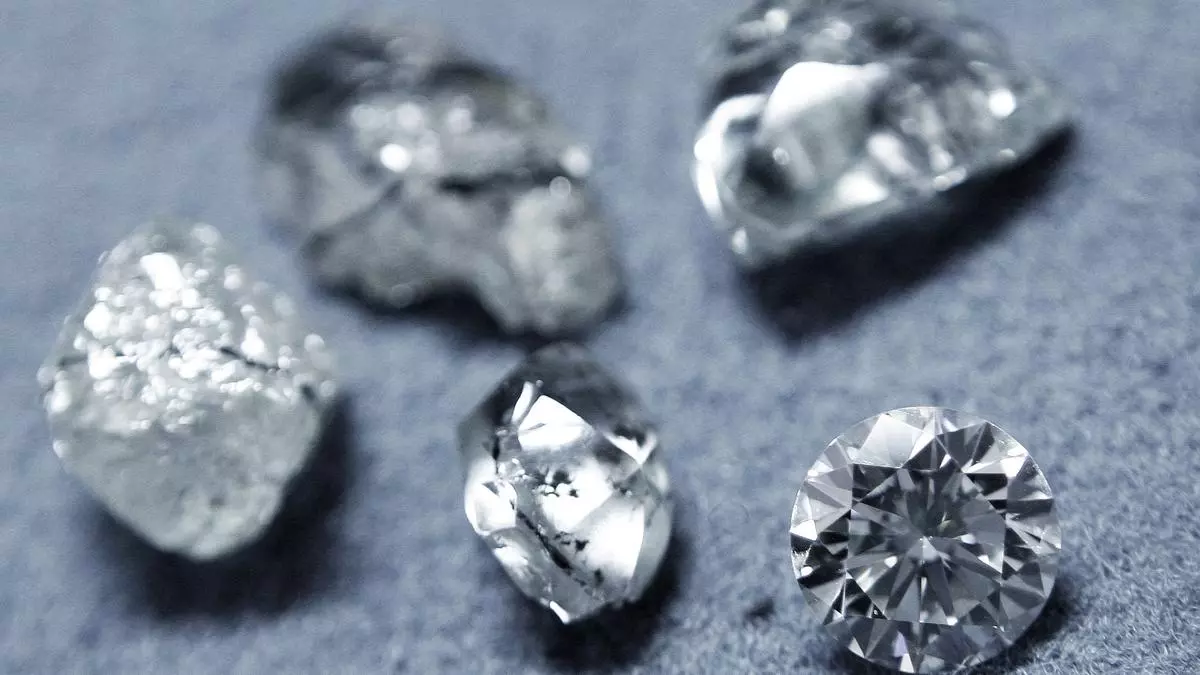
In the Budget for 2023-24, Finance Minister Nirmala Sitaraman announced reduction in customs duties for ‘seeds’ for lab grown diamonds, to give a fillip to diamond manufacturing in India. The government also gave a grant of ₹242 crore to IIT Madras for setting up an India Centre for Lab Grown Diamonds (InCent-LGD) for research into LGDs.

Growing diamonds is a time-consuming process — it takes about 12 days for a diamond to grow through the conventional ‘high pressure, high temperature’ method — discovered by GE in 1955 — by which almost all the synthetic diamonds are produced today.

Diamonds are just carbon atoms arranged in a certain way. The HPHT method involves dissolving carbon in liquid metal at a high pressure of about 5 Giga Pascals (50,000 times the atmospheric pressure) at 1,300–1,600oC. The molten metal behaves like a solvent for the dissolved carbon; the carbon atoms move towards the diamond seed crystal and deposit themselves on it — just growing the lattice structure. Over a few days, it becomes diamond. Diamonds produced by this method cannot be very big.

Is there a way to produce diamonds easier, faster and bigger? Yes, says a group of Korean scientists.

In a recent paper published in Nature, they describe how they grew diamonds in just 15 minutes at a temperature of 1,025oC, with no seed particles. Importantly, this was at ambient pressure.

How they did it

The group of 15 scientists (including an Indian, Babu Ram) of the Ulsan National Institute of Science and Technology, created a cocktail of gallium, iron, nickel and silicon by putting them in a graphite crucible. Then they pumped in methane at 1,175oC. Diamonds formed at the bottom, where the liquid metal had solidified, and “had rainbow colours to the eye”. Then they used a different methane — 13CH4 — where the carbon atom is of an isotope of carbon and they found diamonds were purer. The researchers established that the crystals were diamond using methods of Raman spectroscopy, transmission electron microscopy and X-ray diffraction.

They found that diamonds nucleate and grew at the centre, where they believe there was a “temperature gradient” (slight lower temperature). Carbon atoms rushed to the spot, piled on each other and formed a structure that we know to be diamond. They did many runs, spanning different lengths of time. They found that diamonds start forming between 10 minutes and 15 minutes (compared with 12 days through the HPTP method!) The diamonds keep growing with time but stop growing at around 150 minutes.

This method is a path-breaking discovery. That this is done at ambient pressure is significant. It may not be perfect, but it suggests a new way of making diamonds. The Korean scientists suggest that the system could be tweaked, such as with a different cocktail of metals, for better results.

“The possibilities of exploring diamond growth with this type of approach seem promising,” they say in their paper.


Source link

YouTube
Instagram
WhatsApp
