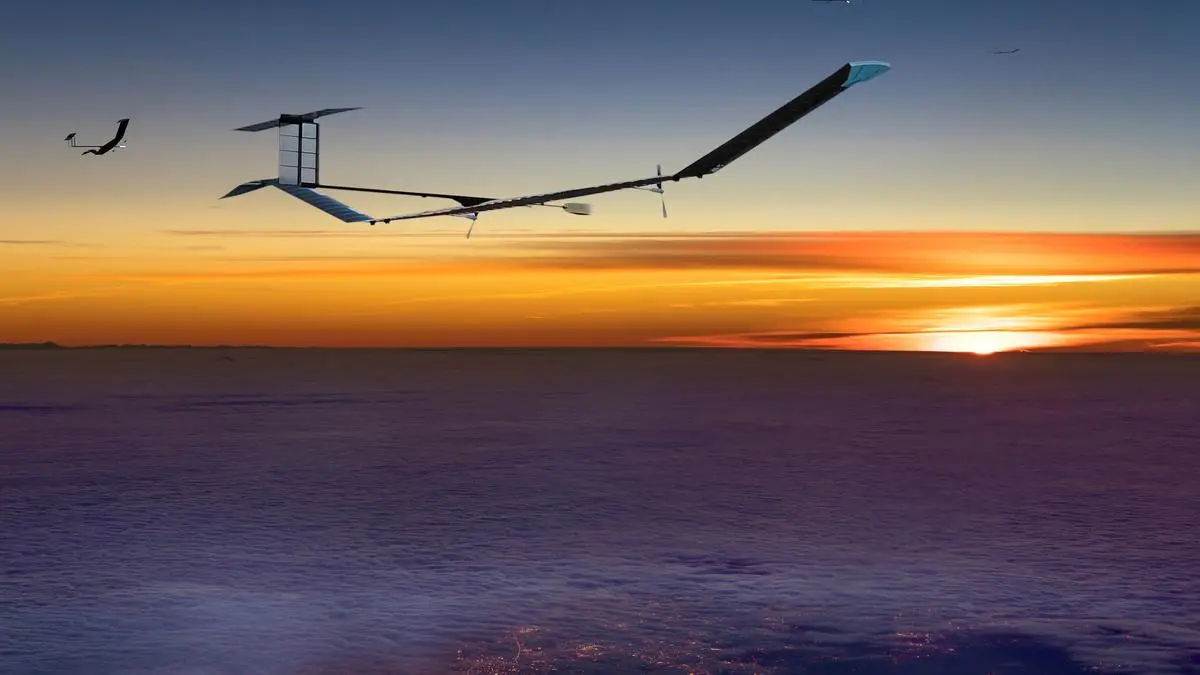
India on course to joining the elite HAP club

India on course to joining the elite HAP club


India has carved a place for itself in many exclusive niches — it is among the very few countries to have achieved moon landing, to possess anti-satellite missile systems, intercontinental ballistic missile (ICBM) and ICMBs with multiple independently targetable re-entry capabilities. And now, the country is on course to join a very select club of countries that have their own long-flight, High-Altitude Platforms (HAP).

On May 7, the public funded research body, CSIR-NAL (National Aerospace Laboratories), test-flew a vehicle first to a height of about 3,000 feet (with a ‘synthetic aperture radar’ payload, made by the start-up, Galaxeye Space). It came back and took off again and flew to 25,000 feet (about 8 km), without the payload. The “subscale flight” was a milestone event in the journey towards the development of a full-scale HAP. The learnings from the flight would be used to build a bigger vehicle, which is the target of the ‘High Altitude Platform Program’, by December 2025. When NAL achieves the feat, India might be only the second or the third country to have HAP (depending upon other countries’ progress.)

What is HAP?

HAP is an unmanned aerial vehicle. Think of it as a big drone, but with two essential differences — the HAP typically operates at a height of 18-20 km above earth, clearing all air traffic and weather, and is equipped to stay up there for longer periods than drones — from several hours to even months.

The HAP that NAL is developing is being designed to stay airborne for 90 days — unless other HAP hopefuls get better earlier, NAL’s HAP would set a world record.

A HAP can do many things that a satellite can — surveillance, imaging the earth below, for both civilian and strategic purposes and can also be used, where economics work out, to provide telecommunications and broadband services over a chosen region — all at a fraction of the cost of a satellite. Of course, a satellite can be packed with far more capabilities and can stay up there for years — so HAPs won’t replace satellites but will complement them. Potentially, HAPs could compete with Elon Musk’s Starlink.

A satellite does not need to be powered for its orbital flight — it does this by gravity. But a HAP needs some propulsion system, with on-board energy generation capability. This, today, only means solar power, with batteries to store energy for night-time flight.

A new player in the sky

NAL’s HAP that was test-flown on May 7 was a much smaller version than the target vehicle. It stood 12-m across from wing-to-wing, had two motors with conventional solar panels and lithium-ion batteries to power them. This was just to collect data that would be used in the building of the bigger vehicle, Dr Abhay Pashilkar, told quantum.

The full-scale vehicle that is under development will be very different than the subscale model, in terms of size and energy-propulsion systems. With a wingspan of 35 metres (roughly same as of A-320 aircraft) and weighing 150 kg, the HAP will be capable of carrying payloads up to 15 kg.

The vehicle that NAL is developing is at the cutting edge of technology. Dr L Venkatakrishnan, NAL’s Program Director–High Altitude Platform, and Chief Scientist and Head, Experimental Aerodynamics Division, told quantum that the full-scale vehicle’s solar cells would not be the conventional silicon, but of gallium arsenide, and produced by the US company MicroLink. These can convert 30 per cent of sunlight into electricity; conventional solar cells do 20 per cent maximum.

And the battery of NAL’s HAP will pack much more energy. The energy density of the battery — likely to be a lithium-silicon or lithium-sulphur— will be 400-500 Watt-hour per kg of material; comparatively, Tesla’s batteries have about 270 Whr/kg. As for total battery power, Venkatakrishnan said, “a lot depends upon the design and payload — now we can only say what is the Whr/kg at cell level that we aim for.”

Furthermore, the solar cells and the batteries should be shielded from the extreme cold at an altitude of 20 km (minus 55oC).

Venkatakrishnan said the HAP could carry payloads weighing up to 15 kg. It will be geostationary, circling over a chosen region 24×7, at a speed of 100 kmph.

Taking the vehicle up there could be as challenging as making it. Since the HAP is basically a light-weight vehicle one must be careful about the structural integrity of the airframe. “It is like crossing a road,” Venkatakrishnan said, “once you get to the other side, you are safe, but while you are crossing you must be careful.”

Future plans

Between now and December 2025, NAL will be building a full-scale prototype, using the learnings from the recent sub-scale flight. The full-scale HAP will also be equipped with auto pilot capabilities — the hardware for it would be bought, but the software written in-house. To test the software, NAL might do one more flight of a sub-scale vehicle later this year.

“Over the next one-and-a-half years, a lot of ground tests will be done,” Venkatakrishnan said.

NAL is really aiming for the sky. No other HAP in the world is capable 90-day endurance. Airbus’ Zephyr has demonstrated 64 days flight. Others are being built. Phasa-35, made by UK’s Prismatic (a subsidiary of BAE Systems) last year demonstrated a stratospheric flight for 24 hours, but the company mentions “several months” as the HAP’s endurance. Lockheed Martin was working on a High Altitude Airship, a much heavier vehicle, but is said to have closed the program.

How much would the HAL cost? Venkatakrishnan did not wish to divulge the cost of developing the HAP, (nor the budget for the program which began in April 2021) but observed that the Zephyr had been offered for £8 million.

But then cost considerations take a backseat when it comes to a country’s security or disaster relief — the most likely uses of the HAP.




Source link

AI will eliminate all jobs, jobs will remain like a hobby: Elon Musk

AI will eliminate all jobs, jobs will remain like a hobby: Elon Musk


Elon Musk, CEO of Tesla, stated that artificial intelligence (AI) will eventually eliminate all jobs, but he believes this is not necessarily a bad development, as reported by CNN. Speaking at a startup and tech event in Paris on Thursday, Musk said, “Probably none of us will have a job”.

Elon Musk was speaking remotely via webcam at the Viva Tech event, where he predicted a future where jobs would be “optional.” He said, “If you want to do a job that’s kinda like a hobby, you can do a job.” Musk added, “But otherwise, AI and the robots will provide any goods and services that you want.”

Musk highlighted that for this scenario to succeed, there would need to be a “universal high income;” which should not be confused with universal basic income; however, he did not elaborate much on this concept. The Universal Basic Income (UBI) refers to the government providing a certain amount of money to everyone, regardless of their earnings.”There would be no shortage of goods or services,” Musk stated.

He highlighted that AI capabilities have advanced rapidly over the past few years, advancing so quickly that regulators, companies, and users are still figuring out how to utilize the technology responsibly. In the past, Musk has also expressed his concerns about AI. During his keynote on Thursday, he described technology as his biggest fear.

He cited the “Culture Book Series” by Ian Banks, a utopian fictionalized depiction of a society run by advanced technology, as the most realistic and “the best envisioning of a future AI.” Musk questioned whether people would feel emotionally fulfilled in a future without jobs.”

The question will really be one of meaning, if the computer and robots can do everything better than you, does your life have meaning?” Musk said. He added, “I do think there’s perhaps still a role for humans in this, in that we may give AI meaning. “He also advised parents to control and limit the amount of social media their children consume, saying that social media platforms “are being programmed by a dopamine-maximizing AI.

“Industry experts are continuously raising concerns over how various industries and jobs will be transformed as AI proliferates in the market. CNN reports that in January, researchers at MIT’s Computer Science and Artificial Intelligence Lab found that workplaces are adopting AI more slowly than some had expected and feared. The report also noted that many jobs previously identified as vulnerable to AI were not economically beneficial for employers to automate at that time.

Experts largely believe that many jobs requiring high emotional intelligence and human interaction, such as mental health professionals, creatives, and teachers, will not need replacing.


Source link

America will send an Indian astronaut to International Space Station by year-end: US envoy

America will send an Indian astronaut to International Space Station by year-end: US envoy


America will send an Indian astronaut to the International Space Station by the end of the year, US envoy to India Eric Garcetti said on Wednesday.

He said the NISAR project, a joint Earth-observing mission between US space agency NASA and the Indian Space Research Organization (ISRO), is also likely to be launched by the end of the year.

“We are going to put an Indian astronaut into the International Space Station this year.

“We promised when PM Narendra Modi came (to the US in 2023) that by the end of this year, we will do this and our mission is still on track to be able to go in space this year,” he said.

The US ambassador was speaking on the sidelines of an event to mark the 248th Independence Day of the United States.

He said both India and the US should look at coordinating research and critical emerging technology so that they can increasingly leverage each other’s strengths.

The diplomat said India landed ‘Chandrayaan 3’ on the Moon last year at a fraction of the cost that the US incurred on a similar lunar mission.

“The US has some capacities that India still doesn’t have today. When the two are combined, both countries have those capacities,” he said.

On the civilian nuclear energy arena, Garcetti said post elections, the Indian government can address outstanding liability issues and move forward “arm in arm and hand in hand”.

Two sites in India – Mithi Virdhi in Gujarat and Kovadda in Andhra Pradesh – have been earmarked for US companies to build nuclear reactors.

However, the companies have raised concerns over the Civil Liability Nuclear Damage Act 2010, which provides for prompt compensation to the victims for damage caused by a nuclear incident through a no-fault liability regime.


Source link

Reddit Forges Pact With OpenAI to Bring Content to ChatGPT

Reddit Forges Pact With OpenAI to Bring Content to ChatGPT


Reddit Inc. forged a partnership with OpenAI that will bring its content to the chatbot ChatGPT and other products, while also helping the social media company add new artificial intelligence features to its forums. 

Shares of Reddit, which had their initial public offering in March, jumped as much as 15% in late trading following the announcement.

The agreement “will enable OpenAI’s AI tools to better understand and showcase Reddit content, especially on recent topics,” the companies said Thursday in a joint statement. The deal allows OpenAI to display Reddit’s content and train AI systems on its partner’s data.

Reddit will also offer its users new AI-based tools built on models created by OpenAI, which will place ads on its partner’s site. Financial terms of the deal were not disclosed.

Reddit content has long been a popular source of training data for making AI models — including those of OpenAI. Last week, Reddit released new policies governing the use of its data, part of an effort to increase revenue through licensing agreements with artificial intelligence developers and other companies. 

“Our data is extremely valuable,” Chief Executive Officer Steve Huffman said at the Bloomberg Technology Summit earlier this month. “We’re seeing a ton of interest in it.”

Finding new moneymaking opportunity was part of Reddit’s pitch in the lead-up to its IPO. The company also signed an accord in January with Alphabet Inc.’s Google worth $60 million to help train large language models, the technology underpinning generative AI.

Huffman previously declined to discuss the specifics of the Google deal but said typical terms can govern how long a Reddit summary can show up in a Google search or whether a licensee has to display Reddit branding in AI-generated results. The San Francisco-based social network has signed licensing deals worth $203 million in total, with terms ranging from two to three years, and has been in talks to strike additional licensing agreements. 

OpenAI, for its part, is increasingly forging partnerships with media companies to help train its AI systems and show more real-time content within its chatbot. The ChatGPT maker also penned deals with Dotdash Meredith earlier this month and the Financial Times in April.

Backed by Microsoft Corp., the startup has emerged as a driving force in the development of AI. Sam Altman, CEO of OpenAI, has a long history with Reddit. He was one of the company’s largest shareholders at the time of its IPO earlier this year and briefly served as Reddit’s interim CEO in 2014.

The companies noted in the statement that their partnership was led by OpenAI Chief Operating Officer Brad Lightcap and was approved by its independent directors.

The shares of Reddit, which had declined 5.5 per cent to $56.38 in regular New York trading Thursday, soared as high as $64.75 after the partnership was announced. The stock has gained 66 per cent since its IPO.

More stories like this are available on bloomberg.com


Source link

Solar storms that caused pretty auroras can create havoc with technology — here’s how

Solar storms that caused pretty auroras can create havoc with technology — here’s how


At the weekend, millions of people around the world were treated to a mesmerising display of the aurora borealis and aurora australis, better known as the northern and southern lights. The lights, usually seen in crown-like regions surrounding the Earth’s poles, were pushed to mid-latitudes by heightened activity from the Sun.

The same geomagnetic storms causing the auroras can cause havoc with our planet’s human-made infrastructure. These storms, caused by high energy particles from the Sun hitting our atmosphere, have the potential to knock out electrical grids and satellites. So what were the impacts of this recent burst of stormy space weather? Around May 8, an active region of the Sun exploded, flinging a billion-tonne cloud of magnetised and electrically charged material known as a coronal mass ejection (CME) towards the Earth. This turned out to be the first of several successive CMEs, which later merged to form a single, massive structure.

This crashed into our planet’s magnetosphere, the region of space near Earth that is dominated by the terrestrial magnetic field. As sub-atomic particles from the CME are funnelled downward, channels of electrical current flowing through part of the atmosphere known as the ionosphere, are intensified.

Apart from triggering the auroral displays, this can cause powerful magnetic fluctuations at the Earth’s surface. As a result, electrical currents can flow through power grids, pipelines and railway lines, potentially interfering with normal operations.

The sub-atomic particles from the CME can cause damage to the solar panels and electronics of satellites. On Saturday, Elon Musk said that his company SpaceX’s Starlink internet satellites were “under a lot of pressure,” because of the storm, “but holding up so far”.

The disturbances in the ionosphere were compounded by a series of bright eruptions called “flares” on the Sun that poured high energy radiation across the Earth’s sunlit face. Flare activity is associated with radio blackouts that can interfere with high-frequency radio communications, such as those required by aircraft on trans-oceanic flights. There are indications that the storm caused some disruption on transatlantic flights, but these reports are still being assessed.

Shawn Dahl, service coordinator for the Space Weather Prediction Center at the National Oceanic and Atmospheric Administration (NOAA) in Colorado, told US National Public Radio that power grid operators had been busy “working to keep proper, regulated current flowing without disruption”.

He also added that some GPS systems had struggled to lock locations and had offered incorrect positions. These GPS problems appear to have caused disruption to navigational systems in farming equipment in the US. Many tractors use GPS to plant precise rows in a field, avoid gaps and overlaps. The problems happened during the height of planting season in the midwest and Canada.

Some of this may sound a bit like a Hollywood disaster movie. Yet, while the GPS problems caused significant disruption in agriculture, impacts do not appear to have been widespread across the Earth. For many or most, life seems to have carried on, regardless. How come? Awareness and preparedness certainly helped. What we just experienced was, without question, an unusually strong space weather event. It’s early days and scientists will be analysing the storm of May, 2024 for years to come. However, early indications are that last weekend’s geomagnetic storm was the most powerful since the “Halloween storm” of October, 2003. Beyond the beautiful lights in the sky, the negative impacts of the 2024 storm aren’t yet completely clear.

At this stage, it doesn’t look like there were any catastrophic failures, but infrastructure operators will be taking stock to understand if, and how, their systems were affected. Behind the scenes, national agencies such as NOAA and the Met Office in the UK were monitoring the activity, issuing forecasts and alerts to interested parties, and liaising with experts and governments. In response, infrastructure operators took steps to ensure the continuity of services and safeguard their equipment.

Even bigger storms

However, what we’ve just experienced wasn’t the biggest such event ever seen. That honour goes to the “Carrington Event” of September, 1859, in which a massive CME (or most likely a pair of CMEs) triggered a huge geomagnetic storm that pushed the aurora borealis as far south as the Caribbean, and induced such powerful currents in copper telegraph lines that at least one operator suffered a severe electric shock – though he lived.

By some metrics, the Carrington event was two to three times more powerful than the storm we have just witnessed. Such massive events are rare, probably occurring once every couple of hundred years, in contrast to the May 2024 storm which was of a scale seen once every couple of decades.

Human technology is able to cope with relatively powerful space weather events, but modern technologies and infrastructure have never experienced anything like the Carrington event. This is why researchers strive to better understand space weather and work with agencies and government to predict and mitigate its impact on our society and develop better forecasting tools.

Jim Wild, Professor of Space Physics, Lancaster University


Source link

OpenAI co-founder Ilya Sutskever departs ChatGPT maker

OpenAI co-founder Ilya Sutskever departs ChatGPT maker


OpenAI co-founder and chief scientist Ilya Sutskever is leaving the startup at the center of today’s artificial intelligence boom.

“OpenAI would not be what it is without him,” OpenAI CEO Sam Altman wrote in a message to the company, which OpenAI posted on its blog.

Microsoft-backed OpenAI makes the popular ChatGPT chatbot, which sparked a race among the world’s largest tech companies for dominance in the emerging generative AI field.

Jakub Pachocki will be the company’s new chief scientist, the company said on its blog.

Pachocki has previously served as OpenAI’s director of research and led the development of GPT-4 and OpenAI Five.

“After almost a decade, I have made the decision to leave OpenAI,” Sutskever said in a post on X.

Sutskever posted that he is working on a new project “that is very personally meaningful to me about which I will share details in due time.”

Sutskever played a key role in Altman’s dramatic firing and rehiring in November last year. At the time, Sutskever was on the board of OpenAI and helped to orchestrate Altman’s firing.

Days later, he reversed course, signing onto an employee letter demanding Altman’s return and expressing regret for his “participation in the board’s actions.”

After Altman returned, Sutskever was removed from the board and his position at the company became unclear.

Sutskever’s exit comes a day after the company said at an event on Monday that it would release a new AI model called GPT-4o, capable of realistic voice conversation and able to interact across texts and images.

Shortly after launching in late 2022, ChatGPT was called the fastest application ever to reach 100 million monthly active users. However, worldwide traffic to ChatGPT’s website has been on a roller-coaster ride in the past year and is only now returning to its May 2023 peak, according to analytics firm Similarweb.

Sutskever has long been a prominent researcher in the AI field. Before founding OpenAI, he worked as a researcher at Google Brain, and was a postdoctoral researcher at Stanford, according to his personal website. He started his career working with Geoffrey Hinton, one of the so-called “godfathers of AI”.


Source link

YouTube
Instagram
WhatsApp


