Checking out the Sun: Why ISRO’s Aditya L-1 mission is unique in many ways

Checking out the Sun: Why ISRO’s Aditya L-1 mission is unique in many ways


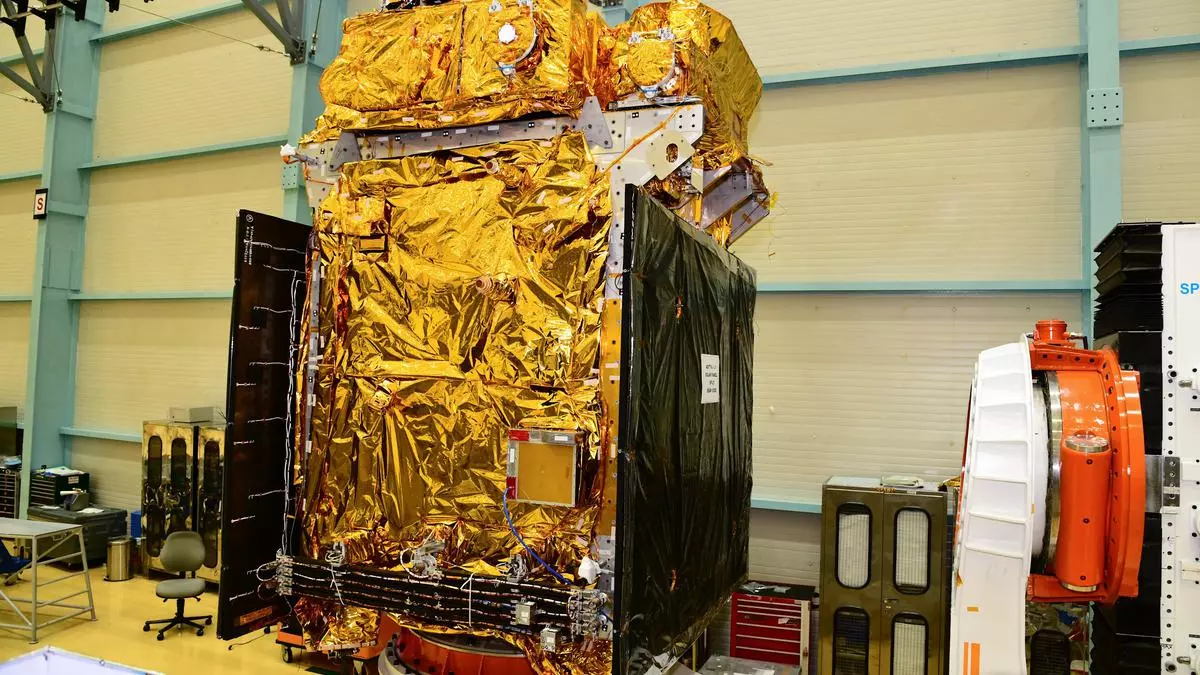
ISRO’s Aditya L-1 mission, the Indian space agency’s most complex mission ever, which is scheduled to launch by the end of August or early September, is unique in many ways.  

For the first time, India is building a ‘space observatory’ — the spacecraft that will be peering at the Sun all the time, checking out the ball of fire 24×7. 

India has never put a spacecraft at a Lagrange point, which is a point between two or more massive objects (like the Sun and the Earth) where the massive objects exert equal pull over the spacecraft so that it “stays” right there. Placing a spacecraft precisely at a point in space 1.5 million km away from Earth (between Earth and Sun), calls for extreme deftness in ‘steering’ the spacecraft to its slot. Keeping it there is even tougher.  

Also Read | India’s space dreams to lift off?

There are five Lagrange points in the Sun-Earth system; Aditya is going to be positioned at Lagrange-1. 

And the two principal instruments onboard Aditya L-1 — SUIT and VELC — are completely home-made — designed and built by Indian scientists. Furthermore, the VELC will do ‘spectropolarimetric measurements’ to study the magnetic field of the Sun — for the first time by any country from space. As such, the data it generates will contribute a lot to science. 

But first, why the interest in the Sun? 

The Aditya L-1 spacecraft is essentially a space telescope. Broadly, the Aditya L-1 mission has two purposes — long term (scientific quest) and short term (protecting our satellites).  

The mission had its genesis in 2006, when a group of scientists from the Indian Institute of Astrophysics and the Astronomical Society of India made a presentation to ISRO, underscoring the need to protect satellites from ‘things’ coming out of the Sun. Back then, the idea was to put up a small satellite in the Low Earth Orbit, which would monitor the Sun, imaging it. But Prof U. R. Rao, a former Chairman of ISRO, suggested that the scope of the mission be expanded, and the spacecraft placed at Lagrange-1 point.  

Also Read | How ISRO is working on next generation rockets 

The idea was to monitor the Sun constantly so as to provide an early warning against solar storms that can damage our satellites and electrical grids. Solar storms can take many forms, such as coronal mass ejections (or billions of tons of matter flung out of the Sun, which can shoot off anywhere including towards the Earth) and solar flares, which are sudden bursts of energy, often in the form of tongues of fire thousands of kilometres long that can spew X-rays, electromagnetic waves, or high-energy particles all across space and can disrupt radio communications and harm astronauts in space). Imagine GPS going out of whack! Aditya L-1 is a sort of an early warning system. 

As for the long term, it is understood that ultraviolet rays from the Sun can impact climate on the Earth and the ozone layer in the atmosphere. UV radiation of wavelengths between 200 and 310 nanometres is absorbed by the oxygen and ozone in the Earth’s atmosphere. UV radiation above 310 nm pierces through the atmosphere. We need to know what kind of UV the Sun is likely to emit. Changes in UV radiation can influence cloud formation, water vapor content and temperature patterns in the Earth’s lower atmosphere. It is important, therefore, to study the behaviour of the Sun to see its impact on the Earth’s climate. 

Why Lagrange-1 point? 

Illustration of Lagrange points of the Sun-Earth system.

As shown in the picture, the L-1 point lies between the Sun and the Earth, affording a spacecraft placed there an excellent view of the Sun. L-1 (along with L-2 and L-3) are ‘halo orbits’, where a spacecraft placed there keeps going round an invisible centre. An object kept there is very unstable, because the spacecraft is subject to constant pulls and pushes in space. Imagine keeping a pin stable between two magnets — that is how difficult it is. While taking the spacecraft to that ‘parking slot’ is tough, keeping it there is tougher, because all celestial objects cause ‘gravitational perturbations’ on the spacecraft and ground controllers on the Earth would have to make small orbital adjustments to counteract the perturbations. Still, L-1 is preferred because it is the best vantage point to observe the Sun. If you want to build a ‘watchtower’ in space to observe the Sun 24×7, L-1 is where you should build it.  

How does Aditya L-1 study the Sun? 

Aditya L-1 houses seven instruments; some study the Sun from afar while the others analyse the particles from the Sun that stream into the spacecraft. But mainly there are two instruments — the Solar Ultraviolet Imaging Telescope (SUIT) and the Visible Emission Line Coronagraph (VELC) — both designed and built in India. 
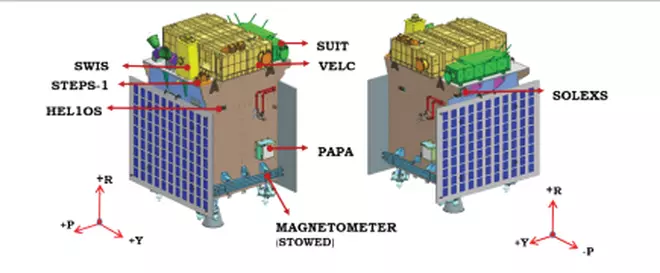
Locations of Aditya-L1 payloads on the spacecraft. R, P and Y indicate the Raw, Pitch and Roll axis of the spacecraft. ASPEX Payload Consists of SWIS & STEPS.

Locations of Aditya-L1 payloads on the spacecraft. R, P and Y indicate the Raw, Pitch and Roll axis of the spacecraft. ASPEX Payload Consists of SWIS & STEPS.

The SUIT will be looking at the disc of the Sun, which comprises the inner photosphere and the outer chromosphere, while the VELC will peer into the rim (corona). The SUIT will capture the near-ultraviolet rays (200-400 nm wavelength) coming from the Sun; VELC will pick up the near-Infra red radiation from the Sun. Both the instruments were built at the Inter-University Centre for Astronomy and Astrophysics (IUCAA), Pune. 

“These are very unique instruments, completely built in India,” says Dr Somak Raychaudhary, who was involved in the development of SUIT. Raychaudhary, who is now the Vice Chancellor of the Ashoka University, Delhi, explained to businessline that since both SUIT and VELC look at the Sun at the same time, it would be possible to see the effect of any changes in the Sun’s photosphere and chromosphere on the corona—giving a better picture of how the star behaves.  

The Sun is not solid like the Earth is, but a huge ball of gas with different layers, all surrounded by the corona. Each layer spins at a different speed. SUIT will simultaneously map different parts of the Sun — photosphere and chromosphere of the Sun using 11 filters sensitive to different wavelengths and covering different heights in the solar atmosphere. “This will help in the understanding of the processes involved in the transfer from mass and energy from one layer to the other,” according to a 2017 paper published by IUCAA scientists. 

The VELC will study the corona. It will do both photograph (optical imaging) and spectrograph, which is splitting of light into its constituent wavelengths — a study of the spectrographic lines can tell a lot about the light emitter, which, in this case, is the Sun. Dr. Dipankar Banerjee, who was involved with the development of the VELC in IUCAA, explains that the instrument can spectropolarimetric observation. Polarimetric measurements refers to the orientation of electromagnetic waves — sort of slanting this way or that way — which “carries information about the magnetic field of the Sun,” says Banerjee. “This is a unique experiment, because this has never been done by anybody from space,” Banerjee told businessline. The magnetic field is the “main culprit” responsible for all the dynamics of the Sun, so understanding the magnetic field is useful. 
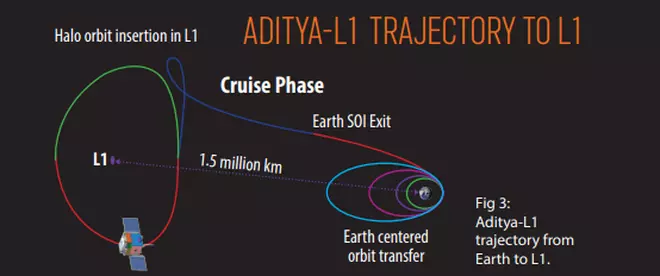
Aditya-L1 trajectory from Earth to L1.

Aditya-L1 trajectory from Earth to L1.

Then the VELC can investigate the red and green spectroscopic lines, which give a peek into the temperature of the region of the Sun from where the light has come. 

The other five instruments pick up and analyse X-rays and particles from the Sun. So, the seven instruments on Aditya L-1 cover the entire gamut of electromagnetic radiation — near infra-red, visible light, near ultraviolet and X-rays as well as particles bursting out of the Sun — all from a vantage point at L-1. If the mission is successful, ISRO can claim to have the Sun in its pocket. 


Source link

Imaging technique reveals potential for advanced DNA nanodevices: IISc

Imaging technique reveals potential for advanced DNA nanodevices: IISc


Scientists from the Indian Institute of Science’s Department of Biochemistry have used an imaging method to identify how DNA building blocks stack on a single strand — paving the way for constructing intricate DNA nanodevices and uncovering essential insights into the structure of DNA.

DNA serves as the foundational blueprint for every living cell, carrying the essential information for growth, functioning, and reproduction. Typically, each DNA strand comprises four nucleotide bases: Adenine (A), Guanine (G), Thymine (T), and Cytosine (C). These bases on one strand pair up with their counterparts on the opposing strand to form double-stranded DNA (A pairs with T, and G pairs with C).

The stability of DNA’s double helix structure relies on two types of interactions: base-pairing — interaction between bases on different strands — is well-known, while base-stacking (interaction between bases on the same strand) has remained less explored, according to the researchers.

“Base-stacking interactions are typically stronger than base-pairing interactions,” said Mahipal Ganji, Assistant Professor at the Department of Biochemistry, IISc, and corresponding author of the paper published in Nature Nanotechnology.

To study all 16 possible base-stacking combinations, the researchers used DNA-PAINT (Point Accumulation in Nanoscale Topography).

“DNA-PAINT is an imaging technique that works on the principle that two artificially designed DNA strands, each ending on a different base, when put together in a buffer solution at room temperature, will bind and unbind to each other randomly for a very short time,” said the team.

For this, one strand (imager strand) was tagged with a fluorophore that would emit light during binding, and we tested the stacking of this strand on top of another docked strand. The binding and unbinding of different strand combinations (based on the end bases) were captured as images under a fluorescence microscope.

Through this process, it was discovered that incorporating an additional base-stacking interaction into a DNA strand can amplify its stability by up to 250 times.

Additionally, each nucleotide pair exhibited distinct stacking strengths. This insight enabled the design of an efficient three-armed DNA nanostructure, potentially forming a polyhedron-shaped vehicle for biomedical applications, including targeted disease marker identification, and precision therapy delivery.

Using the data obtained from DNA-PAINT, the researchers built a model that linked the timing of binding and unbinding with the strength of interaction between the stacked bases, noted Abhinav Banerjee, first author and PhD student at the Department of Biochemistry.

However, work is ongoing to improve the DNA-PAINT technique itself. By leveraging stacking interactions, the team plans to design novel probes that would expand the potential application of DNA-PAINT, Banerjee said.

Beyond imaging and nanotechnology, the research draws broader implications. Ganji envisions these findings contributing to the study of fundamental properties in single and double-stranded DNA, potentially shedding light on DNA repair mechanisms, disruptions of which are implicated in various diseases, including cancer.


Source link

Baring the biodiverse heart of the Thar desert

Baring the biodiverse heart of the Thar desert


The Thar, one of the most populated deserts in the world, has long been perceived as a barren wasteland. However, a recent study by IIT-Jodhpur shows that this arid ecosystem harbours remarkable biodiversity, containing four distinct ecoregions.

The study used community science, specifically crowdsourced bird data from the online resource eBird, to assess the biota and delineate the ecoregions. 

The roughly 3.85 lakh sq km Thar Desert accounts for about 9 per cent of India’s land area and 2.12 per cent of its fauna — 682 species of flora and 1,195 species of fauna. 

Manasi Mukherjee, one of the researchers, says the Thar has not received as much attention in global ecological studies as the larger deserts like the Sahara and Namib due to its smaller size and the lack of interdisciplinary research and long-term ecological assessments. 

Four ecoregions

Eastern Thar, comprising nine districts, is marked by the Aravalli region and the eastern agro-industrial region. 

Western Thar, with five districts, includes the western arid regions. 

The ‘transitional zone’ consists of 13 districts on either side of the Aravalli range. 

The ‘cultivated zone’, with six districts scattered across the Thar, was identified as an evolving zone due to anthropogenic activities and a higher risk of habitat fragmentation, posing a concern for near-threatened species, Mukherjee says. 

As the report puts it, “As relatively fewer species and high endemism characterise deserts, loss of one species is reflected as a much higher percentage of biodiversity loss.”

Bird methodology 

Birds have been found to be valuable indicators of ecosystem functions, making them essential to ecological research, Mukherjee says. “Using crowdsourced data from eBird, we report for the first time how a single taxon can be successfully used for delineation of ecoregions,” the report says.

A total of 492 bird species were recorded across 33 districts in Rajasthan, which collectively make up nearly 70 per cent of Thar. 

The birds serve as a representative biota for inferring shifts in ecoregions, the effect of anthropogenic activities, and the need for ecoregion-based conservation strategies to protect endangered habitats and species.

Mukherjee says crowdsourcing data through citizen science programmes is a cost-effective means of covering a wide spatial area. 

Birds played a central role in this research, serving as indicators of ecoregion dynamics.

The report says that “the variation in bird diversity is a reflection of the differences in the major geographic regions of Thar”.

Mukherjee says that, thanks to their adaptability and wide distribution, birds also helped in identifying invasive species and the ecological changes due to climate change or human activities.


Source link

Oppenheimer’s ‘near-zero’ confidence

Oppenheimer’s ‘near-zero’ confidence


In Oppenheimer, General Groves (played by Matt Damon) asks the man who made the atom bomb if he was confident that the explosion wouldn’t destroy the entire world. Oppenheimer (Cillian Murphy) says that he was confident that the probability of that happening was ‘near zero’ to which Groves replies, “zero would be nice.”

The fear, as expressed by another Manhattan Project physicist, Edward Teller, who would later testify against Oppenheimer (destroying his reputation), was that the energy released by the bomb would be so huge as to cause hydrogen atoms in the atmosphere to fuse, releasing even more energy. The ensuing chain reaction would burn down the planet. It was to the probability of this happening that Oppenheimer’s confidence was “near zero”. Apparently, Ed Teller was less sure.

We are literally the living proof that Oppenheimer was right. However, why didn’t the fusion of hydrogen atoms happen as feared? Turns out that the energy released by the atom bomb tested on July 16, 1945 or the two that were dropped on Japan the next month was not enough to get the atmospheric hydrogen atoms to fuse.

Dr Steven Biegalski, Chair of Nuclear and Radiological Engineering at Georgia Institute of Technology explains, “The density of fusible atoms and the energy balance prevented it from happening.” But, Biegalski was speaking of the bomb of those days. Today, the world is in possession of much more potent bombs. If one of them is detonated, this time, the destruction may not be local.


Source link

Engineering a thermally stable perovskite solar cell

Engineering a thermally stable perovskite solar cell


Scientists at the International Advanced Research Centre for Powder Metallurgy and New Materials (ARCI), Hyderabad, have engineered methylammonium lead iodide (MAPI) to attain thermal stability by incorporating guanidinium iodide and moisture stability through surface passivation using 5- amino valeric acid iodide. The scientists also fabricated mini modules for use in real-time applications.

The modified MAPI exhibits a 2D/3D encapsulant layer at the perovskite surface, which helps the perovskite attain high moisture and temperature stability. The engineered MAPI films exhibit excellent temperature (150-plus degrees C) and ambient stability (more than 59 days) when compared with traditional MAPI films.

This stable perovskite was used as an absorber in carbon-based perovskite solar cells and was successfully integrated with road reflectors to power the LEDs, which were used to charge commercial 1.2V batteries. It can be powered under a full sun and also functions at diffused light, which is key in niche applications.

Organic light harvester

A new nanogenerator device developed for harvesting light energy using organic material has the potential to power wearable devices on the go. The device can generate current and voltage from minute amounts of heat or light that fall on it.

The scientific community is exploring various ways to meet the ever-growing demand for energy. Harnessing energy from the nano regime is a prime area of focus, and energy generation from organic materials holds great potential for sustainability.

Scientists at the Institute of Advanced Study in Science and Technology (IASST), in Guwahati, have developed the nanogenerator device for harvesting light energy using organic material.

The exploration of energy materials by IASST led to the synthesis of an organic energy material called polyaniline-rubrene and the fabrication of an organic pyroelectric nanogenerator (OPyNG), says an IASST press release.

The device features polycrystalline graphene oxide and polyaniline-rubrene forming a rectifying junction. In this configuration, the polyaniline-rubrene thin film serves as the photoactive layer responsible for generating charge carriers. The pyroelectric effect of the device owes to the light-induced change in spontaneous polarisation occurring in the ultra-thin oxidised surface layer of the polyaniline-rubrene thin film.


Source link

Battling tuberculosis in speed mode

Battling tuberculosis in speed mode


India accounts for a quarter of tuberculosis cases worldwide. However, recent research by the Department of Community Medicine and Family Medicine, All India Institute of Medical Sciences, Bhubaneswar, suggests that the country has made remarkable strides in combating this deadly disease and stands a chance of eliminating it by 2025, five years ahead of the global target.

Since 1962, when the National Tuberculosis Programme (NTP) was launched, the strategies to tackle this communicable disease have evolved over time, culminating in the establishment of the National Tuberculosis Elimination Programme (NTEP) in 2020 with the stated aim of eradicating TB from the country.

There are multiple challenges along the way, topped by limited budget allocation. As the AIIMS-Bhubaneswar research paper, titled ‘India marching towards TB elimination: How far we are’, states: “There are some challenges which India needs to overcome to achieve its target five years ahead of the [United Nations] Sustainable Development Goals. Insufficient budget, inadequate diagnostic facilities, under-reporting, low success rate, high dropout rate, social stigma are some of the major challenges.”

Shortage of funds hinders the adoption of comprehensive strategies, and the expansion of diagnostic facilities and treatment options. The study calls on the government to prioritise TB elimination through higher budget allocation.

Early detection

Enhanced diagnostic capability is another key aspect of the battle against TB, the research notes. It is essential to equip healthcare facilities with advanced diagnostic technologies to accurately detect TB and determine drug resistance. Newer tools such as the Gene Xpert MTB/ RIF assay and MERM (medical event reminder monitor) can revolutionise TB diagnosis and choice of treatment.

Similarly, early detection of the disease is vital for higher success rates. “For any disease to be eliminated, the idea is to identify all active cases at the earliest, prevent cross-infection from active cases to other people, treat the patient completely, and ensure good follow-up,” says Dr Anantha Krishnan, an infectious disease expert at Prashanth Hospitals, Chennai.

Social factors

TB has two forms: pulmonary (affecting the lungs) and extra-pulmonary. It can affect any part of the body, making diagnosis challenging. Accurate diagnosis through proper use of tools must be followed by the initiation of anti-tuberculosis treatment (ATT), ensuring patient’s compliance and completion of ATT, and adequate follow-up care.

Equally important is the need to address the social, economic, cultural, and nutritional vulnerabilities in the fight against tuberculosis. Factors such as overcrowding, migration, social stigma, and poor nutritional status contribute to the spread and persistence of the disease.

“To prevent tuberculosis, focusing on the overall health and immune system is essential. Dietary tips include incorporating a variety of fruits and vegetables, opting for whole grains, including pulses and legumes, consuming dairy products, and staying hydrated with traditional beverages,” says Madhavi Avate, a nutritionist and lactation counsellor.

Role of private sector

Sounding a note of caution, Dr Krishnan says, “India’s TB treatment is not centralised as it is not uniform. Nearly 50 per cent of TB patients are diagnosed in the private sector and the rest by the government sector. Although the private sector reporting of tuberculosis has gone up from 4 per cent to 25 per cent, there is a huge gap due to underreporting, so I do not think India is in any position to eliminate tuberculosis by 2025.”

The inclusion of private healthcare providers in TB elimination efforts can vastly expand the reach of diagnostic and treatment services, the study recommends. Policies, regulation, and advocacy are needed to ensure delivery of adequate treatment and care services.

An added challenge is TB’s co-infection with diseases like HIV and diabetes. Integrating TB services with existing health programmes can optimise resources and improve outcomes for those with dual burdens.


Source link

YouTube
Instagram
WhatsApp




