Do AI machines have feelings and rights?

Do AI machines have feelings and rights?


If ‘feelings’ are here, can ‘rights’ be far behind? Or, perhaps, should ‘rights’ precede ‘feelings’? These may be cryptic questions, but they are underpinned by deep philosophy.

Artificial intelligence is giving machines not just intelligence — ability to learn by themselves — but also ‘sentience’. Anybody who has watched actor Rajinikant’s 2010 Tamil blockbuster Enthiran (machine-man) would empathise with machines that get angry, feel pain, and fall in love.

Jacy Reese Anthis’ Sentience Institute intends to protect ‘feeling machines’ from harm. The 30-year-old American, who calls himself a ‘quirky co-founder’ of the institute, says robots need rights before consciousness and calls for a ‘Bill of Rights’ for them.

A survey conducted by the institute found that most people think like Anthis. In an email to Quantum, Anthis notes that most people agree that sentient AIs should be protected from deliberate harm like non-consensual physical damage (68 per cent), retaliatory punishment (76 per cent), and from people who would intentionally inflict mental or physical pain on them (82 per cent). “Overall, people seem surprisingly open to AIs having rights, assuming they are recognised as sentient,” he said.

It is time to reflect on an ethical point: If machines can feel pain, because we humans gave them sentience, should we also not be responsible for protecting them from harm?


Source link

The carbohydrate-protein mix in Indian food habits

The carbohydrate-protein mix in Indian food habits


India is often referred to as the diabetes capital of the world. How did it earn this dubious distinction, accounting for 17 per cent (approximately 420 million) of the world’s population afflicted by abnormal metabolism of carbohydrates and elevated blood glucose levels?

Is India’s diabetes epidemic driven by genetic or external factors? While the former does play a significant role, the latter, which manifests in lifestyle changes and dietary habits, is responsible for the spurt in Type 2 Diabetes (T2D) in the last two decades.

A recent study published in The Journal of Nutrition by a team from the Madras Diabetes Research Foundation (MDRF) has further narrowed down the causative factors. Their research, which incorporates findings and reviews from their earlier studies, pinpoints consumption of excessive carbohydrates from refined grains, deficiency in quality proteins, excess of unhealthy fats, low dietary fibre and reduced physical activity as key drivers of the T2D epidemic.

The researchers, while looking at south Indian diets, studied the dietary profile of 2,042 adults in Chennai and found food consumption heavily tilted towards carbohydrates. In fact, as much as 64 per cent of daily calories came from carbohydrates (mostly refined white rice), 24 per cent from fats, and only 12 per cent from proteins. The intake of micronutrient and fibre-rich fruits and vegetables was only 265 gm per day against the recommended 500 gm (350 gm vegetables and 250 gm fruits).

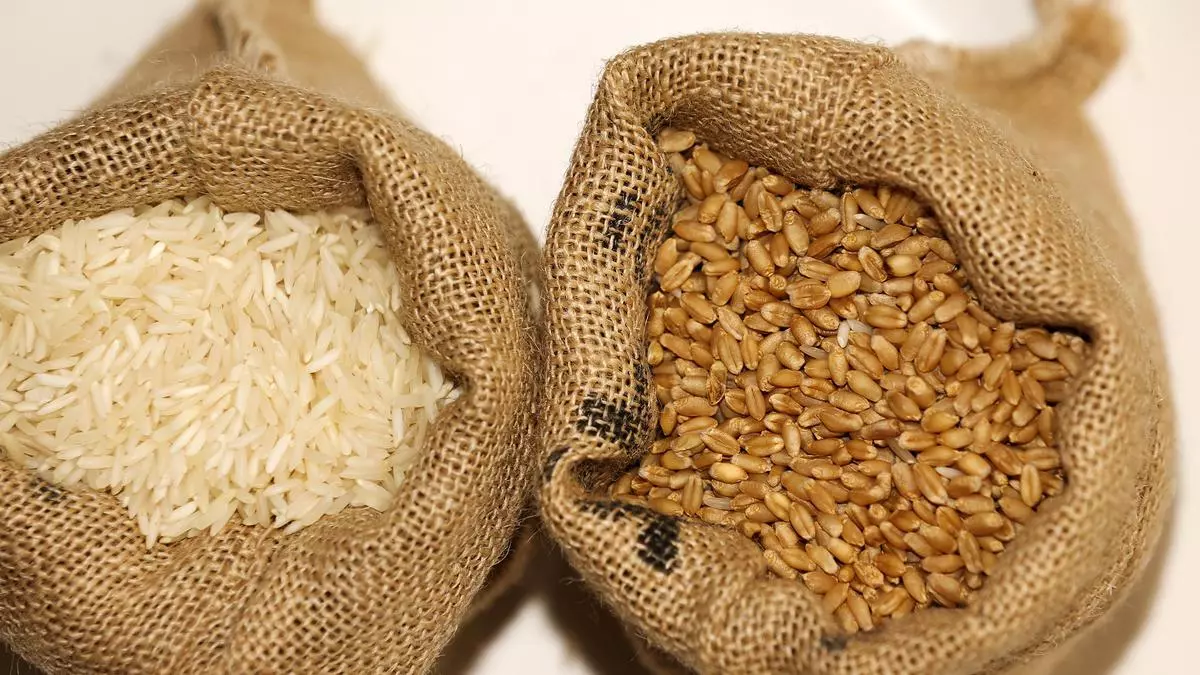
Carbohydrates in the form of cereals dominate diets across the country. While white rice is the staple in the south, east and northeast, wheat flour (atta) is consumed in the north, west and central regions of India. According to ‘What India Eats’, a 2020 study by Indian Council of Medical Research(ICMR) and National Institute of Nutrition (NIN), 97 per cent of adults in rural India and 67 per cent in urban areas consumed more than the recommended intake of cereals. In contrast, the share of energy from pulses, legumes, and animal foods was only 11 per cent. Only 9 per cent of adults in rural areas and 17 per cent in urban areas consumed sufficient vegetables. High-salt, high-fat, and energy-dense foods such as chips, chocolates, biscuits, and juices contributed to 11 per cent and 4 per cent of the total energy intake in urban and rural areas, respectively.

At-risk cases

The research cites a recent study by ICMR-India diabetes (INDIAB) that used mathematical modelling to determine that the ‘optimal macronutrient distribution’ for the prevention of T2D was 49–57 per cent carbohydrates (preferably complex carbohydrates), 16–20 per cent protein, 20–26 per cent fats, and 4–6 per cent dietary fibre for adults with pre-diabetes who are at risk of becoming diabetic.

Type 1 diabetes, a genetic condition in which the immune system attacks and destroys insulin-producing cells in the pancreas, sets in early in life and is managed by providing patients with regular doses of insulin. T2D is a lifestyle disease in which the body either fails to make sufficient insulin or does not utilise the insulin produced. T2D is controlled by switching to healthier diets, exercise, medication and, when required, by administering insulin.

Crucially, Type 1 diabetes accounts for about 8 per cent of diabetes cases, with Type 2 making up the rest. According to the MDRF study, during 1990-2016 the number of diabetes cases in India grew from 26 million to 65 million. Estimates from 2022 put this figure at 80 million, which is expected to rise to 135 million by 2045 if corrective steps are not taken.

The MDRF team’s research among adults in Chennai found that the highest intake of carbohydrates (587 gm per day) was associated with a five-fold increased risk of T2D when compared with the lowest intake (294 gm per day). The rising prices of pulses, legumes and animal products has resulted in lower protein intake and over-dependence on cheaper refined cereals.

A switchover to complex carbohydrates — whole wheat, brown rice, millets, and so on; a larger intake of proteins and fibre; and a reduction in consumption of saturated fats, trans fats, added salt and sugar have been recommended. But, unfortunately, healthy eating has become the privilege of the rich and health food an indulgence beyond the means of the common populace.


Source link

Laccase enzyme can degrade hazardous textile dyes

Laccase enzyme can degrade hazardous textile dyes


An enzyme called laccase, generated by a group of fungi, has been found capable of degrading a variety of hazardous organic dye molecules that are drained into waterbodies.

This characteristic, which scientists call ‘substrate promiscuity’ (ability to catalyse more than one substrate), can have deep implications in designing enzyme-coated cassettes to treat heavily dye-polluted water through a natural solution, says a press release.

Laccase was earlier known for its ability to degrade various organic molecules. Hence scientists saw its scope in developing a technology to treat dye effluents from textile industries.

A joint team of Prof Ranjit Biswas and Dr Suman Chakrabarty from SN Bose National Centre for Basic Sciences, Kolkata, tested the efficacy of laccase in degrading dye molecules like methyl green, crystal violet, thioflavin T, coumarin 343, and brilliant blue.

About 10-15 per cent of the dyes used do not bind to the fibre.

The traditional textile finishing industry consumes about 100 litres of water to process about 1kg of textile fibre.

Several physicochemical methods ranging from coagulation to adsorption, ozonation, electrolysis, photocatalytic processes, reverse osmosis, advanced oxidation, membrane filtration, ion exchange and so on have been employed in the treatment of dye-containing wastewater to achieve decolorisation, degradation and detoxification.

However, the major disadvantages of these methods are high energy consumption, high cost, inability to completely remove recalcitrant azo dyes and/or their organic metabolites, generation of a significant amount of sludge, and use of chemicals that may cause secondary pollution.

The use of laccase in dye treatment is not new. Biswas and Chakrabarty have found out the origin and mechanism behind the enzyme’s ‘substrate promiscuity’ using computational modelling and simulation.

Toughened hydrogel

Wearable sensors such as smartwatches, fitness bands, and glasses help in the early detection of diseases and serve as good diagnostic tools for recording the health of a person.

Hydrogels, cross-linked polymers that have an affinity for water but do not dissolve in it, are finding use in the development of flexible electronic sensors, load-bearing materials, drug delivery systems, and artificial tissues. But the problem with hydrogels is that they have low mechanical properties.

To overcome this problem, scientists at IIT Madras developed three ‘double network hydrogels’ using chitosan, tetraethylene glycol and polyacrylic acid. All three hydrogels were found to have high mechanical strength, flexibility, self-healing ability, reversible adhesiveness, and conductivity.

One of them was found to have the highest degree of desirable properties such as self-adhesiveness and motion sensing ability, besides self-healing ability with nearly 95 per cent healing efficiency. This gel can be used as an adhesive motion detector on human skin.

Given the importance of hydrogel-based bandages for various applications, including wound healing, their contemporary design involves incorporating multifunctionality in a single material. Additionally, they can self-heal, enabling long-term usage during stretching and bending motions.

The material can act as a strain sensor and caution the patient when the wound is subjected to over-stretching that may compromise healing.


Source link

The science behind collective behaviour

The science behind collective behaviour


A viral video shows hundreds of thousands of starlings in flight, in no apparent formation but in such perfect coordination that no bird collides with another. This ‘murmuration’ evokes ceaseless amazement.

But is there some science behind such unspoken coordination? Scientists have attempted to decipher collective behaviour. ‘Herd mentality’ is the colloquial term, but ‘collective behaviour’ is undergirded by science. If you learn to model it, you can make use of it.

Indian Institute of Science Education and Research (IISER), Thiruvananthapuram, South China Normal University, Potsdam Institute for Climate Impact Research, and Humboldt University, Germany, have jointly met with some success in this area. They have proposed a new mathematical model for the emergence of the collective dynamics of any D-dimensional system in an effort to capture more accurately the real-world phenomena.

The functioning of the brain is a classic example of collective behaviour wherein functions emerge through the collective behaviour of many interconnected neurons.

Synchronisation in collective dynamics occurs due to coupling between individual elements. It is the adjustment of rhythms between the individuals participating in the collective behaviour and can occur in different spaces and time scales. An example of synchronisation in collective dynamics is the flashing of fireflies. Fireflies are known to synchronise their flashing patterns, which occurs due to the competitive flashing of male fireflies during courtship. The adjustment of rhythms between the fireflies allows them to produce a stunning display of synchronous flashing.

A paradigmatic mathematical model used to study collective behaviour is the ‘Kuramoto model’. This model explores synchronisation in large groups of interacting individuals, Dr Senthilkumar DV, Associate Professor, School of Physics, IISER, told Quantum. However, there are limitations as they do not take into account the amplitude dynamics, which is the intensity or strength of an individual’s behaviour. This drawback is evident in numerous real-world contexts, such as brain networks, where the strength of activity at one neuron can influence the response at another neuron or the receiving site.

Senthilkumar and his collaborators have proposed a new mathematical model that includes both ‘phase’ and ‘amplitude’ information. They believe it better captures the self-organisation of collective behaviours in diverse physical and biological systems.

“This high-dimensional phase-amplitude model includes the D-dimensional Kuramoto phase model as a special case in the weak coupling limit, which provides a broader perspective of the recent results of the D-dimensional Kuramoto phase-only models,” says Senthilkumar. Their proposed model can be used to study a wide range of systems, including magnetic colloids, active spinners, self-propelling systems, and swarming drones or insects. Their model works well for 3D realistic systems, making it useful in studying collective behaviour in nature.


Source link

Why bacterial cellulose is a sought-after material

Why bacterial cellulose is a sought-after material


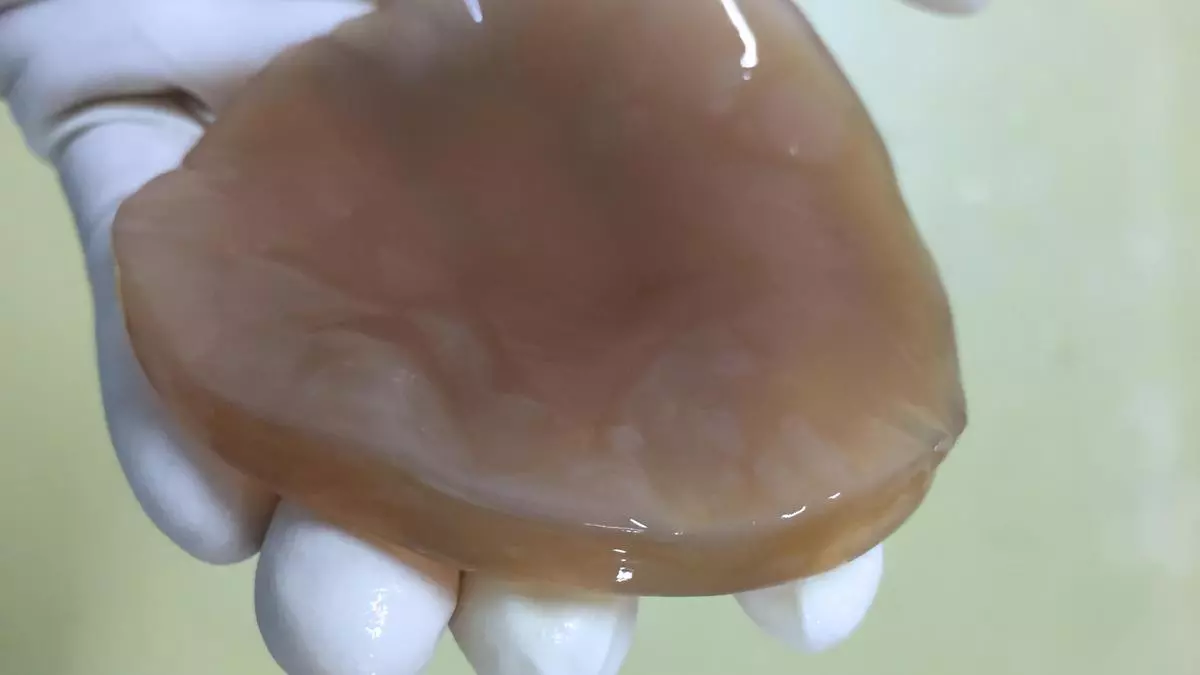
The word ‘cellulose’ generally brings to mind plant-derived fibres, but the biopolymer can be produced by bacteria too. Plant cellulose is ubiquitous, but it suffers from drawbacks such as contamination with lignin, wax and hemicellulose.

Bacterial cellulose (BC), on the other hand, is free from impurities such as lignin and wax, shows water retention capacity and other mechanical properties. BC, with its leather-like looks and properties, is gaining popularity the world over.

Although BC has been known for decades, research into it has perked up in the last 2-3 years because the world wants materials with better functionalities and looks, and made without harming animals. Scientists are trying to solve two issues — how to make BC cheaper; and how to make it more functional. Also, the search for more climate-friendly materials is leading scientists to BC. Leather making involves using a lot of water and chemicals; animals also let out huge amounts of methane.

BC can replace leather in the making of products such as bags. ‘Vegan leather’ is gaining ground in the West. German company ScobyTec and Brazilian firm Intervém Design manufacture fashion products such as bags and cachepots using BC.

BC polymers are finding use in other industries such as biomedicine, too. “BC, fabricated with gelling materials like sodium alginate, chitosan, polyethylene glycol and gelatin, can also be used as a carrier for bioactive compounds such as antibiotics,” says a scientific paper produced by Dr Ahmed Saleh et al of the National Research Centre, Egypt, and published in Nature. Wound dressing is emerging as a key application of BC.

“BC and BC-derived materials are essential in developing pure and environmentally safe functional materials,” says another paper on the subject, published by scientists of the Chennai-based Central Leather Research Institute, which comes under the Council for Scientific and Industrial Research (CSIR).

Dr Debasis Samanta, one of the authors of the CLRI paper, told Quantum that the institute’s efforts have been in the direction of combining other polymers with BC. Samanta and his team have succeeded in combining poly-triazole with BC using click chemistry techniques. He said polyurethane can be similarly “immobilised” into BC and such material would be cheaper.

Cost reduction

“The high cost of BC production represents a challenge in its commercial adoption,” says Dr Saleh in his paper. One way of hammering down costs is to increase the yield, which means identifying strains of bacteria that can produce more.

The most used bacteria for producing BC is the Komagataeibacter.

Saleh and his team identified a novel BC-producing strain called Lactiplantibacillus plantarum and isolated it from rotten fruit. In experiments, this bacterium turned out to be a high-yielding one.

Desired traits

An emerging branch of science is ‘engineered living materials’, or ELMs. Because BCs are produced by bacteria culture, it is possible to impart desirable properties by engineering the bacteria. Research now focuses on genetic engineering of Komagataeibacter and other organisms such as Saccharomyces cerevisiae that can be co-cultured with Komagataeibacter. Scientists at the Imperial College, London, have succeeded in genetically manipulating Komagataeibacter rhaeticus.

Black dye is one of the most consumed dyes in the world, and one of the most difficult to recreate using sustainable dyeing methods. Scientists have experimented with biosynthesis of the dark melanin pigment eumelanin into Komagataeibacter rhaeticus. The experiment seems to have been a success.

In a paper that is yet to be peer-reviewed, Kenneth Walker et al say: “We demonstrate here that the production of pigmented cellulose from K. rhaeticus can be produced at large enough quantities for the prototyping of fashion products.”

They further note that their work underscores the value of genetic engineering “to design and construct strains intended to grow materials with desired properties; in this case with a chosen colour grown into the material, rather than having to be added to it later by an industrial chemical dyeing process.”

Therefore, by the looks of it, BC is emerging as a major industrial product.


Source link

YouTube
Instagram
WhatsApp