Inferences from an inferno

Inferences from an inferno


While the raging fires that laid waste the city of Lahaina, including a centuries-old banyan tree, in the Maui island of Hawaii is a pinching reminder of what a careless fire can do to a climate-change-dried earth, human-caused infernos are nothing new.

A recent study by scientists at Marshall University, US, has revealed that human-lit fires roared through southern California and caused the extinction of several large mammals – 13,000 years ago.

La Brea in Los Angeles is known for its tar pits. These pits have trapped thousands of animals in the last 50,000 years, preserving their bones. These bones reveal much.

Scientists from Marshall University analysed radiocarbon dates of 172 specimens from seven extinct and one extant species. They found that there had been a “complete extirpation of mega-fauna and unprecedented fire activity.” From sediment cores of Lake Elsinore, they found out that, about 13,200 years ago, “charcoal accumulation rates” increased over 30 times. A radical shift in vegetation was also inferred, which “appears to have been triggered by human-ignited fires in an ecosystem stressed by rapid warming, a mega-drought and a millennial-scale trend toward the loss of large herbivores from the landscape.”


Source link

Checking out the Sun: Why ISRO’s Aditya L-1 mission is unique in many ways

Checking out the Sun: Why ISRO’s Aditya L-1 mission is unique in many ways


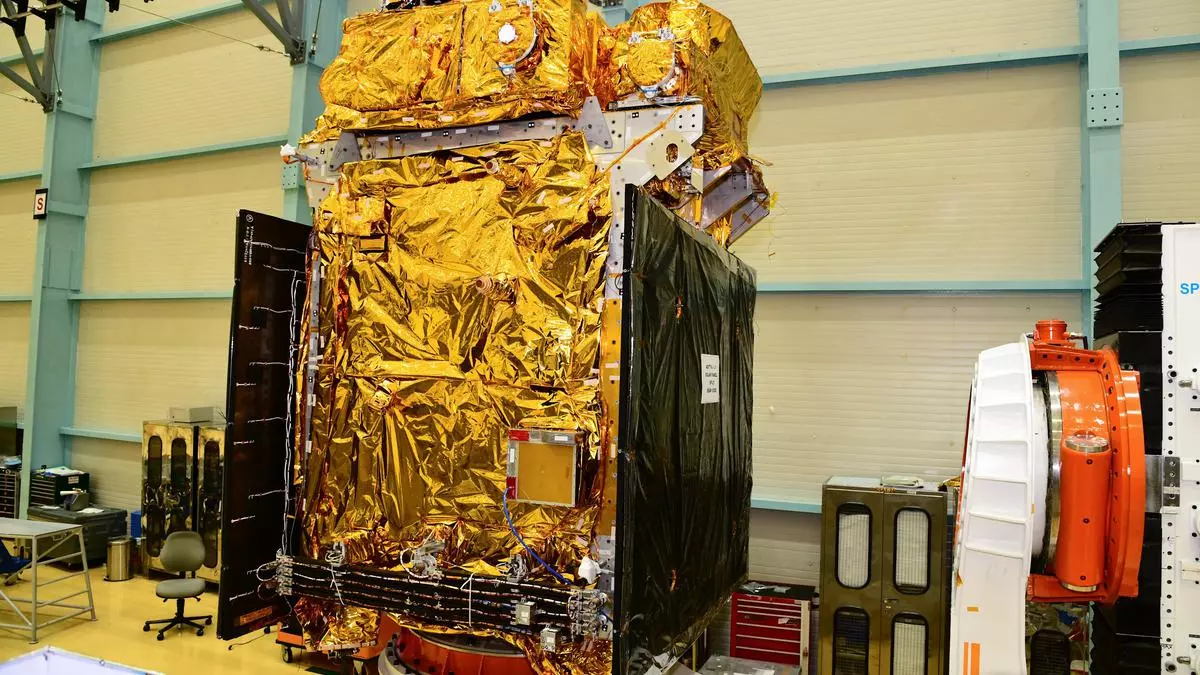
Aditya-L1, the first space-based Indian observatory to study the Sun, is getting ready for the launch. The satellite realised at the U R Rao Satellite Centre (URSC), Bengaluru has arrived at SDSC-SHAR in Sriharikota.
| Photo Credit:
ANI

ISRO’s Aditya L-1 mission, the Indian space agency’s most complex mission ever, which is scheduled to launch by the end of August or early September, is unique in many ways.  

For the first time, India is building a ‘space observatory’ — the spacecraft that will be peering at the Sun all the time, checking out the ball of fire 24×7. 

India has never put a spacecraft at a Lagrange point, which is a point between two or more massive objects (like the Sun and the Earth) where the massive objects exert equal pull over the spacecraft so that it “stays” right there. Placing a spacecraft precisely at a point in space 1.5 million km away from Earth (between Earth and Sun), calls for extreme deftness in ‘steering’ the spacecraft to its slot. Keeping it there is even tougher.  

Also Read | India’s space dreams to lift off?

There are five Lagrange points in the Sun-Earth system; Aditya is going to be positioned at Lagrange-1. 

And the two principal instruments onboard Aditya L-1 — SUIT and VELC — are completely home-made — designed and built by Indian scientists. Furthermore, the VELC will do ‘spectropolarimetric measurements’ to study the magnetic field of the Sun — for the first time by any country from space. As such, the data it generates will contribute a lot to science. 

But first, why the interest in the Sun? 

The Aditya L-1 spacecraft is essentially a space telescope. Broadly, the Aditya L-1 mission has two purposes — long term (scientific quest) and short term (protecting our satellites).  

The mission had its genesis in 2006, when a group of scientists from the Indian Institute of Astrophysics and the Astronomical Society of India made a presentation to ISRO, underscoring the need to protect satellites from ‘things’ coming out of the Sun. Back then, the idea was to put up a small satellite in the Low Earth Orbit, which would monitor the Sun, imaging it. But Prof U. R. Rao, a former Chairman of ISRO, suggested that the scope of the mission be expanded, and the spacecraft placed at Lagrange-1 point.  

Also Read | How ISRO is working on next generation rockets 

The idea was to monitor the Sun constantly so as to provide an early warning against solar storms that can damage our satellites and electrical grids. Solar storms can take many forms, such as coronal mass ejections (or billions of tons of matter flung out of the Sun, which can shoot off anywhere including towards the Earth) and solar flares, which are sudden bursts of energy, often in the form of tongues of fire thousands of kilometres long that can spew X-rays, electromagnetic waves, or high-energy particles all across space and can disrupt radio communications and harm astronauts in space). Imagine GPS going out of whack! Aditya L-1 is a sort of an early warning system. 

As for the long term, it is understood that ultraviolet rays from the Sun can impact climate on the Earth and the ozone layer in the atmosphere. UV radiation of wavelengths between 200 and 310 nanometres is absorbed by the oxygen and ozone in the Earth’s atmosphere. UV radiation above 310 nm pierces through the atmosphere. We need to know what kind of UV the Sun is likely to emit. Changes in UV radiation can influence cloud formation, water vapor content and temperature patterns in the Earth’s lower atmosphere. It is important, therefore, to study the behaviour of the Sun to see its impact on the Earth’s climate. 

Why Lagrange-1 point? 
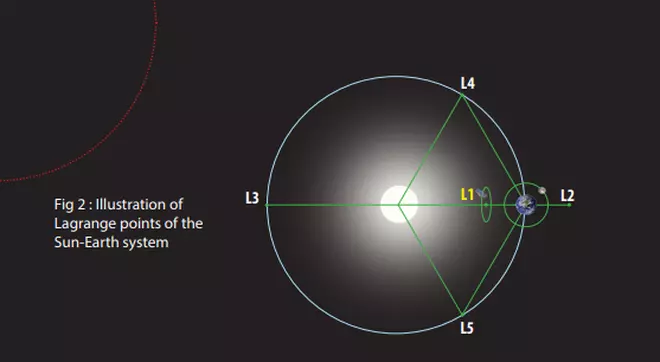
Illustration of Lagrange points of the Sun-Earth system.

Illustration of Lagrange points of the Sun-Earth system.

As shown in the picture, the L-1 point lies between the Sun and the Earth, affording a spacecraft placed there an excellent view of the Sun. L-1 (along with L-2 and L-3) are ‘halo orbits’, where a spacecraft placed there keeps going round an invisible centre. An object kept there is very unstable, because the spacecraft is subject to constant pulls and pushes in space. Imagine keeping a pin stable between two magnets — that is how difficult it is. While taking the spacecraft to that ‘parking slot’ is tough, keeping it there is tougher, because all celestial objects cause ‘gravitational perturbations’ on the spacecraft and ground controllers on the Earth would have to make small orbital adjustments to counteract the perturbations. Still, L-1 is preferred because it is the best vantage point to observe the Sun. If you want to build a ‘watchtower’ in space to observe the Sun 24×7, L-1 is where you should build it.  

How does Aditya L-1 study the Sun? 

Aditya L-1 houses seven instruments; some study the Sun from afar while the others analyse the particles from the Sun that stream into the spacecraft. But mainly there are two instruments — the Solar Ultraviolet Imaging Telescope (SUIT) and the Visible Emission Line Coronagraph (VELC) — both designed and built in India. 
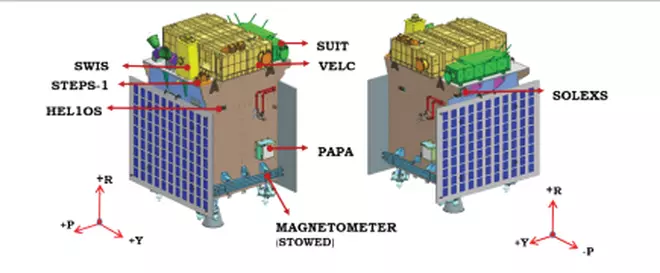
Locations of Aditya-L1 payloads on the spacecraft. R, P and Y indicate the Raw, Pitch and Roll axis of the spacecraft. ASPEX Payload Consists of SWIS & STEPS.

Locations of Aditya-L1 payloads on the spacecraft. R, P and Y indicate the Raw, Pitch and Roll axis of the spacecraft. ASPEX Payload Consists of SWIS & STEPS.

The SUIT will be looking at the disc of the Sun, which comprises the inner photosphere and the outer chromosphere, while the VELC will peer into the rim (corona). The SUIT will capture the near-ultraviolet rays (200-400 nm wavelength) coming from the Sun; VELC will pick up the near-Infra red radiation from the Sun. Both the instruments were built at the Inter-University Centre for Astronomy and Astrophysics (IUCAA), Pune. 

“These are very unique instruments, completely built in India,” says Dr Somak Raychaudhary, who was involved in the development of SUIT. Raychaudhary, who is now the Vice Chancellor of the Ashoka University, Delhi, explained to businessline that since both SUIT and VELC look at the Sun at the same time, it would be possible to see the effect of any changes in the Sun’s photosphere and chromosphere on the corona—giving a better picture of how the star behaves.  

The Sun is not solid like the Earth is, but a huge ball of gas with different layers, all surrounded by the corona. Each layer spins at a different speed. SUIT will simultaneously map different parts of the Sun — photosphere and chromosphere of the Sun using 11 filters sensitive to different wavelengths and covering different heights in the solar atmosphere. “This will help in the understanding of the processes involved in the transfer from mass and energy from one layer to the other,” according to a 2017 paper published by IUCAA scientists. 

The VELC will study the corona. It will do both photograph (optical imaging) and spectrograph, which is splitting of light into its constituent wavelengths — a study of the spectrographic lines can tell a lot about the light emitter, which, in this case, is the Sun. Dr. Dipankar Banerjee, who was involved with the development of the VELC in IUCAA, explains that the instrument can spectropolarimetric observation. Polarimetric measurements refers to the orientation of electromagnetic waves — sort of slanting this way or that way — which “carries information about the magnetic field of the Sun,” says Banerjee. “This is a unique experiment, because this has never been done by anybody from space,” Banerjee told businessline. The magnetic field is the “main culprit” responsible for all the dynamics of the Sun, so understanding the magnetic field is useful. 
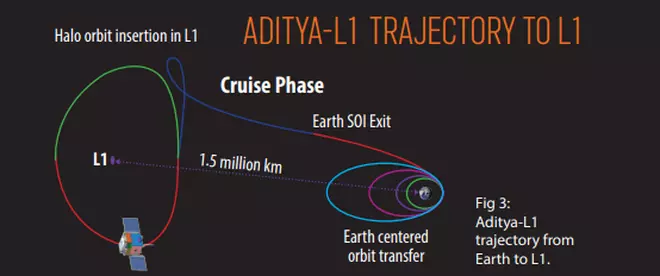
Aditya-L1 trajectory from Earth to L1.

Aditya-L1 trajectory from Earth to L1.

Then the VELC can investigate the red and green spectroscopic lines, which give a peek into the temperature of the region of the Sun from where the light has come. 

The other five instruments pick up and analyse X-rays and particles from the Sun. So, the seven instruments on Aditya L-1 cover the entire gamut of electromagnetic radiation — near infra-red, visible light, near ultraviolet and X-rays as well as particles bursting out of the Sun — all from a vantage point at L-1. If the mission is successful, ISRO can claim to have the Sun in its pocket. 


Source link

Checking out the Sun: Why ISRO’s Aditya L-1 mission is unique in many ways

Checking out the Sun: Why ISRO’s Aditya L-1 mission is unique in many ways


ISRO’s Aditya L-1 mission, the Indian space agency’s most complex mission ever, which is scheduled to launch by the end of August or early September, is unique in many ways.  

For the first time, India is building a ‘space observatory’ — the spacecraft that will be peering at the Sun all the time, checking out the ball of fire 24×7. 

India has never put a spacecraft at a Lagrange point, which is a point between two or more massive objects (like the Sun and the Earth) where the massive objects exert equal pull over the spacecraft so that it “stays” right there. Placing a spacecraft precisely at a point in space 1.5 million km away from Earth (between Earth and Sun), calls for extreme deftness in ‘steering’ the spacecraft to its slot. Keeping it there is even tougher.  

Also Read | India’s space dreams to lift off?

There are five Lagrange points in the Sun-Earth system; Aditya is going to be positioned at Lagrange-1. 

And the two principal instruments onboard Aditya L-1 — SUIT and VELC — are completely home-made — designed and built by Indian scientists. Furthermore, the VELC will do ‘spectropolarimetric measurements’ to study the magnetic field of the Sun — for the first time by any country from space. As such, the data it generates will contribute a lot to science. 

But first, why the interest in the Sun? 

The Aditya L-1 spacecraft is essentially a space telescope. Broadly, the Aditya L-1 mission has two purposes — long term (scientific quest) and short term (protecting our satellites).  

The mission had its genesis in 2006, when a group of scientists from the Indian Institute of Astrophysics and the Astronomical Society of India made a presentation to ISRO, underscoring the need to protect satellites from ‘things’ coming out of the Sun. Back then, the idea was to put up a small satellite in the Low Earth Orbit, which would monitor the Sun, imaging it. But Prof U. R. Rao, a former Chairman of ISRO, suggested that the scope of the mission be expanded, and the spacecraft placed at Lagrange-1 point.  

Also Read | How ISRO is working on next generation rockets 

The idea was to monitor the Sun constantly so as to provide an early warning against solar storms that can damage our satellites and electrical grids. Solar storms can take many forms, such as coronal mass ejections (or billions of tons of matter flung out of the Sun, which can shoot off anywhere including towards the Earth) and solar flares, which are sudden bursts of energy, often in the form of tongues of fire thousands of kilometres long that can spew X-rays, electromagnetic waves, or high-energy particles all across space and can disrupt radio communications and harm astronauts in space). Imagine GPS going out of whack! Aditya L-1 is a sort of an early warning system. 

As for the long term, it is understood that ultraviolet rays from the Sun can impact climate on the Earth and the ozone layer in the atmosphere. UV radiation of wavelengths between 200 and 310 nanometres is absorbed by the oxygen and ozone in the Earth’s atmosphere. UV radiation above 310 nm pierces through the atmosphere. We need to know what kind of UV the Sun is likely to emit. Changes in UV radiation can influence cloud formation, water vapor content and temperature patterns in the Earth’s lower atmosphere. It is important, therefore, to study the behaviour of the Sun to see its impact on the Earth’s climate. 

Why Lagrange-1 point? 

Illustration of Lagrange points of the Sun-Earth system.

As shown in the picture, the L-1 point lies between the Sun and the Earth, affording a spacecraft placed there an excellent view of the Sun. L-1 (along with L-2 and L-3) are ‘halo orbits’, where a spacecraft placed there keeps going round an invisible centre. An object kept there is very unstable, because the spacecraft is subject to constant pulls and pushes in space. Imagine keeping a pin stable between two magnets — that is how difficult it is. While taking the spacecraft to that ‘parking slot’ is tough, keeping it there is tougher, because all celestial objects cause ‘gravitational perturbations’ on the spacecraft and ground controllers on the Earth would have to make small orbital adjustments to counteract the perturbations. Still, L-1 is preferred because it is the best vantage point to observe the Sun. If you want to build a ‘watchtower’ in space to observe the Sun 24×7, L-1 is where you should build it.  

How does Aditya L-1 study the Sun? 

Aditya L-1 houses seven instruments; some study the Sun from afar while the others analyse the particles from the Sun that stream into the spacecraft. But mainly there are two instruments — the Solar Ultraviolet Imaging Telescope (SUIT) and the Visible Emission Line Coronagraph (VELC) — both designed and built in India. 

Locations of Aditya-L1 payloads on the spacecraft. R, P and Y indicate the Raw, Pitch and Roll axis of the spacecraft. ASPEX Payload Consists of SWIS & STEPS.

Locations of Aditya-L1 payloads on the spacecraft. R, P and Y indicate the Raw, Pitch and Roll axis of the spacecraft. ASPEX Payload Consists of SWIS & STEPS.

The SUIT will be looking at the disc of the Sun, which comprises the inner photosphere and the outer chromosphere, while the VELC will peer into the rim (corona). The SUIT will capture the near-ultraviolet rays (200-400 nm wavelength) coming from the Sun; VELC will pick up the near-Infra red radiation from the Sun. Both the instruments were built at the Inter-University Centre for Astronomy and Astrophysics (IUCAA), Pune. 

“These are very unique instruments, completely built in India,” says Dr Somak Raychaudhary, who was involved in the development of SUIT. Raychaudhary, who is now the Vice Chancellor of the Ashoka University, Delhi, explained to businessline that since both SUIT and VELC look at the Sun at the same time, it would be possible to see the effect of any changes in the Sun’s photosphere and chromosphere on the corona—giving a better picture of how the star behaves.  

The Sun is not solid like the Earth is, but a huge ball of gas with different layers, all surrounded by the corona. Each layer spins at a different speed. SUIT will simultaneously map different parts of the Sun — photosphere and chromosphere of the Sun using 11 filters sensitive to different wavelengths and covering different heights in the solar atmosphere. “This will help in the understanding of the processes involved in the transfer from mass and energy from one layer to the other,” according to a 2017 paper published by IUCAA scientists. 

The VELC will study the corona. It will do both photograph (optical imaging) and spectrograph, which is splitting of light into its constituent wavelengths — a study of the spectrographic lines can tell a lot about the light emitter, which, in this case, is the Sun. Dr. Dipankar Banerjee, who was involved with the development of the VELC in IUCAA, explains that the instrument can spectropolarimetric observation. Polarimetric measurements refers to the orientation of electromagnetic waves — sort of slanting this way or that way — which “carries information about the magnetic field of the Sun,” says Banerjee. “This is a unique experiment, because this has never been done by anybody from space,” Banerjee told businessline. The magnetic field is the “main culprit” responsible for all the dynamics of the Sun, so understanding the magnetic field is useful. 

Aditya-L1 trajectory from Earth to L1.

Aditya-L1 trajectory from Earth to L1.

Then the VELC can investigate the red and green spectroscopic lines, which give a peek into the temperature of the region of the Sun from where the light has come. 

The other five instruments pick up and analyse X-rays and particles from the Sun. So, the seven instruments on Aditya L-1 cover the entire gamut of electromagnetic radiation — near infra-red, visible light, near ultraviolet and X-rays as well as particles bursting out of the Sun — all from a vantage point at L-1. If the mission is successful, ISRO can claim to have the Sun in its pocket. 


Source link

Imaging technique reveals potential for advanced DNA nanodevices: IISc

Imaging technique reveals potential for advanced DNA nanodevices: IISc


Scientists from the Indian Institute of Science’s Department of Biochemistry have used an imaging method to identify how DNA building blocks stack on a single strand — paving the way for constructing intricate DNA nanodevices and uncovering essential insights into the structure of DNA.

DNA serves as the foundational blueprint for every living cell, carrying the essential information for growth, functioning, and reproduction. Typically, each DNA strand comprises four nucleotide bases: Adenine (A), Guanine (G), Thymine (T), and Cytosine (C). These bases on one strand pair up with their counterparts on the opposing strand to form double-stranded DNA (A pairs with T, and G pairs with C).

The stability of DNA’s double helix structure relies on two types of interactions: base-pairing — interaction between bases on different strands — is well-known, while base-stacking (interaction between bases on the same strand) has remained less explored, according to the researchers.

“Base-stacking interactions are typically stronger than base-pairing interactions,” said Mahipal Ganji, Assistant Professor at the Department of Biochemistry, IISc, and corresponding author of the paper published in Nature Nanotechnology.

To study all 16 possible base-stacking combinations, the researchers used DNA-PAINT (Point Accumulation in Nanoscale Topography).

“DNA-PAINT is an imaging technique that works on the principle that two artificially designed DNA strands, each ending on a different base, when put together in a buffer solution at room temperature, will bind and unbind to each other randomly for a very short time,” said the team.

For this, one strand (imager strand) was tagged with a fluorophore that would emit light during binding, and we tested the stacking of this strand on top of another docked strand. The binding and unbinding of different strand combinations (based on the end bases) were captured as images under a fluorescence microscope.

Through this process, it was discovered that incorporating an additional base-stacking interaction into a DNA strand can amplify its stability by up to 250 times.

Additionally, each nucleotide pair exhibited distinct stacking strengths. This insight enabled the design of an efficient three-armed DNA nanostructure, potentially forming a polyhedron-shaped vehicle for biomedical applications, including targeted disease marker identification, and precision therapy delivery.

Using the data obtained from DNA-PAINT, the researchers built a model that linked the timing of binding and unbinding with the strength of interaction between the stacked bases, noted Abhinav Banerjee, first author and PhD student at the Department of Biochemistry.

However, work is ongoing to improve the DNA-PAINT technique itself. By leveraging stacking interactions, the team plans to design novel probes that would expand the potential application of DNA-PAINT, Banerjee said.

Beyond imaging and nanotechnology, the research draws broader implications. Ganji envisions these findings contributing to the study of fundamental properties in single and double-stranded DNA, potentially shedding light on DNA repair mechanisms, disruptions of which are implicated in various diseases, including cancer.


Source link

Baring the biodiverse heart of the Thar desert

Baring the biodiverse heart of the Thar desert


The Thar, one of the most populated deserts in the world, has long been perceived as a barren wasteland. However, a recent study by IIT-Jodhpur shows that this arid ecosystem harbours remarkable biodiversity, containing four distinct ecoregions.

The study used community science, specifically crowdsourced bird data from the online resource eBird, to assess the biota and delineate the ecoregions. 

The roughly 3.85 lakh sq km Thar Desert accounts for about 9 per cent of India’s land area and 2.12 per cent of its fauna — 682 species of flora and 1,195 species of fauna. 

Manasi Mukherjee, one of the researchers, says the Thar has not received as much attention in global ecological studies as the larger deserts like the Sahara and Namib due to its smaller size and the lack of interdisciplinary research and long-term ecological assessments. 

Four ecoregions

Eastern Thar, comprising nine districts, is marked by the Aravalli region and the eastern agro-industrial region. 

Western Thar, with five districts, includes the western arid regions. 

The ‘transitional zone’ consists of 13 districts on either side of the Aravalli range. 

The ‘cultivated zone’, with six districts scattered across the Thar, was identified as an evolving zone due to anthropogenic activities and a higher risk of habitat fragmentation, posing a concern for near-threatened species, Mukherjee says. 

As the report puts it, “As relatively fewer species and high endemism characterise deserts, loss of one species is reflected as a much higher percentage of biodiversity loss.”

Bird methodology 

Birds have been found to be valuable indicators of ecosystem functions, making them essential to ecological research, Mukherjee says. “Using crowdsourced data from eBird, we report for the first time how a single taxon can be successfully used for delineation of ecoregions,” the report says.

A total of 492 bird species were recorded across 33 districts in Rajasthan, which collectively make up nearly 70 per cent of Thar. 

The birds serve as a representative biota for inferring shifts in ecoregions, the effect of anthropogenic activities, and the need for ecoregion-based conservation strategies to protect endangered habitats and species.

Mukherjee says crowdsourcing data through citizen science programmes is a cost-effective means of covering a wide spatial area. 

Birds played a central role in this research, serving as indicators of ecoregion dynamics.

The report says that “the variation in bird diversity is a reflection of the differences in the major geographic regions of Thar”.

Mukherjee says that, thanks to their adaptability and wide distribution, birds also helped in identifying invasive species and the ecological changes due to climate change or human activities.


Source link

Oppenheimer’s ‘near-zero’ confidence

Oppenheimer’s ‘near-zero’ confidence


In Oppenheimer, General Groves (played by Matt Damon) asks the man who made the atom bomb if he was confident that the explosion wouldn’t destroy the entire world. Oppenheimer (Cillian Murphy) says that he was confident that the probability of that happening was ‘near zero’ to which Groves replies, “zero would be nice.”

The fear, as expressed by another Manhattan Project physicist, Edward Teller, who would later testify against Oppenheimer (destroying his reputation), was that the energy released by the bomb would be so huge as to cause hydrogen atoms in the atmosphere to fuse, releasing even more energy. The ensuing chain reaction would burn down the planet. It was to the probability of this happening that Oppenheimer’s confidence was “near zero”. Apparently, Ed Teller was less sure.

We are literally the living proof that Oppenheimer was right. However, why didn’t the fusion of hydrogen atoms happen as feared? Turns out that the energy released by the atom bomb tested on July 16, 1945 or the two that were dropped on Japan the next month was not enough to get the atmospheric hydrogen atoms to fuse.

Dr Steven Biegalski, Chair of Nuclear and Radiological Engineering at Georgia Institute of Technology explains, “The density of fusible atoms and the energy balance prevented it from happening.” But, Biegalski was speaking of the bomb of those days. Today, the world is in possession of much more potent bombs. If one of them is detonated, this time, the destruction may not be local.


Source link

YouTube
Instagram
WhatsApp