Why Chennai unicorn Uniphore took over a French company

Why Chennai unicorn Uniphore took over a French company


Last month, Uniphore, a unicorn incubated at the IIT-Madras Incubation Cell, announced it had taken over a French company, Hexagone. The acquisition, says Uniphore, will add muscle to its offering, which falls under a growing branch of science — conversational artificial intelligence.

It has been a while since software plugged into human voice — translating speech into text — and things have since moved far ahead. For instance, Uniphore uses automated speech recognition and natural language processing (NLP) to help clients understand the emotions of their customers when the latter reach out to their contact centres to complain or seek help in resolving an issue.

So, how does it work?

Have you ever had your mother or partner ask over the phone why your voice is sounding low, and checking whether you’re feeling fine or ill? What did they base their question on? Voice!

Computer science and computational linguistics have converged over the past several years to help convert speech to text — also called speech recognition — which is helping companies sense the stress, delight or anger in customers’ voices. Conversational AI is proving good enough to evaluate customer sentiment.

NLP is used for automated speech recognition. Virtual assistant applications such as Siri or Alexa are ready examples of services that use speech recognition.

When it comes to speech recognition used by companies to understand customer sentiment, especially by analysing call records at contact centres, Uniphore says its conversational artificial intelligence (AI) helps predict intent from voice, sentiment, tonal cues and emotion in customer conversations. Such technology helps drive self-service before the customer’s call needs to be transferred to contact centre agents for complex queries. This also helps companies gain insights into agent performance, Uniphore says.

Conversational AI is driven by three core technologies, says Uniphore: NLP, AI, and machine learning (ML).

NLP software analyses natural human language and speech, interpreting contextual nuances and extracting relevant information. Together with natural language understanding (NLU), NLP allows humans to have conversations with AI.

AI uses the data analysed by NLP to predict patterns of communication. Conversational AI allows machines to communicate back and forth with humans, generating relevant automated responses based on the speaker’s intent and other contextual insights.

ML enables AI-based systems to ‘learn’ and improve from experience without being explicitly programmed. “A subset of machine learning, deep learning, allows conversational AI models to cluster and categorise extracted data to make highly accurate predictions. Deep learning models run on neural networks. Many voice AI-based virtual assistants use deep learning models to mimic natural human speech,” according to the Uniphore website.

These three together power many of the tools and experiences we take for granted today, such as search engines, email spam filters, language translation software, and grammar analysis.

Uniphore says the technology from Hexagone will “enhance its capability to fuse all data derived from computer vision, natural language processing, knowledge AI, and voice and tonal analysis to pick up behavioural and emotional cues”.

In a video announcing the acquisition, Hexagone chief Camille Srour explains that even the sound of frustration — the “aargh” from an angry customer — or a laugh in every conversation are picked up and analysed by this technology.

He points out that without such technology companies tend to pick up voice calls at random at the end of every year and arrive at marketing or sales strategies based on insights gained from them. This, he says, is not the ideal way. After all, if only three customers want a certain feature among the thousands of end-users, then the company would end up being misled if it happened to listen to only those three customers randomly.




Source link

Peptide factory powered by artificial intelligence

Peptide factory powered by artificial intelligence


Researchers at the Indian Institute of Technology, Madras, have developed a ‘machine learning pipeline’, which they call ‘AI-expert’, for suggesting the best combination of amino acids to form peptides for a given purpose.

Amino acids are a group of 20 compounds of carbon, oxygen, hydrogen and nitrogen. Short chains of amino acids are ‘peptides’, while long chains are proteins.

Theoretically there are billions of peptides, because amino acids can, mathematically, combine in so many ways. Much like one can form countless words with the 26 letters of the alphabet.

Scientists have all along relied on experience and intuition to come up with newer peptides, but with artificial intelligence the selection of the right candidate to solve a particular problem can be more precise.

Prof Rohit Batra and his team at the Department of Metallurgical and Materials Engineering, Indian Institute of Technology, Madras, have developed the ‘AI-expert’ to pick the ‘right horses for the courses’ among the billions of peptides. The AI-expert uses an algorithm known as Monte Carlo tree search (MCTS) to make an informed decision on the peptide sequences.

To put it simply, the AI would come up with a peptide sequence. A computer would simulate its use, determine how good it is, and give it a score. Then the AI would come up with the next one and get a score. The scores will tell the AI which direction to take and, soon enough, it will come up with the right peptide.

For the research, Batra took up penta-peptides, or peptides of five amino acids, for which, mathematically, there are 3.2 million possibilities. The AI-expert evaluated 6,600 of these and compared the results given by a group of expert peptide designers. The AI-expert had a success rate of 66.7 per cent.

While the discovery of such peptides with special properties is by itself impactful, the work holds far greater potential, says Prof Rampi Ramprasad, a Georgia Research Alliance Eminent Scholar in Energy Sustainability, School of Materials Science and Engineering, Georgia Institute of Technology, Atlanta, Georgia. “It provides a blueprint for search strategies that could be adopted in many materials and chemistry application domains, so long as the search problem can be formulated in a suitable manner,” Ramprasad says in an article in  IIT Madras Tech Talk.

Batra told  Quantum that the AI-expert could be used wherever there is a need to choose from among billions of possibilities; he, however, chose to apply this with peptides — as opposed to, say, polymers — because peptides are easy to manufacture. One can come up with the right peptide for, say, light harvesting, catalysis, mechanical stability, or conductivity. You can, for example, come up with peptides that bind to certain rare earth materials, Batra said.

Can you use AI-expert to arrive at different proteins? Proteins can have hundreds of amino acid molecules, compared to peptides with 15-20 molecules. Not possible, says Batra. The computation required would overwhelm even the best computers of today. Proteins should wait for quantum computers.


Source link

India’s first ‘high-altitude platform’ could fly in May

India’s first ‘high-altitude platform’ could fly in May


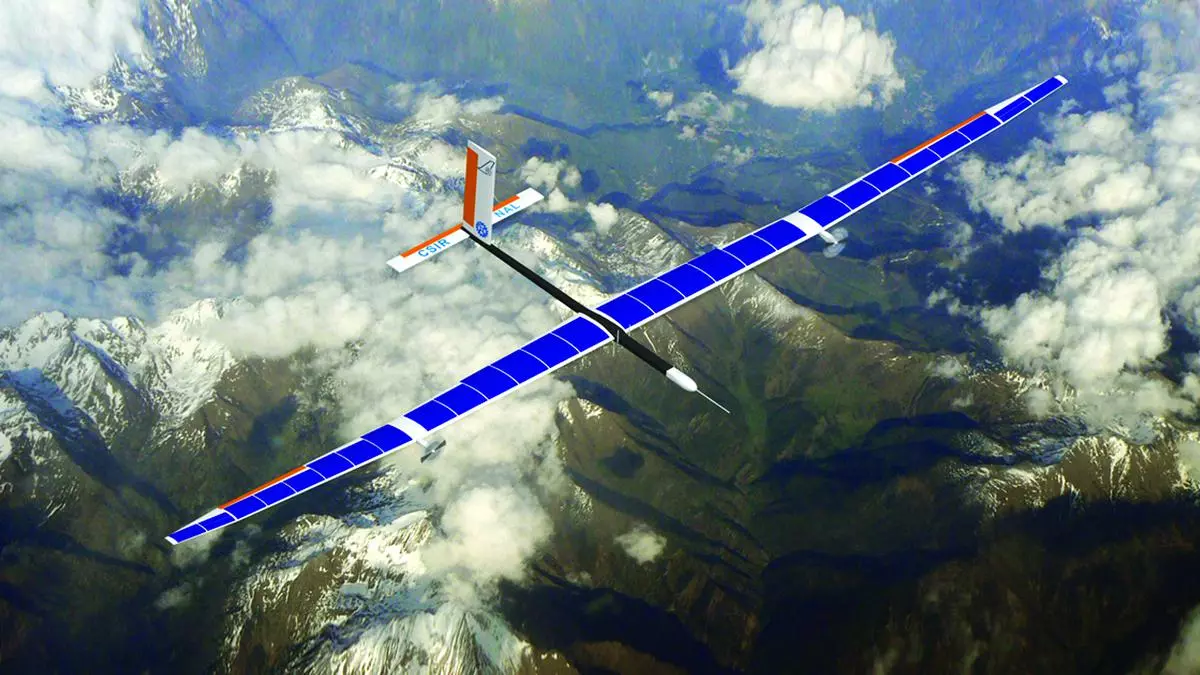
Come May, India will see its first high-altitude platform (HAP) take off. The prototype device will hover about 3 km above ground while its designer-manufacturer, National Aerospace Laboratories (NAL), tests and validates the onboard equipment.

The HAP is much like a drone, except that it can fly at much higher altitudes — 18-20 km above the earth. They are not satellites, which reach much greater altitudes and revolve around the earth only with the help of gravity. They are also not balloons of the Chinese kind that the Americans shot down recently (though some classify balloons as HAPs). Balloons are held in place by the lift provided by a light gas (helium) and they typically cannot move laterally; HAPs are fully powered propulsion systems like any other aircraft.

Dr Abhay A Pashilkar, Director, NAL, told  Quantum that the prototype is roughly one-third the size of a regular HAP. While the fully operational HAP would be stationed at an altitude of around 20 km, the prototype would remain at 3 km.

The full-fledged HAP would be ready in 2-3 years. Once India is HAP-ready, there are plenty of uses in waiting. Potential applications include guarding against external threats (border surveillance), piracy, smuggling, irregular migration, and pollution; search and rescue operations; wireless access; emergency communications; and rural communications.

Complex machines

HAPs are complex machines. They have to be lightweight because the air at 20 km altitude is very thin — one-16th the density at sea level — so the HAP must be designed for much less ‘lift’; it is the under-wings force that keeps the aircraft in flight.

An HAP would typically be stationed in the upper atmosphere for several months; since it can’t carry its own fuel, the energy must come from solar power. The solar panels must be flexible enough to adhere to the wings. They must also be high-efficiency — around 30 per cent — to be able to generate enough power to not only run equipment such as control systems and the payload, but also store enough for night-time. This would require carrying onboard an ultra-high-energy dense battery, which comprises high-end lithium-ion batteries with silicon nanowire electrodes.

Amprius, a US-based manufacturer, says these batteries have energy densities of 450 Whr/kg of lithium. Because the batteries are heavy, it can skew the load of the airframe. “All the areas of aerodynamics pose challenges,” Pashilkar said.

The prototype has been entirely designed by NAL, which is one of the public-funded laboratories under the Council for Scientific and Industrial Research (CSIR).

Early days

HAP is still a lab-baby, but industry is getting ready for business. The public sector Hindustan Aeronautics Ltd is collaborating with a start-up, NewSpace Research and Technologies, for HAPs. In February 2022, HAL said it had allocated ₹42 crore for developing an HAP prototype. In October 2022, a spokesman of NewSpace Research and Technologies told the  Janes publication that the company had test-flown a scaled version of its HAP for five minutes, without solar panels.

Jayant Patil, member of the executive committee of management, L&T, told  Quantum recently that HAPs were still in the “concept stage” but, when perfected, it would be a much cheaper way of providing many of the services that satellites provide today.

L&T has signed an MoU with a start-up for developing advanced HAP, Patil said, but declined to give more details because it was still too early. He, however, said that if L&T did get into the business, it would produce only advanced HAPs.

Airbus has an HAP, which it calls Zephyr; in October 2021, the company announced that Zephyr had achieved 36 days of stratospheric flight, at an altitude of 76,100 ft (23 km) — a world record.

In March 2022, Saudi Arabia said it had successfully tested providing 5G services from an HAP.


Source link

KIMSHEALTH wins health IT project award

KIMSHEALTH wins health IT project award


Kerala-based KIMSHEALTH, a quaternary care hospital network offering healthcare services in India and West Asia, won the ‘Best Health IT Project of the Year Award’ at the 10th International Conference on Transforming Healthcare with IT, which concluded in New Delhi recently.

Group CIO Sreeni Venugopal received the award for ‘IT innovation to automate surgical sponge tracking.’ This innovation had earlier won the 1st Runner-Up award at the CAHOTECH 2022, organised by the Consortium of Accredited Healthcare Organisations (CAHO) in September 2022.

Honouring big findings

On the other hand, the annual Best Health IT Project of the Year award was given away by the US-based International College of Healthcare Information Management Executives. It recognises and honours significant contributions made by healthcare organisations across various fields, a spokesman for KIMSHEALTH said here.

The award-winning solution uses IoT technology to track surgical sponges used during surgeries. It ensures fast and accurate detection and tallying of all surgical sponges used before and after any surgery. This reduces the risk of retained surgical sponges and improves the turnaround time of surgeries, which benefits the patient, the spokesman pointed out.

Interactive environment

The College of Healthcare Information Management Executives is an executive organisation with over 5,000 members in 56 countries and two US territories. It partners over 150 healthcare IT businesses and professional services firms, providing an interactive and trusted environment that enables industry leaders to collaborate, exchange best practices, address professional development needs and advocates for the effective use of information management to improve healthcare.


Source link

SpaceX booster for Musk

SpaceX booster for Musk


In what must rank as ‘the science news of the month’, Elon Musk’s SpaceX test-fired its Booster-7 rocket, a massive contrivance with 33 engines. Though one of them had to be manually disabled and another failed, the simultaneous firing of 31 rocket engines is a world record, beating the 30-engine firing of the Soviet N1 rocket in 1969. The super-massive Booster-7 can kick the ground with a thrust of 7,600 tonnes; to compare, India’s PSLV-XL rises with a thrust of 430 tonnes.

The Booster is the first (lower) stage of SpaceX’s launch vehicle. The second (upper) stage is called Starship, which will return to earth for reuse. When fully assembled, the entire rocket will stand 120 metres (about 394 ft) tall.

That the Booster-7, also called ‘Super Heavy’, did not explode on the launchpad — the previous test in July 2022 burst into flames — was itself considered a success. Earlier, SpaceX had tested the Starship five times by launching it to a height of 10 km and bringing it back to the launchpad. The first four crashed, the fifth (SN-15), flown in May 2021, was a success.


Source link

Many tools on the horizon to predict earthquakes

Many tools on the horizon to predict earthquakes


As the devastation caused by the Turkey-Syria earthquake, which has claimed over 40,000 lives, weighs heavily on everyone’s mind, we come back to the question that pops up after every earthquake: Is there a way to predict an earthquake and, thereby, minimise the toll on life and property?

The general consensus among experts is that earthquakes cannot be predicted. Dr Abhishek Kumar, Associate Professor, Department of Civil Engineering, Centre for Disaster Management and Research, IIT-Guwahati, tells  Quantum that in-situ measurements of ground temperature and satellite-based measurements of ground displacement can help identify earthquake-prone regions. However, “the temporal occurrence of earthquakes in such regions is still an area of further study.”

At best you can build earthquake-resistant buildings, but you cannot tell when the earth will shake.

Recent research papers on earthquake prediction are more hopeful — perhaps an indication of growing confidence among scientists. In a paper titled ‘Artificial intelligence-based real-time earthquake prediction’, published in  Engineering Applications of Artificial Intelligence, Munish Bhatia, et al, note that “with the technological revolution in data acquisition, communication networks, edge–cloud computing, the Internet of Things (IoT), and big data analysis, it is feasible to develop an intelligent earthquake prediction model for early warnings at vulnerable locations”.

Others are more emphatic, believing it is possible to foretell the magnitude, epicentre and time of occurrence of earthquakes. Among them are the scientists Manana Kachakhidze and Nino Kachakhidze-Murphy of Georgian Technical University, Natural Hazard Scientific Research Center in Tbilisi, Georgia. In a May 2022 (yet to be peer-reviewed) paper, they say: “To the question ‘is it possible to predict earthquakes?’ we may answer that moderate and strong earthquakes can be predicted.”

Tuning into earth’s language

The earth speaks loud and clear before it shakes, albeit in its own language. It speaks in terms of very low frequency and low frequency (VLF/LF) electromagnetic emissions, altered intensity of electro-telluric currents (electric currents that move underground or undersea) in the focal area, perturbations of geomagnetic field in the form of irregular pulsations, perturbations of the atmospheric electric field, increased intensity of electromagnetic emissions in the upper ionosphere in several hours or tenths of minutes before an earthquake, and infrared radiation. Not all of these are necessarily observed before each earthquake, but there is one or the other of these precursors.

Manana and Nino set store by VLF/LF electromagnetic emissions, which they describe as “unique precursor. VLF/LF electromagnetic radiation frequency analysis offers the possibility to simultaneously determine the three characteristic parameters (magnitude, epicentre, and time of occurring) needed for incoming earthquake prediction.

It is shown that the prediction of moderate and strong earthquakes is possible with great precision. They stress that VLF/LF electromagnetic radiation “fully meets the guidelines for submission of earthquake precursor candidates”.

While Bhatia and the Kachakhidzes are looking into the physical parameters, other scientists are focusing on yet another source of precursors: data.

Each year witnesses about 500,000 earthquakes. We may sense only a few of these, but each event spews tons of data, out of which some pattern could be discerned. Tomokazu Konishi of the Graduate School of Bioresource Sciences, Akita Prefectural University in Akita City, Japan, believes that a tool known as ‘exploratory data analysis’ (EDA) can help in earthquake prediction. EDA involves manipulating data in order to find patterns or anomalies in it.

Konishi, in his paper on the use of EDA in predicting earthquakes, describes how he used the technique to analysis various parameters associated with the 2011 Tohoku earthquake and spotted three anomalies. Had these been spotted before the earthquake, lives could have been saved.

Locating the tipping point

In India, Prof RI Sujith at the Department of Aerospace Engineering, IIT-Madras (while stressing that he had never worked on earthquake prediction), says that a tool known as ‘critical transitions in complex systems’ might help.

Prof Sujith has been studying the behaviour of flames in the combustion chamber of aircraft engines. The heat of the flames releases sound waves, which reflect back and feed the flames in a ‘feedback loop’. At a certain tipping point, it could lead to an explosion. The study of this ‘thermo-acoustic instability’ took Sujith to ‘critical transitions in complex systems’, which is used to determine when a tipping point is likely in a complex system.

In simple terms, the tipping point is the proverbial ‘last straw on a camel’s back’ — the point when even a tiny change in input conditions causes a sudden and drastic shift in the state of the system. Nothing, including earthquakes, happens really suddenly — the suddenness is only at the tipping point. ‘Critical transitions in complex systems’ is an emerging area of study that is being applied to a range of problems, from epidemiology to financial markets. Why not earthquake prediction?

So, in future it will be possible to build a model that integrates multiple techniques to forewarn people about an oncoming earthquake.


Source link

YouTube
Instagram
WhatsApp



