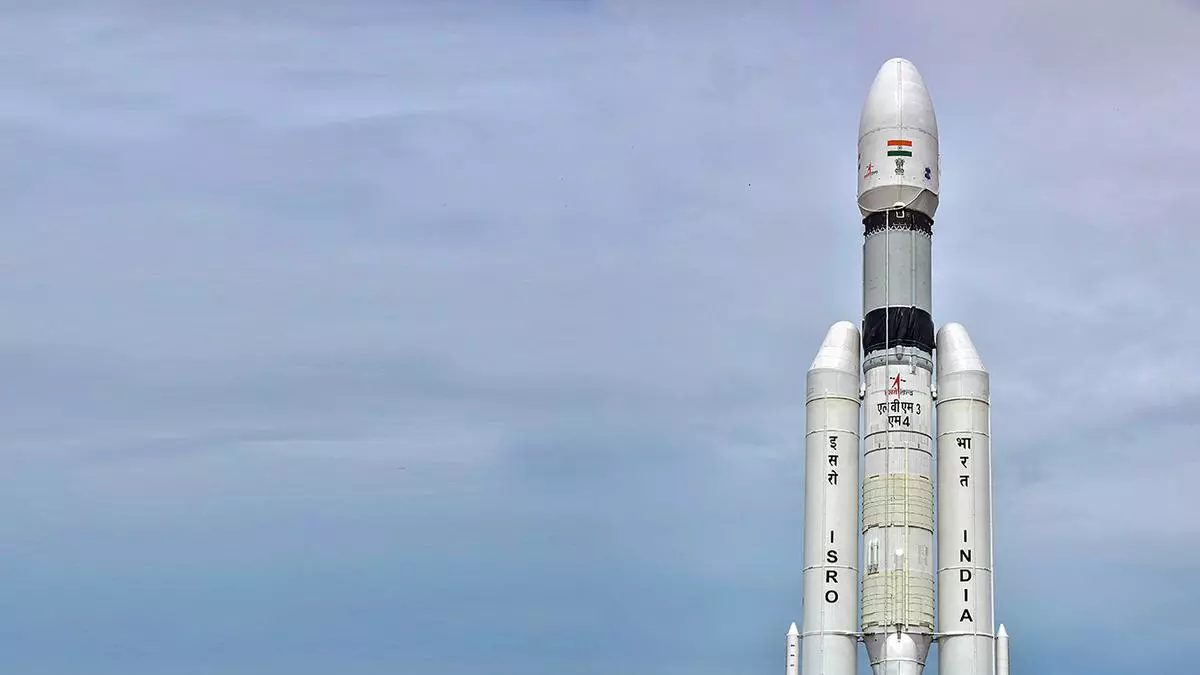
Wishing India’s moon lander a happy touchdown

Wishing India’s moon lander a happy touchdown


In the wee hours of September 7, 2019, India’s moon lander Vikram met its end on the lunar surface, hurtling down at 58 m per second when it was supposed to descend gently at 2 m per second.

The disappointment left Dr K Sivan, the then chairman of India’s space agency ISRO, in tears, prompting a consoling hug from Prime Minister Narendra Modi at the mission control room.

Sreedhara Panicker Somanath, ISRO’s current chief, would for sure prefer a pat on the back rather than a comforting hug at the end of the upcoming ₹615-crore Chandrayaan-3 mission.

Landing (not crashing) on the moon is the central objective of ISRO’s planned third lunar exploration mission, slated to launch on July 14. It is the most important of the mission’s three elements of technology demonstration — reaching the lunar orbit, soft-landing a lander, and getting a rover to slide out of it and crawl on the moon surface.

The lander in the previous mission, Chandrayaan-2, failed due to a software glitch, which has since been fixed; ISRO says other precautions have also been taken this time around to ensure a successful landing.

The lander is slightly heavier this time — 1,752 kg, compared with 1,471 kg previously, despite having only four engines in place of the five earlier. (These engines are meant to provide an upward thrust to the descending lander, in order to slow it down.) The removal of one engine is presumably to offset the added weight of the stronger legs in the new lander. Somanath has said that some redundancies have been built in, to ensure a safe touchdown. The lander has a number of sensors, including an accelerometer, altimeters (Ka-band and laser), Doppler velocimeter, star sensors, inclinometer, touchdown sensor, and a suite of cameras for hazard avoidance and positional knowledge.

The side-mounted solar panels of the Chandrayaan-3 lander are designed to provide more power — 738 W compared with 650 W earlier, though this is not a factor in the landing.

Soft-landing power

Apart from these — and perhaps luck — there is little difference between the Chandrayaan-3 and Chandrayaan-2 lander-rovers. A touchdown on the moon surface on August 23 or 24 would make India the fourth country to demonstrate lunar soft-landing (after the US, the former Soviet Union and China.)

All the scientific instruments of Chandrayaan-3 are the same as those of its predecessor — they will probe the lunar regolith to determine which elements are present in it by burning the mud into a plasma and analysing the plumes; check how heat is conducted on the moon surface near the polar region by drilling a probe 10 cm into the ground; and study the gas and plasma environment of the moon. But the main objective of the mission is to master the technology of soft-landing.

However, there is one crucial difference with respect to an instrument that will not land on the moon but remain with the ‘propulsion module’, the vehicle that will take the lander across the distance between the earth and the moon. The LVM-3 rocket will take the propulsion module plus the lander from the Sriharikota launch station to an elliptical earth orbit of 170 km (nearest to earth) and 36,500 km (farthest from earth). At this point, whatever remains of the LVM-3 rocket (the upper stage with a cryogenic engine, after the other parts have fallen off into the sea) will bid goodbye to the propulsion module and wander off into space. The propulsion module, having thanked the LVM-3 for ferrying it upto there, will circle the earth five times in elliptical loops, each bigger than the previous one, before gathering enough velocity to shoot off on a month-long journey towards the moon.

Earthy spectrum

As it closes in, it will circle the moon in 5-6 elliptical orbits, each time getting closer, until it reaches 100 km above the lunar surface and divests itself of the lander. At this point, an interesting instrument on board the propulsion module will come to life — one that was not part of the Chandrayaan-2 mission.

The Spectropolarimetry of HAbitable Planet Earth (SHAPE) will look at the earth from the moon’s neighbourhood to see what kind of spectrum is generated by the light emerging from earth. Light is affected by the type of gases in an atmosphere, because different elements absorb or deflect different wavelengths of light. So, if you know what the earth spectrum is like, then you can look for similar spectra from exoplanets (planets of other stars) — if they match, you might want to believe that the exoplanet could, like earth, hold life.



Source link

CTBT: Scientific spin-offs from network for monitoring nuclear tests

CTBT: Scientific spin-offs from network for monitoring nuclear tests


Between 1945 and 1996, the world witnessed as many as 2,000 nuclear explosion tests; since then there have been six tests in all — two by India, one by Pakistan, and three by North Korea.

What happened in 1996?

The Comprehensive Test Ban Treaty (CTBT), which seeks to fully halt critical nuclear tests, opened for signature. The treaty can come into force only after all 44 nuclear weapon states have signed and ratified it, which hasn’t happened yet.

Guess who refused to sign?

India, Pakistan and North Korea. India sees the CTBT as no different from the nuclear Non-Proliferation Treaty (NPT), which it vehemently opposes as discriminatory. Secondly, India wants to use the CTBT as a bargaining chip to gain concessions elsewhere.

The US, China, Israel, Egypt and Iran have signed but not ratified the treaty. And now, with the nuclear sabre-rattling in the Russia-Ukraine war, the US appears unlikely to ratify it any time soon.

But the Comprehensive Test Ban Treaty Organisation (CTBTO), which was set up to bring the treaty into force, remains hopeful.

Moreover, the work-in-progress treaty has achieved a key objective — preventing countries from conducting any further nuclear tests. The CTBTO credits this to its ability to detect any nuclear test anywhere — on ground, underground, atmosphere, or underwater.

Interestingly, the organisation’s network of sensors and sensing technologies have useful spin-offs for industry and society. For example, they find application in monsoon forecast, tsunami warning, tracking whale movements, and research in radio nuclides.

The CTBTO’s International Monitoring System (IMS) runs over 300 ‘monitoring stations’ around the world, including many in some of the “most remote and inhospitable environments”.

The IMS rests on four pillars — seismic, infrasound, hydroacoustic and radionuclides.

Seismic

With two seismic networks — primary (50 stations) and auxiliary (120 stations) — the IMS can detect any vibration on ground. The primary network consists of seismic array stations that can determine the type of seismic wave and its origin or cause. The auxiliary seismic stations supplement the work of the primary stations.

Typically a seismic event generates two types of waves — body waves (P and S waves) and surface waves (Rayleigh and Love waves), which differ in speed, direction and medium of propagation. Body waves travel through earth’s depths, surface waves move along the surface. IMS seismic network can detect both types of waves.

Infrasound

Audible sound frequency is 20-20,000 Hz; infrasound is below 4 Hz. Infrasonic waves cause minute changes in atmospheric pressure, which are measured by micro-barometers. Infrasound travels long distances, hence it is useful in detecting atmospheric nuclear explosions. The IMS infrasound monitoring system has 60 array stations in 35 countries. Each array has four or more elements arranged in geometric patterns, a meteorological station, a central processing facility, and a communication system for data transmission.

Hydroacoustic

Hydroacoustic technology is used to measure changes in water pressure caused by sound waves. Hydroacoustic data can pinpoint the location of a nuclear explosion underwater, near the ocean surface, or near a coastline. Sound propagates efficiently through water but, at one level in the water, sound travel is slower but particularly efficient: the ‘sound fixing and ranging channel’ or SOFAR, at about 1,000 m depth. “Hydroacoustic monitoring makes use of the unique phenomenon of sound waves being trapped in that layer,” says CTBTO. The 11 IMS hydroacoustic stations keep a ear on all the oceans and provide tsunami warnings.

Radionuclide

The presence of radionuclides — isotopes of elements that undergo radioactive decay — is the clinching evidence of a nuclear explosion. Isotopes of noble gases — xenon, in particular — are produced only by nuclear fission; hence, radionuclides are a ‘smoking gun’. The IMS has 80 radionuclide stations and 16 radionuclide laboratories.

All the stations of IMS generate a lot of data daily, which is sent to its international data centre (IDC) in Vienna. The IDC today is a massive repository of data, which serve as fantastic raw material for scientific research.

The CTBT is not born yet, says Dr Robert Floyd, Executive Secretary of the CTBTO, “but it is already a success.” Except for North Korea, no country has since dared to conduct a nuclear test, because detection is inevitable and would lead to consequences.

(The writer was in Vienna at the invitation of CTBTO to attend its science conference SnT 2023)


Source link

How IoT can reduce mining accidents

How IoT can reduce mining accidents


Coal India Limited witnessed 29 workplace fatalities in 2021 and 20 more deaths the following year. Across India, there were nine fatal mining accidents in 2020, each claiming 30 lives on average; additionally there were 97 serious accidents that year.

Underground mining operations face unique challenges due to the harsh environment and rough terrain. Traditional communication systems often fail to deliver timely information from the surface to underground workstations. Now, the Internet of Things (IoT) technology promises to fill this gap.

Researchers Ankit Singh and Prof Dheeraj Kumar of the department of mining engineering, Indian Institute of Technology, Dhanbad, have mooted the idea of using IoT to develop an underground mining support system they call ‘Smart-SAGES (self-advancing goaf edge support)’.

Their study suggests that IoT sensors can facilitate real-time communication, enabling quick response to hazardous situations.

The IoT sensors can continually monitor environmental factors like temperature, humidity, and toxic gases. Additionally, IoT facilitates remote monitoring of mining operations, including machine health, maintenance, drilling intelligence, and roof convergence.

The ability to take quick decisions can avert strata control problems and environmental hazards, thus ensuring the safety of mine personnel and costly machinery, their study paper says.

Prof Kumar, who is the Deputy Director of IIT-Dhanbad, says the system can instantly alert mining managers whenever any safety aspect is compromised.

Resources can be allocated optimally, minimising errors and maximising operational efficiency, leading to energy and cost savings.

Moreover, the data collected by IoT nodes can enable predictive maintenance and timely repairs, averting breakdown of equipment.

Security concerns

The study also highlights the potential risks associated with IoT use in underground mines such as information disclosure and denial-of-service (DoS) attacks that can disrupt operations and endanger workers’ lives. The study proposes a taxonomy of security challenges and a security-by-design approach.

To prevent data leakage, the communication channel must have multi-layers of security through encryption and decryption, as also blockchain technology to curb cyber-attacks and secure data transmission and storage.

Environmental worry

Underground mines are dynamic environments, where the infrastructure is constantly relocated, accompanied by temporary disturbances such as land movements and their potential ecological impact.

Kumar says the use of electricity to run IoT devices may spark underground explosion when it comes in contact with oxygen or other subterranean gases.

On the plus side, IoT can help detect unstable dumps or other landslide-prone areas, promoting sustainable mining practices.


Source link

IIT-B develops perovskite solar cell with 26% efficiency, likely the highest in the world

IIT-B develops perovskite solar cell with 26% efficiency, likely the highest in the world


The National Centre for Photovoltaic Research and Education (NCPRE) at the Indian Institute of Technology Bombay (IITB) has developed a perovskite solar cell (PSC). The cell has been demonstrated an efficiency of over 26 per cent.

To compare, with the best of the conventional solar cells in the market, you will be lucky to get an efficiency of 22 per cent. Efficiency is the percentage of sun’s light energy that falls on the cell that is converted into electrical energy.

The authors, Prof Dinesh Kabra, et al, say that this cell could be “the gateway for the potential use in niche applications like building integrated photovoltaics (BIPV)”.

In material science, the word ‘perovskite’ refers to a certain crystal structure in which the atoms are arranged. It is in the form of ABX3. For example, Calcium titanium oxide, or CaTiO3 is a perovskite. Solar cells made with perovskite material are highly efficient at converting light into electricity. However, they are unstable and degenerate when exposed to light— or else the entire world would be using only perovskite solar cells (PSC) today.

Scientists the world over have been trying to get better efficiencies by marrying the perovskite cell to the conventional silicon cells. It is in this area of research that NCPRE has reported success. Their tandem structure has been found to be pretty stable.

“We have fabricated a stable 4T (four terminal) Si/perovskite tandem solar cells which provides outstanding stability in the dark as well as continuous heating conditions” say the authors in a recent scientific paper.

A 4T tandem device has four terminals — two for each of the layers of the tandem device. “This allows for precise measurements of the solar cell’s performance, while also improving the device’s efficiency and lifetime,” says a write-up on IIT-Bombay’s website.

A cell efficiency of 26 per cent, as reported by IIT Bombay, is perhaps a record. Recently, researchers at the National University of Singapore reported having achieved 24.35 per cent efficiency for a perovskite solar cell with an active area of 1 sq. cm.

However, it should be noted that when the cells are connected together to form a module—the panels that we see on rooftops — the efficiency will come down. The module efficiency under real-life conditions is the critical number. A Japanese start-up called EneCoat Technologies recently reported a module efficiency of 19.4 per cent, which is a very big number. Only further research will tell what the module efficiency of the NCPRE solar cell would be — if it exceeds even 20 per cent, it would be major news.

Perovskite solar cells have come a long way since the first cell was made in 2009. It had a conversion efficiency of 3.8 per cent.


Source link

Leather from fish skin, chicken feet

Leather from fish skin, chicken feet


The Central Leather Research Institute (CLRI), which is one of the laboratories of the government-funded research body Council for Scientific and Industrial Research (CSIR), has developed technology for producing leather products from the skin of fish and chicken feet. CLRI lists products such as pouches, small handbags, wallets and watch straps that can be made from fish skin and chicken feet. The technology is market-ready. The one related to chicken feet has already been licensed to a company, says CLRI. The process is cost-effective as it uses waste material, it says.

Anti-UV bio furanic polymer

The Central Salt and Marine Chemicals Research Institute (CSMCRI), Bhavnagar, Gujarat, has developed furanic polymers from biomass. This ‘biomass-derived furanic polymers’ (BFP) can be used both as a UV-shielding agent as well as for improving mechanical strength in various products such as thin films, bottles, tablet strips for pharmaceutical uses, windows, display screen guard, sun-protective glass, welding glass, vertical blind, cloths, paints, varnish, dispersant, and sunscreen lotion and cream, says CSMCRI.

The institute is offering this technology for licensing. Replacing petroleum-derived products with biomass-derived products is an emerging area of interest. The use of a biomass-derived polymer as a UV-shielding agent with higher efficiency than petro-derived commercial polymers would be highly beneficial, the institute says.

Fire detector from BARC

Agni-rakshak is a Raman optical fibre distributed temperature sensor system that can detect distributed and local fire events along a lengthy section. The Bhabha Atomic Research Centre is offering it for licensing.

Agni-rakshak measures the distributed temperature along the length (few hundred metres or more) of the sensing fibre. Here, the optical fibre itself acts as an array of distributed sensing elements. The system can detect a fire outbreak by sensing the heat, says BARC. It can pinpoint the location, width and temperature of the fire zone, and generate audio-visual alarms.

Agni-rakshak has use in fire monitoring in hospitals, buildings, road and rail tunnels, stations, power cables, transformers, coal conveyors, warehouse, cement industry, oil and gas industry, nuclear industry, and other sensitive installations.

Mobile robot from IIT-Delhi

Researchers at IIT-Delhi have developed a mobile robot called ‘Robomuse 5.0’, suited to various industries, to carry payloads up to 100 kg and perform object manipulation through an arm on top. This mobile robot is also a good research platform for various teaching and research organisations, says a press release from IIT-Delhi.

A licensing agreement has been signed between IIT-Delhi’s technology innovation hub, named IHFC, and a Pune-based company, SVR InfoTech, for the technology transfer of Robomuse 5.0.

The origin of Robomuse 5.0 goes back to a robot built by IIT-Delhi students for the Doordarshan-Robocon competition in 2008. To test its reliability, it was later installed at the institute’s student activity centre.


Source link

The sound of a 3,000-year-old voice

The sound of a 3,000-year-old voice


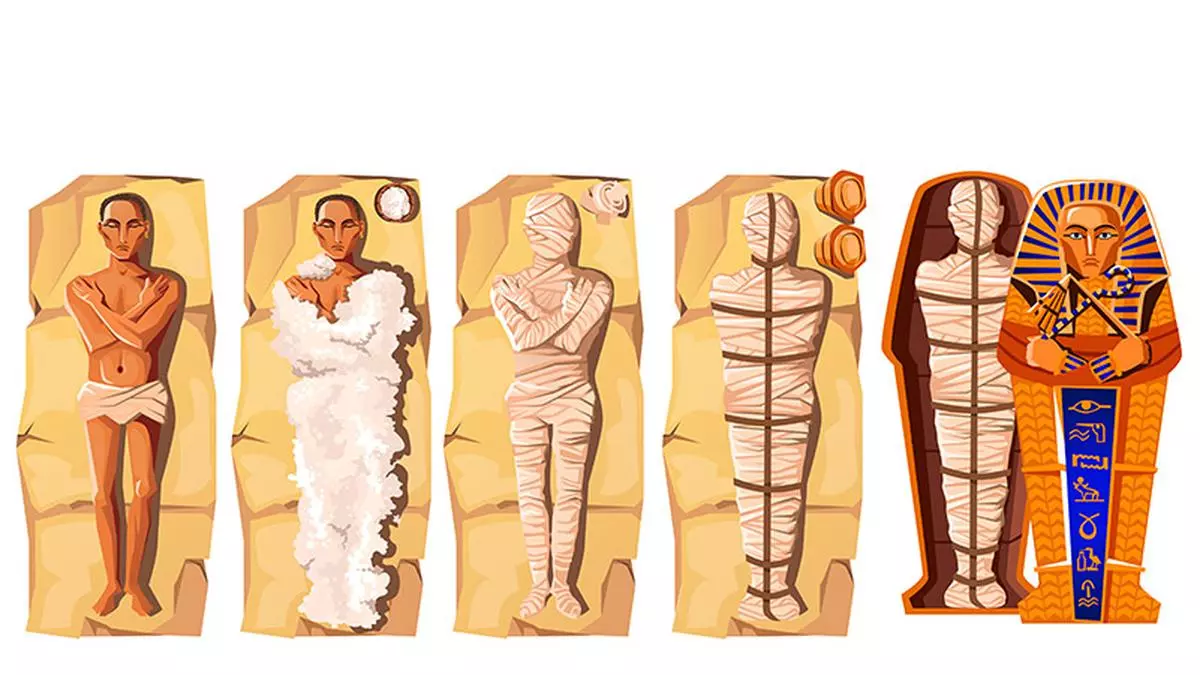
Would you like to hear the voice of a 3,000-year-old mummy? Then please get in touch with Prof DM Howard of the University of London.

While it is not clear whether Howard and his colleagues desired to hear the voice of Nesyamun, the Egyptian priest who died 3,000 years ago, when they visited his mummy at the Leeds City Museum, surely the thought crossed their mind when they discovered that his vocal cords were surprisingly well preserved.

But you can’t make a dead vocal cord speak, no matter how well preserved. Fortunately, science today has several tools to get around problems like this. Howard picked two — CT scan and 3D-printing. He scanned the mummy’s throat, 3D-printed it and attached it to a loudspeaker to play an electronic signal that mimicked the sound of a human larynx. The researchers heard a sound, a sort of a groan, a melancholy drawl.

However, one should not conclude that Nesyamun, who lived during the politically volatile reign of pharaoh Rameses XI, did not possess any vocal finesse beyond the groan. The priest was employed at the state temple of Karnak in Thebes (today’s Luxor) and “his voice was an essential part of his ritual duties, which involved spoken as well as sung elements”, says Howard in a scientific paper published in Nature.

Obviously, the tongue and other muscles of Nesyamun had long wasted away, and a live vocal cord would assume different positions. So, the voice was Nesyamun’s, but surely he had more to say in his time.


Source link

YouTube
Instagram
WhatsApp



