Mindfulness meditation as emotion regulator

Mindfulness meditation as emotion regulator


Two recent studies by IIT-Bombay researchers Rashmi Gupta and Surabhi Lodha examine mindfulness meditation and its potential role in regulating emotions and anger.

Mindfulness meditation encompasses cognitive conditioning through techniques such as attentive respiration, body scans, gentle stretching, yoga postures, and mindfulness in everyday tasks.

The study, titled ‘Irrelevant angry, but not happy, faces facilitate response inhibition in mindfulness meditators’, aims “to address the potential interactive role of mindfulness and irrelevant emotional information in response inhibition”.

In the experiment, 58 participants — including 23 who practised ‘mindful meditation’ regularly — were given a simple task, followed by a comprehensive questionnaire.

The task involved pressing a key if the screen said ‘go’ or refraining when it said ‘stop’. Before each prompt, the participants were shown an image of a ‘happy, angry or neutral’ face, which they were asked to ignore.

The image flashed for 85 milliseconds, while the prompt flashed for 250 milliseconds. The participants were encouraged to respond promptly and accurately to the cues. The survey at the end recorded each participant’s attention and awareness levels, mood and impulsivity, as self-reported by the participants on a scale of 1 to 5.

On average, individuals who regularly practised mindfulness were shown to have greater proficiency in abstaining from pressing the key when prompted with a ‘stop’ signal, compared to the rest. This difference was particularly notable when participants were exposed to an angry face prior to the cues.

The findings indicate that mindfulness practice facilitates swifter processing of negative emotions without compromising on the ability to regulate impulsive responses.

The study says, “Monitoring negative emotions, anger, could be considered an adaptive strategy that individuals acquire from sustained mindfulness practice.”

“The study reveals that mindfulness influences the attention-emotion interface to promote meaning in the face of difficulty,” Gupta told Quantum.

In another study, ‘Are you distracted by pleasure? Practice mindfulness meditation’, the researchers conducted two experiments with 154 participants, of whom some practised mindfulness meditation.

The participants had to locate a specific letter among many arranged in a circle and press a key. Angular letters like H, K, W, M and Z presented a more challenging task compared to others like O.

In some trials, the participants were shown a distracting image in the centre, but were told to ignore it. In the first experiment, the image was of happy or angry faces, while the second experiment had pleasurable (highly arousing) and unpleasant (mutilated) images.

Participants had 1,900 milliseconds to respond. It was found that, on average, the distracting image delayed the response. Those who practised mindful meditation were found better able to ignore positive distractions when the task was challenging.

So, why did negative emotions require greater attentional resources?

Negative emotions, like anger and fear, require more cognitive processing because they are seen as threatening. This can make it harder to shift attention away from them, explains Gupta.

The study, however, has limitations. “Despite including an age-matched control group, individual differences like personality factors might have disposed the individuals towards meditation practice and are responsible for the observed differences between the two groups,” the authors say.





Source link

Green shoots on the Red Planet

Green shoots on the Red Planet


Much as we admire Mark Watney’s ingenuity in manufacturing water from leftover rocket fuel to grow survival potatoes in his Martian garden, we do also realise that fact is much harsher than fiction. In the 2015 movie Martian, food could be grown on the Red Planet on the director’s (Ridley Scott) whim, but really nothing can grow easily once you leave the earth’s benign atmosphere.

That’s why the US space agency, NASA, put out a Space Food Challenge; and the phase-2 winning entries were announced last week.

Among the eight who graduated to the third phase of the competition is the Brooklyn, New York-based Air Company, whose idea is to make alcohol from an astronaut’s breath. The alcohol is food for a yeast variety that can produce something edible.

Massachusetts Technology Review quotes Air Company’s co-founder and CTO Stafford Sheehan as saying that the system would ferment continuously to supply food, so that “whenever you feel like you want a space protein shake, you make one from this yeast that’s growing”.

Another successful entrant, Interstellar Lab, based in Florida, makes ‘bio pods’ or capsules that have their own temperature and humidity control and watering system. You can grow a variety of plants, and even insects such as black soldier flies, for proteins.

NASA needs to figure out how to grow food in outer space because it is impossible to carry enough food for astronauts on long missions, such as a Mars voyage, which would take a year each way.


Source link

Decoding cellular cross-talk

Decoding cellular cross-talk


A group of researchers led by Prof Arun K Shukla in the Department of Biological Sciences and Bioengineering at the Indian Institute of Technology, Kanpur, have unravelled a previously unknown mechanism that regulates an important class of drug targets known as G protein-coupled receptors.

The discovery has important implications for not only understanding the fundamental mechanism of cellular signalling in our body but also facilitating novel drug discovery.

Cell membranes in our body harbour a special type of protein molecules known as receptors.

These receptors sense different chemicals and hormones and respond accordingly by activating specific physiological responses.

The G protein-coupled receptors (GPCRs) are involved in regulating heart function, blood pressure, mental disorders, and our general behaviour.

Several drugs, such as those used for depression, heart failure, cancer, and hypertension, work by modulating these receptor proteins.

The function of the GPCRs is regulated by another family of proteins known as arrestins, which bind to GPCRs and control their function and physiological responses.

However, a complete understanding of GPCR-arrestin interaction has been mostly elusive so far.

“The researchers have now visualised the cross-talk of GPCRs and arrestins in great detail using the cutting-edge technology cryogenic-electron microscopy (cryo-EM). The same has allowed the team to discover a novel mechanism that is responsible for regulating the function of GPCRs in our body,” says a press release from IIT-Kanpur.

“This study has opened up novel directions for improving the currently existing medicines by lowering their side-effects, and also provides an opportunity for discovering new medicines for several human disease conditions,” says Prof Shukla.

“For example, the chemokine receptor, which is one of the receptors investigated in this study, has important role in breast cancer progression.”


Source link

Device to diagnose, treat stroke at home

Device to diagnose, treat stroke at home


Stroke — when blood does not reach the brain — generally means rushing first to a diagnostic centre for a CT scan to detect which type of stroke it is.

If the cause is a clogged artery or vein (ischaemic), the doctor would prescribe a medicine to melt away the block.

If, on the other hand, the cause is a ruptured blood vessel, leading to bleeding (haemorrhagic), the treatment involves creating a clot to plug the leak.

The standard treatment today for a paralytic stroke is physiotherapy, which may, at best, yield partial results.

Prof Shubhajit Roy Chowdhury of the Biomedical Systems Laboratory, School of Computing and Electrical Engineering, IIT-Mandi, Himachal Pradesh, has come up with a portable ‘point of care’ device, resembling a medium-sized suitcase, to detect the type of stroke and treat it.

To detect the type of stroke, a wearable ‘near infra-red spectroscopy’ (NIRS) device emits light of 650-950 nm wavelength, which interacts with blood chromophores after penetrating the tissue.

The reflected light is collected by a photodiode, which can tell whether the stroke is ischaemic or not, since light reflected by a block (clot) is different from that reflected by blood.

Revival pathway

The next problem is determining how to revive brain function. Prof Chowdhury explained to Quantum that while the damaged neurons (brain cells) are gone forever, it is possible to coax the remaining neurons to assume the full functions of the brain. This is done by exposing the brain to a low-density direct current — 0.5-0.6 ampere per sq m against the brain’s tolerance limit of 250 ampere per sq m.

This ‘transcranial direct current stimulation’ (tDCS) has been shown to help revive paralysed parts of the body.

While tDCS is nothing new, the heart of Prof Chowdhury’s invention is a new type of electrode, a button-shaped device with near-invisible hair-like protrusions (spikes).

This special design is crucial. Why? As we know, the brain is full of folds. Through tDCS, current easily reaches the raised folds (gyri) but not the grooves (sulci). Prof Chowdhury’s ‘spiking electrode’ can reach the sulci too.

Bharat Electronics Ltd, the Bengaluru-based government-owned company, seems to be impressed by the device, which, according to Prof Chowdhury, is at a ‘technological readiness level’ of 4.

BEL is in the process of commercialising the device, he told Quantum.


Source link

To deal with carbon dioxide, befriend it

To deal with carbon dioxide, befriend it


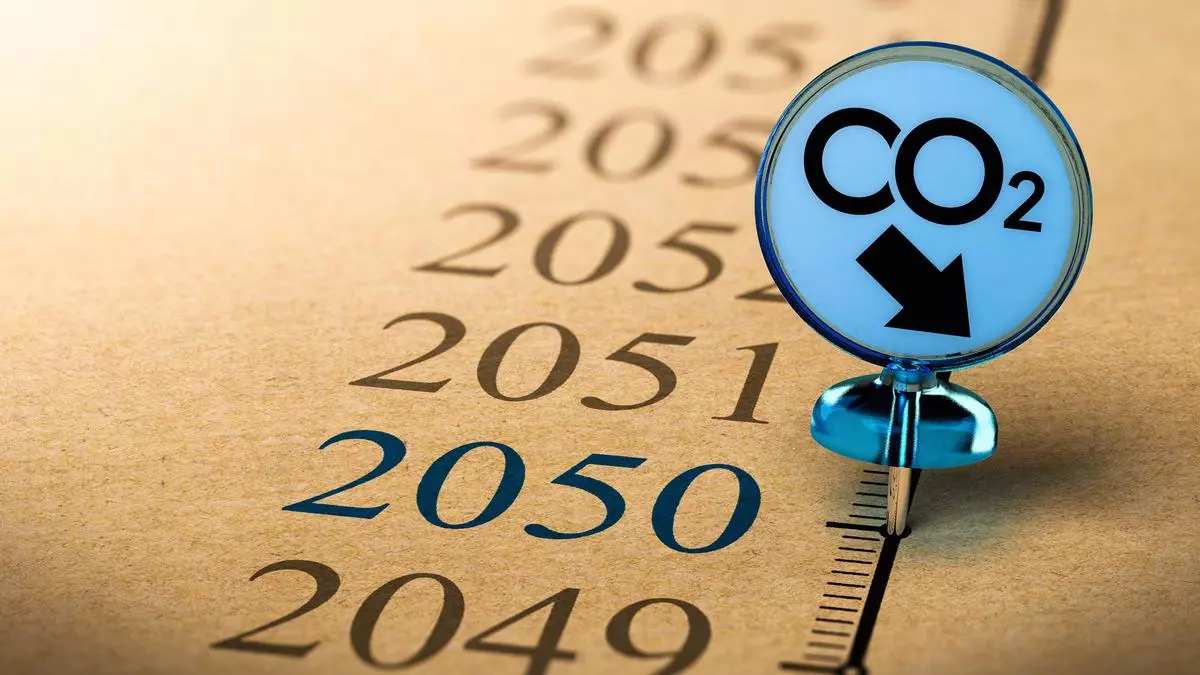
Countless philosophers have pointed out that you can disarm an adversary by treating him as a friend. Now is the time to apply that principle to mankind’s worst enemy — carbon dioxide.

In theory, this global warming greenhouse gas can also be an industrial product — you can use it in aerated drinks, for example — but industry needs less than one per cent of the carbon dioxide that humans produce.

Can this be increased? Yes, if you can make high-value products out of the gas. As such, researchers have been preoccupied with the valorising of carbon dioxide. Making value-added products means getting carbon dioxide to react with something. But the gas with one carbon atom bonded to two oxygen atoms does not readily react with other materials.

Also read:Leveraging carbon storage

There are two ways to break this bond. The first is to remove one oxygen atom (reduction) to produce carbon monoxide and oxygen; but this requires a lot of energy. To break the bond between carbon and oxygen calls for 805 kilo-joules of energy per molecule.

The other way, non-reduction, is to ‘activate’ the carbon to react with other material. This requires a lot less energy.

We know that a molecule of anything is incredibly small, too small for us to imagine, yet each molecule has its own geography. A carbon dioxide molecule, too, has different ‘sites’, one of which is called ‘lowest unoccupied molecular orbital’. This region loves electrons; if you supply electrons, it will accept them and this, in turn, will ‘activate’ the carbon dioxide molecule. The trick is to find a suitable catalyst that will provide electrons to the carbon dioxide molecule at the desired site.

Researchers working in this area have found out that you can make ‘cyclic carbonates’ with carbon dioxide. Cyclic carbonates — there are eleven of them — are versatile compounds and have wide applications in Li-ion batteries, pharmaceutical manufacturing, and in the manufacture of many fine chemicals. “Depending on the nature of the reaction and catalyst used, different products, such as dimethyl carbonate, heterocycles, formates, formic acid, methanol, alpha- and beta-unsaturated carbonyl compounds, polycarbonates, urea, urethanes, carbon monoxide, etc can be obtained by carbon dioxide conversion,” says a scientific paper produced by researchers led by Prof Venkata Krishnan at the School of Basic Sciences and Advanced Materials Research Centre, Indian Institute of Technology, Mandi, Himachal Pradesh.

Also read:EU carbon rules to hurt India, others

Prof Krishnan’s team has developed a catalyst, ‘metal-free boron doped graphitic carbon nitride’, for the job. Indeed, that catalyst has been tried earlier — Prof Krishnan acknowledges the pioneering work done by Prof Zhen Zhao of Shenyang Normal University, China — but Krishnan has tweaked the catalyst further for better results by turning it into nanosheets. It is also pertinent to note that there are several ways of activating carbon dioxide, and using a catalyst is one of them.

The catalyst provides electrons to activate carbon dioxide, but to make the high-value products — cyclic carbonates — you need to bend the carbon dioxide molecule, which is a straight line (oxygen-carbon-oxygen), into a triangular ring. At this point, chemicals called ‘epoxides’ enter the scene. An epoxide molecule is triangular with one vertex occupied by an oxygen atom and the other two vertices by carbon atoms, which in turn could be part of any other molecule. So, activated carbon dioxide is made to react with a suitable epoxide. By adding (polymerising) carbon dioxide to a suitable epoxide and manipulating them, you get cyclic carbonates.

This is a promising conversion method, and many types of catalysts have been reported to show good results, says a February 2023 paper by Ting Yan, et al of Shanghai University.

Also read:EU carbon tax: India wants its own energy auditors to do carbon verification of identified exports

Prof Krishnan told Quantum that the pathway to produce cyclic carbonates discovered at IIT-Mandi has several advantages. It requires much less power — about 100 degrees Celsius. It needs no pressure, so does not require additional energy. Importantly, it is solvent-free — solvents can be costly and toxic. Furthermore, you can make the entire range of cyclic carbonates through this pathway.

The most relevant of these products is polycarbonate, a versatile material with a wide range of industrial applications — from automobiles and aerospace to electrical insulation, lens making, medical equipment, packaging, and toys. It can be made with carbon dioxide and epoxides. Who said carbon dioxide is bad?


Source link

EELS: Slithering on Saturn’s icy moon

EELS: Slithering on Saturn’s icy moon


On a tiny moon of a distant planet, a billion kilometres from earth, a snake will soon slither through the uncertain terrain. The 13-ft long ‘snake’, weighing 100 kg, will scope its immediate surroundings, figure out how to pass through it, and either crawl through or curve itself sideways or extend itself across chasms without falling in — all the while looking for alien life on the icy moon of Saturn called Enceladus.

Named, tellingly, EELS (for exobiology extant life surveyor), the metal snake is a robot. Made by the US space agency NASA, the engineering marvel will function independent of human assistance. Unlike many other robots, it has no wheels to move on; instead, it moves on 3D-printed, horizontally placed screw threads. With this kind of build, the EELS can go to places where other robots never have.

“Imagine a car driving autonomously, but there are no stop signs, no traffic signals, not even any roads. The robot has to figure out what the road is and try to follow it,” says the project’s autonomy lead, Rohan Thakker. “Then it needs to go down a 100-ft drop and not fall.”

Enceladus is among those places that scientists believe have a better chance of hosting life. The Saturn moon is so far out that any control from the earth is out of the question. Hence the autonomous robot EELS.


Source link

YouTube
Instagram
WhatsApp



