A home-grown probiotic sewage treatment solution

A home-grown probiotic sewage treatment solution


Probiotics, the ‘good’ microorganisms with health benefits that are commonly found in fermented foods, are now being deployed in sewage treatment. Chennai-based Esquire Enterprise manufactures a ‘bio-augmented probiotic liquid’ as a locally made “organic and sustainable” alternative to chemical agents such as sodium hypochlorite for sewage treatment.

Launched in December 2020, the company has four plants in Tamil Nadu and Karnataka with capacity to manufacture 390 tonnes of probiotic liquid; it is currently setting up a new 600-tonne plant in Gujarat. Its CEO, Balaaji Sundararaaman, spoke with businessline on the advantages of the product and its potential uses. Edited excerpts:

A regular sewage treatment plant (STP) of 8-10 kilo litres per day (KLD) capacity costs ₹2.5-3 lakh. How economical is the probiotic-based system in comparison?

A regular STP can typically recycle only 60-80 per cent of [sewage] water. But with probiotics, this can be increased to 95 per cent. And the water we supply, which is colourless and odourless, can even go back for use in building maintenance, including toilets. Similarly, when it comes to electricity usage, the blowers in STPs often work for 24 hours a day. With probiotics, you can save six hours of electricity, which is humongous. We are making it economical by increasing the plant’s efficiency by recycling more sewage with fewer resources and in an organic way.

Imported probiotics are priced ₹1,500-2,100 per 500 gram; our product costs just one-third of this.

Moreover, though the chemical supplements are cheaper, our probiotic replacement is better in efficiency and sustainability.

Of the 72,368 million litres of sewage generated per day in India, existing plants treat 31,841 million litres. Will the probiotic system address this gap?

There has been no new technological development in STP. Now, we have the probiotic solution. Probiotic indigenous microbes are available in our country and you’re going to pay less for it, compared to imported supplies, for running an STP. We would like to educate people about the made-in-India product. It can be dispatched to any part of India within four days. So, yes, we will be able to help bridge the gap.

There is no solution, yet, for sludge management in regular STPs. How will the probiotic system address this issue?

This is an augmented liquid. It digests the faecal matter. Basically, these microbes multiply as long as there is faecal matter. And if the system is very efficient, it almost metabolises 97-98 per cent of the sewage. So, there is really no need to dispose of sludge in a river or pond. One litre of our probiotic liquid can handle 10,000 litres of faecal matter. And poured in, the microbes start eating up whatever is available and multiply within seconds.

How is the probiotic system more sustainable than the regular ones?

It uses less water, hence there is cost savings and decrease in carbon footprint. Recycling water within the facility eliminates the need for water tankers and reduces diesel consumption needed for water transportation. Additionally, probiotics help reduce the formation of excess sludge. This, in turn, reduces the need for sludge tankers to transport and disposed of it in environmentally harmful ways, and the associated fuel consumption and carbon footprint. The negative impact of liquid suspended solids (LSS) in terms of odour and toxic emissions, specifically hydrogen sulphide, which can contribute to health issues like asthma, is avoided with organic recycling.

How are you mobilising the raw material for the plant?

Our main ingredients — nearly 60 per cent — comprises cow dung and cow urine. This comes from the 6,000 cows we have across our six centres, of which 90 per cent can’t yield milk. We take care of their food and health needs round the year, collect the cow dung, and ensure it is processed well within time. The processing time for probiotics is 60 days. We’ve already produced close to 500 tonnes of probiotics. This can clean up to 5 billion litres of sewage

.

Published on May 14, 2023


Source link

Powering up India’s supercomputing ambitions

Powering up India’s supercomputing ambitions


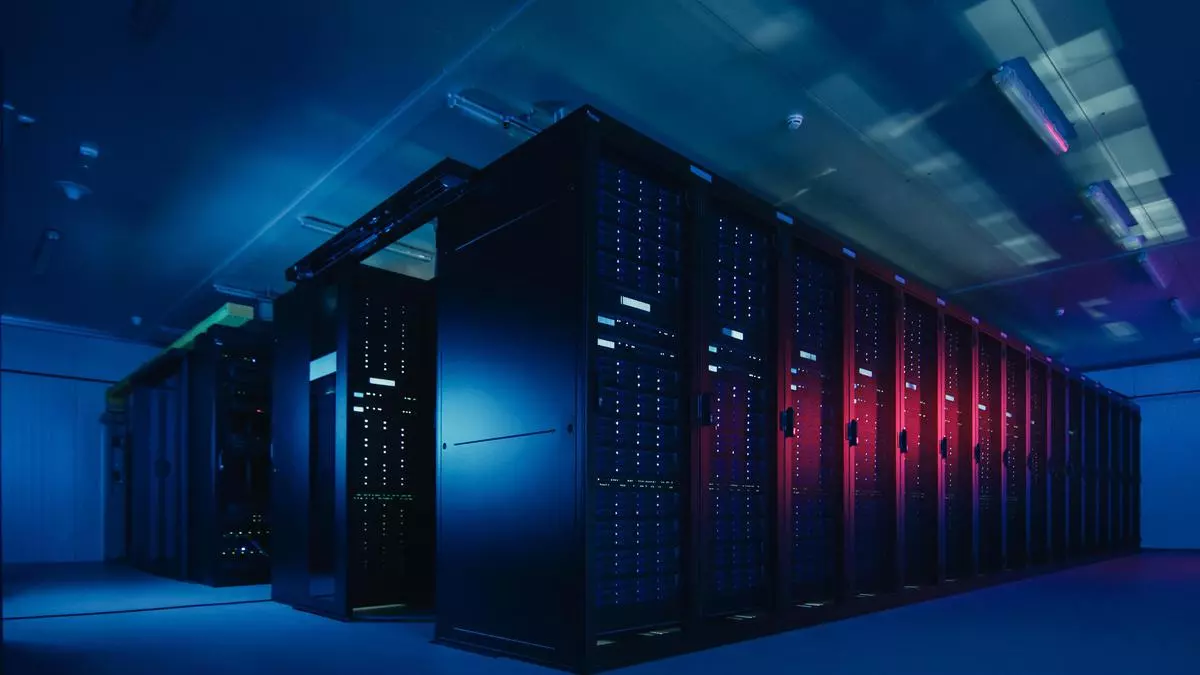
India is today home to 23 supercomputers — powerful computers that are primarily used for scientific and engineering work that demands ultra high-speed computations.

Although indigenous development of supercomputers began in 1980 — with the involvement of organisations such as BARC, C-DAC and C-DOT, among others — it was the launch of the National Supercomputing Mission (NSM) in 2015 that accelerated efforts in a big way.

“Compared to five or 10 years ago, India’s supercomputing journey has been quite successful,” says Faisal Ahmad, co-founder and CEO of BIS Research, a market intelligence and advisory firm focusing on deep technology. “Until 2016, India had only four supercomputers.”

The superfast machines are in use in the field of computational chemistry, material science, quantum mechanics, and more, with nearly 5,000 users executing close to 8 lakh jobs on them.

On the flip side, however, use of supercomputers is currently limited to research institutions.

Indian ‘super’ stars

A line-up of supercomputers and the institutions housing them

Param Shivay — IIT-BHU, Varanasi

Param Siddhi-AI — IIT-Hyderabad

Param Pravega — IISc, Bengaluru

Param Utkarsh — C-DAC, Bengaluru

Param Porul — NIT-Trichy

Sahasrat — IISc, Bengaluru

Param Brahma — IISER, Pune

Param Ananta — IIT-Gandhinagar

Param Seva — IIT-Hyderabad

Param Himalaya — IIT-Mandi

Annapurna — IMSc, Chennai

HP Apollo 6500 — IIT-Delhi

Param Ishan — IIT-Guwahati

Param Yuva II — C-DAC, Pune

Param Kamrupa — IIT-Guwahati

Param Yuva — C-DAC, Pune

Param Sanganak — IIT-Kanpur

Param Shakti — IIT-Kharagpur

Param Ganga — IIT-Roorkee

Pratyush — Indian Institute of Tropical Meteorology, Pune

Param Smriti — National Agri-Food Biotechnology Institute, Mohali

Param Yukti — Jawaharlal Nehru Centre for Advanced Scientific Research, Bengaluru

Mihir — National Centre for Medium Range Weather Forecasting, Noida

(Sources: C-DAC website, India Brand Equity Foundation, NSM website, Government of India’s department of science and technology, and IIT websites)

In terms of supercomputing capacity, India has made commendable progress, though it still lags other leading nations.

As of June 2022, China boasted a staggering 173 of the world’s 500 most powerful supercomputers, while the US had 128. From India, only three systems — Param Siddhi AI (ranked 111), Pratyush (132), and Mihir (249) — made it to the list.

“Our focus should be to equip supercomputers with better facilities, rather than achieving a global rank,” says Rupesh Nasre, Faculty, Department of Computer Science and Engineering, IIT-Madras.

Exascale goal

While exascale computing — involving billions of computations per second — is evolving rapidly, India has no exascale supercomputers yet. “We are still looking at petaflops [quadrillion flops, where a ‘flop’ — or floating point operations per second — is a measure of computer performance]. But we should be looking at exaflops now, because the world is already there,” says Nikhil Malhotra, Chief Innovation Officer, Tech Mahindra.

The Indian government has initiated efforts to develop indigenous exascale computing capabilities through NSM by 2024. Does this delay signify an oversight on the part of the country?

Ahmad says, “Param-Shankh, India’s new indigenous exascale supercomputing monster from C-DAC, is set to launch in 2024. Thus, India has not ignored the exascale revolution. Under the NSM scheme, C-DAC is aiming to install 70 supercomputers pan India.”

Beyond research and academia, however, supercomputers have found limited adoption in industry. Lack of awareness is one reason for this. “Both industry and research institutes need to come together to solve this challenge,” says Malhotra.

Hardware capability

India currently lacks the infrastructure to produce the semiconductor devices required for the development of supercomputers.

Moreover, due to friendly trade agreements, companies such as Intel, Qualcomm, Nvidia, and others have access to Indian markets, adds Ahmad.

While the country still relies on imports for some components, indigenisation efforts are on, too.

“We have seen in recent times that India has started building the hardware required for supercomputers, but it is still early days and would need a push,” says Devroop Dhar, co-founder of advisory firm Primus Partners.

As per government data, India’s network of research institutions, in collaboration with industry, is scaling up the technology and manufacturing capability to make more and more parts in India.

In phase I of NSM, 30 per cent of value addition was done in India, and this has been scaled up to 40 per cent in phase II. India has developed an indigenous server, Rudra, which can meet the high-performance computing needs of government bodies and public sector undertakings.

The quantum jump

Supercomputers continue to be highly relevant even in the era of quantum computing. While quantum computers possess immense potential for certain types of calculations, supercomputers excel at tackling a broader range of complex problems.

Malhotra says the link between supercomputers and quantum computers is hierarchical.

“If supercomputers don’t yield the desired effect, I’ll explore the option of quantum computers. It’s a hierarchical scale that I can leverage,” he says.





Source link

Biocompatible drug delivery for rheumatoid arthritis

Biocompatible drug delivery for rheumatoid arthritis


A newly synthesised biocompatible therapeutic nano-micelle drug delivery system, combined with anti-inflammatory drugs, has shown improved potential to cure rheumatoid arthritis at the lab level. It can help ameliorate the pain associated with the condition as well as heal by restoring cartilage integrity to provide flexibility to the bone.

Inflammation plays an important role in the development of rheumatoid arthritis. As a result, treatment strategies have largely focused on providing symptomatic relief from pain, and a permanent cure is not available to date.

Methotrexate (MTX) is considered a gold standard therapy for the condition, but due to its severe side effects researchers are looking for alternative drugs or strategies.

Scientists from the Institute of Nano Science and Technology (INST), Mohali, explored the potential of the USFDA-approved anti-inflammatory drug 9-aminoacridine (9AA) and the natural compound caffeic acid, generally found in coffee or wine (reported to possess significant anti-arthritic potential), conjugated to nano-micelles — an amphiphilic molecule that forms a spherical structure when immersed in water — for the treatment of rheumatoid arthritis.

A research group led by scientist Dr Rehan Khan, along with senior research fellow Akshay Vyawahare, has developed a therapeutic nano-micelle loaded with anti-inflammatory drug 9AA.

When administered, it shows site-specific inhibition of inflammatory mediators due to the activation of the NR4A1 gene (nuclear receptor sub-family 4 group A member 1), which regulates inflammatory mechanism by inhibiting pro-inflammatory cytokines through fluorescent 9AA.

The nano-micelle itself has potential to provide therapeutic effect, but when combined with anti-inflammatory drug, it showed enhanced potential to cure rheumatoid arthritis experimentally by inhibiting joint damage and cartilage degradation, says a press release.

Near-infrared OLEDs

Researchers at IISER, Bhopal, have created a new family of organic molecules that emit light in the near-infrared (NIR) range, opening possibilities for OLEDs for various applications. Led by Prof Jeyaraman Sankar, the team’s research marks a significant breakthrough in the field, as developing NIR-emitting OLEDs has been a challenging endeavour worldwide.

The team’s new approach to obtaining stable electron-deficient molecules with NIR emission using nitration as a strategy is unique, says a press release.

Light-emitting diodes or LEDs are tiny light-emitting devices that are commonly used in applications such as television screens, gadget displays, and so on.

They are different from traditional filament bulbs, as bulbs emit light when heated, but LEDs emit light when electricity (in the form of electrons) passes through them. OLEDs are a form of LEDs where the light emitting materials are organic molecules — chemicals largely made of carbon and hydrogen.

Although visible light-emitting OLEDs have already found mass application in displays for gadgets, televisions, and lighting, producing NIR-emitting OLEDs is challenging due to their unique molecular energy structure. Light-emitting molecules generate light when electrons fall from a high-energy state (HOMO) to a low-energy state (LUMO) inside the molecule, and the colour of the emitted light depends on the energy difference between the two states. The energy difference in organic molecules corresponds to visible light, making visible light-emitting OLEDs easier to design.


Source link

IIT-M scientists develop improved flow battery technology

IIT-M scientists develop improved flow battery technology


Where space is not a constraint, flow batteries are deemed to be good energy storing devices. In conventional batteries, energy is stored in solid electrodes. In flow batteries, the storage of energy is in liquid redox electrolytes, which can be kept in tanks outside the cells — if you want to store more energy, you just make the tanks bigger. They can indeed be as big as you want, there is no limit. If you want more power, you only have to increase the number of cells or stack size.

Flow batteries have been around for some time, but industry is increasingly looking to them for applications such as storing electricity to handle the intermittency issue in solar and wind farms or maintaining grid stability.

In countries like Australia, where people live in far-flung areas, flow batteries are fast replacing conventional diesel gensets.

Researchers the world over are trying to improve the performance of flow batteries. In this, a team of scientists led by Prof Kothandaraman Ramanujam and Prof Sankararaman S, Department of Chemistry, Indian Institute of Technology, Madras, have developed a ‘non-aqueous all-organic redox flow battery’ (NORFB), which promises improved performance.

Conventional flow batteries feature aqueous (water-based) electrolytes like hydrochloric acid, sulphuric acid, and alkali metal hydroxides, which bring forth two problems. One, the water interferes by undergoing electrolysis and, therefore, reducing the operating voltage limit and energy density (amount of energy packed per unit volume or gram); and two, they corrode battery components.

Thus, as an alternative, researchers have been looking for electrolytes that are non-aqueous and organic.

The IIT-M researchers have developed a new type of electrolyte using ‘pyrylium salts’, which are a class of organic chemicals.

Technically, with suitable structural modifications these chemicals allow high-voltage operation, namely they can store more energy. Ramanujam told Quantum that the team achieved current densities of 40 mA/sq cm, which is pretty high (as the redox materials were charged and acting as conducting medium). The team used ‘2-, 4-, 6-triphenylpyrylium tetrafluoroborate’ as the anolyte, and ‘N-decylphenothiazine’ as the catholyte. Ramanujam said these chemicals can be produced easily and are cheap.

The electrolyte is designed to carry more current density as well as voltage. The battery has been demonstrated with an average coulombic efficiency of 97 per cent.

While the anolyte material offers high solubility and reversibility, it is not as stable as desired. However, re-engineering the molecule can impart the desired stability.

A scientific paper by Ramanujam, Sankararaman and their student Priya Vallayil in the Journal of Energy Storage concludes that pyrylium salts are a “new family of anolyte material that can be used as a potential anolyte for non-aqueous flow battery applications”.


Source link

Furry supermodel

Furry supermodel


In 1925, diphtheria — a disease that can be fatal in children — broke out in Nome, Alaska. Serum containing antibodies had to be rushed to the remote town. The task fell upon a sled driver and his team of dogs. The sled drove for about 1,100 km in five-and-a-half days, under punishing conditions of blizzard and white-out, delivered the medicine, and saved many lives.

One of the heroic sled dogs was Balto, whose legendary energy is reminiscent of the canine Buck in Jack London’s The Call of the Wild, recently made into a Harrison Ford movie. Balto, incidentally, has been immortalised in a sculpture that stands in Central Park, New York.

Recently, a bunch of scientists led by Katherine Moon, a geneticist at the University of California, Santa Cruz, decided to study Balto’s DNA from the dog’s taxidermy remains. Apart from determining that Balto was more genetically diverse than most dogs of today, they also figured out how he looked. Balto, according to them, stood 21.7 inches tall and had a double layered coat of fur that was mostly black with a little white. Their findings agree well with the few photographs available of Balto. It is a marvel of science that a relic of a dead cell can tell so much.

Elaine Ostrander, a dog geneticist who was not part of Moon’s study, told Science magazine that Balto’s genes could be a blueprint for promoting healthier dogs today.


Source link

Why this Tata Steel experiment made the world take notice

Why this Tata Steel experiment made the world take notice


It was a tiny experiment, but it made the world sit up and take notice.

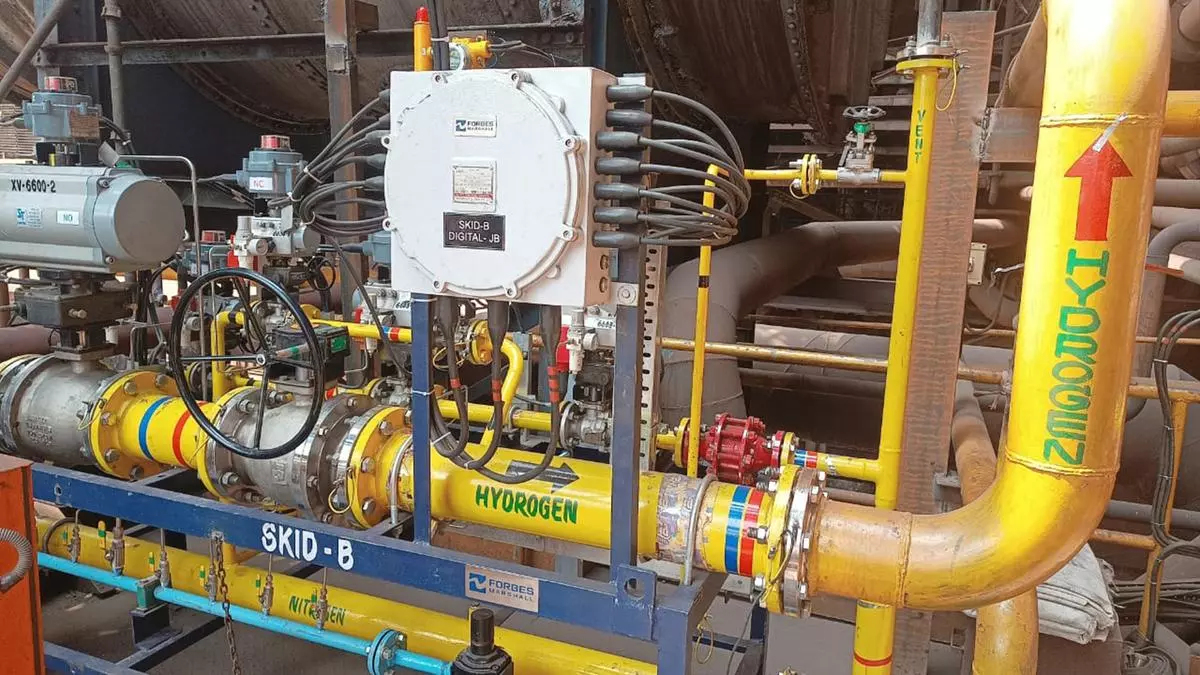
Because, if taken to fruition, it has the potential to replace up to 20 per cent of the coke used in steel making with hydrogen — a very big deal in reducing carbon dioxide emissions.

On April 23, Tata Steel announced that it successfully injected a small quantity of hydrogen into one of its blast furnaces (6 kg per tonne of hot metal, for four days). Globally, only two such attempts have been reported before. The first was a 2015 Japanese project called Course50, which involved indirect injection of hydrogen in the form of coke oven gas. The other was a 2021 experiment at the German company Thyssenkrupp, where 0.5 kg of hydrogen per tonne of hot metal was injected for a few hours. Neither compares with what Tata Steel did in scale or duration.

Related Stories
Supercritical carbon dioxide can flush out oil from depleting wells

Underground carbon sequestration gets a new improved process from IIT-Madras researchers

“It was a resounding success,” Dr Debashish Bhattacharjee, Vice-President (Technology and R&D), Tata Steel, told Quantum. The experiment generated “enormous amounts of data”, he said, adding that it graduated “from pen-and-paper to real life”.

Given the grave concerns over climate change, replacing carbon dioxide-emitting coke with hydrogen has become the holy grail of the steel industry, which, according to the International Energy Agency, emitted some 2.8 billion tonnes, or about 7 per cent of the global emissions of the greenhouse gas from energy use in 2020.

Debashish Bhattacharjee, Vice-President (Technology and R&D), Tata Steel

On paper it is easy. Carbon in coke pulls oxygen away from iron ore to leave behind pure iron; hydrogen does just the same, but with no greenhouse gas emissions. The problem, however, is that the world has invested billions of dollars in building huge blast furnaces to make steel.

Blast furnaces don’t care how little iron there is in the ore, so you can use low-grade ores (which are predominant in India). But putting hydrogen into blast furnaces is fraught with difficulties. Hydrogen needs external energy (endothermic) and the reactions inside the blast furnace are very different, leading to issues of structural stability. (It is easier to use hydrogen with the electric arc furnace, but these require high-grade ores.)

“As long as you have blast furnaces, you would need coke,” says Bhattacharjee.

While you can’t replace coke with hydrogen in a blast furnace, you can replace a part of it, and keep increasing that part till you cannot do it any more — that is, until the structural stability becomes an unavoidable issue.

Related Stories
Thermo-chemical upcycling of crop residues

IIT-Madras devises three clean means of extracting biochar, activated carbon, and syngas from farm waste

Tata Steel (indeed the global steel industry) knows that the way forward is to replace as much coke as possible with hydrogen (preferably, green hydrogen) and deal with the attendant carbon dioxide emissions through other means, such as fixing the gas in some useful compound or burying it underground.

A global first

Tata Steel’s experiment is a significant step in that direction because, for the first time, this quantity of hydrogen (though not green) has been injected into a live blast furnace for four days. The experiment has “added to our knowledge”, says Bhattacharjee. “We know what to look for, which sensors to use, what will work, and what will not work.”

He stresses that the safety issues are equally important. Hydrogen, which can catch fire, must be handled with care. Tata Steel has learned to check for leaks using helium. During the experiment, there was no safety-related incident.

Tata Steel is currently doing a lot of data crunching — hence it does not wish to give out more details, but once the technology is mastered, it is possible to replace a fifth of the coke used today with hydrogen.

It is learnt that the global steel industry has been asking the company for more information about the experiment.

Meanwhile, Tata Steel is also experimenting with other furnace charges, such as biochar, coal-bed methane and coke oven gas (like the Japanese).

At the other end, Tata Steel is trying to neutralise the unavoidable carbon dioxide emission by injecting it into cooling towers, where the gas becomes carbonates of calcium or magnesium, which can be slagged off and sold.

HIsarna project

‘HIsarna’ is the name that Tata Steel has chosen for the radically different route of steel making it has invented, at its Netherlands plant. It uses coke, but the gas that comes out of the furnace has a high concentration (80 per cent) of carbon dioxide, making it amenable to capture and neutralisation.

At present, Tata Steel has a small pilot plant in The Netherlands, but Bhattacharjee says that the company will put up a “demonstration plant” in India that is five-times the size of the one in The Netherlands.


Source link

YouTube
Instagram
WhatsApp


