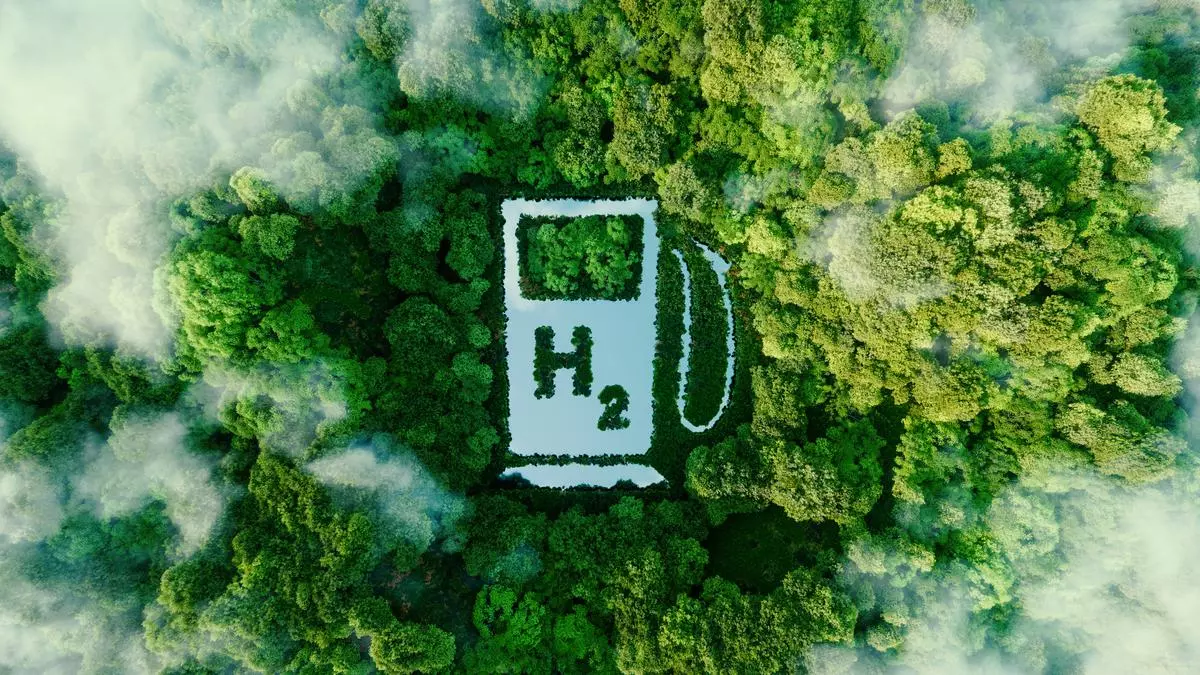
Good intention is not equal to good policy

Good intention is not equal to good policy


On the surface, the government’s green hydrogen thrust looks pretty good. Around ₹19,440 crore will be given to the industry to build enough electrolyser capacity to produce 5 million tonnes of green hydrogen annually by 2030. Applause!

But scratch the surface, you see writhing worms.

Nobody is going to buy green hydrogen out of large-heartedness — it has to make economical sense. Here is the problem. For green hydrogen to become cheap renewable energy needs to become ultra-low cost. Today, all the measures of the government for the renewable energy industry only have the effect of raising the energy costs.

Secondly, it had been said that the government would bring in a ‘green hydrogen purchase obligation’, on the lines of the ‘renewable energy purchase obligation.’ But reliable sources who have interacted with the government officials say that the current thinking is not to bring in any such obligation. The thinking apparently goes that if it might be unfair to impose burdens on some select industries (mainly refineries and fertilizers). Instead, the Ministry of Petroleum and Natural Gas is ‘suggesting’ to the public sector oil refiners to ensure that a part of their hydrogen is ‘green’. Such ‘suggestions’ are peremptory. But oil refiners alone cannot provide the demand function on a scale consistent with 5 mtpa of the green hydrogen market.

Third, the government is saying that it would allow duty-free import of electrolysers for a few years and then erect barriers to cause a domestic industry to come up. Industry sources say that this is a problem because, while on the one hand duty-free imports would discourage domestic manufacturing, importing of electrolysers is also a challenge because of the tight supply situation. The fear is having neither.

Cost of renewable energy

You need electricity to split water into hydrogen and water. Even biomass-based plants need electricity. There is no point if this electricity comes from burning coal — it must necessarily come from renewable sources like wind, solar or hydel. Hydel is small and is difficult to scale up, so it boils down to wind and solar. As for wind, the government has just announced two measures, yielding to the long-standing demands of the industry — ’closed bidding’ method of capacity auctions and State-wise auctions. Leave aside what these are — suffice to say that both the measures will have the effect of raising wind tariffs. Today, wind power sells at around ₹2.80 – ₹2.90 per kWhr, but it could go up by 30-40 paise, if not more.

As for solar, the government has erected stiff barriers to prevent imported cells and modules, and has given PLI incentives to the domestic manufacturers in the vain hope that after a few years, the domestic industry will become globally competitive. Nobody in the industry believes it would ever be competitive against the Chinese — who have the advantage of scale and government support. The government would need to perpetually keep supporting the domestic industry to the detriment of the consumers. But that is another matter. What is important to note is that because of the higher costs of cells and modules, solar energy costs are slated to go up.

Rough calculations show that if renewable energy costs ₹ 3 per kWhr, with even the most efficient of electrolyser technologies — solid oxide — the cost of the hydrogen would be about $3.5 – $4 per kg. At this price, it is hard to see large-scale, voluntary adoption of green hydrogen. One kg of hydrogen has the same energy as 3.25 liters of diesel. At $4, hydrogen prices itself out, more so when you take into account the additional costs of transportation and storage.

Recently, the National Chemicals Laboratory, a public research institute based in Pune that has worked on electrolyser technologies, revealed some figures showing what it takes to have a market of 5 mt a year of green hydrogen. You are going to need 130 GW of renewable energy, 35 GW of electrolyser capacity, 115 million litres a day of water and 3,40,000 hectares of land. A recent publication of the International Energy Agency (IEA), said that by 2030, the world would have 65 GW of electrolyser capacity (from around 200 MW now). Is it conceivable that half the global electrolyser capacity will be in India? Further, after all these years, India has built 42 GW of wind and 62 GW of solar. You are going to need to more than double this capacity, exclusively for green hydrogen production, in just 7 years. Does it sound feasible, especially with policy niggles such as the tighter norms for ‘deviation settlement mechanism’ (DSM)?

Overall, the government’s green hydrogen policy is a mass of contradictions and unless the kinks are straightened out, it is difficult to see it achieve its objectives.




Source link

The quest for white hydrogen

The quest for white hydrogen


The core of all hydrogen production technologies is separation of the gas with whichever element it has joined hands with — like oxygen (water) or carbon (natural gas).

Hydrogen is the most abundant element in the universe. So how simpler life would be if only we could find it in its pure elemental form, ready for use! At the very edges of our atmosphere, there is pure hydrogen, uncompounded with other elements, but trying to get that is economically impossible, so leave that aside. There is one more option to lay our hands on it pure, elemental hydrogen that is fit to be filled into our cylinders – you just dig it out of the ground.

That hydrogen exists deep underground is no new revelation — geologists have known it for decades. But no one gave it a thought, because they were always looking for hydrocarbons or other minerals. In fact, this hydrogen, that lies adsorbed in rocks, was only considered a nuisance till now. In the last few years, the world has begun to look at hydrogen as a saviour which can pull mankind from the monster called climate change. Underground hydrogen suddenly became a friend. Earlier, it was still thought to be too expensive, but the more recent narrative is that it could be the cheapest source of clean hydrogen, costing perhaps under a dollar per kg.

A US-based Natural Hydrogen Company says that it has just completed an exploratory well and is about to begin commercial production. It says that earth is an “inexhaustible” source of hydrogen and as an additional sweetener, a lot of helium often comes out along with it. Helium is a valuable, scarce resource. Another US company, Cemvita Factory, wants to use microbes to bring up the buried hydrogen. Basically, after the microbes feed on the hydrogen, they are flushed back to the surface and gas is extracted from them. Yet another company, Helios Aragon, is preparing to drill in Spain to mine hydrogen.

What about India?

Well, no company has drilled more holes on the Indian soil than the public sector oil and gas giant, ONGC. Ravi, head of ONGC Energy Centre, the research arm of the company, told businessline that the Centre has found hydrogen in some wells in India. Currently there is no program to extract this hydrogen. But clearly there has been insufficient attention on this source of hydrogen in India.


Source link

The Green methods of producing hydrogen

The Green methods of producing hydrogen


Hydrogen is everywhere — in air, water — but it takes energy to separate it. If hydrogen is produced through processes that do not emit green house gases, such hydrogen is called ‘green hydrogen’.

How to produce green hydrogen? Here are the various ways of doing it.

Biomass route

Green hydrogen can be produced by gasification of biomass. A Varanasi-based company called Biezel Green produces gasifiers. Biezel Green’s ‘thermally accelerated anaerobic digesters’ can produce 40 grams of hydrogen from one kilogram of biomass, but can also yield an assortment of by-products such as methane and biochar. Some experts believe that biomass gasification is a good option for India as it can fetch farmers a steady income. But the big challenge here is to ensure uninterrupted availability of biomass.

Electrolysis

Splitting of water into hydrogen and oxygen is the most trusted route of producing green hydrogen. This technology has been around for decades. It involves supplying electrons (through electricity) to disturb the tight bond between two hydrogen and one oxygen atom, so that the hydrogen separates itself out.

There are three established electrolysis technologies in the market but a better fourth one is being perfected.

The ‘alkaline electrolysers’ are the most mature ones but they are the least efficient in terms of energy. It also calls for high maintenance costs because the electrodes degrade in a corrosive environment and are slow to react to fluctuating power.

The ‘proton exchange membrane’ (PEM) technology is more efficient but it features precious metals like platinum. Therefore, the biggest problem with PEM is the high capital cost.

The ‘solid oxide electrolysers’ operates at very high temperatures — between 600 and 1,000 degrees — and hence consume less electricity. Its conversion efficiency is also the highest. On the flipside, the ‘high temperature’ brings its own challenges — longer start-up and break-in time, mechanical instability due to thermal stress and degradation of cell components.

New and efficient

The fourth technology, which is still emerging, is the ‘anion exchange membrane’ (AEM) electrolysers. Think of it as PEM without the costly precious metals for electrodes. AEM is cheaper and efficient, but it comes with its own problems. According to the ‘Green Hydrogen Cost Reduction’ report released by the International Renewable Energy Agency last year, “the AEM membrane has chemical and mechanical stability problems, leading to unstable lifetime profiles. Moreover, performance is not as good as expected yet, mostly due to low AEM conductivity, poor electrode architectures and slow catalyst kinetics”.

The alternatives

Are there other ways of producing green hydrogen? Yes, there are. For example, in 2007, the Bhabha Atomic Research Centre (BARC) worked on an ‘Indian high temperature reactor programme’ for the production of hydrogen, with uranium as fuel (TRISO fuel, which is a combination of uranium, carbon and oxygen). BARC designed a reactor that would operate at 18 MW of power and produce 80,000 cubic metres an hour of hydrogen and 375 cubic metres of drinking water. IV Dulera and RK Sinha of BARC made a presentation on this at an ‘International Conference on Non-electric applications of nuclear power’ held in Japan in April 2007. But the programme seems to have died down, presumably because hydrogen was not such a hot topic back then. BARC has not responded to businessline’s queries about reviving the programme.


Source link

Know your hydrogen 

Know your hydrogen 


Hydrogen is the lightest and the most abundant element in the universe and is what the stars are mostly made of. It has one proton, one electron and no neutron. However, very few hydrogen atoms do have one neutron – such hydrogen is called Deuterium. Even fewer have two neutrons and those are called Tritium. When two atoms of Deuterium join with an atom of oxygen, ‘heavy water’ is obtained – used in nuclear reactors as a coolant. Similarly, you could have Tritium water too – a poison. An extremely rare hydrogen atom could have even more neutrons.

Hydrogen is so light that about 3 cubic meters of it is leaking out of the earth’s atmosphere every second.

It also carries a lot of energy. One kilogram of hydrogen packs 140 mega joules(MJ) of energy, while petrol and diesel carry close to 46 MJ. So, it’s a pretty good automobile fuel, if you know how to store large quantities of it on a vehicle.

In 2021, around 94 mt of hydrogen were produced worldwide, with an energy content equivalent to 2.5 per cent of global final energy consumption. Less than 1 per cent of it was produced using low-emission production technologies according to an IEA report.

A total of 26 governments have adopted national hydrogen strategies since September 2021. In May 2022, the European Commission said that EU’s demand could rise to 20 million tonnes in 2030, which could replace 27 billion cubic metres of natural gas and four million tonnes of oil demand.

At present, facilities for international trade in hydrogen do not exist commercially, but considerable attention is being given to the exploration of how existing infrastructure  – such as that for trading ammonia or natural gas –could be used for this purpose.


Source link

AMP up the fight against hardy pathogens

AMP up the fight against hardy pathogens


We know that our bodies have their own defence mechanism against invading microbes (pathogens such as bacteria and viruses). This defence mechanism is in the form of antibodies, which are proteins (long chains of amino acids) — the antibodies destroy the pathogens, or, at least, most of the time. This defence mechanism is strengthened by man-made drugs — antibiotics — which kill bacteria (not viruses).

However, the pathogens are smart. Over time, they have developed resistance to drugs. This antimicrobial drug resistance (ADR) is now so serious that it has come to be recognised as a major killer. Take, for example, the tuberculosis-causing  Mycobacterium tuberculosis, which is proving to be too slippery for the TB vaccine Bacillus Calmette Guérin, or BCG. Some research papers say that about 700,000 people die annually because of ADR; this number is estimated to swell to 10 million by 2050.

What’s the solution?

Scientists are now turning to a less-recognised line of defence known as ‘antimicrobial peptides’, or AMPs. Peptides are small chains of amino acids. AMPs are produced by human bodies, as also other living beings. Today, about 5,000 AMPs are known, catalogued. AMPs are proving to be smarter than invading pathogens (at least for now). The pathogens enter healthy cells and use the chemicals to multiply, destroying the cells in the process. AMPs attach themselves to cell membranes of bacteria or virus and prevent them from entering healthy cells. This happens because the cell walls of pathogens are negatively charged, whereas AMPs are positively charged — the attraction between unlike charges enables AMPs to cling to the membranes.

“The use of antimicrobial peptides (AMPs) provides an attractive solution to combat the problem of antimicrobial resistance,” says a December 2022 research paper authored by scientists from Guru Granth Sahib World University, Punjab, and Amity Institute of Biotechnology, Rajasthan, and published in the magazine  Microbiological Research. “These peptides are effective, broad-spectrum antimicrobials that establish themselves as new therapeutic agents, and hold potential to kill gram-negative and gram-positive bacteria, fungi, enclosed viruses, and even mutated or malignant cells,” the authors say.

The point to note is, unlike antibiotics, AMPs are effective against viruses too. There is recent evidence that several AMPs of human, insect and plant origin work against a broad range of viruses, says the paper, which indeed was about the potential of AMPs to fight Covid-19.

Amir Pandi et al of multiple German research institutions note in a paper awaiting peer review that, despite the looming threat of ADR pathogens, there is not enough research on developing antimicrobial drugs. “While more than 4,000 immuno-oncology compounds were in clinical trials in 2021, only 40 antimicrobials (of which none is active against multi-drug resistant gram-negative bacteria) were subjected to clinical studies, highlighting the urgent need to increase the development of novel antimicrobial compounds,” the paper says.

Well, the world will turn to AMPs, which are described as “next-generation antimicrobials”. But the problem is, how to produce AMPs. It is possible to chemically synthesise AMPs. Another option is to take the DNA in organisms and coax it to produce the peptides. But both are time-consuming, costly and with no guaranteed output.

Designer AMPs

The German researchers have reported a novel method, called ‘cell-free protein synthesis’ (CFPS), which involves in-vitro transcription (making RNA from DNA) and translation (making peptides from RNA). In other words, the peptides are made outside living cells.

This method, the scientists say in the paper, “can help overcome potential cellular toxicity effects, and open up the way for rapid, small-scale production of several hundreds of peptides from linear DNA in parallel.”

Describing the research, the paper says, “We combined deep learning and CFPS for de novo-design, rapid production and screening of AMPs at small scale within 24 hours, and less than $10 per individual AMP production assay (excluding cost for the DNA fragment).”

Having explored around 500,000 theoretical sequences, the researchers screened 500 AMP candidates to identify 30 functional AMPs, which are completely unrelated to natural sequences. Six of these AMPs “exhibited high antimicrobial activity against multidrug-resistant pathogens, showed no emergence of resistance and only minimal toxicity on human cells.”

AMPs are still in the realm of R&D, but show promise. Dr Subramanian Swaminathan, Director–Infectious Diseases, Gleneagles Global Health City, Chennai, feels Indian industry should undertake more research into this “exciting area”. Swaminathan told  Quantum that with the sole exception of enfuvirtide, for HIV infections, there is no AMP drug in the market yet. He observed that good work is on at public research labs, but not much in pharma industry. In 2019, Indian Institute of Science, Bengaluru, and MS Ramaiah Medical College came up with a peptide, named Omega76, against the ESKAPE family of bacteria, but there has not been much progress since.

Swaminathan observed that industry tended to ignore the anti-microbial segment because it is return-negative. As a result, the problem is growing bigger. AMPs can be a solution. However, there is need for proper clinical trials, he cautions. After all, these are biological products and there will be long-term consequences, both intended and unintended.


Source link

Materials programmed to change shape

Materials programmed to change shape


Can there be materials that change shape according to one’s desire? If yes, then you could, for instance, make comfortable chairs and mattresses that never cause bedsores.

Indeed, there are ‘programmable materials’ that adjust themselves to pressure, says the Fraunhofer Cluster of Excellence Programmable Materials, (CPM), Germany. The CPM comprises six core institutes that aim to design and produce programmable materials.

How to programme materials?

“Essentially, there are two key areas where adjustments can be made: the base material — thermoplastic polymers in the case of mattresses and metallic alloys for other applications, including shape memory alloys — and, more specifically, the microstructure,” explains Dr Heiko Andrä, in a press release. “The microstructure of these metamaterials is made up of unit cells that consist of structural elements such as small beams and thin shells.” While the size of each unit cell and its structural elements in conventional cellular materials, like foams, vary randomly, the cells in the programmable materials are also variable — but can be precisely defined or programmed. This programming, for example, can be such that pressure on a particular position will result in specific changes in other regions of the mattress — that is, increase the size of the contact surface and provide optimal support to certain areas of the body.

Materials can also react to temperature or humidity.

The desired change in shape of the material and the stimuli to which it reacts — mechanical stress, heat, moisture or even an electric or magnetic field — can be determined by the choice of material and its microstructure. “The programmable materials allow adapting products to the specific application or person, so that they are more multifunctional than before. As such, they do not need to be swapped as often. It is particularly interesting in the context of material saving and sustainability,” says Franziska Wenz, deputy spokesperson on the topic at the Fraunhofer Institute for Mechanics of Materials IWM, another core institute of Fraunhofer CPM. This can also create added value, whereby products are adapted to individual needs.

A single piece of material can take the place of entire systems of sensors, regulators and actuators. The goal of Fraunhofer CPM is to reduce the complexity of systems by integrating their functionalities into the material and reducing material diversity. “We always have industrial products in mind when developing the programmable materials. As such, we take mass production processes and material fatigue into account, among other things,” says Wenz.

The research team expects that, initially, programmable materials will act as replacements for components in existing systems or find use in special applications such as medical mattresses, comfortable chairs, variable damping shoe soles and protective clothing. “Gradually, the proportion of programmable materials used will increase,” says Andrä. Ultimately, they can be used everywhere — from medicine and sporting goods to soft robotics and even space research.


Source link

YouTube
Instagram
WhatsApp



