New quantum material for superfast data transmission

New quantum material for superfast data transmission


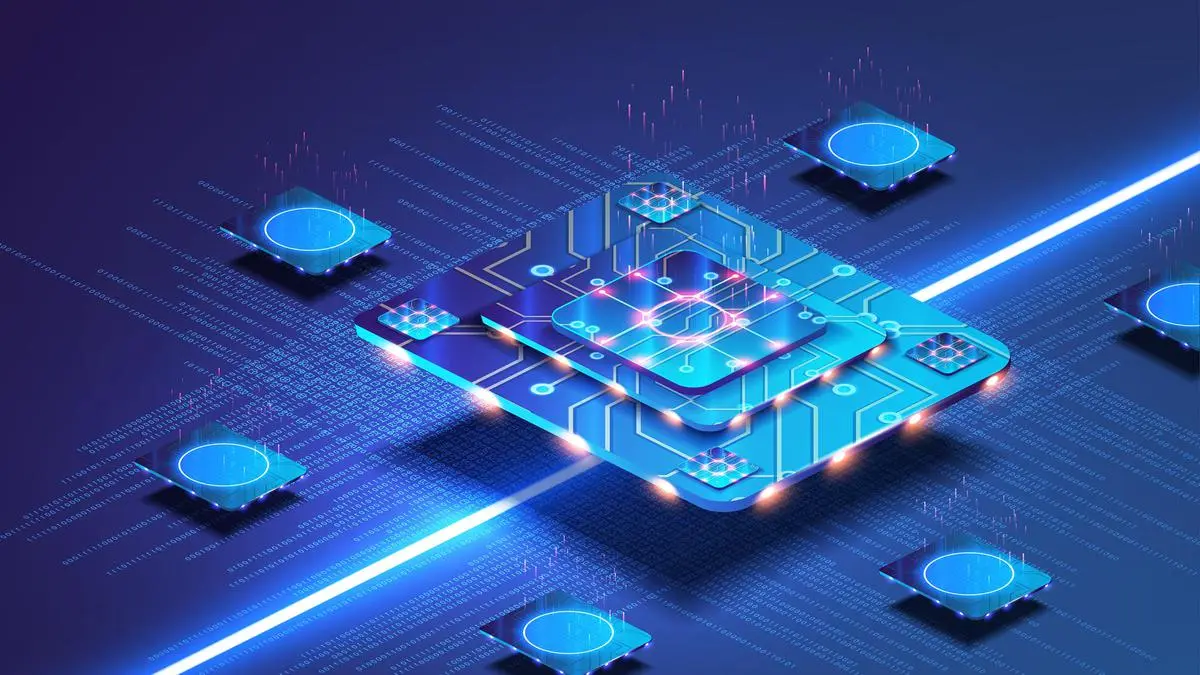
A recent chance discovery of a quantum material can have far-reaching implications in quantum computing and superfast data transmission.

Brewing a mixture of manganese and tin in quartz tubes, followed by gradual cooling, led to a mixture of compounds that may possibly be able to host small and energy-efficient information cells. These information cells have the potential to develop high-density, low-power, and multi-functional devices for memory and logic applications.

Researcher Achintya Low of the SN Bose National Centre for Basic Sciences, Kolkata, brewed a mixture of manganese and tin powder in 7:3 proportion, sealed it in an evacuated quartz tube at 1,000 degrees C for 24 hours, and cooled the mixture very slowly.

When sufficiently cooled, the quartz tubes were transferred to a centrifuge to separate the crystals from the residue. The crystals were tiny but visible to the naked eye. The chemical composition of these crystals was supposed to be three manganese atoms to one tin atom per unit cell.

‘Energy dispersive X-ray spectroscopy’ showed that some crystals had a ‘defect’ — instead of three manganese atoms, they had 2.8 or 2.65 manganese atoms to one tin atom per unit cell.

The researchers suggested that the crystals with 2.8 manganese atoms per unit cell were highly likely to host magnetic skyrmions — the small and energy-efficient information cells that have the potential to develop high-density, low-power, and multi-functional devices for memory and logic applications.

Memory devices built with skyrmions are likely to replace hard disc devices because of their reliable mechanical stability, faster addressing time, and higher storage density. Thus the crystals with 2.8 manganese atoms per unit cell will find application in quantum computing and superfast data transmission, says a press release.

Portable uric acid detector

A new flexible bio-electronic uric acid detecting device has been fabricated for various applications such as wearable sensors and point-of-care diagnostics.

Uric acid is one of the most important antioxidants that maintain blood pressure stability and reduce oxidative stress in living beings.

The usual range of uric acid in blood is 0.14-0.4 millimole per cubic decimetre, and for urine 1.5-4.5 millimole per cubic decimetre.

However, fluctuating uric acid levels due to lack of balance between its production and excretion cause diseases like hyperuricemia, which in turn may lead to gout disease, type 2 diabetes, increased risk of cardiovascular diseases, Lesch–Nyhan syndrome, hypertension, and renal disorders.

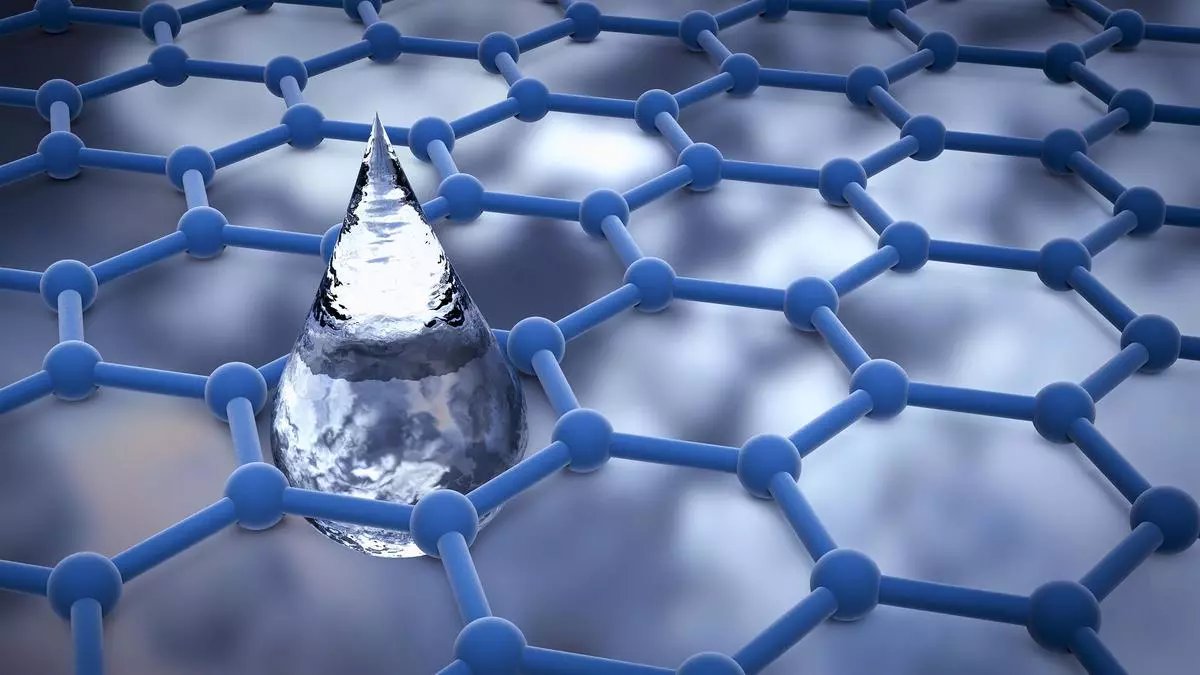
Researchers at the Institute of Advanced Study in Science and Technology (IASST) fabricated a device made of reduced phosphorene quantum dots — a new class of zero-dimensional functional nanostructures with unique physicochemical and surface properties. The quantum dots show distinctive electrical performance in biomedical applications and can be used in fabricating high-performance electrical biosensors.

The fabricated device shows reversibility in interaction with uric acid, which enables repeat use of the device for sensing experiments. It outperforms all currently available devices in effectiveness and cost because it doesn’t need any enzymes.

The response of the fabricated device was investigated with samples like human blood serum and artificial urine. The device is simple, portable, cost-effective, and easy to fabricate for detecting uric acid, says a press release.





Source link

A chip off the AI block

A chip off the AI block


Memory and processing being two separate pieces of hardware was never a big deal — until now. With the advent of artificial intelligence and its branches, machine learning and deep neural network, more time and energy is needed for information to jump back and forth between ‘processing’ and ‘memory’, and is therefore avoidable.

Scientists are investigating ways of unifying processing and memory, leading to a new branch of electronics called ‘in-memory computing’. A ‘deep neural network’ could have millions of nodes organised into layers to perform a certain computation from input data. Any unification of logic and memory would be a big help.

Bhaswar Chakrabarti, an assistant professor in the department of electrical engineering, Indian Institute of Technology, Madras, is among the scientists investigating how to unify processing and memory. “I have always been intrigued by ‘memory’,” Chakrabarti told Quantum, “both in humans and machines.” So, he embarked on designing a memory chip that can offer an “alternative computational paradigm” with higher performance and energy efficiency.

Related Stories
How machine learning can forewarn about disasters

Machine learning has rejuvenated research on early warning systems for events ranging from disease outbreak to stock market crashes

Among the various in-memory computing hardware, the one that Chakrabarti found particularly interesting was the ‘content-addressable memory’ (CAM). Basically, when you search a memory device to retrieve information, you don’t search by the ‘address’ and instead go straight into the ‘content’. CAM, therefore, “is a promising candidate for wide application in data-intensive, high-performance search operations”, he says.

Chakrabarti began designing a CAM that would be useful in applications such as network routing, CPU caching and deep learning. His idea was to use a special type of transistor that is the in-thing in the electronics industry today, the ‘ferroelectric field effect transistors’ or FeFET. (Transistors are a part of an electronic circuit, where they amplify and regulate the flow of electricity in the circuit.) The FeFETs are made using a compound called indium gallium zinc oxide, and they “are being vigorously investigated for deployment in in-memory computing”. Chakrabarti sourced FeFETs from the Fraunhofer Institute of Germany, which collaborated in the research effort.

Chakrabarti has designed a new CAM cell using FeFET transistors which, he says, “significantly improves density and energy efficiency compared with conventional ‘complementary metal-oxide-semiconductor’-based cells. To illustrate, the design uses eight times fewer transistors than the conventional ones.

Related Stories
Peptide factory powered by artificial intelligence

IIT-Madras uses machine learning to help create newer, useful peptides

Chakrabarti and his fellow scientists have published a paper on their research in Applied Electronic Materials. “Simulation shows that the proposed CAM has sufficient decision range to perform the search operations. We have also demonstrated the impact of retention degradation on the feasibility of the multi-bit operation in IGZO-based CAM cells. Our proposed CAM is highly promising for energy-efficient in-memory computing platforms, compared with other solutions, because of its simple one FeFET−one transistor architecture and multi-bit operation,” the paper says.

Chakrabarti says there is still work needed before a chip based on this design can be deployed in industry. Memory arrays would need to be developed and peripherals would need to be tweaked to sync with this new type of chip. Nevertheless, the new CAM is a breakthrough in the area of electronics in the era of artificial intelligence.


Source link

One for the long road

One for the long road


J in science stands for joules and, hence, power. You see a lot of J in Ram.

Well, I’m not alluding to the legendary Hindu god king, but a vehicle.

Stellantis, the American car manufacturer, has just unveiled a new car called Ram. Again, no reference (or reverence) to Lord Rama, but the horned animal that can headbutt its way through.

Ram has set a new record. It has a heck of a lot of ‘J’. It has the world’s heaviest and most powerful vehicle battery.

The battery weighs more than some small cars. It can hold 229 kWhr of energy — for perspective, a Tata Nexon has a 40.5 kWhr battery.

The 2025 Ram 1500 REV, expected to be available for purchase in 2024, is indicative of the shape of things to come in the automotive sector. Massive battery packs capable of charging in a jiffy and running cross-country distances are becoming the norm. Ram’s battery can run 800 km on a single charge and can be charged in ten minutes flat. The battery is so powerful that reviews have said it can power a house during a storm or light up a tailgate party.

The vehicle was unveiled last week at the New York International Auto Show. The price has not been disclosed yet, but a good guess would be that the vehicle is meant for people whose pockets reach their ankles.


Source link

Probiotics as net-zero ally

Probiotics as net-zero ally


‘Probiotics’ — microorganisms that confer a benefit on the host — are common to many kinds of food such as milk and yoghurt.

For some years now, a Chennai-based company, ProKlean Technologies, has been successfully using probiotics for industrial applications. The company uses a ‘community of bacteria’, as opposed to a single species, which has some benefits.

Now it is becoming clear that industrial use of probiotics has another benefit — reducing carbon footprint.

Typically, jobs such as de-waxing grey fabric to ensure they absorb dyes better, stain removal, treatment of textile effluents, odour elimination, and bleaching of paper involve the use of chemicals.

Community work

“A third-party, cradle-to-grave carbon footprint evaluation of our typical product, compared with the chemical equivalent that we replace, shows a 75 per cent reduction in carbon footprint,” says Dr Sivaram Pillai, the co-founder and Director (R&D) of the 11-year-old ProKlean Technologies.

ProKlean’s use of a consortium of microbial species, rather than a single species as in other fermentation systems, turned out to be a great innovation because, in a community, bacteria tend to help each other. Basically, the metabolite produced by one species becomes a nutrient for another species.

“It is a dynamic and constantly evolving milieu,” says Pillai.

About 90 per cent of the species in the consortium used by ProKlean belongs to the genus Lactobacillus and Bifidobacterium. The fermentation is carried out in non-aseptic conditions as against the aseptic conditions used in typical fermentation systems.

Further, the fermentation is carried out in ambient conditions (in a hot city like Chennai) while typical fermentation systems require maintaining a constant temperature. This saves energy. “Since the majority of the species in the culture we were using were Lactobacillus, similar to those in milk, we reasoned that we could also try our fermentation at room temperature. We developed simple methods and procedures over a couple of years to keep out contamination and perfected the protocols we use today,” says Pillai

Low-cost process

ProKlean’s plant uses Sintex tanks for the fermentation process, as opposed to the stainless-steel tanks needed in typical fermentation systems. Downstream concentration and purification steps have been eliminated as the entire broth at the end of the fermentation becomes the final product, leading to a considerable reduction in capital cost. More importantly, there is hardly any effluent discharge.

As such, the ProKlean process is a low-cost, low-energy (and hence low carbon footprint), and zero-pollution one.

Some estimates suggest that less than 5 per cent of all microbes are harmful to humans. Of the rest, probably less than 5 per cent are considered beneficial and the rest neutral. Scientists have found that many different species of microbes live together in nature (including human bodies) and communicate using signal chemical molecules. They support each other by sharing nutrients required for growth and survival. When harmful or pathogenic bacteria outnumber the good ones in any milieu, the situation turns ugly; and when good bacteria outnumber the bad ones, the situation turns pleasant. Therefore, by manipulating the good bacteria to do useful work, one can employ many ‘neutral’ bacteria too.

Pillai says that after a dip in business during the pandemic, sales are picking up again and have tripled over the last two years to reach around ₹50 crore last year — this is expected to double again in 2023-24. So far, the company has raised $6 million from The Chennai Angels, Infuse Ventures and Siana Capital and expects to raise another $3.6 million soon.

Currently the bulk of its customers are in the textile and paper industries, but the company is to soon get into wastewater treatment (using bacteria).


Source link

Rare diseases spark an unusual solution

Rare diseases spark an unusual solution


An estimated 96 million Indians are affected by ‘rare diseases’, for which drugs have either not been discovered or, if there is a drug, it is way too expensive. ‘Rare diseases’ (RD) — which affect a small percentage of the population — constitute a major problem in India, and remain lurking under the radar.

There are an estimated 7,000 RDs in the world, but fewer than 5 per cent of these have an approved drug for treatment. Another estimate says there are 450 RDs in India.

The government is seized of the problem but does not have a solution. In 2021, the government came out with a National Policy for Rare Diseases (following an earlier version from 2017), which describes the problem in detail, and speaks of providing financial assistance to the affected and asking Indian research laboratories to engage with RDs. It notes that “for a long time, doctors, researchers and policymakers were unaware of rare diseases and, until very recently, there was no real research or public health policy” concerning RDs.

Noting that fewer than 10 in a hundred patients receive disease-specific treatment, the NPRD document says that for a child weighing 10kg, the cost of treatment could vary from ₹10 lakh to ₹1 crore a year, and the treatment may be lifelong.

Repurposed drugs

The typical approach to RDs among doctors is to either dip into medical literature for a treatment clue or ask colleagues if they have come across something similar. Both approaches are fraught with risks, says Dr Subramanian Swaminathan, Director, Gleneagles Global Hospitals, Chennai. Medical literature only provides information about (the few) cases that were successfully treated.

Two researchers — Dr Khujith Rajueni of the Department of Clinical Pharmacy, Poona College of Pharmacy, Bharati Vidyapeeth University, Pune; and Dr Mohua Chakraborty Choudhury of DST Centre for Policy Research, Indian Institute of Science, Bengaluru — have explored the viability of using repurposed drugs for rare diseases. “Repurposing drugs used for other common conditions has been considered an essential alternative for RDs due to their cost-effectiveness and reduced timeline, resulting in higher success rates than novel drugs,” they say in a yet-to-be-peer-reviewed paper titled ‘Assessing the availability of repurposed orphan drugs in India’, published in the preprint server Medrxiv.org.

(In an email to Quantum, Dr Choudhury cautioned that “the paper is under review and may undergo major changes.)

Drugs used for RDs are known as ‘orphan drugs’. Drugs repurposed for treating RDs are called ‘repurposed orphan drugs’, or RODs. Rajueni and Choudhury have looked at the availability of RODs, their likely uses, and the need for regulations.

Generic giant

The paper notes that India has a vast potential to use RODs as it is the biggest global manufacturer of generic medicines. “Many RODs out of the exclusivity period are possibly manufactured and available in India and used for other conditions,” the authors say. Further, the patent regime in India disallows evergreening of pharmaceutical patents — namely protection of incremental changes in previously approved drugs. This will enable generic manufacture of many RODs in India. There is also a provision for ‘subsequent new drug application’ for approval of an already approved new drug (within four years) with new claims, namely indications, dosage, dosage form, and means of administration.

Which of the generic medicines could be RODs? The Central Drugs Standards Control Organisation (CDSCO) does not give the ‘orphan’ label to any drug. Rajueni and Choudhury picked 1,033 designated orphan drugs from the US FDA list and culled out 279 as RODs. Their investigation showed that 170 of these were in the CDSCO list. They further researched to see how many of the rest were found in other sources such as Indian Pharmacopoeia (IP), the Food Safety and Standards Regulations (2016), and the Ayush ministry website. This led them to another 42. Thus, 212 of the drugs in the FDA list could be RODs in India — the other 67 would need to be imported.

Noting that “there is an absence of a dedicated orphan drug approval system or information portal in India”, the authors say that there has been no study to assess the availability of orphan drugs in India. As such, the information they dredged out could “guide the industry and researchers to identify drug candidates for which generics can be launched in India”.

Dr Swaminathan stresses the need for an international database on RDs and the possible RODs. The work of Rajueni and Choudhury is perhaps the first step in that direction.


Source link

Custom-made nano filter

Custom-made nano filter


Researchers at the Indian Institute of Science Education and Research (IISER), Bhopal, led by Dr Abhijit Patra, have developed a novel method to produce free-standing crystalline nano porous organic films that can separate toxic organic micro-pollutants from water.

Membrane separation is a widely used technique in industry for separating and purifying various substances. The membranes used are usually made of porous material, with the pore size being an important factor in determining their filtration. Scientists have been researching various types of porous material for years. Recently, covalent organic frameworks (COFs) have emerged as promising porous material for membrane-based separation.

COFs are two-dimensional or three-dimensional crystalline porous organic polymers that have unique advantages over other porous material because their structures and functions can be precisely designed. “These materials are lightweight, highly thermally stable, and permanently porous, making them an excellent choice for membrane separation applications,” says a press release.

“The researchers at IISER Bhopal have demonstrated the transformation of an organic imine cage molecule into a free-standing COF film,” it says. The films were nano porous — that is, the pores were a hundred thousand times smaller than the width of a human hair.

Lab-grown bone

Bikramjit Basu, Professor at the Materials Research Centre, and Hardik J Pandya, Associate Professor at the Department of Electronic Systems Engineering, Indian Institute of Science, Bengaluru, recently developed a tool that uses electrical stimulation to grow mouse bone cells in a culture dish. This technology could pave the way for making better implants that can be integrated with fractured bones.

Bones are piezoelectric, meaning they store electric charge when subjected to mechanical stress. This charge accumulation can be useful.

Basu and Pandya prepared a composite material called polyvinylidene difluoride (PVDF) base mixed with barium titanate and carbon nanotubes. They used this as a medium to grow mouse bone cells.

“PVDF is electroactive — its shape and size can change in response to electric charge,” says an article in IISc’s newsletter Kernel. “This medium can therefore mimic the environment inside our body, where piezoelectric bones can undergo growth and modulation in response to accumulation in which the cells are grown in the presence of an electric field, active for 10 minutes a day.”

Membrane’s second coming

The Central Salt and Marine Chemicals Research Institute, Bhavnagar, is giving a second life to discarded reverse osmosis membranes used in desalinating seawater.

They can be used for low-salinity brackish water desalination, wastewater treatment, says CSMCRI. They can also be used for partial substitution of the original application “by enhancing the flow rate but maintaining the salt rejection performance”.

The rejuvenated membrane costs just 15-20 per cent of the cost of new membranes. The technology is ready for transfer to industry. “It is important from an environmental perspective to extend the lifecycle of membrane elements since membrane waste is a hazardous polymeric waste,” says CSMCRI.


Source link

YouTube
Instagram
WhatsApp



