Turbine for low-flow rivers

Turbine for low-flow rivers


Technologists at IIT-Madras have developed a turbine for run-of-the-river plants with low water depth. The turbine can be placed where the water depth is less than 4.5 m and flow rate is only 3 m per second.

The turbine is horizontal, which means the water flows through it and turns the blades at a speed of 1,500 rpm. Prof Dhiman Chatterjee of the Hydro Turbo Machines Lab of the Department of Mechanical Engineering, told  Quantum that the rated capacity of the lab-tested device is 9kW, but the one built for field trials would have 100kW capacity.

The energy for conversion into electricity comes from both the flow of the river and the pressure from the head of the water — the machine converts around 73 per cent of this energy into electricity. Dr Chatterjee said the team is “looking for opportunities for funding and a place to do field-level tests”.

For field tests, the only addition, apart from upscaling the capacity, would be to integrate a generator to produce electricity. The only other challenge is the likely damage to the blades from silt, for which the team is working with IIT-M metallurgy department for an appropriate surface coating. Dr Chatterjee said the turbines have high potential for commercial deployment. It can be put up in Himalayan rivers, at places where there is a good slope, or in other places by building a small check-dam and a diversion canal to place the turbine.


Source link

Designing nanoparticles to fight cancer cells

Designing nanoparticles to fight cancer cells


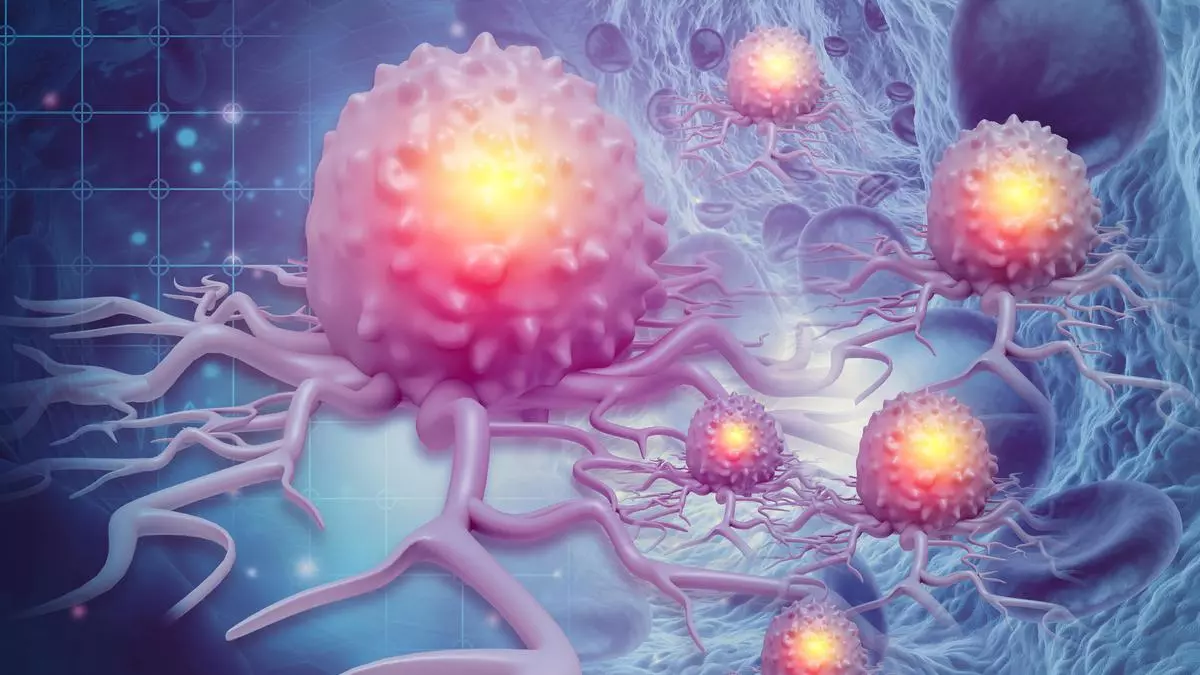
A major problem in treating cancer is that cancer cells develop drug resistance. Scientists have been trying to find a way of killing cancer cells that have developed ‘multi-drug resistance’, or MDR.

A team of researchers from IIT-Jodhpur have reported a breakthrough, at the heart of which is the use of specially designed nanoparticles. Indeed, this breakthrough is an entirely new pathway of therapy, whose technological underpinnings can be applied in treating several other diseases, too.

The team, headed by Dr Raviraj Vankayala, took up lung cancer for their study.

Now, how to kill cancer cells? One good way is to oxidise them. Cancer cells, like all cells, die if they accumulate oxygen. Accumulation of oxygen happens when any molecule containing oxygen gets into the cell. Such oxygen-containing molecules that damage cells are called ‘reactive oxidative species’ or ROS, better known as ‘free radicals’. The oxygen in the ROS reacts with the many chemicals in the cells, destroying their functions, effectively killing them. This is called ‘oxidative stress’. Doctors routinely advise us to take antioxidants, such as fruits. The purpose of antioxidants is to remove ROS.

The right receptor

All cells, including cancer cells, naturally have defence mechanisms against ROS. Now, the trick to kill cancer cells is to quell its defence mechanism. Defenceless, the cells get oxidised and die.

The next question is, how to demolish the cancer cell’s anti-oxidative defence mechanism. Here is where IIT-Jodhpur’s research comes in. The team developed a special type of nanomaterial called ‘upconversion nanoparticles’, or UCNP, which is a cocktail of rare metals. A useful property of UCNP is that when they absorb light (get energised) they produce so much ROS as to overwhelm the cell’s antioxidant defence mechanism. Think of them as Popeye after eating a can of spinach!

Cast of characters

1. UCNP, or ‘upconversion nanoparticles’, is a cocktail of rare metals that produce ROS, or ‘reactive oxidative species’, under infrared, visible or ultraviolet light

2. ROS, also known as free radicals, are molecules containing oxygen that can enter cells. ROS are harmful

3. EGFR, or ‘epidermal growth factor receptors’, are found on the surface of lung cancer cells. Receptors are the entry points of a cell

4. Anti-EGFR antibodies are proteins that can bind to EGF receptors

1. UCNP binds with anti-EGFR antibodies to form modified UCNP

2. The modified UCNP, led by anti-EGFR antibody, enters cancer cells through the EGF receptors

3. When infrared light is shone on UCNP, it produces lots of ROS

4. ROS creates oxidative stress in cancer cells, overwhelming their anti-oxidant mechanism to kill them

The next step is to get the UCNP into cancer cells — and, again, only into cancer cells and not healthy cells. To do this, Vankayala’s team zeroed in on a specific feature of lung cancer cells, called ‘epidermal growth factor receptor’, or EGFR. These receptors are a sort of entry point into a cell. In the case of the SARS-CoV-2 virus causing the Covid-19 pandemic, for instance, the spike proteins of the virus bind to the ‘ACE2 receptor’ in human cells to enter them. The EGFR are similar receptors that are overproduced in lung cancer cells.

Vankayala’s idea was to modify the UCNP to home in on the receptors in lung cancer cells (and not healthy cells). The team hit upon an ingenious ploy for this. They attached the UCNP to a commercially available anti-EGFR antibody. The UCNP has a carboxyl group, the anti-EGFR antibody has an amine group. The carboxyl and amine join hands, and you have a molecule that can enter the lung cancer cell through the EGF receptor. In a way, the anti-EGFR antibody leads the UCNP inside the cancer cells. All you need to do now is shine an infrared light on the cancer cells. Nourished with IR, the UCNP produces copious quantities of ROS, creates oxidative stress in the cancer cells and kills them.

Challenges

While this treatment pathway has been proven in a lab, there are still some challenges in its practical application, Vankayala says. For example, it is important to ascertain that UCNP does not prove to be toxic or have other deleterious side-effects.

Another challenge is the need to produce UCNP in large quantities. While testing in mice a few milligrams are enough, but you’d need several grams to test on a human. However, these are not insurmountable problems.

Once validated in clinical trials, which would take at least a few years, this can prove to be a cure for cancer. IIT-Jodhpur experimented with lung cancer cells, but for other types of cancer, it is just a question of finding other nanoparticles similar to UCNP.

The UCNP method can also be used in diagnosis. The nanoparticles glow when lit with IR — they can be a good biomarker to identify bad cells. This opens up a completely new field of diagnosis. Vankayala calls it ‘nano-theranostics’.

Indeed, this treatment pathway could be extended to many diseases. Vankayala says that neuro-degenerative disorders can be the first of the other candidates. In fact, the pathway has potential to completely revolutionise the field of medicine itself. “But that would take a decade or two,” cautions Vankayala.


Source link

Ocean energy harvester designed for Indian waters

Ocean energy harvester designed for Indian waters


Oceans are throbbing, which means they are full of energy that can be tapped. There are many ways of tapping this energy for commercial use, but all are still in the works. But broadly, the methods are of three kinds — making use of the up-down movement of the oceans; harnessing underwater currents; and harvesting energy from tidal movement.

Of these, the up-down movement of water is the lowest hanging fruit, perhaps because it calls for the least investment in equipment.

The ‘ocean wave energy converter’ that IIT-Madras unveiled last week has been tailored for Indian waters. Prof Abdus Samad of IIT-Madras, who has established a Wave Energy and Fluids Engineering Laboratory, tells  Quantum that Indian seas are characterised by waves that are not tall, but have a high variation — they come in quick succession. This is a useful feature.

Prof Samad and his team tested the small 85 kW machine in the Bay of Bengal, 6 km off the coast of Tuticorin, at a water depth of 20 m. The device chiefly consists of a buoy (a hollow drum of less than 1 m diameter and one foot tall), a flat plate, and a 10 m rod, called spar, connecting the plate and the buoy. Notably, the plate does not rest on the sea floor — it just hovers inside the water. This makes it deployable anywhere, including in seas with slopy, uneven floors. Atop the buoy is a rack-and-pinion arrangement — a gear wheel that can run up and down a pair of toothed guidelines. The wheel is connected to a small generator.

As the buoy bobs up and down in the seawater, the underwater plate remains stable. In tandem with the buoy’s movement, the gear wheel runs up and down, and the generator produces electricity.

Samad’s team wants to build a bigger device, with a buoy of 15 m diameter and larger plate. Samad’s PhD student Prashant Kumar, who is part of the project, told  Quantum that with 20 15-m buoys, you can produce electricity for ₹9 a kWhr.

Costs will reduce with scale and alternative materials. Samad reckons that Indian seas pack at least 54 GW of energy, of which 40 GW could come from waves.

Desalination

Samad’s team is working on repurposing the same machine to produce drinking water from seawater. After all, reverse osmosis is about pushing saltwater through a membrane — drinking water accumulates on the other side. When the energy for the ‘push’ is available in the seas, why not use it? The Department of Science and Technology has given IIT-M a grant of ₹1 crore for this purpose.


Source link

DuPont’s high-efficiency RO

DuPont’s high-efficiency RO


A membrane is really a filter and, hence, prone to clogging. To overcome this in reverse-osmosis systems, water is allowed to cross-flow across the membrane, so that some water gets to the other side and the rest flushes out the accumulated by-particles such as salts. Since such a system allows only partial recovery of drinking water from seawater, RO plants use an array of membranes, so that water flowing from one membrane becomes the feed for the next. However, even this is a problem because it is difficult to balance flow rates across all membranes.

To overcome this, DuPont (through its brand DesaliTec) has come up with a solution it calls ‘closed-circuit reverse-osmosis’ (CCRO). DuPont Water Solutions’ Commercial Leader-Pacific, Tanmeet Gulati, told  Quantum that while conventional RO plants rely on sequential membrane arrays, CCRO recycles a given batch of water through a single membrane array “until no further recovery is possible”. Literature provided by the company says that “at a software-based set point, the system automatically flushes out all the concentrate and then returns to operation mode. The flush is automatically triggered by the software in response to set points that include recovery, pressure, permeate quality and other water quality parameters”.

The result is a high recovery rate, which can, in turn, help reduce cost of water produced.

Powerless heating

Dr Sumer Singh of the Department of Design, IIT-Delhi, and his team have come up with a low-cost heating system that can be activated by plain water anytime, anywhere and does not require any fuel or electricity to heat or power it. It can provide low-grade heating in any location.

Singh calls it ‘powerless heating technology’. It is particularly useful in remote places.

The active heating element consists of a mixture of eco-friendly minerals and salts, which generate exothermic energy, resulting in heat on contact with water. This provides enough energy to raise the temperature of any food or beverage by 60-70 degrees Celsius. The heater weighs only 50 g, and after every heating the by-product (natural mineral rock) inside the heating pad can be disposed of. The rock helps improve soil fertility and is biodegradable.

With this technology, users can heat ready-to-eat food, and make instant noodles and beverages like tea and coffee.

The release says that ITC Ltd has come forward to use the technology.

North East Centre for Technology Application and Reach (NECTAR), an autonomous body under the Department of Science and Technology, supported Dr Singh and his team to develop a food box and a liquid container that can be integrated with the powerless heating technology.

Staggeringly tough

The toughest material in the world today is an alloy made of chromium, cobalt and nickel (CrCoNi).

CrCoNi is a subset of a class of metals called high entropy alloys (HEAs). All the alloys in use today contain a high proportion of one element with lower amounts of additional elements added, but HEAs are made of an equal mix of each constituent element. These balanced atomic recipes bestows some of these materials with an extraordinarily high combination of strength and ductility when stressed, which together make up what is termed “toughness.” HEAs have been a hot area of research since they were first developed about 20 years ago, says a press release from the Lawrence Berkeley National Laboratory, US. But the technology required to push the materials to their limits in extreme tests was not available until recently.

The toughness of this material near liquid helium temperatures (20 kelvin, -424 fahrenheit) is as high as 500 megapascals square root meters. In the same units, the toughness of a piece of silicon is one, whereas, the aluminium airframe in passenger airplanes is about 35, and the toughness of some of the best steels is around 100. “So, 500, it’s a staggering number,” the release says.


Source link

CSR sparks R&D spends

CSR sparks R&D spends


Corporate social responsibility regulations mandate that companies fulfilling one of three criteria — net worth, turnover or profit — must spend 2 per cent of the average net profit of preceding three years on CSR activity.

A recent study by Shubhashis Gangopadhyay and Swarnodeep Homroy of the Department of Economics, Econometrics and Finance, University of Groningen, The Netherlands, has turned in an insight: companies just under the net profit threshold have been trying to avoid CSR spending by increasing their own R&D expenditure (to depress profits).

Here again, only companies with a proclivity for spending on R&D have increased their expenditure under the head; others have opted for CSR. This is because the R&D-minded companies have already incurred the high-cost, long-term expenditure on R&D infrastructure. As such, they only had to step up R&D spends to avoid CSR. The others, in contrast, would have to start from scratch to set up research labs.

Now, the nub of the issue is that companies that stepped up R&D spends, even if only to avoid CSR, have done well because today’s R&D expenditure nourishes tomorrow’s business. “Firms reduce pre-tax profits beneath the threshold by increasing R&D expenses,” the report says.

They note that the increase in R&D expenses has tangible innovation impacts in the following years. “Firms proximate to the threshold that increases R&D expenses apply for one additional patent and announce two new products in the next three years than similar firms that did not increase their R&D expenses. This effect is particularly pronounced in firms with a prior history of innovation and firms in innovative industries,” the report says.

CSR regulations have also aided R&D more than direct incentives, the authors say. Firms can, and do relabel other operational expenses as R&D to take advantage of fiscal incentives like tax credits for innovations. Therefore, direct fiscal incentives can incentivise misleading information about innovation activities.

“Our results show a pathway through which indirect incentives generated by social policies can foster ‘real’ innovation without such relabelling concerns,” the report says.


Source link

How close are we to an insulin tablet?

How close are we to an insulin tablet?


In 2021, approximately 537 million people had diabetes; this number is set to rise to 643 million by 2030 and 783 million by 2045, data from the International Diabetes Federation (IDF) shows.

Diabetes can lead to multiple health issues and is a leading cause of mortality globally, along with cardiovascular disease (CVD), respiratory disease, and cancer.

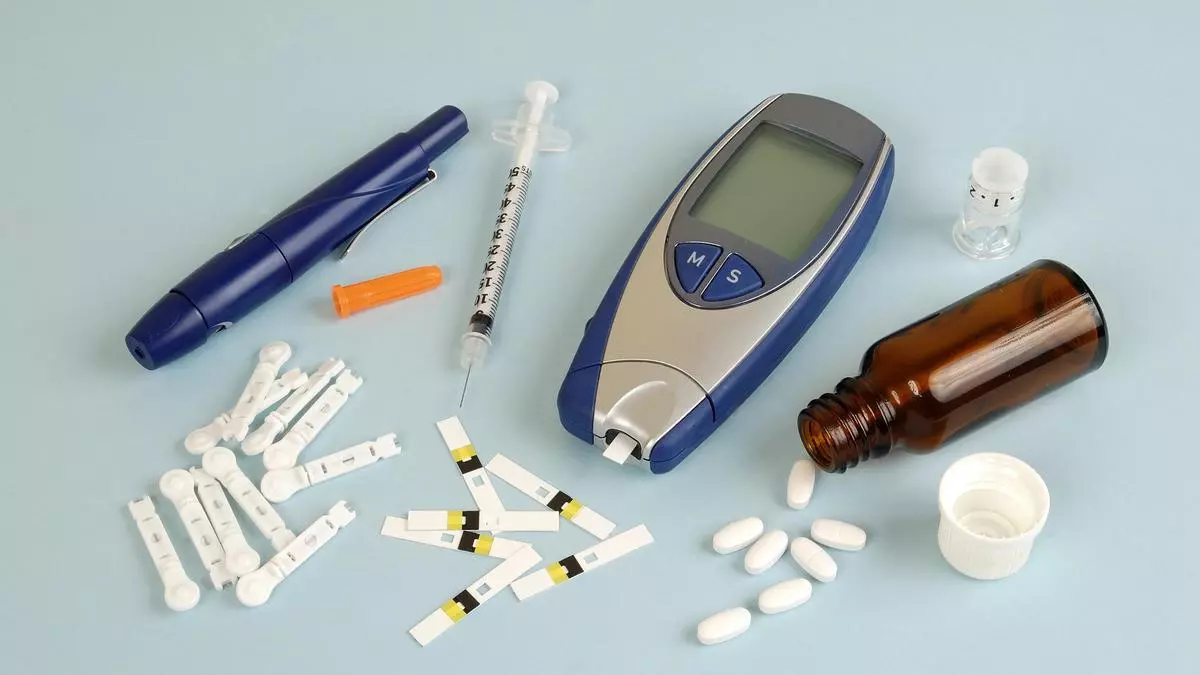
Insulin, a hormone that regulates blood sugar levels, is injected to help manage diabetes. The insulin — in the form of a liquid solution or a suspension — is injected subcutaneously (under the skin). Depending on prescription, it may be taken several times a day. However, the discomfort of needle use and the cost of injectable insulin could impede patient compliance. Research is on to find alternative delivery of insulin through inhalation, or rectal, buccal or oral routes.

Of these, oral insulin delivery is the most convenient. However, since insulin is a peptide (short chain of amino acids) it is acted upon by the enzymes in the body that break down macromolecules in food into smaller molecules fit for metabolism. When insulin is broken down by enzymes its ‘bioavailability’ — the time it remains available for use by the body — is reduced.

“The human physiological system acts as a formidable barrier to insulin, limiting its bioavailability,” says a scientific paper titled ‘An overview of oral insulin delivery strategies’, by scientists from Institute of Chemical Technology (ICT), Mumbai.

The paper, a review of literature, focuses on oral insulin delivery strategies (OIDS) for increasing the bioavailability of oral insulin, including nanoparticles, microparticles, nano-in-microparticles, hydrogels, tablets, capsules, intestinal patches, and ionic liquids.

A viable option

Oral insulin can enhance patient compliance and drive down prices significantly, but its development has been a challenge for the scientific community.

“Oral insulin is one of the most researched subjects… Unfortunately, none of the products have reached commercial stage or success yet,” says Ratnesh Jain, Associate Professor at ICT. However, “such an option can be viable in the future,” he told  Quantum.

Since insulin is sensitive to the acids and enzymes in our digestive system, which break it down, the challenge is in ensuring the drug makes its way unaffected to the intestinal lining.

The strategy is to temporarily block the enzyme action through alternative chemical agents.

“Sufficient bioavailability is needed for drugs to function. We are trying to suppress acid/enzyme mixture and, at the same time, create temporary pores for the peptides to pass through in the stomach or intestinal barriers, so bioavailability can increase,” he said.

The intestinal lining also contains various pores for water, vitamins and nutrients to enter the blood stream. However, these pores are too small for drugs like insulin. Permeation agents (chemical agents) are used to increase the pore size.

These pores, together with the reduced activity of enzyme, allow faster transfer of drugs from intestine to blood. This is known as the ‘trojan horse’ approach.

“Oral peptide delivery is a major research topic in our lab,” Jain said.

Advancing technology

At ICT, researchers have successfully used nanomaterials, chemicals and excipients to increase the bioavailability of insulin.

“Formulation components are key to control this challenge,” Jain says. Formulation components like sugars, fatty acids, and polymers interact with acids and enzymes differently and they inhibit the enzymes and create temporary small pores in the barriers. “A large number of components need to be screened for this activity and, sometimes, a right ‘recipe’ needs to be created which can work for oral delivery of peptides. We are still screening various recipes that can work for insulin,” he said.

There has been limited success so far. “One of the most successful strategies is the oral delivery of semaglutide, where the patent technology of formulation components has allowed higher bioavailability.” He added that there are drugs in various clinical stages of development.

An added challenge he points out is that early development is expensive and the Indian pharma industry can only fund late-stage developments. “Early-stage development requires government support,” Jain says. Another major issue is the need for a regulatory path for the researchers.

“In our lab, we have established an industry-acceptable regulatory path and this is one of the major reasons why industry has come forward to collaborate with us,” he said.

This collaboration will, hopefully, soon enable thousands of diabetics to put down their insulin syringes and pop a tablet instead.


Source link

YouTube
Instagram
WhatsApp