King Tut’s enduring mystery rages on

King Tut’s enduring mystery rages on


Nearly 40,000 people, including several world leaders and diplomats of various countries, have congregated in Egypt, for yet another climate change jamboree. But today Egypt ought to be remembered for a different and completely unconnected story.

It was exactly this month a hundred years ago that the English archaeologist, Howard Carter, putting his eye against a dark hole, exclaimed those now-famous words: “Yes, wonderful things.” He was responding to his colleague, Lord Carnarvon’s question as to whether he could see anything.

Howard Carter’s startling discovery was that of the boy king, Tutankhamun, who became the Pharaoh of Egypt when he was only 9 and died at 18, in 1324 BC. Recent DNA analysis seem to indicate that he was the product of an incestuous relationship between his father and his aunt; consequently, he was born with multiple deformities. It is said that he needed to walk with a cane, suffered from epilepsy, had a cleft palate and a curved spine.

Today, Tutankhamun is such a big draw. He achieved much during his short lifetime including restoring an ancient religion that his father, Akhenaten, dissolved. He continues to achieve a lot for Egypt’s economy by pulling throngs of tourists to his resting place in the Valley of Kings. The aura of mystery around the boy king and the “curse” of his tomb, have also helped – all those who were involved in the discovery of his tomb, including Carter and Carnarvon, died mysteriously.


Source link

Nanoparticles to aid cancer treatments

Nanoparticles to aid cancer treatments


Conventional therapies in cancer treatment face challenges in delivery of drugs in the body and just the quantity needed, due to the toxic nature of the medicines used that have unwanted side effects.

Nanomaterials have ‘enormous’ potential in cancer treatment, says Dr V Ganesh Kumar, Scientist & Associate Professor at the Centre for Ocean Research (COR), Sathyabama Institute of Science and Technology. “They help alter the drug toxicity profile with enhanced surface characteristics which can diffuse inside the tumour cells. They deliver an optimal concentration of nano drugs at tumour sites and reduce toxicity,” he says.

Dr. Kumar is the corresponding author for a review paper to be published by Elsevier in the January 2023 volume of its Nanomedicine: Nanotechnology, Biology and Medicine journal. The other authors of the review include Ph.D scholar CG Anjali Das, Junior Research Fellow, pursuing research in anti-cancer studies.

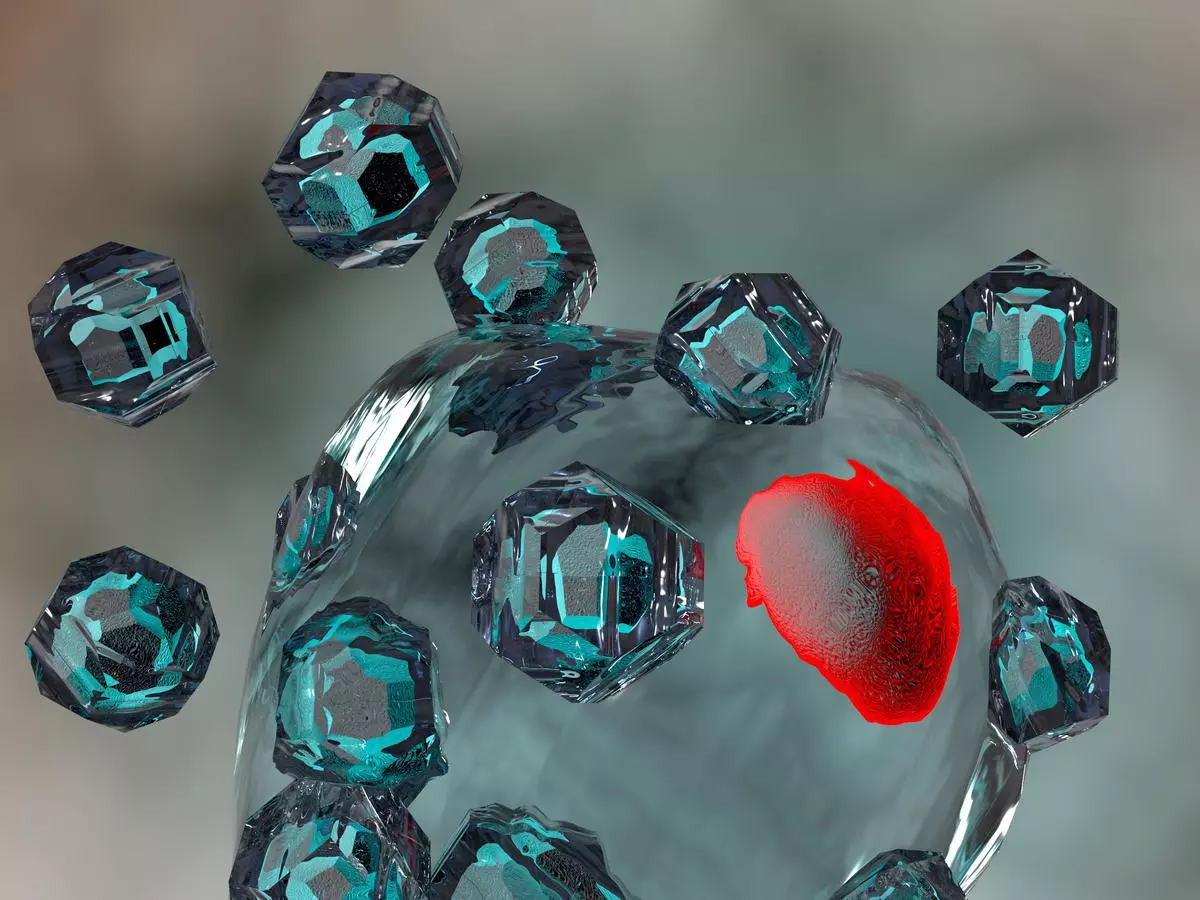
In nanomedicine, three kinds of nanomaterials are studied predominantly – organic, inorganic and hybrid involving both. They include dendrimers, liposomes and exosomes, quantum dots, fullerenes, polymeric micelles, nanoemulsions, RNA nanoparticles and nanotubes.

Examples of organic molecules are dendrimers — which have a branched structure — and liposomes that are akin to lipids, with each having a property that helps inhibit a cancer cell.

Drug carriers

Nanoparticles (particles less than 100nm in length) trump traditional drugs and their delivery mechanisms across three areas: surface characteristics, ability to alter the toxicity of active cancer cells, and tumour specific constituents.

An inorganic nanoparticle such as gold, silver or platinum, acts as a drug carrier. How exactly does the drug delivery take place? “The electrostatic forces between adjacent molecules help in the drug delivery to the tumour site,” he says.

Nanomaterials are useful especially when only a specific amount of drug needs to be delivered and anything in excess would only cause side-effects of the drug. When nanodrugs reach the cancer site, they inactivate the multiplying property of the cancer cell by mutating the ‘signalling pathways’ that aid the proliferation of cells, explains Dr Kumar.

How does the field of medicine narrow down upon tumour-specific constituents of nanomaterials? Dr. Kumar cites the example of the organic nanomaterial, liposome. “The quantum of nano-drugs is at a ‘trace’ level. “We always study bio-compatibility. That is, how much of a drug can a cancer patient bear, what reactions the patient shows to such drugs…”

Liposomes disseminates inside a cell and easily disintegrates with time. In the use of metals, there is always the danger of accumulation of the drug residue which could have an impact on the patient in future.

Liposomes are drug delivery molecules that play a vital role in pharmaceuticals and in the biomedical arena. Marine-derived liposomes act as drugs. They are organic nanomaterials that are effective in drug delivery due to their biocompatibility, enhanced drug solubility, and their non-toxic nature, in addition to being biodegradable. Liposomes can be derived from plants and marine sources.

Does that mean that liposomes are the preferred category of nanomaterials? According to Dr Kumar, researchers are working on both organic and inorganic nanomaterials. “Both are advantageous in their respective application modes. While liposomes are applicable in a higher number of treatment cases than other nanomaterials, it is not an individual decision. For every patient, an oncology board will decide depending on the case history down to the level of blood pH level of the patient. Some kinds of cancers in certain patients may be more susceptible to dendrimers than liposomes. In other cases, oncologists may suggest the treatment with radiation, no material — nano or other kinds — may be required.”

Tumour-specific

If inorganic nanomaterials are invariably transporters of drugs and their organic cousins are drugs themselves, then why is the former in consideration at all? Isn’t it easier to just deliver the drug rather than mount it at nano-levels on a transporter and then aim for the cancer site? Kumar says, “The doctors may opt for controlled release. That is, the drug must neither stay at the site for a long time nor disintegrate quickly. And it must get active only at the cancer site; in such instances, you need a carrier for targeted drug delivery.”

Listing a host of nanoparticles that have been effective in treatment of cancer, the review showed, for example, that spherical gold nanoparticles synthesised in the lab using marine bacteria Vibrio alginolyticus were effective in decreasing cell viability in breast cancer cell line.

The review paper also lists 12 nanomedicines that have been clinically approved for the treatment of cancer. Not surprisingly, liposomes form the bulk of the mentions — in 4 cases — and are used in the treatment of pancreatic cancer, acute lymphoblastic leukemia, acute myeloid leukemia and osteosarcoma.


Source link

Brighter, cheaper LEDs

Brighter, cheaper LEDs


Plasma treatment of some inorganic nano-materials has shown the way towards bright, stable and affordable light-emitting diodes (LEDs).

Cost-efficient and bright light-emitting diodes (LEDs) are in demand, but attaining the desired stability and brightness have been challenges. Scientists are looking for new materials that are stable, produce bright emissions and can be commercially viable.

Researchers at the Centre for Nano and Soft Matter Sciences (CeNS) have found that simple plasma treatment of inorganic material cesium lead halide nanocrystals can lead to enhanced stabilisation.

The researchers, led by Dr Pralay K Santra, found that a mechanism of plasma treatment induced stability enhancement in inorganic perovskite nanocrystals, which could boost their emission. Plasma treatment induces cross-linking of the organic molecules oleylamine present on the surface of the nanocrystals. This creates a stronger network of ligands, providing better encapsulation and higher photoluminescence intensity.

Methanol as carbon sink

The global methanol market is projected to reach $26 billion by 2025, with a compound annual growth rate of 6.6 per cent from 2019 to 2025. Traditionally, methanol has been produced from fossil fuels such as natural gas and coal. However, methanol production from captured carbon dioxide is an emerging sustainable route, according to Noor Yusuf and Fares Almomani of Qatar University.

The hydrogenation of carbon dioxide to methanol is one of the promising carbon dioxide utilisation routes in the industry that can contribute to emission mitigation. In a paper published in the upcoming issue of Fuel journal, they report “sustainable catalytic hydrogenation of carbon dioxide to methanol using copper or zinc oxide or aluminium oxide catalyst operated at 70 bar and 210 degrees C.”

The pure carbon dioxide feedstock used for this process is produced from the cryogenic upgrading process of biogas or hydrocarbon industries and ready-to-use hydrogen purchased at 30 bar and 25 degrees C. “The proposed methanol process with an annual production rate of 2.34 kt is economically sound with a payback period of nine years if the maximum hydrogen price remains below $0.97 per kg. Hence, producing or purchasing grey hydrogen from a steam reforming plant is most viable,” the authors say.

Rapid test for sickle cell anaemia

Researchers led by Sai Siva Gorthi in the Department of Instrumentation and Applied Physics at the Indian Institute of Science, Bengaluru, and collaborators have designed a rapid, low-cost, point-of-care method to detect sickle cell anaemia, says IISc newsletter Kernel. Sickle cell anaemia is a killer disease, which occurs due to a genetic mutation that causes haemoglobin in red blood cells to clump together.

The system designed at IISc relies on the property of haemoglobin in a solution to absorb and transmit light. The team observed differences in the light absorption between deoxygenated blood samples from sick and healthy volunteers. In preliminary clinical trials with 438 samples, the test showed high sensitivity (96.9 per cent) and specificity (98.6 per cent). The test takes only 15 minutes and may cost less than ₹100. A patent has been filed and licensed by ShanMukha Innovations, an IISc-incubated startup, says Kernel.


Source link

Did spices aid in the fight against Covid-19?

Did spices aid in the fight against Covid-19?


A recent study has established a connection between consumption of spices and ability to fight or recover from Covid-19.

The study — conducted by Vedvati Bhapkar of DY Patil Deemed to be University School of Ayurveda, Mumbai, and Supriya Bhalerao of Interactive Research School for Health Affairs, Bharati Vidyapeeth Deemed to be University, Pune — assessed the connection between spice consumption and health outcomes during the Covid-19 first wave.

The paper, yet to be peer-reviewed, has been published in medRxiv, a pre-print server.

The study shows that consumption of chilli, tamarind and a few other spices had significant positive correlation with the number of recovered cases during the Covid-19 first wave. Some of them showed anti-inflammatory and immunomodulatory properties. These include ginger, cumin oil, coriander, and curcumin, derived from turmeric. Also, capsaicinoids in chilli have shown anti-inflammatory activities. The fruit pulp of tamarind has also shown immunomodulatory activities, the authors say.

For the study, the researchers retrieved spice consumption data from the ‘Household consumption of various goods and services in India’ report in the 68th round (2011-12) of survey by National Sample Survey Organisation (NSSO).

They analysed spices for which consumption data was available, namely, ginger, garlic, cumin, coriander, turmeric, black pepper, chilli, and tamarind, among others. They then collated Covid-19 first wave data for states and union territories, including total number of cases, number of cured and/or discharged and/or migrated cases, and number of deaths. It was normalised ‘per million’ population of the respective states and UTs. The correlation of individual spice consumption and Covid-19 statistics was analysed.

The study lends support to the theory that spices boost immunity. In 2020, another study, by Elsayed and Khan, distilled data from 163 countries to show that “there is a clear interrelated prevalence” between the total number of Covid-19 cases per million population tested and the gram of spice supply per capita per day. Nations with lower consumption of spices per capita showed a greater number of Covid-19 cases per million population, the report said.

“This is not surprising as herbs and spices are well known to boost immunity,” the authors said. However, the precise molecular mechanisms associated with spices and immunity are not completely understood yet.

Bhapkar and Bhalerao note that ginger consumption showed a negative correlation with incidence, mortality as well as recovery from Covid-19. On the contrary, garlic showed a positive correlation with them. “Thus, ginger may have a role in prevention of Covid-19 and garlic in its recovery.”

Turmeric had a negative correlation with incidence of Covid-19. Thus, ginger and turmeric may have immune potentiating property. Also, all other spices that exhibited positive correlation with recovery from Covid-19 may possess anti-viral properties, the study posits.


Source link

Chatbots that never say die

Chatbots that never say die


Recently, when software engineer Blake Lemoine interviewed Google’s chatbot LaMDA, its responses were so real that it convinced many that it was sentient.

Artificial intelligence-based Large Language Models (LLMs) software can take in a few sentences and come up with convincing replies.

Last year, San Francisco Chronicle carried a story (recalled in the recent  MIT Technology Review) about a person who uploaded old texts and Facebook messages from his deceased fiancée and created a chatbot version of her. It reportedly gave him a lot of peace.

Artificial intelligence has made it possible to mimic voices, called ‘voice cloning’. In June, Amazon shared an audio of a little boy listening to a passage from  The Wizard of Oz, read by his recently deceased grandmother.

“Her voice was artificially re-created using a clip of her speaking that lasted for less than a minute,” says  MIT Technology Review.

From a reading dead grandmother to a talking dead grandmother is but a small leap. So, you can ‘talk to the dead’.

Chatbots aren’t sentient but they can pretend to be if fed with lots and lots of data. In today’s world that shouldn’t be a problem. Only, things could swing to the other extreme — two chatbots in an unending conversation with each other.


Source link

Drones, robots and other gizmos with green thumb

Drones, robots and other gizmos with green thumb


The technological leap in agriculture from chemical fertilisers and pesticides to smartphone-based remote operation of irrigation motors happened about a decade ago. Over the last few years, agricultural fields have been awash with more technology.

Today, tech-savvy farmers use drones to identify and root out infected plants before they can damage the entire crop. This solution, of course, is not affordable to all farmers.

But into the wide gap between smartphone-based motor switches and drones and robots, more technology is rushing in. For example, weather stations are being put up on agricultural fields.

Frugal engineering

A weather station at a farm near Erode, Tamil Nadu

In Perundurai, a remote part of Tamil Nadu, a small-sized company called Mobitech Wireless Solutions has been selling products like valves, and wired and wireless valve controllers and sensors. These enable farmers to operate their farm equipment from home, using smartphones. SIM cards inserted in motors or valves do the trick. Using the smartphone’s timer, the farmer can irrigate his fields for fixed periods. Yet another layer of automation is the use of ‘internet of things’ or IoT — the sensors tell the controller when to switch on the irrigation motors and how much water to use. Company officials tell  Quantum that business has been growing 40 per cent annually in the last few years, thanks partly to the pandemic and the resultant labour shortage. These IoT-connected sensors typically save 35 per cent in water consumption, the company says.

And now, Mobitech Wireless has launched a weather station — its priciest product at ₹25,000 each. How does the weather station aid the farmer? While other products give the farmer control over irrigation, the knowledge of wind speeds and outside temperature can help optimise water use, explains P Dhanasekaran, General Manager, Mobitech Wireless. For instance, the sensors can gauge soil moisture levels but the weather station could give the controller a word of caution: don’t let out water now, because the wind speeds are high.

An added advantage for farmers, Dhanasekaran said, is that the data proves handy when lodging an insurance claim following crop damage due to bad weather. This saves time and effort for the farmer, who would otherwise be forced to get the data from the district weather station.

Further automation

Beyond sensor-IoT-based agriculture, you have ‘deep learning’ (a subset of machine learning) and fuzzy logic lending a hand in crop management. In a recent scientific paper published in  Smart Agriculture Technology journal, researchers Anis Ahmed, Dharmendra Saraswat and Aly El Gamal of Purdue University note that “the use of deep learning techniques for plant disease diagnosis provides multiple advantages, including separating disease symptoms, identifying multiple diseases and estimating disease severity”. They point out that deep learning techniques have been used on images acquired from multispectral and hyperspectral sensors to identify the disease-affected regions in a field; thermal sensors and fluorescent sensors have also been used.

Plant disease identification is necessary for precision agriculture and plant phenotyping. Both these areas are data-, information-, and technology-intensive. But researchers today have access to data, mainly from different collection platforms, handheld sensors and drones. Deep learning has become a preferred approach for disease identification due to increased computational power, storage capacities, and availability of large datasets, the authors say.

Another paper, authored by Kalavathi Devi Thangavel, et al, of Kongu Engineering College, Perundurai, Erode, focuses on the specific design of intelligent microclimate controllers for greenhouses.

Prof Thangavel told  Quantum that their work was based on computer simulations of data obtained from a local greenhouse. The simulation took temperature, humidity and soil moisture as inputs and regulated the operations of the heater, pump and humidifier. This, of course, remains to be tested in a real greenhouse, but it is believed that high crop yields are possible.

All these indicate that the world is just beginning to scratch the surface of emerging technologies for agriculture.


Source link

YouTube
Instagram
WhatsApp