InterGlobe Aviation shares tank 6% as oil prices rise above 0/bbl

InterGlobe Aviation shares tank 6% as oil prices rise above $100/bbl


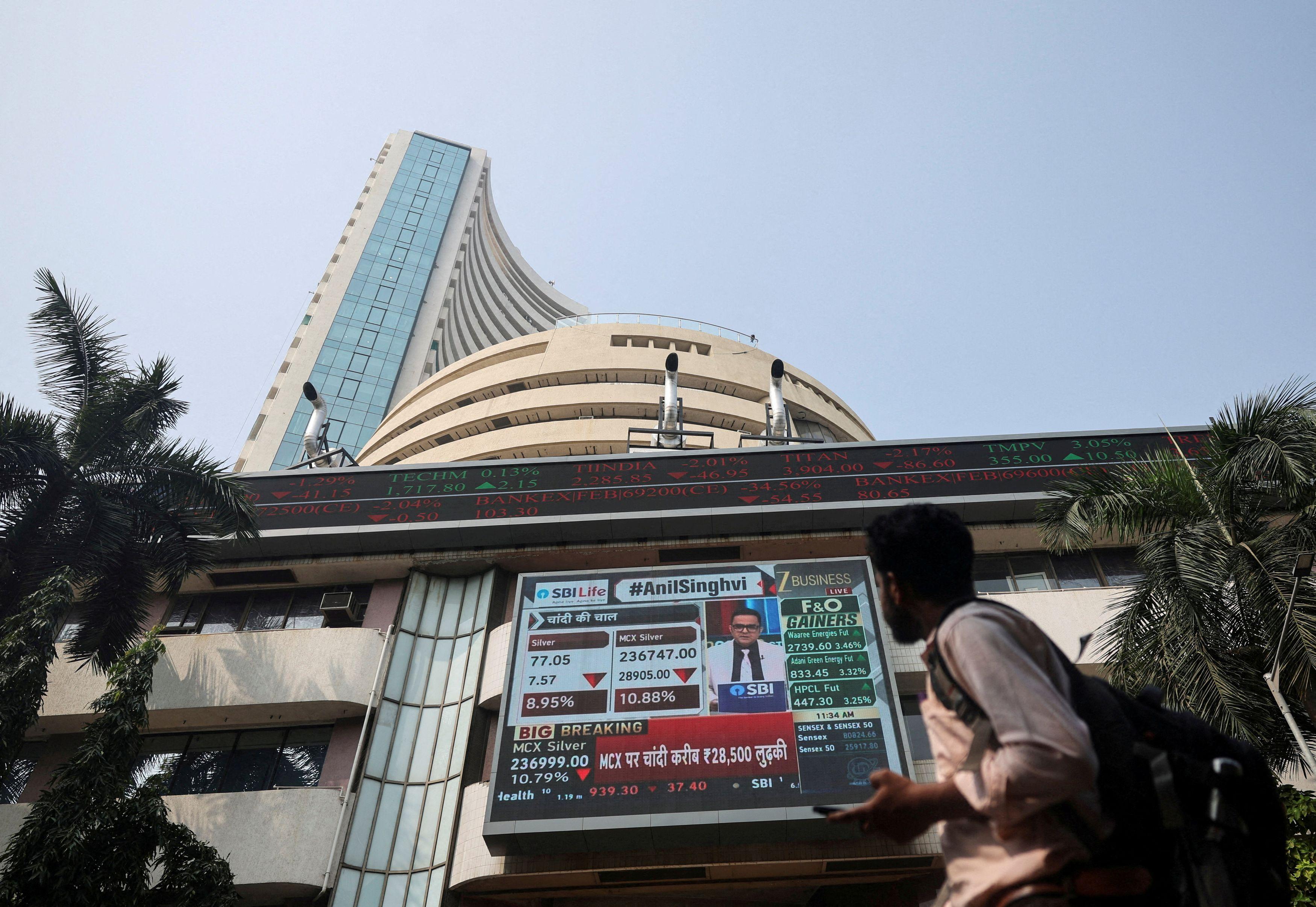
Aviation-related stocks traded mixed on Monday after intensified tensions in the West Asia pushed oil prices higher. InterGlobe Aviation (IndiGo) shares tanked 6.3 in trade on the BSE, logging an intra-day low at 4,265.6. At 9:17 AM, InterGlobe Aviation (IndiGo) share price was trading 6.37 per cent lower at ₹4,265.6  per share. In comparison, the BSE Sensex was up 1.68 per cent at 76,246.44. 


However, SpiceJet shares touched 5 per cent upper circuit at ₹12.88 per share.


The stocks moved after oil prices surged above $100 per barrel as escalating tensions in West Asia spooked investors. Last check, Brent crude oil futures were up 7.32 per cent at $102.17 per barrel. 


Generally, when crude oil prices rise, air turbine fuel (ATF) prices follow, and since airlines cannot immediately pass on the full increase to passengers through higher ticket prices without risking demand destruction, margins get squeezed almost instantly.


Oil prices rallied on Monday after reports suggested the United States (US) Navy prepared a blockade of the Strait of Hormuz that could restrict Iranian oil shipments after ​the US and Iran failed to reach a deal to end ​the war over the weekend.


US President Donald Trump said on Sunday the US Navy would start blockading the Strait of Hormuz, raising the stakes after marathon talks with Iran failed to reach a deal to end the war, jeopardising a fragile two-week ceasefire.


He added that the price of oil and gasoline may remain high through November’s ‌midterm elections, a rare acknowledgement of the potential political fallout from his decision to attack Iran six weeks ago.


US Central Command said US forces would begin implementing the blockade of all maritime traffic entering and exiting Iranian ports at 10 a.m. ET (1400 GMT) on Monday.


“Not only does this restrain exports from Persian Gulf oil producers, but it will also restrict Iran’s ability to export oil and will exacerbate the supply disruptions the market is experiencing,” ANZ analysts Brian Martin and Daniel Hynes said in a note.


Meanwhile, Iran’s Revolutionary Guards said on Sunday that any military vessels attempting to approach the Strait of Hormuz would be considered a violation of the two-week ​US ceasefire and ‌be dealt with harshly and decisively.


Despite the stalemate, three supertankers fully laden with oil passed through the Strait ‌of Hormuz on Saturday, shipping data showed. They appeared to be the first vessels to exit the Gulf since the ceasefire deal was struck last week.


Motilal Oswal Financial Services, in its report dated March 25, 2026, noted that the ongoing airspace disruption due to the West Asia conflict represented a meaningful near-term earnings overhang for IndiGo, driven by a combination of network dislocation, revenue loss, and elevated cost pressures. The supply-side nature of the shock limits mitigation, with cancellations and booking softness likely to weigh on Q4FY26 performance.  


While demand fundamentals remain intact and recovery should be swift once normalcy resumes, the concurrent fuel cost spike, rerouting inefficiencies, and forex headwinds could extend margin pressure beyond the disruption window, thereby impacting earnings visibility to early FY27 despite partial offsets through pricing actions. Over the longer term, the brokerage remains confident in the company’s growth strategy.  
Disclaimer: The views and investment tips expressed by the analysts/brokerage are their own and not those of the website or its management. Business Standard advises users to check with certified experts before taking any investment decisions.


Source link

Astrazeneca Pharma India gets CDSCO approval for Acalabrutinib tablets

Astrazeneca Pharma India gets CDSCO approval for Acalabrutinib tablets


Astrazeneca Pharma India announced that it has received permission from Central Drugs Standard Control Organisation (CDSCO) to import for sale and distribution of Acalabrutinib tablets 100 mg (Brand name: Calquence).

Through this approval, Acalabrutinib tablets 100 mg in combination with venetoclax with or without obinutuzumab is indicated for the treatment of patients with previously untreated chronic lymphocytic leukaemia (CLL) /small lymphocytic lymphoma (SLL).

This regulatory clearance paves the way for the commercial launch and availability of Calquence in the Indian market.

AstraZeneca is a global biopharmaceutical company focused on the discovery, development, and commercialization of prescription medicines in four areas: Oncology, Cardiovascular, Renal & Metabolism, and Respiratory & Rare Diseases. It operates in over 100 countries.


The companys standalone net profit declined 42.3% to Rs 31.55 crore despite 38.9% increase in net sales to Rs 615.57 crore in Q3 FY26 over Q3 FY25.

The counter advanced 1.45% to end at Rs 8,291.50 on Friday, 10 April 2026.

Disclaimer: No Business Standard Journalist was involved in creation of this content

First Published: Apr 13 2026 | 8:04 AM IST


Source link

Equities, rupee brace for market volatility amid West Asia conflict

Equities, rupee brace for market volatility amid West Asia conflict


Geopolitical uncertainties caused by the unproductive United States-Iran talks in Islamabad are likely to cast a shadow on equity markets on Monday.


Tensions mounted after US President Donald Trump ordered a naval blockade of the Strait of Hormuz on Sunday evening if Iran fails to keep this key waterway open for the passage of ships. These developments dent hopes of a sustained de-escalation that had buoyed sentiment last week.


The rupee is also seen to be under pressure after the talks ended without a breakthrough, market participants said, although the impact may remain contained because there has been no indication of a breakdown in the understanding on ceasefire.


The development dents hopes of a sustained de-escalation, which had buoyed sentiment last week.


Domestic equities had rallied sharply in the previous week, logging their best weekly gain in over five years as a tentative ceasefire between Iran and the United States (US) improved investor confidence and eased concerns over disruption in oil supply.


For the week, the Sensex surged 5.8 per cent and the Nifty 5.9 per cent — their strongest performance since February 2021.


Experts say the pause in negotiations has reintroduced a layer of uncertainty, particularly around crude-oil prices, which remain a key monitorable for the markets.


“Investors are trying to gauge how far apart the two sides remain, and for now the gap appears significant. The hope is that over the coming weeks it becomes bridgeable,” said Saurabh Mukherjea, founder and chief investment officer, Marcellus Investment Managers. 


He added the market direction in the near term would hinge largely on energy prices. “If oil rises another 10 per cent, the markets could see a correction of 2-3 per cent.”


While market participants expect a downside on Monday, the extent of correction they are hoping for will be limited, given the recent pullback in valuations and hopes of diplomatic intervention.


“The Nifty 50 could see a decline of up to 2 per cent, but the downside may be limited as stocks have somewhat corrected,” said Ambareesh Baliga, an independent equity analyst.


“Various stakeholders may step in to persuade both sides to maintain the truce, even if the initial discussions may not have progressed as expected.”


Apart from geopolitical cues, investors will track the progress of the March-quarter earnings season, which is expected to play a pivotal role in shaping near-term market trends.


“Despite the geopolitical overhang, domestic triggers remain equally important. The fourth-quarter earnings season gathers pace this week, and the market’s focus is clearly shifting from headline numbers to forward guidance,” said Hariprasad K, founder, Livelong Wealth.


He noted that management commentary on demand visibility, margin sustainability, and structural themes would be critical. “Banking and financials, led by heavyweights such as HDFC Bank and ICICI Bank, will remain central to the index direction, while information-technology stocks like Wipro could continue to face pressure amid global demand uncertainties,” he said.


The Sensex on Friday ended at 77,550, up 919 points, or 1.2 per cent, and the Nifty 50 closed at 24,051, gaining 276 points or 1.2 per cent.


Foreign flows will also be watched. While selling by foreign portfolio investors (FPIs) moderated in recent sessions, they remain net sellers of ~48,213 crore so far this month.


On Friday, FPIs were marginal net buyers at ~672 crore while domestic institutional investors purchased equities worth ~410 crore.


Mukherjea also flagged broader macro concerns, noting that beyond oil, emerging constraints in gas supply could weigh on the economy.


“More than oil, the gas situation is emerging as a serious concern for India … Investors are, therefore, assuming the economy may face at least six months of gas shortages and will be looking for signs of how industries and households are coping,” he said, adding that the ongoing earnings season might reflect these pressures, with growth likely to remain in single digits.


Participants in currency markets said the absence of a deal could weigh on global risk sentiment and push prices of crude oil higher, a key negative for the rupee.


“Since there is no indication that the ceasefire is off, depreciation pressure (on the rupee) should be limited,” said the treasury head at a private bank.


Forex traders said that if crude-oil prices went up, the rupee was expected to remain weak, risking further depreciation towards 94-95 to the dollar in the near term.


On Friday, the Indian unit ended at 92.73.


It fell 9.85 per cent in FY26 due to outflows in foreign investment, with the war, which started on February 28, aggravating the situation.


In March, the Indian unit depreciated a little over 4 per cent. Following regulatory measures by the central bank in late March, the currency appreciated 2.24 per cent in April so far.


Yields on government bonds are also seen edging higher, tracking caution in global markets and concerns over inflation risks arising from any sustained increase in the prices of crude oil.


“Yields could slightly harden in early trade as geopolitical uncertainties typically feed into inflation expectations through oil. That said, the move should be contained as markets are not pricing in a full escalation,” said a treasury head at a state-owned bank.


The yield on the 10-year bond had crossed 7 per cent in late March following a surge in the prices of crude oil. It closed at 6.91 per cent.


“As long as the ceasefire understanding continues, even if fragile, the reaction in both the rupee and bond yields should remain measured. The markets are unlikely to take aggressive positions unless there is a clear escalation,” said a treasury official at a foreign bank.


Dealers added that the trajectory of crude-oil prices and further diplomatic developments would be closely watched, with both the currency and bond markets expected to remain sensitive to headlines in the near term. 


Source link

Inconclusive US-Iran talks, oil prices to steer markets this week: Analysts

Inconclusive US-Iran talks, oil prices to steer markets this week: Analysts


The talks between Iran and the US in Pakistan, which ended without a deal, would weigh heavily on investors’ sentiment when markets open for trading on Monday, analysts said.


Besides developments related to West Asia, crude oil prices would also dictate market trends in a holiday-shortened week ahead, they said.


Stock markets will remain closed on Tuesday for Baba Saheb Ambedkar Jayanti.


The talks between Iran and the US in Pakistan have ended without a deal due to “excessive demands” made by the American side, a top Iranian official said on Sunday.


Iranian Foreign Ministry spokesperson Esmaeil Baqaei, however, emphasised that “diplomacy never ends”.


US Vice President JD Vance, who led the American delegation, said the talks failed to reach a peace deal, citing Tehran not forgoing its nuclear programme as one of the key sticking points.


He said the American side presented its “final and best offer” to the Iranian side, but it did not accept it.


Baqaei, however, said the two sides reached a consensus on some issues, but they held different views regarding “2-3 important matters”.


“Finally, the talks did not reach an agreement,” he was quoted as saying by the state-run Press TV.


Markets had rallied last week following the US-Iran ceasefire and a sharp decline in crude oil prices, which dropped below the USD 100 mark. Last week, the BSE benchmark Sensex jumped 4,230.7 points, or 5.77 per cent, and the NSE Nifty surged 1,337.5 points, or 5.88 per cent.


“The Nifty-50 enters the upcoming week at a critical inflexion point. After staging a sharp recovery and reclaiming the 24,000 mark, the market had begun to reflect cautious optimism,” Hariprasad K, Research Analyst and founder, Livelong Wealth, said.


However, the collapse of peace talks between the United States and Iran has materially altered the near-term outlook, he added.


“With negotiations ending without a resolution, markets are now bracing for a return of volatility that characterised earlier phases of the conflict,” he said.


Benchmark indices are expected to open with a significant gap down, potentially erasing a portion of the recent ceasefire rally, Hariprasad added.


Stock markets would also track inflation data announcements, Q4 earnings and trading activity of foreign investors this week.


“With the onset of the Q4 FY26 earnings season, key results from heavyweight companies, such as Wipro, HDFC Bank, and ICICI Bank, will be closely monitored, along with several others. On the macro front, important data releases include CPI inflation (April 13), WPI inflation (April 14), which will provide insights into inflation trends,” Ajit Mishra SVP, Research, Religare Broking Ltd, said.


Foreign investors maintained their aggressive sell-off in Indian equities, withdrawing Rs 48,213 crore (USD 5.14 billion) this month.


Source link

YouTube
Instagram
WhatsApp