
Inconclusive US-Iran talks, oil prices to steer markets this week: Analysts

Inconclusive US-Iran talks, oil prices to steer markets this week: Analysts


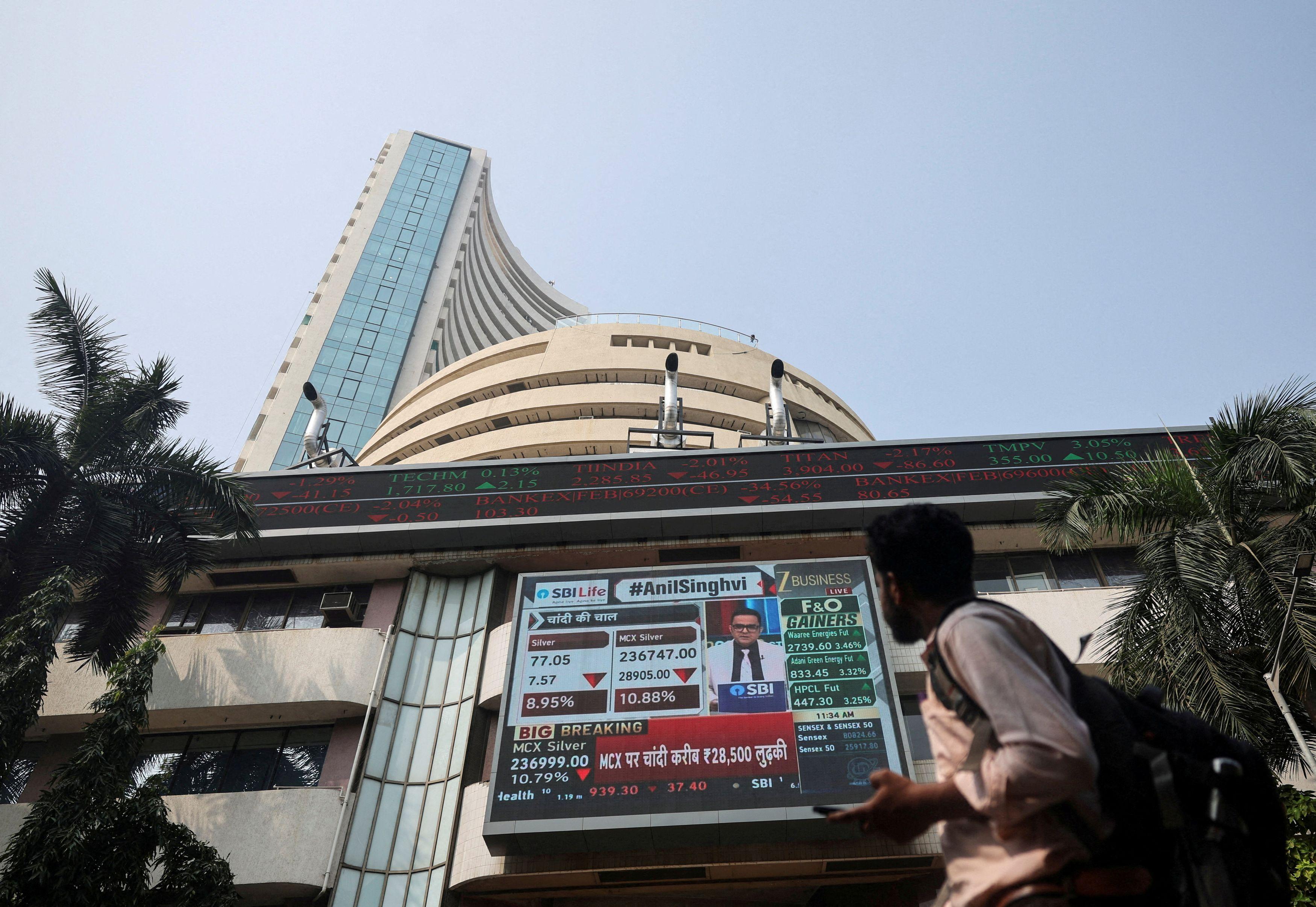
The talks between Iran and the US in Pakistan, which ended without a deal, would weigh heavily on investors’ sentiment when markets open for trading on Monday, analysts said.


Besides developments related to West Asia, crude oil prices would also dictate market trends in a holiday-shortened week ahead, they said.


Stock markets will remain closed on Tuesday for Baba Saheb Ambedkar Jayanti.


The talks between Iran and the US in Pakistan have ended without a deal due to “excessive demands” made by the American side, a top Iranian official said on Sunday.


Iranian Foreign Ministry spokesperson Esmaeil Baqaei, however, emphasised that “diplomacy never ends”.


US Vice President JD Vance, who led the American delegation, said the talks failed to reach a peace deal, citing Tehran not forgoing its nuclear programme as one of the key sticking points.


He said the American side presented its “final and best offer” to the Iranian side, but it did not accept it.


Baqaei, however, said the two sides reached a consensus on some issues, but they held different views regarding “2-3 important matters”.


“Finally, the talks did not reach an agreement,” he was quoted as saying by the state-run Press TV.


Markets had rallied last week following the US-Iran ceasefire and a sharp decline in crude oil prices, which dropped below the USD 100 mark. Last week, the BSE benchmark Sensex jumped 4,230.7 points, or 5.77 per cent, and the NSE Nifty surged 1,337.5 points, or 5.88 per cent.


“The Nifty-50 enters the upcoming week at a critical inflexion point. After staging a sharp recovery and reclaiming the 24,000 mark, the market had begun to reflect cautious optimism,” Hariprasad K, Research Analyst and founder, Livelong Wealth, said.


However, the collapse of peace talks between the United States and Iran has materially altered the near-term outlook, he added.


“With negotiations ending without a resolution, markets are now bracing for a return of volatility that characterised earlier phases of the conflict,” he said.


Benchmark indices are expected to open with a significant gap down, potentially erasing a portion of the recent ceasefire rally, Hariprasad added.


Stock markets would also track inflation data announcements, Q4 earnings and trading activity of foreign investors this week.


“With the onset of the Q4 FY26 earnings season, key results from heavyweight companies, such as Wipro, HDFC Bank, and ICICI Bank, will be closely monitored, along with several others. On the macro front, important data releases include CPI inflation (April 13), WPI inflation (April 14), which will provide insights into inflation trends,” Ajit Mishra SVP, Research, Religare Broking Ltd, said.


Foreign investors maintained their aggressive sell-off in Indian equities, withdrawing Rs 48,213 crore (USD 5.14 billion) this month.


Source link

Mcap of 8 top valued firms jumps ₹4.13 trn; HDFC, ICICI Bank top gainers

Mcap of 8 top valued firms jumps ₹4.13 trn; HDFC, ICICI Bank top gainers


The combined market valuation of eight of the top-10 most valued firms surged by Rs 4,13,003.23 crore last week, with HDFC Bank and ICICI Bank emerging as the biggest gainers, in tandem with an optimistic trend in equities.


Last week, the BSE benchmark Sensex jumped 4,230.7 points or 5.77 per cent, and the NSE Nifty surged 1,337.5 points or 5.88 per cent.


“Sentiment remained buoyant amid optimism surrounding a temporary USIran ceasefire, although lingering geopolitical uncertainties capped the pace of gains as the week progressed,” Ajit Mishra, SVP, Research, Religare Broking Ltd, said.


A sharp decline in crude oil prices below the $100 mark eased domestic concerns and triggered a strong rebound across markets, he added.


From the top-10 pack, HDFC Bank, Bharti Airtel, State Bank of India, ICICI Bank, Tata Consultancy Services (TCS), Bajaj Finance, Larsen & Toubro and Hindustan Unilever were the winners, while Reliance Industries and Infosys faced erosion from their valuation.


HDFC Bank added Rs 91,282.67 crore, taking its market valuation to Rs 12,47,478.57 crore.


The valuation of ICICI Bank jumped Rs 76,036.36 crore to Rs 9,46,741.85 crore, and that of Bajaj Finance surged by Rs 60,980.35 crore to Rs 5,75,206.47 crore.


The market capitalisation (mcap) of Larsen & Toubro zoomed by Rs 47,624.97 crore to Rs 5,44,736.59 crore, and that of Bharti Airtel climbed Rs 45,873.43 crore to Rs 10,66,293.69 crore.


State Bank of India’s mcap soared Rs 43,614.67 crore to Rs 9,84,629.98 crore, and that of TCS edged higher by Rs 26,303.49 crore to Rs 9,13,331.92 crore.


The market valuation of Hindustan Unilever rallied Rs 21,287.29 crore to Rs 5,06,477.89 crore.


However, the mcap of Infosys declined by Rs 3,285.03 crore to Rs 5,24,124.40 crore.


The valuation of Reliance Industries diminished by Rs 947.28 crore to Rs 18,27,086.79 crore.


Reliance Industries remained the most valued domestic firm, followed by HDFC Bank, Bharti Airtel, State Bank of India, ICICI Bank, TCS, Bajaj Finance, Larsen & Toubro, Infosys and Hindustan Unilever.


Source link

FPIs continue sell-off in April, pull out ₹48,213 crore in 10 days

FPIs continue sell-off in April, pull out ₹48,213 crore in 10 days


Foreign investors maintained their aggressive sell-off in Indian equities, withdrawing Rs 48,213 crore ( $5.14 billion) in the first 10 days of April, as rising geopolitical tensions and global macroeconomic uncertainties reduced risk appetite.


The sell-off follows a record outflow of Rs 1.17 trillion (about $12.7 billion) in March, the worst monthly exodus on record. The sharp reversal comes after FPIs had infused Rs 22,615 crore in February, marking the highest monthly inflow in 17 months.


With the latest withdrawals, total outflows by foreign portfolio investors (FPIs) have surged to Rs 1.8 trillion in 2026 so far. In April alone, foreign investors withdrew equities worth Rs 48,213 crore from the cash market till April 10, according to NSDL data.


Market participants attributed the sustained selling pressure to a combination of global macroeconomic headwinds and heightened geopolitical risks.


Himanshu Srivastava, Principal – Manager Research at Morningstar Investment Research India, noted that selling was largely driven by risk aversion triggered by escalating tensions in West Asia, which pushed up crude oil prices and revived concerns about inflation globally.


Echoing similar concerns, VK Vijayakumar, Chief Investment Strategist at Geojit Investments, said the energy crisis stemming from the West Asia conflict, coupled with the potential spillover impact on the Indian economy and continued depreciation of the rupee, has kept FPIs firmly in sell mode.


He also pointed out that markets such as South Korea and Taiwan are currently more attractive to FPIs, given their stronger earnings growth outlook compared to the relatively modest expectations for India in FY27.


Even the recent US-Iran ceasefire failed to arrest the selling momentum.


“FPIs used the relief rally as a liquidity window to exit further,” said Vaqarjaved Khan, Senior Fundamental Analyst at Angel One.


According to Khan, a reversal in flows would depend on three key factors — credible reopening of the Strait of Hormuz, stabilisation of the rupee, and a positive surprise from India’s Q4 earnings season.


“Flows can reverse quickly, but only if macro conditions begin to support the shift,” he added.


Source link

HSBC Value Fund review: Why this 5-star value fund suits SIP investors

HSBC Value Fund review: Why this 5-star value fund suits SIP investors


After a prolonged multi-year rally, the market has seen a meaningful correction over the past few months. Several quality stocks across sectors have corrected and fundamentally sound businesses have seen their valuations cool off. For investors looking to use the correction to build exposure gradually through SIPs, value investing can be an effective route. A value-oriented fund can take advantage of temporary pessimism, buy quality businesses at lower valuations and potentially deliver better risk-adjusted returns over a market cycle.

Among the funds in this space, HSBC Value Fund stands out. The fund, which has 5 stars in our bl. portfolio Star Track MF Ratings, has delivered strong long-term returns while remaining faithful to its value-investing mandate. It has consistently outperformed its benchmark and most peers, without taking excessive portfolio risks.

Performance

Launched in January 2010, HSBC Value Fund has a track record of more than 15 years and is managed by Venugopal Manghat. What makes the scheme stand out is not merely its recent returns, but the consistency of its outperformance across timeframes and market cycles.

On rolling returns, the fund has comfortably outperformed both the value-fund category average and the Nifty 500 TRI. Over one, three, five and 10 years, the fund has delivered annualised returns of 23.5 per cent, 19.7 per cent, 18.1 per cent and 19.1 per cent, respectively. Against the Nifty 500 TRI, this translates into outperformance of 7.3 percentage points over one year, 5.7 points over three years, 4.5 points over five years and 5.5 points over 10 years. This indicates that the fund has not merely benefited from market beta.

The scheme has been equally impressive for SIP investors. A monthly SIP over 10 years has generated returns of 16.8 per cent, compared with 12.5 per cent from the Nifty 500 TRI and 13.9 per cent for the value-fund category average. Even over five years, the fund’s SIP return of 15.2 per cent is far ahead of the benchmark’s 8 per cent and category’s 10.9 per cent.

This ability to deliver in both lumpsum and SIP formats is important in the current market. Investors entering after a correction rarely invest everything at once. A fund that has historically rewarded staggered investing deserves greater weight.

Equally important, the fund has not achieved these returns by taking extreme risks. The portfolio has historically fallen less than the benchmark during weak markets, while participating strongly in rallies. In the difficult FY26 market, for instance, the fund still managed a positive return of 4 per cent and was the second-best performer among nearly two dozen peers, even as the Nifty 50 ended the year with a decline.

Portfolio

Many value funds drift away from their mandate during strong bull markets and end up chasing momentum-led sectors. HSBC Value Fund has largely avoided that trap.

The fund has stayed true to its value approach by focussing on businesses that combine reasonable valuations, sound balance sheets and long-term growth potential. The portfolio is built through bottom-up stock selection rather than sector calls.

Large-caps dominate the portfolio, but the fund also maintains meaningful exposure to mid- and small-cap stocks. Typically, 45-55 per cent of the portfolio is invested in mid- and small-caps, giving the fund the ability to benefit when broader market opportunities emerge (upside capture ratio of 118 per cent). At the same time, the presence of large-caps helps keep overall portfolio risk in check (downside capture ratio of 97 per cent).

The fund is also well-diversified. It typically holds more than 70 stocks, with even the largest positions accounting for less than 4.5 per cent of the portfolio. This reduces dependence on any one stock or sector.

Banks remain the largest allocation, accounting for nearly 23 per cent of the portfolio. Finance, IT software, petroleum products and industrial stocks also feature prominently. Some pockets of these sectors have either underperformed the market or seen valuation compression despite reasonable business fundamentals.

Among the fund’s top holdings are SBI, NTPC, Karur Vysya Bank, Reliance Industries, HDFC Bank and Shriram Finance. Some of These are businesses with relatively inexpensive valuations compared to their own history or the broader market, but with the potential to benefit when sentiment improves.

Suitable through SIPs

The current environment is particularly favourable for SIP investing into a value fund. Market corrections tend to create a wider universe of attractively priced stocks. A staggered investment approach through SIPs allows investors to take advantage of this volatility without worrying about the exact market bottom. In that context, HSBC Value Fund’s portfolio remains reasonably valued too, with a price-to-book of 4.1 times, placing it in the cheaper half of the value-fund category.

HSBC Value Fund is well-suited to such an approach. The fund usually remains fully invested and does not hold excessive cash unlike some peers. This ensures that its investors are able to participate when markets recover on a sustained basis. With a weighted average direct-plan expense ratio of 0.74 per cent (source: ACEMF), it is also among less expensive value-oriented funds, ranking in roughly the lowest one-third of the category by cost alone.

At the same time, the fund’s diversified portfolio and lower downside capture make it relatively better placed than many aggressive mid- and small-cap funds if markets remain weak for some more time.

Investors should, however, approach the scheme with a long-term horizon of at least five years. Value investing can go through phases of temporary underperformance. But over longer periods, patient investors are often rewarded as undervalued stocks revert to fair value.

Published on April 11, 2026



Source link

Where TMF yields look attractive

Where TMF yields look attractive


At its April 6–8, 2026 meeting, the Reserve Bank of India’s Monetary Policy Committee kept the repo rate unchanged at 5.25 per cent and retained a neutral stance. Risks from the West Asia conflict, particularly via energy prices and supply chain disruptions, have strengthened the case for caution. While domestic fundamentals remain resilient, the Governor’s remarks indicate that the MPC will closely track incoming data before moving on rates. However, with upside risks to inflation increasing and global uncertainty remaining high, the room for rate cuts appears limited for now.

With interest rates uncertain, debt allocations for a 1–4 year horizon look sensible. Target Maturity Funds (TMFs) offer a relatively predictable way to capture prevailing yields over short to medium term. In particular, TMFs maturing within 1–4 years look appealing, as their yields have risen notably over the past six months.

Return predictability

TMFs are passively managed mutual funds, available as exchange traded funds (ETFs) or index funds, designed to replicate their benchmark indices by investing in underlying fixed-income securities in the same proportion. What sets them apart is greater return visibility than traditional open-ended debt funds. At the time of the New Fund Offer (NFO), asset management companies (AMCs) disclose the indicative YTM, which serves as a broad return indicator if the fund is held to maturity. Post-launch, YTMs are updated on AMC websites—daily for ETFs and periodically for index funds. This predictable return profile makes TMFs well suited for goal-based investments. YTM is the annualised yield implied by a bond or portfolio if held to maturity, assuming scheduled payments are received.

Structurally, both index fund and ETF variants are open-ended. TMF ETFs are traded on stock exchanges during market hours, while index funds can be bought or redeemed on business days at prevailing NAVs, like regular mutual funds. Index funds also offer both growth and dividend options. According to ACEMF data, there are currently 103 TMFs in the market, of which nine are ETFs and the rest index funds.

Attractive segment

Yields across TMFs have risen over the past six months due to a mix of global and domestic factors. Elevated crude oil prices amid geopolitical tensions have raised concerns over inflation and the current account deficit, pushing bond yields higher.

At the same time, heavy bond supply, especially during the financial year-end, and increased state borrowings have added to the upward pressure on yields. Foreign portfolio investor (FPI) outflows, amid rupee weakness and relatively better yields in developed markets, have further contributed to the rise.

Interestingly, TMFs with residual maturities of 1–4 years have seen a sharper increase in YTM compared to longer-tenure segments of 7–11 years. Yields in the shorter segment rose by as much as 81 basis points, reflecting higher sensitivity to liquidity conditions, near-term rate expectations, and supply factors such as bank issuances and SDL (State development loans) supply.

As per ACEMF data as of April 11, 2026, there are 57 TMFs in the 1–4 year residual maturity segment. As of March 31, 2026, these funds offered YTMs ranging between 6 and 7.8 per cent.

What’s on offer

TMFs can be classified based on their underlying investments—government securities (gilt), SDLs, PSU bonds, NBFC bonds, or hybrid combinations such as gilt + SDL or PSU + SDL—each with a distinct risk-return profile.

Gilt-heavy TMFs currently offer up to 6.6 per cent in the 1–4 year segment, with minimal credit risk. Tata Nifty G-Sec Dec 2029 Index Fund offers the highest YTM of 6.64 per cent in this category.

SDL-heavy TMFs offer slightly higher yields of up to 6.9 per cent. SDLs typically deliver 30–50 basis points more than gilts. Recent trends show SDLs becoming more attractive due to higher supply and improved liquidity, with mutual funds preferring issuances from fiscally stronger states. ICICI Pru Nifty SDL Dec 2028 Index Fund offers the highest YTM of 6.9 per cent in this segment.

Among PSU bond-heavy TMFs, Bharat Bond ETF – April 2030 invests in AAA-rated public sector bonds and offers around 7.41 per cent, with a residual maturity of about four years. Compared to G-secs, it carries slightly higher credit risk, with the trade-off being a marginally higher yield along with a small increase in credit and liquidity risk.

NBFC-based TMFs invest predominantly in AAA-rated bonds issued by financial sector entities, including NBFCs and housing finance companies. Unlike PSU or gilt-heavy TMFs, these funds are more concentrated in financial sector credit.

Interestingly, such passive funds can take 100 per cent exposure to a single sector, unlike active debt funds constrained by sectoral caps. They offer higher yields due to the spread over sovereign and PSU bonds, but with moderately higher credit and liquidity risk. Aditya Birla SL CRISIL-IBX AAA Financial Services Index – Sep 2027 Fund offers the highest YTM of 7.8 per cent in this category.

Among hybrid offerings, Nippon India Nifty SDL Plus G-Sec – Jun 2029 Maturity 70:30 Index Fund offers around 6.9 per cent, while Kotak Nifty SDL Plus AAA PSU Bond Jul 2028 60:40 Index Fund offers about 7.05 per cent.

Takeaways

TMFs, with their predictable return profile, are well suited for goal-based investing. Investors can align these funds with specific time horizons, particularly for 1–4 year goals.

They also help reduce interest rate risk when held till maturity. For retail investors, index funds may be more convenient than ETFs due to ease of access. With a wide range of options, investors can choose based on risk appetite — gilt TMFs for safety, and financial-sector-focussed TMFs for higher yields.

When selecting funds, investors should prefer those with lower expense ratios, minimal tracking error, and a larger corpus. Under the current tax framework, gains from TMFs are taxed as per the investor’s income slab, similar to bank deposit interest. However, investors with lower taxable income, particularly those earning up to ₹12 lakh annually, including these gains, may effectively pay minimal or no tax, making TMFs a relatively more efficient option for stable income.

Published on April 11, 2026


Source link

Three real risks in SWP

Three real risks in SWP


Systematic Withdrawal Plans (SWPs) are often positioned as the mirror image of SIPs, a disciplined way to extract income from a mutual fund portfolio. The concept of SWP is simple. Invest a corpus in a mutual fund scheme, set a fixed withdrawal, and let the rest compound. But that simplicity hides structural risks. SWP is not a product; it is a withdrawal strategy layered on top of market-linked instruments that are exposed to drawdown risk. For investors, especially those transitioning from accumulation to distribution, understanding these risks is critical. A poorly designed SWP can silently destroy capital and distort income expectations. Let’s look at the three real risks while opting for an SWP.

Sequence of returns risk

When you start an SWP, the timing of market returns matters a lot. If markets fall in the early years of your withdrawals, like it has done in the past few months, it can hurt your retirement significantly. This is called sequence of returns risk.

In an SWP, you withdraw a fixed amount regularly. If the market is down at the beginning, you end up withdrawing from a falling portfolio. This reduces your corpus faster. As a result, even when markets recover later, there is less money left to grow, increasing the risk of running out of funds during retirement.

Consider two retirees, A and B, each starting with ₹1 crore. Both withdraw ₹4 lakh annually through SWP, increasing it by 5 per cent each year for inflation. Assume both earn similar average returns, but yearly performance differs. A gets strong returns first (25 per cent, 10 per cent, 14 per cent), then losses (-15 per cent, -9 per cent). B faces early losses (-15 per cent, -9 per cent), then gains (14 per cent, 10 per cent, 25 per cent). Though total returns are identical, the sequence differs. After five years, A has ₹98 lakh, while B has ₹85 lakh, showing how timing impacts outcomes.

How to manage this risk? Use a bucket strategy based on time horizons. Divide your portfolio into short-, medium-, and long-term buckets so that withdrawals are not forced from falling markets. Keep 2–3 years of expenses in a short-term bucket and run your SWP from here. This bucket should be invested in low-volatility options such as liquid funds and short-duration debt funds. Allocate the rest across a medium-term bucket (up to 10 years) and a long-term bucket (beyond 10 years). These can include a mix of debt, hybrid, and equity-oriented funds, allowing growth while protecting near-term withdrawals.

Withdrawal rate miscalibration

Many investors set SWP withdrawals by comparing them with fixed deposit (FD) income. For example, if a ₹50 lakh FD gives 7 per cent, they expect the same from equity. This is flawed. Equity returns are volatile and capital is not guaranteed.

In reality, a safer withdrawal rate from pure equity is around 5–6 per cent annually. Yet many investors set 8–10 per cent, unknowingly drawing down their principal from the start.

Before starting an SWP, calculate your withdrawal rate (annual withdrawal divided by total corpus). If it exceeds 6 per cent for equity, the risk of running out of money rises sharply.

Financial experts often recommend a conservative withdrawal rate from the retirement corpus, adjusted annually for inflation, as a safer option for retirees.

According to a study by Rajan Raju, Director, Invespar Pte Ltd, and Ravi Saraogi, Co-founder, Samasthiti Advisors, the safe withdrawal rate for an Indian retiree aged 60, with a life expectancy of 90 and a retirement period of around 30 years, falls within the range of approximately 3–3.5 per cent. This rate applies to the first year after retirement, with adjustments in subsequent years to reflect inflation.

SWP withdrawals should be adjusted periodically to keep pace with inflation. Instead of a fixed amount, increase withdrawals annually, say by 5–7 per cent, based on inflation trends. This helps maintain purchasing power but requires careful planning, as higher withdrawals can accelerate corpus depletion if returns do not keep up.

Build in a margin of safety while fixing the withdrawal rate, so temporary market falls, higher inflation, or longer life expectancy do not force premature depletion of the retirement corpus.

Wrong fund choice

Many investors prefer equity funds because of their higher return potential. However, regular withdrawals from pure equity funds can be risky, especially over short and medium horizons.

An SWP investor has two conflicting needs. The portfolio must grow over time to sustain the corpus while also providing a steady monthly cash flow regardless of market conditions.

Problems arise when investors pick the wrong fund category. Using small-, mid-cap, or sector funds for SWP withdrawals can lead to sharp fluctuations in value, increasing the risk of early losses. A short-term bucket should be parked in low-risk options such as liquid funds, ultra short-duration funds, low-duration funds, money market funds, or arbitrage funds.

Investors who are willing to take limited equity exposure can consider hybrid options like conservative hybrid funds, balanced advantage funds, and multi-asset funds. Investors with stable alternative income sources and a higher tolerance for volatility may consider opting for an SWP in large-cap, flexi-cap, or multi-cap equity funds. Investors can refer to bl.portfolio MF Star Track ratings (https://tinyurl.com/blmfratingsapril2026)  and pick four- and five-star-rated funds within relevant categories.

Investors also end up relying on a single fund. In an SWP, relying on a single fund means you are depending on one strategy, one fund manager, one asset mix, and one category behaving well for years. If that fund underperforms, turns volatile, sees style headwinds, or suffers a sharp drawdown at the wrong time, both your income stream and capital base come under pressure. Diversifying SWP withdrawals across suitable funds can reduce this concentration risk.

Published on April 11, 2026


Source link

YouTube
Instagram
WhatsApp