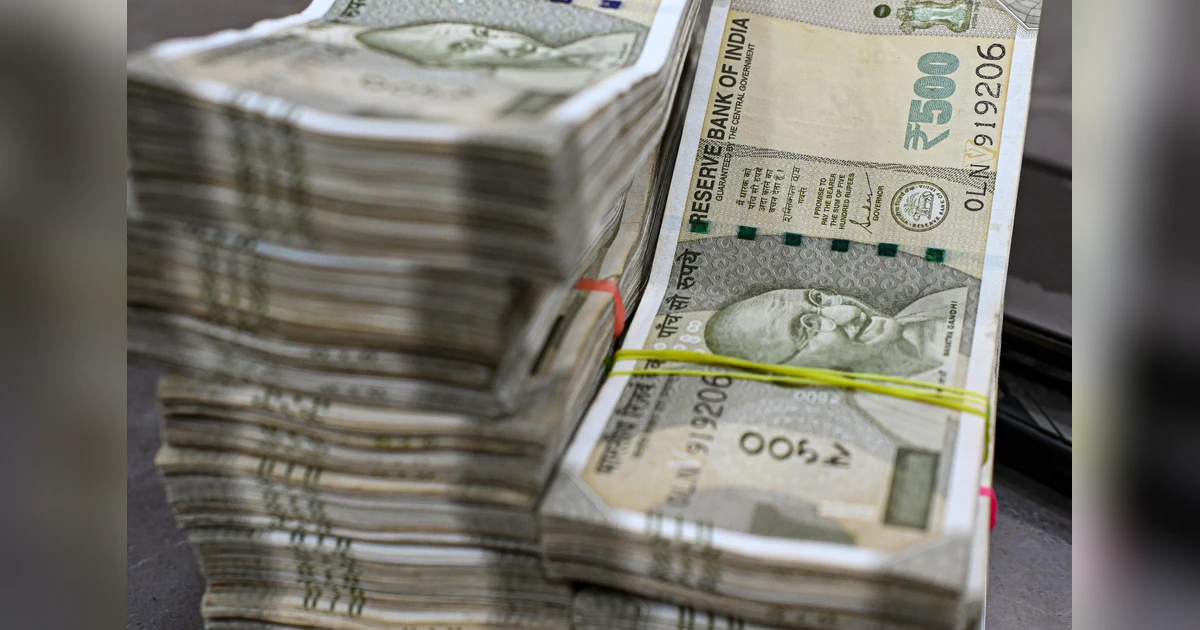
Gold price falls ₹10 to ₹1,48,960; silver down ₹100, trades at ₹2,49,900

Gold price falls ₹10 to ₹1,48,960; silver down ₹100, trades at ₹2,49,900


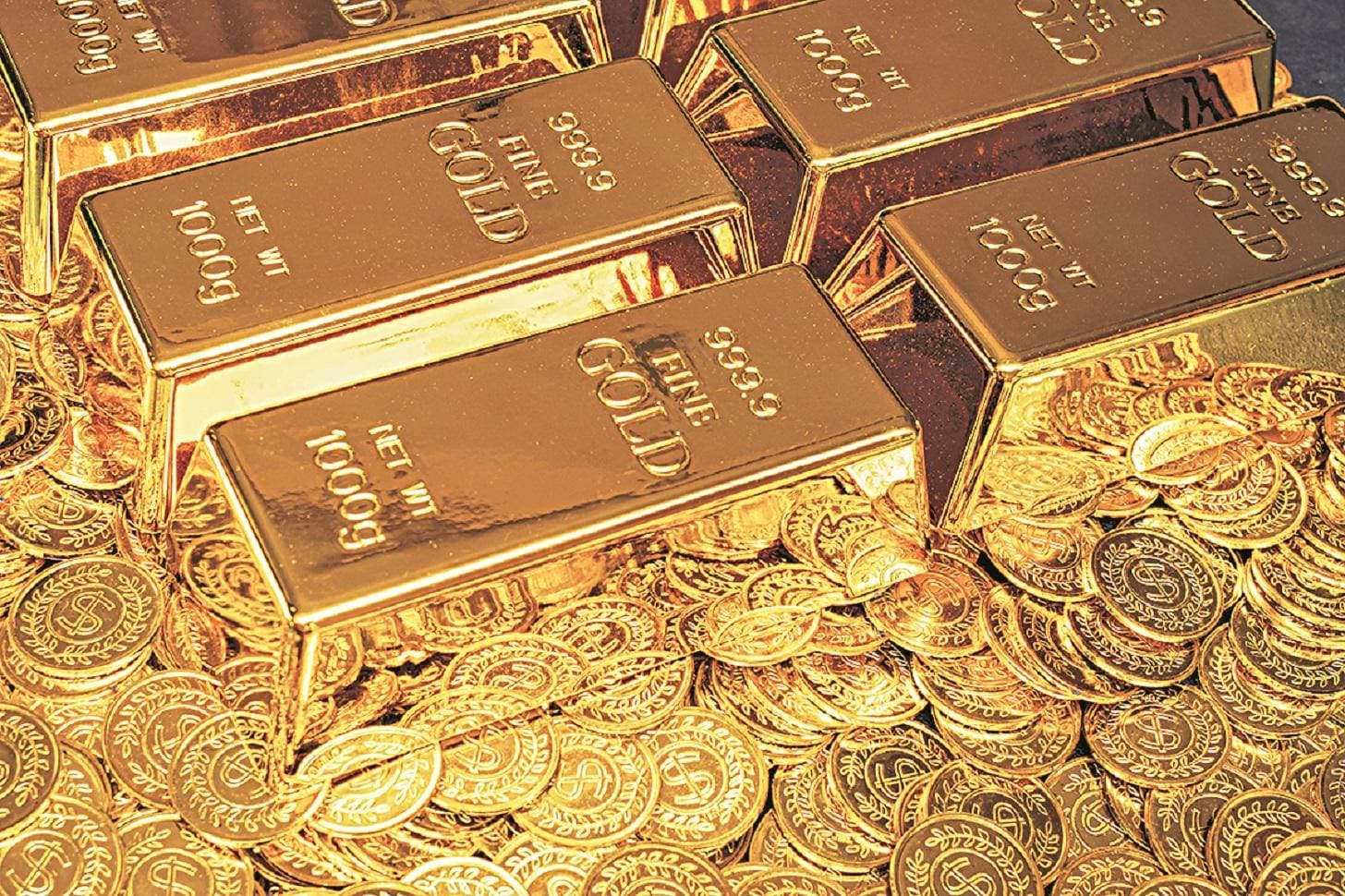
Gold Price Today: The price of 24-carat gold fell ₹10 in early trade on Friday, with ten grams of the precious metal trading at ₹1,48,960, according to the GoodReturns website. The price of silver also declined by ₹100, with one kilogram of the precious metal selling at ₹2,49,900.


The price of 22-carat gold decreased by ₹10, with ten grams of the yellow metal selling at ₹1,36,540. 


The price of ten grams of 24-carat gold stood at ₹1,48,960 in Mumbai, Kolkata, and ₹1,49,990 in Chennai.


In Delhi, the price of ten grams of 24-carat gold stood at ₹1,49,110.


In Mumbai, the price of ten grams of 22-carat gold was ₹1,36,540, the same as in Kolkata, Bengaluru, Hyderabad, and ₹1,37,490 in Chennai. 


In Delhi, the price of ten grams of 22-carat gold stood at ₹1,36,690.


The price of one kilogram of silver in Delhi, Kolkata, and Mumbai stood at ₹2,49,900. 


The price of one kilogram of silver in Chennai stood at ₹2,54,900.


US gold prices declined on Friday as a stronger US dollar and rising oil prices pressured the metal, after Donald Trump said the United States would continue attacks on Iran, fuelling inflation concerns and expectations of higher interest rates.


Spot gold dropped 2.2 per cent to $4,651.35 per ounce as of 1:30 pm EDT (1730 GMT), after earlier hitting a two-week high. US gold futures settled 2.8 per cent lower at $4,679.70.


The dollar strengthened sharply, making dollar-priced bullion more expensive for holders of other currencies. While gold is traditionally seen as a hedge against inflation, it tends to lose appeal in a high interest rate environment because it does not yield returns.


Prices have fallen about 12 per cent since West Asia conflict began on February 28.


In other precious metals, spot silver declined 3.7 per cent to $72.38, platinum rose 0.9 per cent to $1,981.95, and palladium gained 1.9 per cent to $1,497.00.


(with inputs from Reuters)


Source link

RVNL bags Rs 242 crore OHE upgradation contract from South Central Railway

RVNL bags Rs 242 crore OHE upgradation contract from South Central Railway


Rail Vikas Nigam Limited (RVNL) said that it has received a contract from South Central Railway for the upgradation of overhead electrification (OHE) infrastructure in the Ongole-Gudur section of the Vijayawada Division.

The project involves design, supply, erection, testing and commissioning for upgrading the existing 1×25 kV system to a 2×25 kV AT feeding system, along with feeder and earthing works. The scope covers 154 route km (462 track km).

The contract has been awarded under general contract conditions to a domestic entity and is to be executed within 24 months.

The total contract value stands at Rs 242.49 crore, including applicable taxes.


The order is domestic in nature and does not involve any related party transactions. Additionally, the promoter, promoter group, or group companies have no interest in the awarding entity.

Rail Vikas Nigam is engaged in executing a wide range of railway infrastructure projects, including new lines, doubling, gauge conversion, railway electrification, metro projects, workshops, major bridges, cable-stayed bridges, and institutional buildings.

The company reported a 3.65% rise in consolidated net profit to Rs 322.83 crore in Q3 FY26, compared to Rs 311.44 crore recorded in Q3 FY25. Revenue from operations rose 2.56% YoY to Rs 4,684.46 crore for the quarter ended 31 December 2025.

The counter fell 0.67% to end at Rs 260.85 on the BSE.


Source link

US crude jumps over 11%, Brent nearly 8% as Trump vows more attacks on Iran

US crude jumps over 11%, Brent nearly 8% as Trump vows more attacks on Iran


US oil prices settled more than 11 per cent higher and Brent soared nearly 8 per cent on Thursday in volatile trading, as traders worried about prolonged disruptions to oil supply the day after President Donald Trump said the United ​States would continue attacks on Iran.


Brent crude futures closed $7.87, or 7.78 per cent, higher at $109.03 a barrel. US West Texas Intermediate ​crude futures rose $11.42, or 11.41 per cent, at $111.54 per barrel, settling at their biggest absolute price rise since 2020.


Both benchmarks remained below highs near $120 a barrel ‌touched earlier in the conflict.


Trump said military operations would be intensified, but did not specify a timeline for ending hostilities. He gave no details on any steps that could lead to a reopening of the Strait of Hormuz


“We’re going to hit them extremely hard over the next two to three weeks,” Trump said. “We’re going to bring them back to the Stone Ages, where they belong.”


Iran is drafting a protocol with Oman to monitor traffic in the strait, an Iranian foreign ministry official said, after a Bloomberg report.


Iran has effectively shut down the narrow waterway through which a fifth of global oil and liquefied natural gas is shipped, in retaliation for US-Israeli strikes that began on February 28. Reopening it has become a priority for governments around the world as energy prices soar.


“The real question on traders’ minds is that if Iran’s oil infrastructure is possibly now at risk, and with more damage in the area now very likely, even if left intact the restart of oil flows in the region (is) now looking to be delayed further,” said Dennis Kissler, senior vice president of trading at BOK Financial.


WTI, ‌which typically trades below Brent, was pricing nearly $3 over Brent as the US contract was trading for May deliveries, while the Brent contract was trading for June deliveries. WTI’s premium over the global benchmark was the highest in a year.


“Market’s expectation is that if (the) Strait of Hormuz opens up in (a) couple of weeks this risk premium will immediately go down,” said John Kilduff, Partner at Again Capital.


Federal Reserve Bank of Dallas President Lorie Logan said on Thursday that a swift war resolution may mean economic impact could be pretty moderate, adding that the economic outlook was uncertain due to the crisis. The United States has some buffers to impacts from the war, Logan said.


Brent crude prices could average $95 a barrel in the base case and $130 a barrel in the bull case in the second half of the year, Citi said, while ​oil prices could climb to between $120 and $130 a barrel in the near-term, JP Morgan said. Prices could rise above $150 if the Strait remains closed into the middle ‌of May, JP Morgan added.


US oil rigs, an indicator of future output, rose by two to 411 this week, energy services firm Baker Hughes said. An increase in prices for oil to be delivered in future months has producers considering adding more rigs, but they have cautioned that they would like to ​see the higher prices hold ‌for longer to do so.


Front-month WTI traded at its largest-ever premium over the second-month and seventh-month contract on Thursday.


Talks on reopening Hormuz


Britain is hosting a virtual meeting of around 40 ‌countries to discuss options for reopening the Strait of Hormuz. The United States is not due to attend.


OPEC+, meanwhile, is likely to weigh a further oil output increase on Sunday, sources said. This would position members to add more barrels should the Strait of Hormuz reopen but is not likely to meaningfully ‌increase supply ​before then.


In Russia, ​Ukraine’s strikes on port infrastructure, pipelines and refineries have reduced export capability by 1 million barrels per day, or a fifth of total capacity, sources say, enough to set the stage for imminent production cuts.


The head of the International Energy Agency also said that supply disruptions would start ‌to affect Europe’s economy in April, after ​the region had previously been shielded by cargoes contracted before the start of the war. 


Source link

Rupee posts biggest one-day gain since Sept 2013 as RBI curbs speculation

Rupee posts biggest one-day gain since Sept 2013 as RBI curbs speculation


The rupee rallied sharply on Thursday, logging its biggest single-day gain in over 12 years, after the central bank unleashed measures to clamp down on speculative activities in the past week after direct intervention in the foreign exchange market failed to halt the local currency’s sharp fall.


The local currency remained highly volatile today, moving between 92.83 per dollar and 93.66 per dollar during the day, as importers, exporters and banks actively hedged their positions.


The domestic unit strengthened to an intraday high of 92.83 per dollar, staging a strong recovery from its intraday record low of 95.21 in the previous session after the foreign exchange market resumed on Thursday after a two-day break.


It eventually settled at 93.10 per dollar, up 1.8 per cent against the previous close — its best gain since September 2013 (2.61 per cent).


In the current calendar year, the rupee has depreciated by 3.48 per cent against the greenback, pressured by concerns over spillovers from the Iran conflict.


After capping banks’ onshore currency positions at $100 million last Friday — with compliance by 10 April — the central bank on Wednesday prohibited banks from offering some non-deliverable contracts involving the rupee to resident or non-resident users, with immediate effect.


Banks can still offer deliverable FX contracts for hedging, but users cannot offset those trades with positions taken offshore. Citing Bank for International Settlements data, news agency Bloomberg reported that average daily offshore trading in the rupee across Singapore, the UK, the US and Hong Kong was about $149 billion in 2025, more than double the $72 billion traded onshore. 


Market participants said that banks quickly reduced their long positions on Thursday in the non-deliverable forward (NDF) market, while buying dollars in the onshore market.


This shifted genuine hedging demand back onshore, driving up the cost of locking in dollars through forward contracts and mechanically pushing up forward premiums. The one-month forward premium rose to 5.4 per cent from 3.73 per cent, while premiums for contracts up to four months increased by over 1 percentage point to around 4.25 per cent.


“With constraints like NOP limits and reduced flexibility in managing positions, banks are no longer able to freely intermediate flows or run large proprietary books,” said Kunal Sodhani, head of treasury, Shinhan Bank. “This has pushed genuine hedging demand back onshore, increasing the cost of locking in dollars via forwards and mechanically lifting forward premiums,” he added.


“When the rupee strengthens, importers see it as an opportunity to lock in cheaper dollars for future payments. This creates heavy one-sided demand for forward USD, pushing premiums higher,” said Amit Pabari, MD, CR Forex.


According to bankers, the central bank is unlikely to extend the 10 April deadline as speculation was the key driver behind the rupee’s sharp depreciation since the start of the West Asia conflict last February. In March, the local currency fell over 4 per cent against the dollar to become the worst-performing Asian currency.


“The RBI seemed hell-bent on controlling the fall in rupee as it took two major actions in the past five days after rupee reached 94.85 per dollar levels last Friday. It brought down the NOP of banks to $100 million and did not allow banks to transfer their positions to corporates, which banks did on Monday,” said Anil Kumar Bhansali, head of treasury and executive director, Finrex Treasury Advisors LLP.


“With the holiday tomorrow, the rupee is now going to open on Monday within a range of 92.50 to 93.50 as banks square up their overall positions in the NDF and OTC market,” he added.


Source link

Sebi proposes return of open market share buybacks after tax changes

Sebi proposes return of open market share buybacks after tax changes


Markets regulator Sebi on Thursday proposed reintroducing buyback of shares from the open market through stock exchanges as an additional method for companies to repurchase shares, following changes in the taxation framework.


This mechanism was discontinued effective April 1, 2025, due to concerns regarding the equitable treatment of shareholders and implications arising from the then-prevailing taxation framework.


“The reintroduction of this method of buy-back would provide companies with an additional mechanism for undertaking buy-back, while ensuring equitable opportunity and treatment of taxation for public shareholders,” Sebi said in its consultation paper.


Under the existing framework, companies can undertake buybacks either through a tender offer route or via the open market using the book-building process. The stock exchange route was withdrawn earlier due to concerns over equitable treatment of shareholders and tax-related disparities.


Sebi said that under the earlier regime, buybacks through stock exchanges could result in a situation where a few shareholders cornered most of the buyback, while others willing to participate were left out due to the price-time matching mechanism.


Additionally, the then-prevailing taxation structure led to unequal outcomes among shareholders.


However, the regulator noted that subsequent changes in the taxation framework have addressed these concerns.


Following amendments through the Finance Act, 2026, buyback proceeds will now be taxed as capital gains in the hands of shareholders, replacing the earlier system where companies paid buyback tax.


As per the change in taxation framework, buy-back consideration will now be taxable under the head “Capital Gains” in the hands of the shareholders, effective from April 1, 2026.


“Consequently, the differential tax advantage that existed earlier between shareholders who were able to participate in the buy-back and those who were not would not exist any longer,” Sebi said.


The regulator added that under the revised tax regime, shifting of tax burden from the company undertaking buy-back to the public shareholders participating in buy-back has made selling in a normal market equal to selling in a buy-back through the stock exchange.


Sebi also highlighted that the open market buyback mechanism is widely used in global markets and helps in continuous price discovery, improved liquidity and efficient capital allocation.


Industry bodies such as FICCI and the Association of Investment Bankers of India (AIBI) have supported the move, stating that reinstating the stock exchange route would enable companies to absorb selling pressure, prevent panic selling and enhance investor confidence.


Under the proposal, buybacks through stock exchanges may be carried out via a separate window, as provided earlier.


The Securities and Exchange Board of India (Sebi) has sought public comments till April 23 on the proposal.


Source link

RVNL bags Rs 242 crore OHE upgradation contract from South Central Railway

Cupid invests 25% of Rs 331.53 cr planned investment in Style Baazar


Cupid has made the payment of Rs 82.88 crore, representing 25% of its total planned investment of Rs 331.53 crore in Baazar Style Retail (Style Baazar).

Pursuant to this, the Company has been allotted 1,01,00,000 warrants, convertible into equity shares of Style Baazar.

This investment provides Cupid with direct access to a large and rapidly expanding retail network of 260+ stores, significantly strengthening market access, shelf visibility, and last-mile reach for its FMCG product portfolio. The partnership enables immediate availability of Cupid’s products across Style Baazar stores, enhancing in-store presence and consumer engagement from the outset.

The collaboration is also expected to support faster rollout of Cupid’s expanded product portfolio, leveraging Style Baazar’s strong store-level execution capabilities and consumer insights. This will enable deeper penetration across high-potential regional markets with improved speed and efficiency.


Disclaimer: No Business Standard Journalist was involved in creation of this content

First Published: Apr 02 2026 | 7:50 PM IST


Source link

YouTube
Instagram
WhatsApp