Vikran Engg slips after Q3 PAT tumbles 38% YoY to Rs 21 cr

Vikran Engg slips after Q3 PAT tumbles 38% YoY to Rs 21 cr


Vikran Engineering declined 7.09% to Rs 79.83 after the company reported a 37.9% decline in standalone net profit to Rs 20.91 crore on a 0.5% rise in net sales to Rs 266.46 crore in Q3 FY26 as compared with Q3 FY25.

Profit before tax (PBT) fell 42.9% YoY to Rs 25.92 crore in Q3 FY26.

During the quarter, total expenses increased 11.19% to Rs 245.83 crore in Q3 FY26 compared with Rs 221.09 crore in Q3 FY25. Cost of material consumed stood at Rs 69.78 crore (down 50.92% YoY), project-related expenses were at Rs 121.34 crore (up 293.96% YoY), employee benefit expenses stood at Rs 20.92 crore (up 7.67% YoY), and finance cost was at Rs 13.06 crore (down 35.76% YoY) during the period under review.


The companys consolidated order book surged 146% YoY to over Rs 4,987 crore as of 31 December 2025, from Rs 2,027 crore a year ago, providing strong revenue visibility for the next two years. The company has also incorporated a Special Purpose Vehicle (SPV), Vikran MP Solar.

Rakesh Markhedkar, chairman & managing director of Vikran Engineering, said, FY26 marks a pivotal year for Vikran Engineering as we significantly strengthened our presence in the Solar EPC segment. The large-format solar orders secured during the year have materially enhanced our revenue visibility, with our consolidated order book now exceeding Rs 4,700 crore as of 13th February 2026.

While margins during the period reflect execution ramp-up and project mix dynamics, we expect operating leverage benefits to play out as solar projects move into advanced execution phases. With a strong pipeline across Power T&D, Solar, and Water, and a clear focus on disciplined bidding and risk management, we are positioning Vikran Engineering for scalable and sustainable growth. We are also actively evaluating opportunities in select international markets, particularly in Africa and the Middle East, to diversify our growth trajectory.

Vikran Engineering provides end-to-end services from conceptualization, design, supply, installation, testing, and commissioning on a turnkey basis and has a presence across multiple sectors, including power, water, and railway infrastructure.

Powered by Capital Market – Live News


Source link

Vikran Engg slips after Q3 PAT tumbles 38% YoY to Rs 21 cr

Supraneet Finance & Consultants reports standalone nil net profit/loss in the December 2025 quarter


Sales rise 28.57% to Rs 0.09 crore

Supraneet Finance & Consultants reported no net profit/loss in the quarter ended December 2025 and during the previous quarter ended December 2024. Sales rose 28.57% to Rs 0.09 crore in the quarter ended December 2025 as against Rs 0.07 crore during the previous quarter ended December 2024.

ParticularsQuarter EndedDec. 2025Dec. 2024% Var.Sales0.090.07 29 OPM %11.1114.29 PBDT0.010.01 0 PBT00 0 NP00 0

Powered by Capital Market – Live News


Disclaimer: No Business Standard Journalist was involved in creation of this content

First Published: Feb 16 2026 | 9:05 AM IST


Source link

Vikran Engg slips after Q3 PAT tumbles 38% YoY to Rs 21 cr

Ashoka Buildcon bags $45.28 Mln Intl road project in West Africa


Ashoka Buildcon said that it has received letter of award (LoA) from an international entity for upgrading the road in Republic of Liberia, West Africa.

The company has been awarded the project from Ministry of Public Works, Liberia, for the upgradation of road stretches from Nrowkia (Sasstown Junction) to Barclayville, Nrowkia (Sasstown Junction) to Sasstown, and part of the Nrowkia (Sasstown Junction) to Nipleppo road in the Liberia.

The said project is valued at $ 45,276,621.07. The construction work is scheduled to be completed within a period of 24 months.

Ashoka Buildcon is engaged in the construction & maintenance of roads and supporting services to land support and operation of toll roads.


The companys consolidated net profit zoomed 222.59% to Rs to Rs 2,111.41 crore in Q3 FY26 as against Rs 654.50 crore posted in Q3 FY25. Revenue from operations fell 23.47% YoY to Rs 1,827.33 crore in the quarter ended 31 December 2025.

The counter declined 4.26% to settle at Rs 151.75 on the BSE.

Powered by Capital Market – Live News

Disclaimer: No Business Standard Journalist was involved in creation of this content

First Published: Feb 16 2026 | 8:04 AM IST


Source link

Asian shares steady in holiday-thinned trade; weak Japan GDP cools rally

Asian shares steady in holiday-thinned trade; weak Japan GDP cools rally


Asian shares were quietly consolidating recent hefty gains on Monday as holidays made for thin trading, and dismal economic data out of Japan took some of the heat out of that booming market.


China, South Korea, Taiwan and the United States were among the centres off, ​leaving currencies, commodities and bonds all becalmed.


The major data of the week are not out until Friday when ​surveys of global manufacturing hit and the US reports gross domestic product for the fourth quarter. Median forecasts are for annualised growth of 3.0 per cent, down ‌from 4.4 per cent the previous quarter but still solid.


Japan on Monday reported its economy grew a miserly 0.1 per cent annualised in the December quarter, far below the 1.6 per cent gain forecast as government spending dragged on activity.


The disappointing figures underline the tough task ahead for Prime Minister Sanae Takaichi and should support her push for more aggressive fiscal stimulus.


Perhaps with that in mind, investors pushed Japan’s Nikkei up 0.2 per cent, following a 5 per cent rise last week. MSCI’s broadest index of Asia-Pacific shares outside Japan firmed 0.1 per cent.


South Korea’s tech-heavy market surged 8.2 per cent last week, while Taiwan climbed almost 6 per cent for the week.


“Our fear in Asia is that if the mega-cap technology companies announce a pause in capital expenditure, that might lead to a sharp correction in memory stocks that have rallied sharply in markets like Korea this year,” said Nick Ferres, chief investment officer at Vantage Point.


“While rotation is likely to favour emerging markets, we are becoming increasingly cautious on memory stocks in Korea and Taiwan following their exceptional performance and re-rating.”


More capex means fewer buybacks


For Europe, EUROSTOXX 50 futures were flat and DAX futures added 0.2 per cent.


S&P 500 futures gained 0.2 per cent, while Nasdaq futures ‌rose 0.1 per cent. Earnings season continues, with the star attraction being Walmart, which will offer colour on consumer spending trends after a disappointing December for retail sales.


The retailer’s stock has jumped 20 per cent this year, taking its market capitalization above $1 trillion and making it by far the biggest company by market value in the consumer staples sector, which is up 15 per cent in 2026.


Defensive stocks have benefited from a rotation out of tech amid concerns about the huge cost of AI capex and the disruptive effect of AI competition on sectors such as software, which has shed 24 per cent in market value in the past three months.


Hyperscaler capex plans have ballooned to $660 billion, $120 billion higher than at the start of the earnings season.


Analysts at Goldman Sachs noted that as capex has surged, S&P 500 buybacks have dropped by 7 per cent on a year ago.


“This marks the ​third consecutive quarter of stagnation,” they wrote in a note. “We expect the increasing scarcity of free cash flows and buybacks will strengthen the premium for companies focused ‌on returning cash flows to shareholders.”


There is no lack of cash flowing into bond markets as money exited stocks and US economic data underpinned the case for more rate cuts from the Federal Reserve.


Yields on two-year Treasuries fell to 3.408 per cent on Friday, the lowest close since mid-2022. Futures imply a 68 per cent chance the ​Fed will cut in June ‌and have 62 basis points of easing priced in for the year.


The drop in yields pulled the dollar index down 0.8 per cent last week to 96.890, with most of the ‌losses against a rebounding Japanese yen.


The dollar was a shade firmer at 152.94 yen, having sunk 2.9 per cent last week, while the euro was flat at $1.1870.


The dollar also shed 1 per cent on the Swiss franc last week, while the euro slid under 0.9100 francs for the first time since 2015.


The relentless rise of the ‌franc has markets ​on alert for ​possible intervention from the Swiss National Bank given inflation is already down at 0.1 per cent, near the very bottom of its 0 per cent to 2 per cent target band.


In commodity markets, gold eased 0.5 per cent to $5,014 an ounce, having swung wildly in recent weeks as some investors were squeezed out of leveraged positions. [GOL/]


Oil ‌prices were steady as investors digested a ​Reuters report that OPEC is leaning towards a resumption in oil output increases from April. [O/R]


Brent was flat at $67.74 a barrel, while US crude barely budged at $62.87 per barrel.


Source link

Silver, gold braces for another jittery week on US inflation data: Analysts

Silver, gold braces for another jittery week on US inflation data: Analysts


Precious metal prices are expected to witness further consolidation in the next week, with volatility likely to persist as investors track key US economic data, including inflation numbers, GDP readings and policy signals from Federal Reserve, analysts said.


Traders will also closely watch the US labour data, along with Federal Open Market Committee (FOMC) meeting minutes and speeches from Fed officials, for cues on the timing and pace of potential rate cuts, they added.


Pranav Mer, Vice President, EBG, Commodity & Currency Research, JM Financial Services Ltd, said gold and silver prices may continue to see more consolidative moves but volatility will prevail with focus on incoming US data on GDP and the Personal Consumption Expenditures (PCE) inflation numbers and Federal Reserve official’s commentary.


On the domestic front, silver futures on the Multi Commodity Exchange (MCX) declined Rs 5,532, or 2.2 per cent, while gold rose Rs 444, or 0.3 per cent, over the past week.


“Gold prices have fallen in February 2026, with prices correcting from highs of Rs 1,80,000 per 10 grams to around Rs 1,53,800 per 10 grams as on February 13,” Prathamesh Mallya, DVP – Research, Non-Agri Commodities and Currencies, Angel One, said.


He said stronger-than-expected US employment data have lowered expectations of near-term rate cuts, weighing on gold prices in the past week.


“However, the yellow metal’s safe haven appeal remains intact on account of geopolitical tensions, and strong buying ahead of the Lunar New Year. It’s a tug of war between bears and bulls this week, and the volatility will continue in the week ahead,” Mallya added.


In the international market, Comex gold futures gained USD 84, or 1.7 per cent, while silver edged up marginally to close at USD 77.27 per ounce.


“Gold prices see-sawed between gains and losses for most part of the trading session, but managed to close the week in positive and above USD 5,000 per ounce in the overseas market.


“The bullions are passing through a phase of consolidation amid lack of clarity among traders as they remain divided over the price direction and look for fresh fundamental triggers,” Pranav Mer said.


Analysts said central bank buying, safe-haven flows amid the sharp sell-off in tech & AI stocks across global markets, and a softer dollar index lent support to bullion prices.


However, mixed physical demand from India and China, profit-booking among ETF investors, and strong US macro data capped the upside.


Pranav Mer noted that silver prices also saw bouts of volatility throughout the week, marked by two-way price movements and periodic profit-taking at higher levels.


“The white metal was weighed by corrections in industrial metals and profit-booking after failing to breach key technical resistance. It also faced pressure from the tech-led global equity sell-off, which reduced risk appetite across asset classes,” he added.


Analysts said that both gold and silver are likely to remain range-bound in the near-term as investors await more clarity on the Federal Reserve’s monetary policy outlook and broader global economic direction.


Source link

Volatility in gold prices has not deterred buyers, says Titan MD Chawla

Volatility in gold prices has not deterred buyers, says Titan MD Chawla


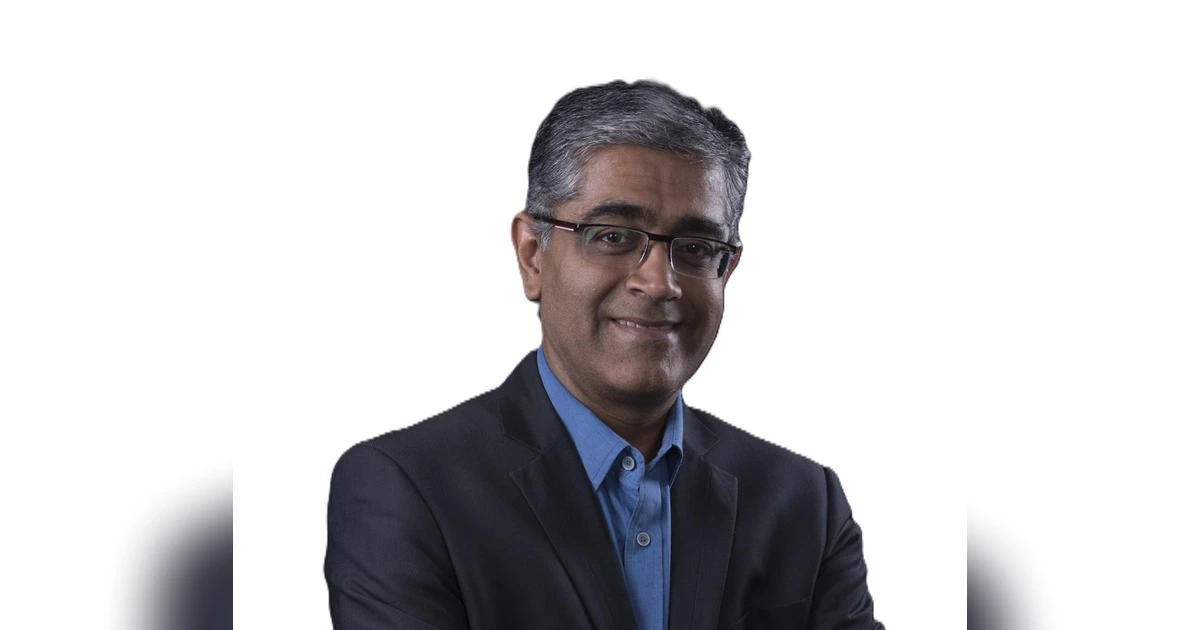
Volatility in gold prices has not deterred Indian buyers, with customers increasingly treating price corrections as opportunities to enter the market, similar to equity investors, Titan Company Managing Director Ajoy Chawla said.


Many consumers who had earlier deferred purchases, being fence sitters due to rising prices, have now shifted strategy, choosing to buy during dips rather than wait indefinitely, he said.


“People have burnt their fingers being fence sitters, so they are now using every correction to come into the market, as they do in the share market,” Chawla told PTI.


He acknowledged that volatility continues to mark the gold trade, but demand remains resilient. “Customers will try to participate. Those who missed out will try to come in,” he said, underlining the strong sentiment around the yellow metal.


Titan’s jewellery division, which includes the flagship Tanishq brand, has benefitted from this trend, supported by product innovation and festive demand in the December quarter.


Gold prices have shown significant volatility in early February 2026, fluctuating between highs near Rs 1.61 lakh per 10 grams and recent drops amid global cues and profit-taking.


According to Chawla, many fence sitters who waited in the first half of the year began purchasing gold ahead of the festive and wedding season, anticipating that prices would not decline further.


Global uncertainty also played a role in driving sentiment, he said, adding that cultural factors continue to underpin demand.


“So weddings, festivals and milestones mean that customers, in fact women, must be telling their husbands that all your share market is on one side. But see, we have always been the wiser ones and now you better listen to me when I have to tell you that you buy jewellery. It’s an asset, not an expense,” he said.


This anecdotal dynamic, Chawla suggested, is playing out in many households, with men becoming “a little sobered lot” as women assert jewellery’s role as a secure investment.


He further noted that a sense of FOMO (fear of missing out) also drove demand.


“So there was a FOMO. People jumped into it, saying a better buy now than regret later. And that went on, I think all the way into January,” said Chawla.


However, he also cautioned against making predictions, pointing to volatility over the last two to three years.


“Sometimes you can not predict how a month will go. The first half may go very well, and the second half you will see a certain slowdown, and the other way around also,” he said.


The company’s approach, he explained, has been to maximise gains when demand is strong.


“When the going is good, when there is occasion to buy, whether it’s a wedding or festival, we should go all out, make the most out of it because we don’t know what will happen one month later or 15 days later,” Chawla said.


He pointed out that gold prices remain connected to broader macroeconomic factors such as US Federal Reserve interest rates, bond yields and global liquidity.


“We cannot predict it, but… whatever we have heard from many investment advisors, many people who are in that financial sector, their view is that there is a secular need for central banks worldwide to de-risk and therefore they see gold as a structural play,” Chawla said.


At the same time, he cautioned that volatility is “inevitable” as there will be some corrections from time to time as in any commodity pricing.


“There will be corrections, there will be ups and downs, there will be volatility. So I mean it, it can be risky, but if you are playing the long game, it may not matter,” he added.


Asked about the December quarter, Chawla said it was “fantastic”, and the growth was led by Titan’s jewellery division, which reported a spike of 45.6 per cent in its revenue to Rs 23,492 crore.


Chawla said Titan chose not to compromise on inventory, retail investments or marketing during the festive and weeding season in the December quarter.


“In fact, we went overboard on marketing. We said this is the time to gain share. So we went very aggressive on marketing, both visibility, freshness, innovation, bringing in celebrities,” Chawla said.


On the outlook for the jewellery division, he said its so far so good, but volatility is here to stay.


“One good month does not mean the next month will be very good. Now that gold prices are fluctuating as opposed to only showing an upward trend, we will wait and watch. So far, it’s decent. It’s good. I am not unhappy about it,” he said.


Titan’s jewellery division is the largest contributor to the company. In FY25, revenue from operations of Titan — a JV between the Tata group and the Tamil Nadu government — was at Rs 57,339 crore, in which its jewellery division contributed Rs 46,571 crore — over 81 per cent.


Source link

YouTube
Instagram
WhatsApp




