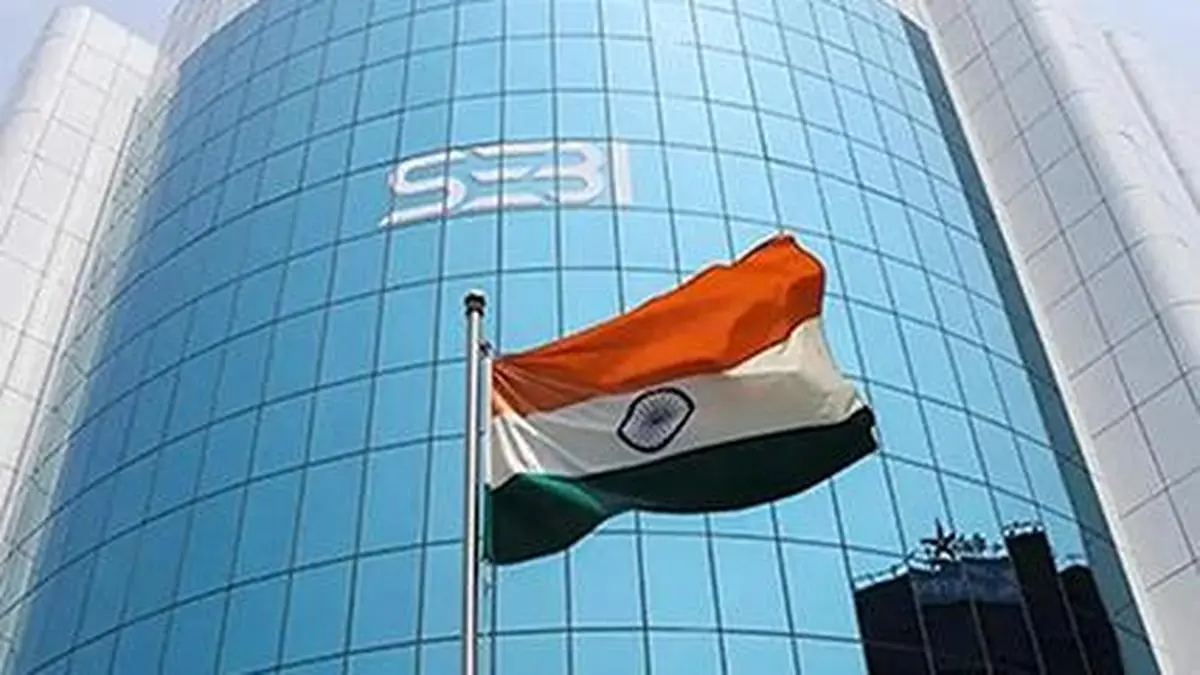
SEBI formalises same-day borrowing for mutual funds; AMC to bear cost

SEBI formalises same-day borrowing for mutual funds; AMC to bear cost


Mutual funds, primarily liquid and overnight schemes, routinely face a timing mismatch between when they pay investors and when they receive cash from underlying instruments. Simply put, mutual funds sometimes have to pay investors before money from their own investments comes in.

Redemption proceeds are typically paid out the next business day morning, while inflows from TREPS (Tri-Party Repo Dealing System) and reverse repo often arrive later the same day. To bridge this gap, mutual funds enter into formal same-day borrowing arrangements with financial institutions such as banks.

A March 13, 2026 SEBI circular (https://tinyurl.com/sebimfborrow) operationalises this practice under the new SEBI (Mutual Funds) Regulations, 2026, effective April 1, 2026. It sets clear rules for such borrowing, exempts same-day borrowing from the 20 per cent cap, and clarifies who bears the cost and risk.

Timing gap

Schemes, especially liquid and overnight funds, process redemption payouts before receiving maturity proceeds from instruments such as TREPS and reverse repos. This creates a same-day liquidity gap. To avoid delays in payouts, funds borrow for a few hours until receivables are credited later in the day. While such arrangements already exist, the absence of explicit regulatory detailing leaves room for variation in implementation.

Mutual fund schemes can generally borrow up to 20 per cent of assets for redemptions, investor payouts or certain trade settlements, for up to six months. But this cap will not apply to same-day borrowing, subject to SEBI’s conditions.

Usage rules

The SEBI circular lays down a clear framework for same-day borrowing.

First, the asset management company and the mutual fund’s trustees must approve this borrowing policy, and it must be disclosed on the asset management company’s website.

Second, the use of intraday borrowing is restricted to specific purposes: meeting redemption obligations, paying interest or income distribution cum capital withdrawal (IDCW), and related payouts to unitholders. It cannot be used for broader leverage or investment activities.

Third, the fund can borrow only against money that is due to come in the same day. Funds can borrow only up to the level of “guaranteed receivables” due from specified sources such as the Government of India, RBI and Clearing Corporation of India Ltd. This is money that is assured to come in the same day. Eligible receivables include maturity proceeds from TREPS and reverse repo, proceeds from government securities and treasury bills, interest on such securities, and sale proceeds of these instruments. This means the borrowing must be backed by money that is expected the same day, and cannot be unlimited.

Cost burden

A key clarification in the circular relates to who bears the cost of such borrowing. SEBI states that any cost of intraday borrowing must be borne by the AMC and not charged to the scheme.

Further, if there is any delay or shortfall in receiving the expected funds due to unforeseen events or settlement issues, the resulting cost or loss must also be absorbed by the AMC.

This effectively separates operational liquidity management from investor returns. The scheme’s NAV is not meant to reflect the cost of bridging short-term mismatches arising from fund operations. In other words, investors should not bear these operational borrowing costs through the scheme.

In addition, AMCs are required to comply with existing regulatory provisions relating to borrowing and liquidity management, including clauses under the Fourth Schedule of the 2026 regulations and relevant provisions of the SEBI Master Circular for mutual funds.

ETF clause

The market regulator also addresses borrowing by equity-oriented index funds and ETFs (exchange traded funds). Stock exchanges will introduce a closing auction session, a final price-setting window at market close, from August 3, 2026.

If these funds are unable to complete all their sale transactions during market hours, they may borrow only to participate in the closing auction session. This means such borrowing is allowed only to help these funds complete trades within the exchange’s trading framework.

Overall, the circular formalises a narrowly defined, operational use of borrowing within mutual funds. It gives funds flexibility for same-day borrowing, but only with clear limits on how the money can be used, how much can be borrowed and who approves it.

By making the AMC bear the cost and risk, the rules keep investors separate from the fund house’s day-to-day cash management.

Operational cash mismatches stay ring-fenced, with fund houses absorbing risk

Published on March 21, 2026


Source link

Sun Pharma launches its semaglutide injection under the brand names, Noveltreat and Sematrinity in India

Sun Pharma launches its semaglutide injection under the brand names, Noveltreat and Sematrinity in India


Sun Pharmaceutical Industries has announced the launch of its semaglutide injection in India under the brand names Noveltreat and Sematrinity, across multiple strengths for the treatment of obesity and Type 2 diabetes.

The company said Noveltreat is indicated for chronic weight management in adults, to be used alongside a reduced-calorie diet and increased physical activity. It is available in five dose strengths, 0.25 mg/0.5 mL, 0.5 mg/0.5 mL, 1 mg/0.5 mL, 1.7 mg/0.75 mL, and 2.4 mg/0.75 mL.

Sematrinity, on the other hand, is indicated for adults with insufficiently controlled Type 2 diabetes mellitus as an adjunct to diet and exercise. It is available in two dose strengths: 2 mg/1.5 mL and 4 mg/3 mL. The company stated that both therapies are priced significantly lower than the innovator brand, with weekly treatment costs ranging from approximately Rs 900 to Rs 2,000 for Noveltreat and Rs 750 to Rs 1,300 for Sematrinity.


Sun Pharma said the products are delivered through user-friendly, pre-filled pen devices. Noveltreat features a concealed needle designed to reduce injection-related anxiety and improve safety and dosing accuracy, while Sematrinity is offered in a multi-dose pen format with a smooth dialer for flexible and precise dose administration. The pens have been developed by global pharmaceutical device suppliers and are manufactured in Europe.

Sun Pharma highlighted that GLP-1 receptor agonists, including semaglutide, are widely used for the treatment of Type 2 diabetes and obesity, offering benefits such as improved glycaemic control and reduced cardiovascular and renal risks.

Citing data from the National Family Health Survey-5 (NFHS-5), the company noted that nearly one in four Indians aged 1549 is overweight or obese, with associated risks including metabolic disorders, cardiovascular diseases, and cancer. It also referred to the ICMR INDIAB study (2023), which estimated that over 101 million people in India are living with diabetes, with a significant proportion failing to achieve glycaemic targets, underscoring the need for effective treatment options and comprehensive disease management.

Kirti Ganorkar, managing director, Sun Pharmaceutical Industries, said, With the launch of Noveltreat and Sematrinity, our endeavour is to provide a high-quality, affordable therapy to a wider patient community in India. We are offering a comprehensive range, backed by our decades of expertise in manufacturing complex medicines. To further support patients, we are also introducing a holistic patient support program intended to guide them throughout their treatment journey.

Sun Pharmaceutical Industries is engaged in the business of manufacturing, developing and marketing a wide range of branded and generic formulations and active pharmaceutical ingredients (APIs). The company and its subsidiaries has various manufacturing facilities spread across the world with trading and other incidental and related activities extending to global market. It is the largest pharmaceutical company in India.

The company has reported a 16.03% rise in consolidated net profit to Rs 3,368.81 crore on a 13.49% increase in revenue to Rs 15,520.54 crore in Q3 FY26 over Q3 FY25.

The counter rose 1.90% to settle at Rs 1,777.45 on the BSE.

Powered by Capital Market – Live News


Source link

Sun Pharma launches its semaglutide injection under the brand names, Noveltreat and Sematrinity in India

Sun Pharma launches semaglutide injection under two brands in India


Sun Pharmaceutical Industries has announced the launch of its semaglutide injection in India under the brand names Noveltreat and Sematrinity, across multiple strengths for the treatment of obesity and Type 2 diabetes.

The company said Noveltreat is indicated for chronic weight management in adults, to be used alongside a reduced-calorie diet and increased physical activity. It is available in five dose strengths, 0.25 mg/0.5 mL, 0.5 mg/0.5 mL, 1 mg/0.5 mL, 1.7 mg/0.75 mL, and 2.4 mg/0.75 mL.

Sematrinity, on the other hand, is indicated for adults with insufficiently controlled Type 2 diabetes mellitus as an adjunct to diet and exercise. It is available in two dose strengths: 2 mg/1.5 mL and 4 mg/3 mL. The company stated that both therapies are priced significantly lower than the innovator brand, with weekly treatment costs ranging from approximately Rs 900 to Rs 2,000 for Noveltreat and Rs 750 to Rs 1,300 for Sematrinity.


Sun Pharma said the products are delivered through user-friendly, pre-filled pen devices. Noveltreat features a concealed needle designed to reduce injection-related anxiety and improve safety and dosing accuracy, while Sematrinity is offered in a multi-dose pen format with a smooth dialer for flexible and precise dose administration. The pens have been developed by global pharmaceutical device suppliers and are manufactured in Europe.

Sun Pharma highlighted that GLP-1 receptor agonists, including semaglutide, are widely used for the treatment of Type 2 diabetes and obesity, offering benefits such as improved glycaemic control and reduced cardiovascular and renal risks.

Citing data from the National Family Health Survey-5 (NFHS-5), the company noted that nearly one in four Indians aged 1549 is overweight or obese, with associated risks including metabolic disorders, cardiovascular diseases, and cancer. It also referred to the ICMR INDIAB study (2023), which estimated that over 101 million people in India are living with diabetes, with a significant proportion failing to achieve glycaemic targets, underscoring the need for effective treatment options and comprehensive disease management.

Kirti Ganorkar, managing director, Sun Pharmaceutical Industries, said, With the launch of Noveltreat and Sematrinity, our endeavour is to provide a high-quality, affordable therapy to a wider patient community in India. We are offering a comprehensive range, backed by our decades of expertise in manufacturing complex medicines. To further support patients, we are also introducing a holistic patient support program intended to guide them throughout their treatment journey.

Sun Pharmaceutical Industries is engaged in the business of manufacturing, developing and marketing a wide range of branded and generic formulations and active pharmaceutical ingredients (APIs). The company and its subsidiaries has various manufacturing facilities spread across the world with trading and other incidental and related activities extending to global market. It is the largest pharmaceutical company in India.

The company has reported a 16.03% rise in consolidated net profit to Rs 3,368.81 crore on a 13.49% increase in revenue to Rs 15,520.54 crore in Q3 FY26 over Q3 FY25.

The counter rose 1.90% to settle at Rs 1,777.45 on the BSE.

Powered by Capital Market – Live News


Source link

Sun Pharma launches its semaglutide injection under the brand names, Noveltreat and Sematrinity in India

Board of Intelligent Supply Chain Infrastru.Trust recommends final dividend


Of Rs 2.5766 per share

Intelligent Supply Chain Infrastru.Trust announced that the Board of Directors of the Company at its meeting held on 20 March 2026, inter alia, have recommended the final dividend of Rs 2.5766 per equity Share (i.e. 2.5766%) , subject to the approval of the shareholders.

Powered by Capital Market – Live News


Disclaimer: No Business Standard Journalist was involved in creation of this content

First Published: Mar 21 2026 | 5:50 PM IST


Source link

MF equity cash holdings up by ₹4,000 cr amid volatile market

MF equity cash holdings up by ₹4,000 cr amid volatile market


The MF ecosystem is heavily supported by consistent SIP inflows, which continue to remain strong even during volatile phases
| Photo Credit:
juststock

Mutual fund houses have increased the cash holding of equity schemes by ₹4,000 crore to ₹2.10 lakh crore in February against ₹2.06 lakh crore logged in January due to huge market volatility, according to JM Financial report.

However, the steady Systematic Investment Plan inflows and recent fall in markets opening up fresh buying avenues have kept the cash holdings under check. Part of the cash build-up can also be due to 8 equity schemes raising ₹3,955 crore through NFO last month. In January, 4 equity NFOs mopped up ₹806 crore.

SIPs hold fort

The inflows through SIP in last 11 months of this fiscal was up 10 per cent at ₹317,502 crore against ₹289,352 crore logged in the whole of FY’25.

Akshat Garg, Head – Research & Product at Choice Wealth said that less than 5 per cent cash holding of MFs does not necessarily mean that there are no redemption pressure but it is simply under the manageable limits.

“If there was real stress in the system, cash levels would have moved up sharply as fund managers prepared for outflows. That is clearly not happening right now,” he added.

The MF ecosystem is heavily supported by consistent SIP inflows, which continue to remain strong even during volatile phases and the steady inflows act as a natural counterbalance to redemptions, allowing fund managers to manage liquidity without holding excessive cash, said Garg.

In fact, in a falling market, holding higher cash can actually become a drag if markets rebound quickly and that is exactly why most funds prefer to remain close to fully invested, he said.

Market crash scares

The gross redemption from equity schemes has reduced to ₹36,098 crore in February against ₹41,639 crore in January. However, a consistent sharp fall in equity markets may scare new MF investors leading to higher redemptions and lower inflows.

Gibin John, Senior Investment Strategist, Geojit Investments said MFs continue to receive a strong and steady SIP inflows of around ₹29,000 to ₹30,000 crore per month, providing consistent liquidity support and reduces the need for holding higher cash.

Despite the huge volatility and recent meltdown in markets, the overall equity asset under management has increased 16 per cent to ₹35.39 lakh crore in February against ₹30.57 lakh crore in April, 2025.

However, the numbers in March will be crucial as the Sensex has already fallen 7 per cent so far this month to 74,533 points on Friday from 80,239 points on March 2. Signs of ending West Asia war will dictate the markets and fate of MF industry going ahead.

Published on March 21, 2026


Source link

Sun Pharma launches its semaglutide injection under the brand names, Noveltreat and Sematrinity in India

Dr Reddy's launches Obeda (semaglutide) in India for Type 2 Diabetes


Dr Reddy’s Laboratories has announced the launch of its injectable semaglutide under the brand name Obeda, marking an important step in expanding access to GLP-1 receptor agonist-based therapy for the management of Type 2 diabetes in India.

The company said it is the first Indian pharmaceutical firm to receive approval from the Drugs Controller General of India (DCGI) for generic semaglutide, enabling a day-one launch upon patent expiry. It added that the move reflects its readiness to serve unmet patient needs in India.

India faces one of the worlds largest diabetes burdens, with over 101 million adults living with the condition, according to the ICMR INDIAB study. The study estimates diabetes prevalence at 11.4%, with nearly four in ten adults experiencing abdominal obesity. An additional 136 million individuals are estimated to be pre diabetic, placing them at high risk of developing the disease. In such a scenario, semaglutide, a GLP-1 receptor agonist, has a globally proven track record in improving glycaemic control and supporting weight management when used as part of a comprehensive treatment plan.


The company stated a Phase III clinical study enrolling 312 participants, Dr. Reddys Obeda established non-inferior efficacy and a safety profile comparable to the innovator drug. It showed similar glycaemic reduction. Additionally, comparable results were observed for fasting glucose control, post-prandial glucose control, and therapeutic glycaemic response (achieving HbA1c <7.0%) at the end of the study. No anti-drug antibodies were detected, and the immunogenicity profile was similar to that of the innovator drug.

With both API development and manufacturing, as well as formulation development conducted entirely in house, Obeda reflects Dr. Reddys strength in complex product development and peptide science. It also showcases the companys decade long expertise in peptide technology and its commitment to bringing GLP 1 therapies to market to ensure access to high quality, affordable medicines and addressing Indias evolving healthcare needs. As part of its future plans for GLP-1 therapies, the company will be looking at a fully integrated API and formulation approach, encompassing both development and manufacturing in-house.

Obeda is available in 2 mg and 4 mg strengths as a once-weekly pre-filled pen for subcutaneous administration. The company said each pen delivers a minimum of four weekly doses, with a monthly treatment cost of ₹4,200.

Dr. Reddys also introduced a patient support programme called SemaKare, which includes digital onboarding support, injection training, tele-assistance, and adherence monitoring to improve patient outcomes.

As part of its broader strategy, the company said it plans to establish metabolic centres of excellence across India to improve diabetes care, enhance healthcare professional training, strengthen diagnostic capabilities, and drive patient awareness. It also noted collaboration with Dr. ReddysNestlHealth Science joint venture products to support nutritional needs of patients on GLP-1 therapies.

Erez Israeli, chief executive officer of Dr. Reddys, said: Todays launch marks a significant step in our commitment to expand our portfolio in critical therapeutic areas with differentiated solutions to patients in India and across global markets. Our foray into GLP-1 therapies reflects our capabilities in complex product development and peptide science. It reinforces our vision to be a trusted partner in healthcare by combining innovation with access, ensuring advanced diabetes treatments are not only available but affordable. As part of phase-1 launch, we aim to introduce generic semaglutide in several countries and, through our One Product, One Quality approach, we are committed to ensure the same high quality product across all markets.

M.V. Ramana, Chief Executive Officer, Branded Markets (India and Emerging Markets), Dr. Reddys, said: As the first generic semaglutide approved in the country, todays announcement reflects our science led approach and our long standing efforts in expanding access to advanced therapies in India. With the country facing a rapidly rising diabetes burden, we aim to offer effective treatment options and enable more patients to benefit from globally established therapies. The launch of this important drug strengthens our diabetes portfolio and reinforces our broader commitment to improving long term health outcomes for people living with chronic metabolic diseases. GLP 1 therapies represent an important area of focus for us, and we will continue working toward building a full breadth portfolio for multiple metabolic indications across all formats.

Hyderabad-based Dr. Reddys Laboratories is a global pharmaceutical company. It offers a portfolio of products and services including APIs, generics, branded generics, biosimilars and OTC.

The company reported a 14.4% decline in consolidated net profit to Rs 1209.8 crore despite of 4.4% jump in revenue to Rs 8,716.8 crore in Q3 FY26 over Q3 FY25.

The counter rose 1.95% to settle at Rs 1,298.95 on the BSE.

Powered by Capital Market – Live News


Source link

YouTube
Instagram
WhatsApp