Pegatron starts iPhone factory in Chennai, third such firm in India

Pegatron starts iPhone factory in Chennai, third such firm in India


Taiwan’s Pegatron on Friday became the third Apple vendor to set up a manufacturing unit in India, inaugurating a facility at Mahindra World City in . It will invest around Rs 1,100 crore in the unit, potentially generating around 14,000 jobs.


The other two Apple vendors with units in India are and Wistron, both Taiwanese. Pegatron’s facility comes at a time when Apple is expected to move at least a quarter of its manufacturing facilities to India by 2025. It signed a memorandum of understanding (MoU) with the Tamil Nadu government in February last year.


“The fact that Pegatron has started production within 18 months of signing the MoU highlights the investor-friendly climate in Tamil Nadu. China is where new cell phone models are manufactured in bulk. We are working to change that and make Tamil Nadu such a manufacturing hub,” said Tamil Nadu chief minister M K Stalin.


The electronics major applied for the central government’s production-linked incentive scheme. Tamil Nadu plans to develop Hosur, Coimbatore and Sriperumbudur as electronics manufacturing hubs.


The state contributes to around 20 per cent of the country’s electronics manufacturing. Major players in the state include Samsung, Foxconn, Tata Electronics and Dell among major investors. Stalin said the state is working to improve supply chain.


“Beyond conventional industries, we are showing interest in innovative industries. Under industry 4.0, the electronics sector plays a very important role. It has the power to change the manufacturing map of the state. We are focusing on that,” he said. Early this year, Tamil Nadu jumped to the third place in terms of ease of doing business, compared to 14 last year.


Stalin reiterated the government’s roadmap to achieve the target of a $1 trillion economy. To move towards this, the state is giving special incentives for the manufacturing sector. “In every sector, we are taking efforts to create more employment and boost diversification initiatives,” he added. Apple had started local assembly of iPhones in 2017 and was majorly making old generation phones in India.


A report by JP Morgan said Apple, in a move to diversify its China-focused manufacturing, is looking at making 25 per cent of its handsets in India by 2025 and shifting 5 per cent of global 14 production to India by the end of 2022.


Source link

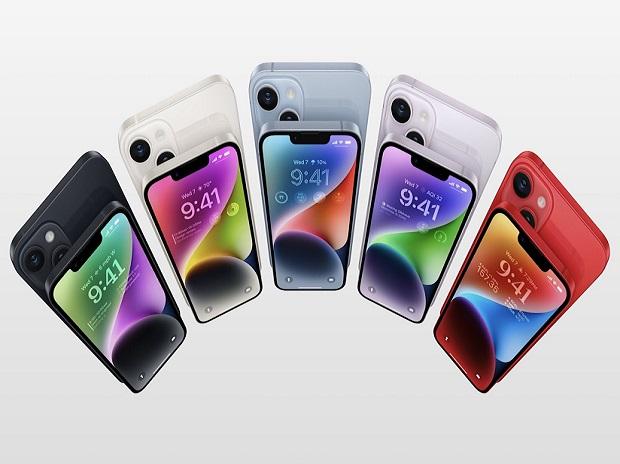
Apple Watch Series 8 keeps a close health watch with health tracker tools

Apple Watch Series 8 keeps a close health watch with health tracker tools


When Apple decided to make its Watch more than just a device to stay connected, the writing was clear on the wall — introduce useful health tools that keep people safe from health emergencies 24/7.


Fall detection, ECG, atrial fibrillation (A-fib) detection, heart rate and oxygen level monitoring, etc created more than a buzz and several people have documented how they received critical help from their which saved their lives.


Taking those learnings further, Series 8 has arrived with more innovative health features, including an innovative temperature sensor that enables advanced features for women’s health, and Crash Detection in case of a car crash.


The new wearable introduces temperature-sensing capabilities, retrospective ovulation estimates, low-power mode and international roaming.


Series 8 is powered by watchOS 9, introducing new and more customisable watch faces like Lunar and Metropolitan, an enhanced Workout app, sleep stages, a first-of-its-kind AFib History feature, and an all-new Medications app.


Let us see if Watch Series can become your trusted doctor-companion on the go.


Crash Detection is a very useful feature on Indian killer roads. According to data collected by the National Crime Records Bureau (NCRB), there are nearly 1.5 lakh deaths on India’s roads every year, of which one third are accounted for by National Highways.


An advanced sensor-fusion algorithm leverages a new, more powerful gyroscope and accelerometer on Apple Watch, which now has the highest dynamic range accelerometer in any .


To create the algorithm, data was collected from these new motion sensors at professional crash test labs with common passenger cars in simulated real-world accidents, including head-on, rear-end, side-impact and rollovers.


In addition to motion data, Crash Detection uses the barometer, GPS, and the microphone on iPhone as inputs to detect the unique patterns that can indicate whether a severe crash has taken place.


When Apple Watch detects a severe car crash, the device will check in with the user and dial emergency services if they are unresponsive after a 10-second countdown.


Emergency responders will receive the user’s device location, which is also shared with the user’s emergency contacts, according to Apple.


Another unique offering is new temperature-sensing capability that give women further insights into their health.


Apple Watch Series 8 takes a unique approach to temperature sensing with a two-sensor design.


The sensors in Apple Watch Series 8 sample the wrist temperature during sleep every five seconds and measure changes as small as 0.1 degree Celsius.


In the Health app, users can see nightly shifts in baseline temperature, which can be caused by exercise, jet lag, or even illness.


Utilising the new temperature-sensing capabilities in Apple Watch Series 8, one can receive retrospective ovulation estimates.


Additionally, with iOS 16 and watchOS 9, all Cycle Tracking users can now receive a notification if their logged cycle history shows a possible deviation, such as irregular, infrequent, or prolonged periods, and persistent spotting, which can be symptoms of underlying health conditions.


Apple Watch uses signals from the accelerometer and heart rate sensor to estimate when users are in rapid eye movement (REM), Core or Deep sleep.


The new Medications tool will help you manage and track medications, vitamins, and supplements, create a medications list, and set up schedules and reminders.


Starting from Rs 45,900, Apple Watch Series 8 also offers Always-On Retina display and a strong crack-resistant front crystal, with a longer battery life.


It is available in India in aluminium and stainless steel cases in two sizes, 41mm and 45mm, in starlight, midnight, silver and (PRODUCT)RED colours.


Conclusion: Apple Watch Series 8 elevates your overall fitness and health experience. Covid has taught us the importance of staying healthy and this device only supplements your daily goals, while keeping a close watch on you!


–IANS


na/

(Only the headline and picture of this report may have been reworked by the Business Standard staff; the rest of the content is auto-generated from a syndicated feed.)



Source link

Smartwatches create a connected lifestyle, help track health fitness

Smartwatches create a connected lifestyle, help track health fitness


New Delhi, Sep 30 (IANSlife) Many things have grown easier in life since the introduction of smartwatches to the public. Everything we need, from making a phone call to tracking one’s health and fitness to listening to music, is now just one tap away. The most intriguing aspect is that whether you are a minimalist or like OTT, you have options ranging from simple to extravagant pieces. Vikas Jain, Co-Founder of World of Play, has more to say about smartwatches.


What features in a can help reduce anxiety?


VJ: Modern smartwatches function as holistic devices stirring the fashion quotient and also help to reduce anxiety and stress. Smartwatches can detect anxiety and offer users a reliable solution to get their breath back in rhythm. They are also integrated with technology that gives personalised breathing sessions and guidance to users to help them calm down gradually and effectively.


In addition, smartwatches are equipped with sensors that can assess stress levels and physical changes, monitor sleeping patterns and signals like fluctuations in a heartbeat, pulse rate, among others. All this data helps users understand their emotional and mental state comprehensively. Modern-age smartwatches are embedded with AI, ML and AioT technologies, making them ideal for information about relevant meditation techniques to accompany users in battling mental health problems like anxiety and stress.


What is the future of wearable technology in healthcare?


VJ: The current evolution of the in the popular avatar is albeit a guiding factor that makes it possible to track and monitor the general fitness levels of a human body. Further technological advancements promise to make it possible to predict major health events in the human body.


Wearables have become quite common among consumers, especially since the pandemic. Consumers prefer to monitor their fitness through smartwatches as the form factor offers various features like oxygen, heart rate, sleep cycle, and even stress level monitoring.


Patients suffering from chronic illnesses such as diabetes, cardiovascular diseases, neurological disorders, and diabetes require real-time monitoring. In this context, smartwatches, fitness bands, and other wearables are a perfect and hassle-free solution, providing able guidance to monitor the vitals for the same.


Smartwatches equip users with real-time data about their physical and mental health, enabling them to make informed decisions about their health and fitness-related anxiety. They can further consult their healthcare specialist if the data is not in the desired range. The best part is that smartwatches can stay with users every day, every time, everywhere. People with chronic and lifestyle diseases can use this technology to ensure their health does not deteriorate while also enjoying its various benefits.


What is the future of connected lifestyle technology?


VJ: Smart wearables among the youth today is a sign of the tremendous growth potential of connected lifestyle technology. Other factors driving this trend include fitness-conscious generation and the progression of science to the point that clear fitness indicators can be obtained by analysing measurable health parameters. Therefore, the brands which back their products with research and innovation are the ones that would survive and grow in a highly demanding market.


Most brands today invest extensively in R&D and set up innovation labs. The goal is to create futuristic products that resonate with the pulse of the consumers; that not just fulfill current demands but also cater to future consumer requirements. Instead of being frivolous shopping, smartwatches have evolved to be a necessity worth the purchase.


With the advent of technology, the focus has shifted toward products that integrate new-age tech such as conversational AI. For example, voice assistance in smartwatches is becoming increasingly popular. In addition, wearables like smart fitness trackers, neckbands, and TWS have already captured a fair share of the market and are becoming an integral part of the connected ecosystem, as updates and health insights are available on the go.


Should you choose a fitness band over a smartwatch?


VJ: The advent of the new age technology in the wearable space has shrunk the addressable consumer for the fitness band. With the massified adulation seen by smartwatches as a form factor, the economies of scale have shifted in favor of smartwatches tremendously. The price arbitrage available between a commercial fitness band and a smartwatch has become so nimble that the fitness-band is giving into the smartwatch as a category.


Consumers definitely want to see their communication and notifications on the bigger display of the smartwatch and with higher battery backup to carry on with the multiple notifications from their host mobile phone, the consumer just ends up picking a smartwatch.


The truth about fitness trackers?


VJ: Many studies present a lopsided view regarding fitness trackers. Some say fitness trackers lead to no significant changes in an individual’s health, while others claim that people who weren’t using these gadgets were able to lose more weight. However, it is pertinent to note here that these studies were conducted when fitness trackers or wearable technology were at their nascent stage. Meaning these devices were no better than revamped pedometers.


In contrast, ultramodern fitness trackers are equipped with technology that constantly send reminders to the user if they have been on a long sedentary period. Additionally, most of the new age trackers are integrated with the latest technology and can monitor the user’s sleep patterns, stress levels, heart rate, and even SpO2 levels (Blood Oxygen Level).


Having all this data literally on their wrists motivates users to make informed and conscious fitness-related decisions, thereby resulting in a clear path towards their personalized fitness goals. The fitness tracker is something that attracts the consumer to buy a smart product. It has also become a major need for people working out in a gym for real-time tracking.


For PLAY, we happily acquire more than 100,000 consumers through our smartwatch portfolio with an additional 30 per cent being repeat purchasers who opt in for an upgrade within the brand portfolio. In the current phase, with distribution expansion further, consumers in rural areas as well are equipping themselves with PLAY smart wearables.


How can Indian design get ahead of international designs?


VJ: India has been a strong player in product design all the way from automotive to mobile accessories. We are excellent at product engineering and with the advent of modern technologies being readily available, we are only getting more competitive. Varied tastes from different regions of a highly populated country give us insights that international companies simply do not have access to. This has led to international companies to play catch-up with us.


Indian design is also inclined towards being more functional since it has to satisfy consumers from all walks of life, especially in a product segment like ours. The design should be both functional and aspirational. We have also noticed that besides the technology, the aesthetics of the product are a big reason for consumer attachment.


Play has launched PLAYFIT STRENGTH and SLIM for millennials and Gen Z to reduce anxiety and help them in tracking their body, sports modes, heart rate & fitness tracker, sleep and SPO2 monitor, BlueTooth notification controller coupled with ingenious application, fulfilling the promises of a 21st-century device. With these launches, the brand aims to delight their consumers in the festive season; these smartwatches will be available at the competitive pricing of INR 2,999 (for PLAYFIT SLIM) and INR 3,999 (for PLAYFIT STRENGTH)


(N. Lothungbeni Humtsoe can be contacted at lothungbeni.h@ians.in)


–IANS


lh/tb/

(Only the headline and picture of this report may have been reworked by the Business Standard staff; the rest of the content is auto-generated from a syndicated feed.)


Source link

Akasa Air uses artificial intelligence product to make travel affordable

Akasa Air uses artificial intelligence product to make travel affordable


Akasa Air, India’s newest airline, has selected an Artificial Intelligence (AI)-powered product to make air travel affordable by leveraging accurate and real-time airfare data.


AirGain by RateGain allows access and agility to act upon changing market dynamics and optimize air fares in real time to provide the best prices to its customers.


The AI-powered platform empowers airline revenue and pricing teams with the most accurate and reliable market insights to build a competitive pricing strategy.


Through an easy-to-use UI that allows faster decision making, AirGain allows the airlines to get notified whenever there is a change in the market.


Additionally, the intelligence provides the user with real-time competitor insights across channels to reduce disparity and revenue losses.


Commenting on the partnership, Praveen Iyer, Co-Founder and Chief Commercial Officer, Akasa Air, said: “At we are developing tech-enabled strategies and building a data-driven organization that will aid us in providing our customers the most affordable fares along with a customer centric flying experience.


“AirGain’s nimble solution delivering real-time air travel information across channels will help us achieve a dynamic allocation of fares furthering our mission to make air travel accessible to everyone in India.”


Bhanu Chopra, Chairman and Managing Director, RateGain, said, “A new airline like Akasa Air, comes to the market with the mindset to adopt the latest technology, and we are delighted that the team decided to choose AirGain to power their growth journey.


“As Akasa grows, our product AirGain will help in maximising revenues by providing accurate and real-time competitive intelligence. AirGain was selected based on data accuracy and delivery, easy-to-use UI, and the extensive support available to Akasa through our dedicated teams -and we are committed to deliver on this promise.”


launched its first commercial flight on August 7


–IANS


kvm/ksk/

(Only the headline and picture of this report may have been reworked by the Business Standard staff; the rest of the content is auto-generated from a syndicated feed.)


Source link

Xiaomi Smart TV X50 review: Among the best Android LED smart TVs on budget

Xiaomi Smart TV X50 review: Among the best Android LED smart TVs on budget


Expanding its line-up in India, Chinese electronics maker recently launched the Smart TV X series. Based on the Mi TV 5X (review), the Smart TV X series is available in 43-inch, 50-inch, and 55-inch screen variants. Like the twin sibling, the 50-inch model (review unit) is powered by TV 10 platform with PatchWall interface built-in. It boasts a long list of features, including support for the most commonly used high dynamic range (HDR) formats, MEMC (Motion Estimation Motion Compensation), Dolby Audio, and DTS:X surround sound system. At Rs 34,999, the Smart TV X50 is Rs 4,000 cheaper than the Mi TV 5X despite being similar in terms of features. Is it as good or has Xiaomi cut corners? Let us find out:

Design

The Xiaomi Smart TV X50 is a well-constructed unit, but it lacks the premium looks of the Mi TV 5X despite sporting a thin metallic frame and bezel-less front profile. It is because the TV ships with plastic legs, which are unnecessarily big and covered in glossy finish. The big footprint makes the leg unsuitable for table-top installation, especially if there is minimal coverage area on the table. The glossy finish seems to be an afterthought, as it does not match with the TV’s overall finish and build quality.

Display and audio

The Xiaomi Smart TV X50 is a technology-rich proposition in the budget LED smart TV segment. It sports a 4K UHD resolution screen with support for commonly used HDR formats, including Dolby Vision and HDR. Besides, there is MEMC that allows users to watch the content at a frame rate natively supported by panel – 60Hz. MEMC is uncommon in budget LED smart TVs, and it makes a one of the differentiation features for the Xiaomi Smart TV X50. This tech comes handy while watching fast-paced content like sports, but you are better off it for traditional content like movies, TV series, etc.

As for picture quality, the screen is good for an LED panel with decent contrast and brightness. From price-performance perspective, the screen is among the best. It works well for the standard dynamic range (SDR) content, which dominates the content space, but leaves one asking for more when it comes to HDR content due to limited contrast range and subdued brightness of the screen. This is common across LED TVs, therefore, should not be taken as negative for the Xiaomi Smart TV X50.

On a positive side, the LED panel on the Xiaomi Smart TV X50 is among the best available in its segment.

Coming to the audio, there are stereo speakers of 30W peak output supported by Dolby Audio and DTS:X Surround technologies. The speakers do not support Dolby Atmos, but the TV has HDMI (eARC) for pass-through. Therefore, you cannot experience Dolby Atmos natively on the TV speakers, but there is a possibility to pass-through the signal to supported sounbdbar or any other audio accessory. As for the output, the speakers are loud and clear. With DTS:X Surround enable, the speakers create good surround sound effect apt for immersive audio experience.

UI and performance

The Xiaomi Smart TV X50 boots 10 TV operating system with PatchWall user interface pre-loaded as secondary interface. Secondary because the UI is the TV’s default interface. Switching to the PatchWall is easy with a dedicated button for it available on the petite Xiaomi remote controller. As for the PatchWall, the UI has come a long way and it now looks polished, intuitive and easy to use. On top, there are services like Assistant and Chromecast for convenience.

Powered by a quad-core A55, paired with 2GB RAM and 8GB on-board storage, the Xiaomi Smart TV X50 is not a performance powerhouse. Yet, it delivers good experience. It comes as a surprise because the Mi TV 5X, with similar processor and RAM, struggled with performance. Nevertheless, there is no visible lag while navigating the user interface and the content playback is smooth.

Verdict

Compared to the Mi TV 5X, the Xiaomi Smart TV X50 lacks premium stance. Moreover, it does not get the far-field microphones for Assistant service and the on-board storage is half of what you get in the Mi TV 5X. Yet it makes a good buy because no compromises are made on the essentials. The Xiaomi Smart TV X50 delivers good audio-visual experience. On top, there is wide-range of connectivity options such as 3 x HDMI 2.1, 2 x USB 2.0, Ethernet, AV input, optical, and headphone jack. For wireless connectivity, there is dual-band Wi-Fi and Bluetooth 5.0.


Source link

Twitter rolls out new ways to enhance video experience for users

Twitter rolls out new ways to enhance video experience for users


To enhance user experience, microblogging site has announced that it is rolling out new ways for users to experience videos on the platform.


The platform introduced two new ways — immersive viewing and easy discovery, and showing more videos in Explore — for users to watch what’s happening on the platform.


“Videos are a huge part of the public conversation… To help make it easier to find and watch what’s happening, we are rolling out two new updates to how you experience videos on Twitter,” the platform said in a blogpost.


Twitter’s updated immersive media viewers can expand videos to full screen with a single click. To activate it, tap or click on a video in the app.


“Once the video has been launched in full-screen mode, we have made video discovery easier as well. Just scroll up to start browsing more engaging video content. If you want to exit the viewer and go back to the original Tweet, click the back arrow in the top left corner,” the platform said.


The immersive media viewer will be available in the coming days to people using in English on iOS.


With our new video carousel, users can now easily find more videos they like alongside Tweets and Trends that might interest them. They can open the Explore tab to discover some of the most popular videos being shared on Twitter.


The video carousel is currently available to people in select countries using Twitter in English on iOS and Android.


–IANS


vc/dpb


(Only the headline and picture of this report may have been reworked by the Business Standard staff; the rest of the content is auto-generated from a syndicated feed.)



Source link

YouTube
Instagram
WhatsApp



