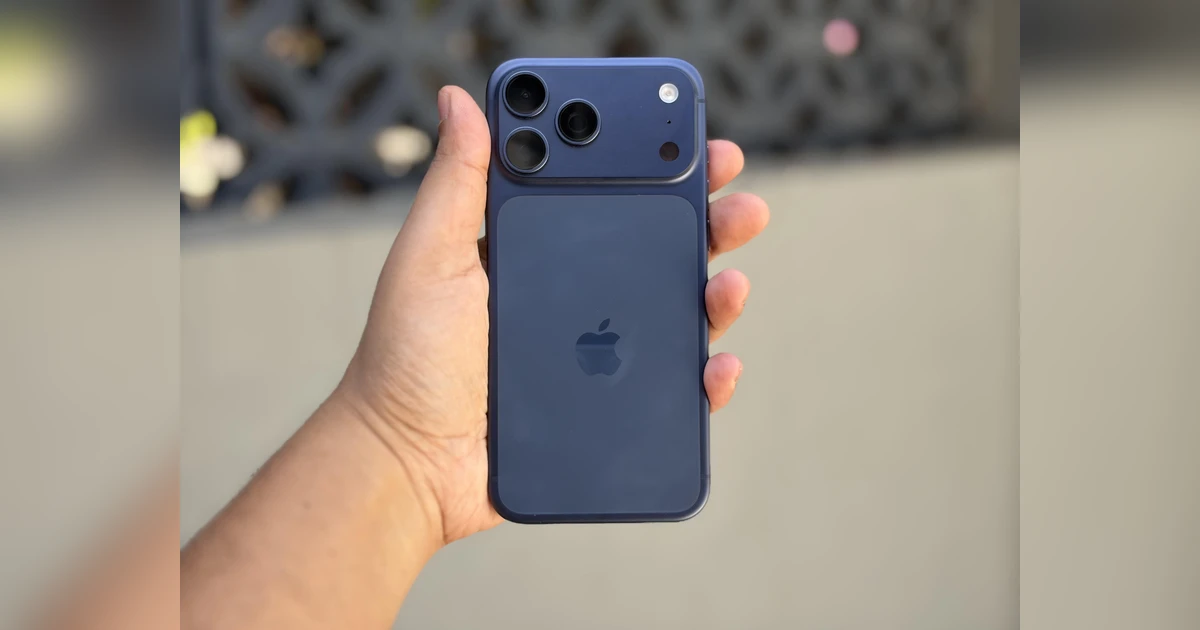
Apple's iPhone 18 Pro series could bring major upgrades in 2026: Report

Apple's iPhone 18 Pro series could bring major upgrades in 2026: Report


Apple’s iPhone 18 Pro and iPhone 18 Pro Max, expected to launch in September 2026, could bring some of the biggest hardware changes to the iPhone in years. According to a report by 9To5Mac, the upcoming Pro models may feature fresh colour options, a smaller Dynamic Island, improved camera hardware, a larger battery, and more. While these details are based on early reports, the iPhone 18 Pro lineup is reportedly shaping up to be one of the most significant updates in recent years.


iPhone 18 Pro/Pro Max: What to expect


New colour options


According to the report, one of the expected highlights include a wider range of colours. Apple’s shift from aluminium to titanium in recent Pro models has reportedly made it easier to introduce more colour finishes.


According to the report, Apple is said to be exploring three new colour options for the iPhone 18 Pro, including brown, purple, and burgundy. Additionally, the report suggested that a black variant may still not be offered. If these plans move forward, the iPhone 18 Pro lineup could appear more colourful than earlier versions.


Smaller Dynamic Island


The report also stated that the Dynamic Island may shrink slightly. Since it was introduced in 2022, its size has mostly stayed the same. However, Apple may shift some Face ID components beneath the display, which could help reduce the cutout area. Earlier reports that suggested a hole-punch design now seem unlikely.


Camera improvements


As reported, both models may get an upgraded telephoto lens. The iPhone 17 Pro currently uses an f/2.8 telephoto lens, which has remained unchanged for some time. Apple could introduce a wider aperture for iPhone 18 Pro, although exact details have not been shared.


Additionally, Apple is reportedly considering a variable aperture for the main camera sensor, at least on the iPhone 18 Pro Max. This could allow better control over depth and improved flexibility while shooting in daylight.


A previous report mentioned that unlike current iPhones with a fixed aperture, this system would physically adjust the lens opening. It could widen in low light for more brightness and narrow in bright scenes for better exposure, while also improving natural background blur, reducing reliance on software-based portrait effects.


According to a previous report, Apple may drop touch gestures for the camera control button on the iPhone 18 Pro and keep only pressure sensing.


Bigger battery


According to the report, the iPhone 18 Pro Max could pack a 5200mAh battery, compared to 5088mAh on the previous Pro Max model. Combined with efficiency improvements from Apple’s modem and the latest generation Apple Silicon, battery performance could see noticeable gains. 


Apple modem


Apple introduced its in-house modem with select iPhone 16 models, but it did not support mmWave 5G. The report stated that the iPhone 18 lineup is expected to use Apple’s C2 modem across all models.


According to the report, the new modem is said to be more power-efficient, which could help improve battery life without increasing battery size. Some reports also suggest the C2 modem may support satellite-based 5G data, expanding connectivity beyond basic text messaging when outside cellular coverage. 


A20 Pro chip


The report noted that, like every new iPhone generation, Apple is expected to introduce upgraded silicon. The iPhone 18 Pro models may feature the new A20 Pro chip, which could be built using a 2nm process for the first time, potentially bringing better performance and improved efficiency.


Apple reportedly may also unveil a new N2 networking chip, following the debut of the N1 chip in the iPhone 17 lineup. However, specific details about the N2 chip are not yet available.
Source link

India leads in making AI affordable, accessible, and scalable: USISPF chief

India leads in making AI affordable, accessible, and scalable: USISPF chief


As New Delhi brings together industry giants from across the world to the one of the biggest gatherings on Artificial intelligence, the US- India Strategic Partnership Forum (USISPF) has arrived with the largest US delegation. President & Chief Executive Officer, Mukesh Aghi underlined the critical importance of India to American companies from AI perspective and as a leader in leveraging tech to provide digital infrastructure with citizens, not only just from a payment perspective.


In an exclusive interview to ANI, Mukesh Aghi, said, “From a strategic partnership perspective between US and India, this event is very important because when you look at some of the leaders in AI in the US are Indian Americans, and to be able to bring in 100 plus global leaders from US into India, that sends a very strong message that India is very critical to US companies and also from an AI perspective”.


He added, “India has taken a very strong lead in trying to make AI more affordable, scalable, and accessible to its citizens. And it has one of the largest structured database to leverage that. So in every aspect, India is going to play a very pivotal role in AI on a global basis.”


When asked about the lessons other emerging economies can learn, Mukesh Aghi told ANI, “I think the message to the rest of the world, especially the global South, is look at how India has been able to provide digital infrastructure with citizens, not only just from a payment perspective, but also leveraging AI in the future.”


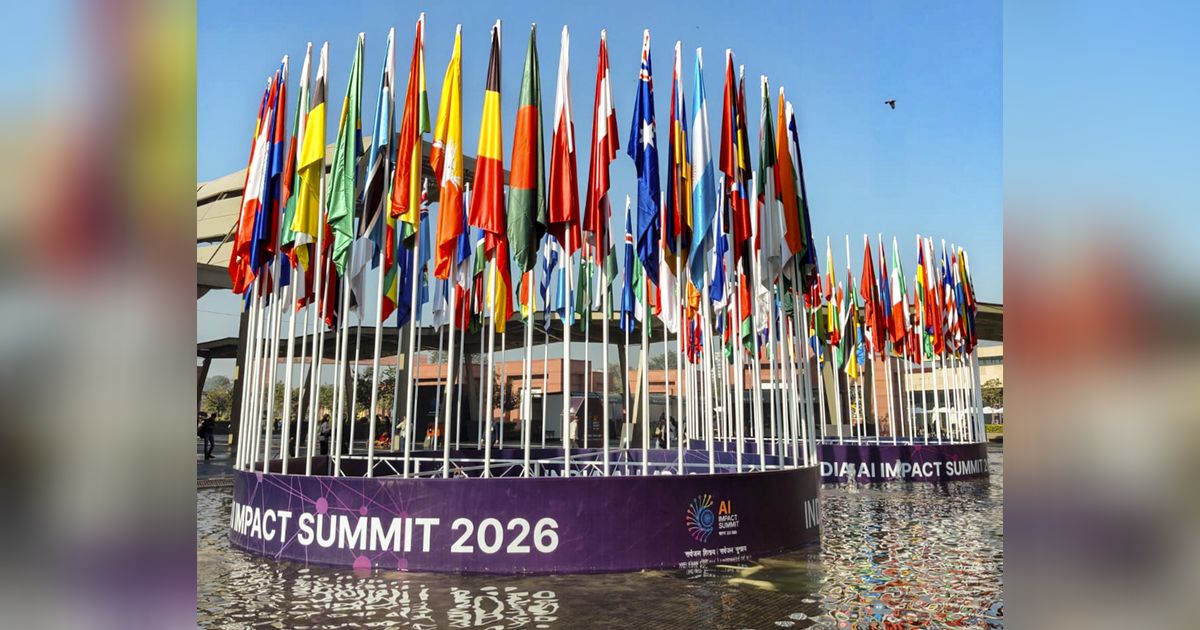
With India hosting the AI Impact Summit at the Bharat Mandapam in the national capital, Prime Minister Narendra Modi on Monday welcomed all world leaders, industry experts and other dignitaries who have arrived to participate in the event.


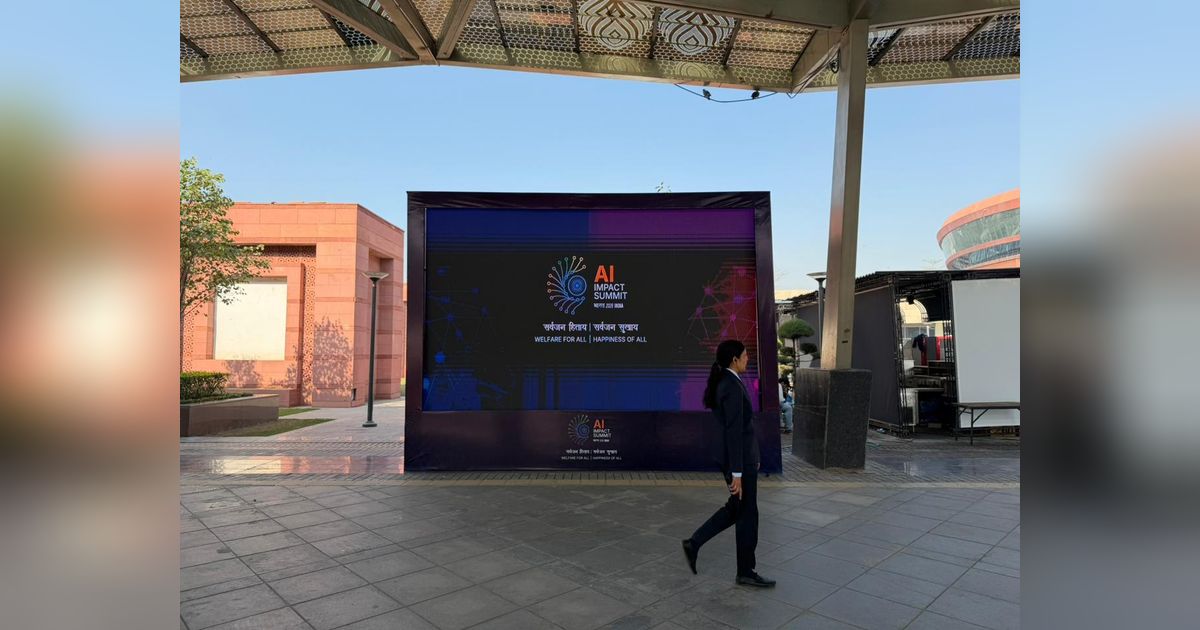
In an ‘X’ post, the Prime Minister emphasised the theme of the summit, which is “Sarvajana Hitaya, Sarvajana Sukhaya”, meaning welfare for all, happiness for all, reflecting India’s shared commitment to harnessing Artificial Intelligence for human-centric progress.


PM Modi will inaugurate the India AI Impact Expo 2026 at the Bharat Mandapam in the national capital. An unprecedented roster of Presidents, Prime Ministers, Crown Princes, and the brightest minds from Silicon Valley and beyond will converse at the Bharat Mandapam as India is set to host the AI Impact Summit 2026.


The summit will be the first global AI summit to be hosted in the Global South. It will bring together global leaders, policymakers, technology companies, innovators, and experts to showcase and deliberate on the transformative potential of AI across governance, innovation, and sustainable development.


The AI Impact Summit which kicked off on Monday in New Delhi will welcome world leaders from across 20 countries, including French President Emmanuel Macron, Brazilian President Lula da Silva, Sri Lankan President Anura Kumara Dissanayake and others. UN Secretary General Antonio Gutteres will also attend the event.


From February 16 to 20, the Impact Summit, the first international AI summit hosted in the Global South, showcases New Delhi’s ambition: to shape an AI future that is inclusive, responsible, and impactful. At the core is India’s audacious vision for sovereign AI.


Source link

AI integration in road, transport can help avoid accidents: MoRTH official

AI integration in road, transport can help avoid accidents: MoRTH official


There is a lot of scope for AI integration in the road and transport industry to help avoid accidents and check issues of vehicular pollution, a government official said on Monday.


Measures such as a vehicle-to-vehicle communication system and adding driving-in-school curriculum can help in this direction, Pankaj Aggarwal, an officer in the Ministry of Road Transport and Highways, said while speaking at the India AI Impact Summit in the national capital.


During a panel discussion on ‘AI for Road Safety: Data-Driven Solutions for Enhancing Road Safety in India’, he said AI can play a big role in avoiding accidents and reducing fatalities.


Data indicates that speeding is the first problem among traffic rule violations, he said. So, capturing proper data with the help of AI and providing the same evidence without human intervention can be of help as whatever data today is recorded by a police person is “not the actual data as there are many other offences which contribute to the accident…” 
“…With that intention if some technology is there if he (driver) can correct himself before any collision (through) vehicle-to-vehicle communication technology… there is a lot of scope for AI,” the official said.


In case of challans also, enforcement is an issue, Aggarwal said.


Further, AI can help maintain correct data when it comes to accidents and fatalities, he said, citing the example of Bihar where he said data shows fatalities are higher than the national average.


On pollution, Aggarwal said, “We are developing an AI tool for that also because the environment is a major concern in the urban centres.” 
How to control pollution is also an area where the government is actively taking steps as data can be misled here.


He also mooted an idea of having driving as part of school curriculum through AI as it can create awareness among the youth.


“IIT Madras is working on it so that it should be mandated as part of the curriculum,” he stated.


Source link

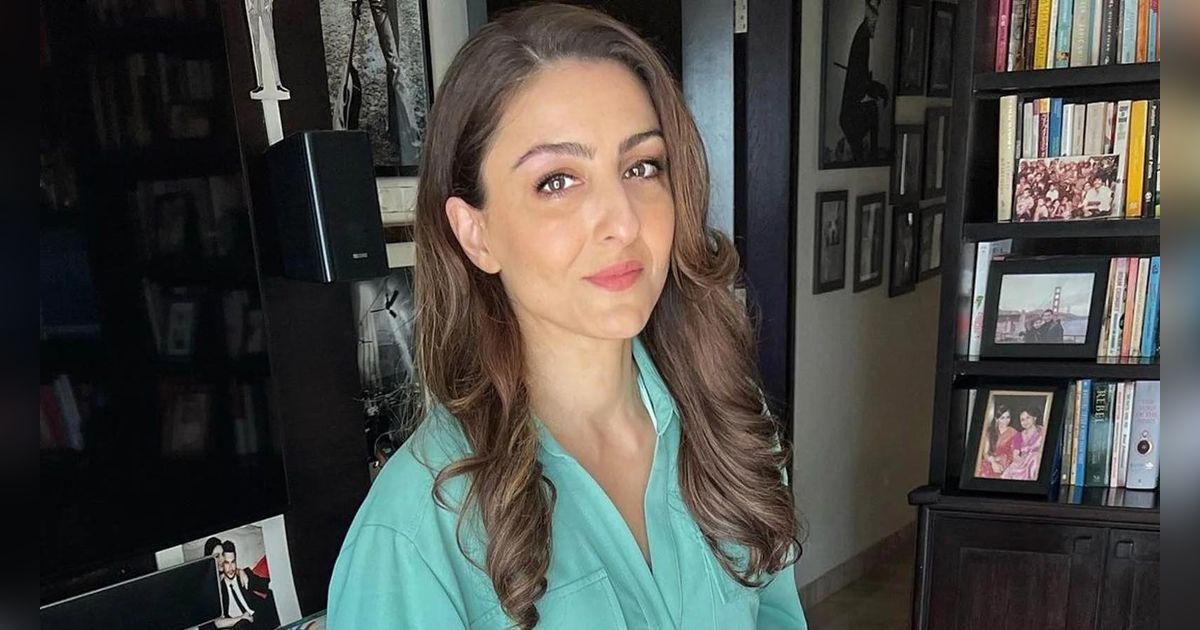
Ethical AI is mandatory, not optional: Soha Ali Khan at AI Impact Summit

Ethical AI is mandatory, not optional: Soha Ali Khan at AI Impact Summit


Actor Soha Ali Khan, speaking at the India AI Impact Summit 2026 on Monday, raised concerns about rising risks for women in the fast-changing digital world, highlighting strong ethical safeguards in artificial intelligence are now essential.  


Khan, an advocate for the United Nations Population Fund (UNFPA), was speaking during a session titled ‘Reimagining Gender in Technology – Designing safer digital futures and advancing ethical ai for inclusive platforms’. She talked about how technology has changed opportunities for women in India. 


“I’ve watched this transformation across India as well. Young women have built businesses online. Girls are still attending stories that one side was faced in entrepreneurs,” she said, pointing to how digital platforms are helping women become entrepreneurs and share their stories. 


Soha added that digital literacy programmes and online tools have created new opportunities for learning and expression. “AI is extraordinary. It improves healthcare access, it expands education. It helps to close maternal health gaps. And through my work, I’ve seen how digital tools like these are really empowering, from digital literacy programs to young girls becoming very confident storytellers,” she said.


Technology also reflecting social inequalities


Soha warned that the digital space is not free from bias or inequality. “Digital world is not neutral. It reflects the society that builds it. And now AI is accelerating everything,” she said. 

She noted that while AI brings many benefits, it is also being misused rapidly. “But AI is also making it faster, cheaper and stable. It’s easier, easier than ever now to impersonate someone, to create deep fakes, to manipulate images, to misuse personal data. And most women, unfortunately, we don’t know how to fight back,” she said. 


Ethical AI a necessity, not a choice


Soha stressed that the problem goes beyond technology alone. “This is not just a tech issue. It is a mental health issue, it is a public health issue, and it is a human rights issue, which is why ethical AI is not optional. I would say it is mandatory,” she said. 


She also suggested what ethical AI should include. “And when I say ethical AI, I mean safety by design, privacy by default, meaningful concept, clear reporting system, real accountability,” she said.


UNFPA flags accountability gaps in AI systems


Speaking at the same session, Andrea Wojnar of UNFPA spoke about the lack of accountability in AI systems, calling them unequal and biased. “It is unequal and biased,” she said. 


She added that AI is reshaping both risks and opportunities. “AI is reshaping risks but possibilities also. AI will influence safety. But trust is also an economic issue, and for those of you who attended our session in December with our private sector tech partners, you’ll know that when people, especially women and girls, feel unsafe, online participation drops and the promise of the digital economy narrows,” Wojnar said. 

“When users don’t trust AI enabled services, adoption slows and reputation risks grow. Digital economy does not reach its potential,” she said. 


India AI Impact Summit 2026


The India AI Impact Summit is being held from February 16 to 20 at Bharat Mandapam in New Delhi. It brings together global leaders, policymakers and technology experts, marking one of the first major AI events hosted in the Global South. 


Top global tech figures expected at the event include Sundar Pichai of Google, Sam Altman of OpenAI, Dario Amodei of Anthropic, and researchers Yann LeCun and Arthur Mensch. Indian business leaders such as Mukesh Ambani, N Chandrasekaran, Salil Parekh, Nikesh Arora and Shantanu Narayen are also slated to attend the event.


Source link

Global AI models struggles with Indian languages and dialects: Report

Global AI models struggles with Indian languages and dialects: Report


Several widely used global artificial intelligence (AI) systems struggle with Indian languages, accents and dialects, even as voice-based interfaces are increasingly being used in public services and consumer applications, according to an AI benchmark report. Called Voice of India, the sovereign benchmark is developed by Josh Talks in collaboration with AI4Bharat at IIT Madras and evaluates automatic speech recognition (ASR) systems across 15 Indian languages using speech from more than 35,000 speakers. 


The benchmark test has reportedly indicated a wide gap in performance between India-focused models and several global systems, particularly on regional languages and dialects, and point to continuing limitations in how current speech models handle real-world Indian speech. 


The benchmark has been introduced as the first day of India AI Impact summit kicks off in New Delhi. At the summit, AI4Bharat group is expected to share more details on the benchmark as well as sovereign AI models.


What is Voice of India


Voice of India is a speech recognition benchmark designed to test how well AI systems transcribe speech as it is actually spoken in India. The dataset covers 15 Indian languages and includes audio from over 35,000 speakers, with around 2,000 speakers per language. Unlike many existing benchmarks that rely on clean, read-out speech, Voice of India uses conversational and spontaneous speech that includes background noise, code-mixed language and regional variation.


The benchmark evaluates models across both major languages such as Hindi and Bengali and regional ones such as Odia and Assamese. It also includes dialect-level testing, including variants such as Bhojpuri and Chhattisgarhi, to measure how systems perform beyond standardised forms of a language.


What does the benchmark show


According to the results shared, Sarvam Audio, the speech recognition model developed by Indian startup Sarvam AI, ranked first or second across most of the languages and dialects tested. Google’s Gemini models performed closer to the Indian systems, while other global models showed significantly higher error rates in several languages. In some cases, the gap between Sarvam’s model and OpenAI’s GPT-4o transcription systems exceeded 50 percentage points in overall average accuracy.


The benchmark also highlights differences across language families. All tested systems perform better on Indo-Aryan languages such as Hindi and Bengali, where word error rates are lower, than on Dravidian languages such as Tamil, Telugu, Malayalam and Kannada, where error rates rise sharply. In dialect tests, even the best-performing models saw error rates climb to 20–30 per cent for languages such as Bhojpuri, compared to under 10 per cent for standard Hindi.


Why such a benchmark is required


The release of Voice of India comes at a time when voice is increasingly being used as an interface for services ranging from customer support and banking to healthcare and government programmes. In such settings, transcription errors are not just a technical issue. A word error rate of 20–30 per cent can mean that names, locations, numbers or instructions are recorded incorrectly, with direct implications for service delivery.


The benchmark’s findings suggest that many global speech models, which are largely trained on Western or standardised datasets, still struggle with Indian accents, code-mixed speech and regional variation. For example, the results show that several systems either perform poorly or do not support a number of Indian languages at all, limiting their usefulness in large parts of the country. 


“This is one of the most rigorous large-scale evaluations of speech recognition for Indian languages, containing district level cohorts with balanced representation across gender and age to truly reflect India’s diversity,” said Mitesh Khapra of AI4Bharat at IIT Madras. “Further, recognising that conventional word error rate can unfairly penalize code mixed and multilingual speech, we manually curated multiple valid spelling variants for transcripts, ensuring models are judged for linguistic correctness rather than orthographic variation. This human intensive effort sets a new benchmark for fair and representative ASR evaluation in India.”


What is AI4Bharat


AI4Bharat is a research initiative based at IIT Madras that focuses on building open and inclusive AI systems for Indian languages. The group has been involved in creating datasets, benchmarks and models for both text and speech, aimed at improving how AI systems handle India’s linguistic diversity.


Source link

Strong ties between US, India in AI has tremendous potential: Rubrik CEO

Strong ties between US, India in AI has tremendous potential: Rubrik CEO


A strong partnership between India and the US in AI offers a tremendous opportunity to deliver across sectors such as healthcare, education, job training and digital literacy, a senior official of AI operations giant Rubrik has said.


Chairman and CEO of security and AI operations giant Rubrik, Bipul Sinha, made these remarks.


“I have been a huge proponent of the India-US relationship because the US has the technological know-how, technology IP and technology scale. India has a human scale. India has a 1.4 billion population and a youth population, tremendous growth rate of a large economy,” Sinha told PTI in an exclusive interview here.


Sinha will attend the India AI Impact Summit being hosted in New Delhi from February 16-20, a global gathering of leaders, policymakers and innovators from across the world for deep-dive discussions on the way forward for AI.


Sinha, the Indian Institute of Technology, Kharagpur and The Wharton School alumnus who co-founded the Palo Alto-headquartered Rubrik in 2014, highlighted that as investment and technology propel India’s growth, “so America and India coming together, particularly around AI, the opportunity is tremendous to deliver healthcare, deliver education, deliver job training, digital literacy, AI literacy and AI-enablement of the population.” 
He emphasised that “technology is the answer” if a country has to move hundreds of millions of people into the middle class.


“And AI could be a very, very strong partnership between America and India that helps American businesses deliver the right technology to Indian organisations and for India to really uplift the population into a very large and thriving middle class,” he said.


Sinha termed Artificial Intelligence as the “most transformational technology in our lifetime”, saying it will have “significant implications” for individuals, societies, businesses as well as nation states.


For individuals and society, he said, AI will be about job training and adopting new work patterns, while for businesses, it entails both risk and reward.


“Because AI promises 100 times more opportunities and also 100 times more risk, because now somebody can control your whole business operations remotely and do tremendous damage.” 
For a nation state, at a time when “we are in this new industrial age”, and where a particular country exists would be very important, AI has significant implications.


“India being the technology hub, India being the largest at-scale technology talent, AI is particularly important for Indian businesses to serve the world,” Sinha said.


In a country of 1.4 billion people, “think about healthcare, education, and so many services that you can provide using AI at scale. The opportunity is tremendous.” 
Responding to a question on the discussions he hopes to have with participants and stakeholders at the Summit, Sinha said his focus is going to be on “how do you adopt agentic work at scale and not undertake a huge risk.” 
Highlighting Rubrik’s motto of ‘unleash agents, not risk’, Sinha said the focus would be on “what are the risks of agents? How do you deploy agents at scale? How do you monitor and govern agents? How do you ensure that there is trust in the AI system? From monitoring of agentic work to governance and creating guardrails of agentic work, and if they misbehave, how do you undo and take out the bad effects of compromised agents?” 
Emphasising that all these are very critical questions, Sinha said, “if you think about the Global South and the need for healthcare services, education, digital literacy, job retraining, all of that would require huge trust in the AI system. That’s what Rubrik is focused on – helping government and businesses deploy agentic work at a scale with trust.” 
Sinha also described AI as being the “new industrial age”, with the new factory of intelligence requiring GPUs, data centres, significant investment across the board, which he said can be quite a hurdle for many countries.


“I would say the Indian government and Indian businesses have done a great job of coming together, and they have already committed around 100 billion dollar committed around these new factories of intelligence.


“India is taking huge strides in data centres, huge strides in the production of that intelligence. India has a unique place,” because AI will be delivered as an intelligent solution, which requires business understanding and business processes understanding.


“India is taking a significant leap” with data centre investments, tax incentives by the government and infrastructure investment in AI. “I’m very, very hopeful about how both private, public, the whole market segments are focused on AI in India,” he said.


Rubrik leads at the intersection of data protection, cyber resilience, and enterprise AI acceleration. Rubrik Security Cloud delivers complete cyber resilience by securing, monitoring, and recovering data, identities, and workloads across clouds, while Rubrik Agent Cloud accelerates trusted AI agent deployments at scale by monitoring and auditing agentic actions, enforcing real-time guardrails, fine-tuning for accuracy and undoing agentic mistakes, the company said.


The high-powered event in New Delhi will be the first-ever AI summit hosted in the Global South and is anchored in the three guiding principles of ‘People, Planet and Progress’.


Sinha said he is “very excited” to be a part of the Summit, as he emphasised that the three Chakras of “people, planet, progress” that form the thematic foundation of the event are “very aligned.” 
“Because you have people-implication of AI, you have planet-implication of AI because of the energy needs, and then you have progress because AI is progressing.


“But is that progress inclusive? Is this progress being trusted? Is this progress going to positively impactthe lives of billions of people who are going to be in this new world of AI? These are the right discussions, and we are very excited to be part of that discussion and also do our bit in ensuring that the agentic deployments happen with confidence,” he said.


Source link

YouTube
Instagram
WhatsApp