Global AI models struggles with Indian languages and dialects: Report

Global AI models struggles with Indian languages and dialects: Report


Several widely used global artificial intelligence (AI) systems struggle with Indian languages, accents and dialects, even as voice-based interfaces are increasingly being used in public services and consumer applications, according to an AI benchmark report. Called Voice of India, the sovereign benchmark is developed by Josh Talks in collaboration with AI4Bharat at IIT Madras and evaluates automatic speech recognition (ASR) systems across 15 Indian languages using speech from more than 35,000 speakers. 


The benchmark test has reportedly indicated a wide gap in performance between India-focused models and several global systems, particularly on regional languages and dialects, and point to continuing limitations in how current speech models handle real-world Indian speech. 


The benchmark has been introduced as the first day of India AI Impact summit kicks off in New Delhi. At the summit, AI4Bharat group is expected to share more details on the benchmark as well as sovereign AI models.


What is Voice of India


Voice of India is a speech recognition benchmark designed to test how well AI systems transcribe speech as it is actually spoken in India. The dataset covers 15 Indian languages and includes audio from over 35,000 speakers, with around 2,000 speakers per language. Unlike many existing benchmarks that rely on clean, read-out speech, Voice of India uses conversational and spontaneous speech that includes background noise, code-mixed language and regional variation.


The benchmark evaluates models across both major languages such as Hindi and Bengali and regional ones such as Odia and Assamese. It also includes dialect-level testing, including variants such as Bhojpuri and Chhattisgarhi, to measure how systems perform beyond standardised forms of a language.


What does the benchmark show


According to the results shared, Sarvam Audio, the speech recognition model developed by Indian startup Sarvam AI, ranked first or second across most of the languages and dialects tested. Google’s Gemini models performed closer to the Indian systems, while other global models showed significantly higher error rates in several languages. In some cases, the gap between Sarvam’s model and OpenAI’s GPT-4o transcription systems exceeded 50 percentage points in overall average accuracy.


The benchmark also highlights differences across language families. All tested systems perform better on Indo-Aryan languages such as Hindi and Bengali, where word error rates are lower, than on Dravidian languages such as Tamil, Telugu, Malayalam and Kannada, where error rates rise sharply. In dialect tests, even the best-performing models saw error rates climb to 20–30 per cent for languages such as Bhojpuri, compared to under 10 per cent for standard Hindi.


Why such a benchmark is required


The release of Voice of India comes at a time when voice is increasingly being used as an interface for services ranging from customer support and banking to healthcare and government programmes. In such settings, transcription errors are not just a technical issue. A word error rate of 20–30 per cent can mean that names, locations, numbers or instructions are recorded incorrectly, with direct implications for service delivery.


The benchmark’s findings suggest that many global speech models, which are largely trained on Western or standardised datasets, still struggle with Indian accents, code-mixed speech and regional variation. For example, the results show that several systems either perform poorly or do not support a number of Indian languages at all, limiting their usefulness in large parts of the country. 


“This is one of the most rigorous large-scale evaluations of speech recognition for Indian languages, containing district level cohorts with balanced representation across gender and age to truly reflect India’s diversity,” said Mitesh Khapra of AI4Bharat at IIT Madras. “Further, recognising that conventional word error rate can unfairly penalize code mixed and multilingual speech, we manually curated multiple valid spelling variants for transcripts, ensuring models are judged for linguistic correctness rather than orthographic variation. This human intensive effort sets a new benchmark for fair and representative ASR evaluation in India.”


What is AI4Bharat


AI4Bharat is a research initiative based at IIT Madras that focuses on building open and inclusive AI systems for Indian languages. The group has been involved in creating datasets, benchmarks and models for both text and speech, aimed at improving how AI systems handle India’s linguistic diversity.


Source link

Strong ties between US, India in AI has tremendous potential: Rubrik CEO

Strong ties between US, India in AI has tremendous potential: Rubrik CEO


A strong partnership between India and the US in AI offers a tremendous opportunity to deliver across sectors such as healthcare, education, job training and digital literacy, a senior official of AI operations giant Rubrik has said.


Chairman and CEO of security and AI operations giant Rubrik, Bipul Sinha, made these remarks.


“I have been a huge proponent of the India-US relationship because the US has the technological know-how, technology IP and technology scale. India has a human scale. India has a 1.4 billion population and a youth population, tremendous growth rate of a large economy,” Sinha told PTI in an exclusive interview here.


Sinha will attend the India AI Impact Summit being hosted in New Delhi from February 16-20, a global gathering of leaders, policymakers and innovators from across the world for deep-dive discussions on the way forward for AI.


Sinha, the Indian Institute of Technology, Kharagpur and The Wharton School alumnus who co-founded the Palo Alto-headquartered Rubrik in 2014, highlighted that as investment and technology propel India’s growth, “so America and India coming together, particularly around AI, the opportunity is tremendous to deliver healthcare, deliver education, deliver job training, digital literacy, AI literacy and AI-enablement of the population.” 
He emphasised that “technology is the answer” if a country has to move hundreds of millions of people into the middle class.


“And AI could be a very, very strong partnership between America and India that helps American businesses deliver the right technology to Indian organisations and for India to really uplift the population into a very large and thriving middle class,” he said.


Sinha termed Artificial Intelligence as the “most transformational technology in our lifetime”, saying it will have “significant implications” for individuals, societies, businesses as well as nation states.


For individuals and society, he said, AI will be about job training and adopting new work patterns, while for businesses, it entails both risk and reward.


“Because AI promises 100 times more opportunities and also 100 times more risk, because now somebody can control your whole business operations remotely and do tremendous damage.” 
For a nation state, at a time when “we are in this new industrial age”, and where a particular country exists would be very important, AI has significant implications.


“India being the technology hub, India being the largest at-scale technology talent, AI is particularly important for Indian businesses to serve the world,” Sinha said.


In a country of 1.4 billion people, “think about healthcare, education, and so many services that you can provide using AI at scale. The opportunity is tremendous.” 
Responding to a question on the discussions he hopes to have with participants and stakeholders at the Summit, Sinha said his focus is going to be on “how do you adopt agentic work at scale and not undertake a huge risk.” 
Highlighting Rubrik’s motto of ‘unleash agents, not risk’, Sinha said the focus would be on “what are the risks of agents? How do you deploy agents at scale? How do you monitor and govern agents? How do you ensure that there is trust in the AI system? From monitoring of agentic work to governance and creating guardrails of agentic work, and if they misbehave, how do you undo and take out the bad effects of compromised agents?” 
Emphasising that all these are very critical questions, Sinha said, “if you think about the Global South and the need for healthcare services, education, digital literacy, job retraining, all of that would require huge trust in the AI system. That’s what Rubrik is focused on – helping government and businesses deploy agentic work at a scale with trust.” 
Sinha also described AI as being the “new industrial age”, with the new factory of intelligence requiring GPUs, data centres, significant investment across the board, which he said can be quite a hurdle for many countries.


“I would say the Indian government and Indian businesses have done a great job of coming together, and they have already committed around 100 billion dollar committed around these new factories of intelligence.


“India is taking huge strides in data centres, huge strides in the production of that intelligence. India has a unique place,” because AI will be delivered as an intelligent solution, which requires business understanding and business processes understanding.


“India is taking a significant leap” with data centre investments, tax incentives by the government and infrastructure investment in AI. “I’m very, very hopeful about how both private, public, the whole market segments are focused on AI in India,” he said.


Rubrik leads at the intersection of data protection, cyber resilience, and enterprise AI acceleration. Rubrik Security Cloud delivers complete cyber resilience by securing, monitoring, and recovering data, identities, and workloads across clouds, while Rubrik Agent Cloud accelerates trusted AI agent deployments at scale by monitoring and auditing agentic actions, enforcing real-time guardrails, fine-tuning for accuracy and undoing agentic mistakes, the company said.


The high-powered event in New Delhi will be the first-ever AI summit hosted in the Global South and is anchored in the three guiding principles of ‘People, Planet and Progress’.


Sinha said he is “very excited” to be a part of the Summit, as he emphasised that the three Chakras of “people, planet, progress” that form the thematic foundation of the event are “very aligned.” 
“Because you have people-implication of AI, you have planet-implication of AI because of the energy needs, and then you have progress because AI is progressing.


“But is that progress inclusive? Is this progress being trusted? Is this progress going to positively impactthe lives of billions of people who are going to be in this new world of AI? These are the right discussions, and we are very excited to be part of that discussion and also do our bit in ensuring that the agentic deployments happen with confidence,” he said.


Source link

India seeks role in shaping AI with summit of world leaders, tech chiefs

India seeks role in shaping AI with summit of world leaders, tech chiefs


By Saritha Rai


India kicks off one of the world’s largest artificial intelligence summits Monday, with Prime Minister Narendra Modi seeking to clear a path for India in a heated race to develop frontier models.


World leaders, tech moguls, AI founders and investors are expected to arrive in New Delhi for the India AI Impact Summit, potentially the largest gathering of AI luminaries to date. Sundar Pichai of Alphabet Inc., Sam Altman of OpenAI Inc., Dario Amodei of Anthropic PBC and Meta Platforms Inc.’s Alexandr Wang are on the guest list, alongside researchers including Yann LeCun and Arthur Mensch. 


During the summit’s final two days — Feb. 19 and 20 — French President Emmanuel Macron will deliver the keynote, followed by Modi’s remarks. 


For Modi, the summit offers a chance to showcase India’s vast tech-savvy population and engineering talent as forces that could tilt the next phase of the global AI race in its favor. The country has digital infrastructure powered by data from over a billion citizens, identifiable through Aadhaar, a biometric ID system. It has a proven track record of scaling technology quickly despite late starts — missing the personal computer boom but becoming a software services powerhouse and leaping from limited landlines to nearly a billion smartphones in under two decades.


“By overlaying AI over existing digital identity, payment rails as well as health care, education and governance stacks, India is attempting to compress decades of development into years,” said Abhishek Singh, additional secretary at the Ministry of Electronics and IT. “And what gets built for India won’t stay only in India.” 


The country is already exporting its digital identity and payments blueprint. MOSIP, an open-source platform inspired by Aadhaar’s architecture, is now helping countries including the Philippines, Morocco and Uganda build national ID systems. Some countries are creating digital payment platforms atop the same scaffolding.


In AI competitiveness, India ranks third globally, trailing the US and China, according to Stanford University’s Institute for Human-Centered AI. 


Global tech firms are taking notice. OpenAI and Anthropic are setting up operations in India, courting enterprise customers, developers and government agencies. Google and Meta are expanding data centers to serve one of the fastest-growing markets for models such as ChatGPT, Gemini and Claude. Nvidia Corp., squeezed by US export curbs on high-end chips in China, sees India as a counterweight, though its chief pulled out of the summit at the last hour citing “unforeseen circumstances.”


Still, industry analysts caution that years of underinvestment in technology research and development may hamper India’s AI growth. Aakrit Vaish, founder of AI-focused fund Activate, said the country’s real breakthrough will come from strengthening its research ecosystem so “we aren’t just a testing lab for Silicon Valley’s algorithms.”


Efforts to build locally attuned models are already underway. Systems reflecting India’s linguistic diversity will be unveiled this week, with researchers developing voice-first systems for dozens of Indian languages.


At the summit, government-backed BharatGen, formed by combining the research muscle of India’s top engineering institutions, will debut Param2, a 17-billion parameter model supporting 22 Indian languages. Sarvam AI, backed by Lightspeed Venture Partners and Khosla Ventures, will unveil an even larger model with similar voice-first orientation. Both projects aim to introduce low-cost AI to a vast population and generate more data to help transform sectors from classrooms to clinics to crop fields.


For US companies, burgeoning competition from such local models may further delay profitability from AI enterprises in India, a conundrum for the ecosystem in China.


The focus on affordability is deliberate, and that could be game changing. “Our model is designed to accelerate adoption in critical areas across governance, education, health care and farming,” said Rishi Bal, chief executive officer of BharatGen. “In India and much of the developing world, cost is not an afterthought.”


Himanshu Tyagi, co-founder of San Francisco-based and Peter Thiel-backed Sentient AI, said India could make up lost ground if it focuses on areas like advanced reasoning for science and robotics, since “the next wave of intelligence will use data not on the internet.” 


Source link

India summit 'important moment' to unlock full benefits of AI: UK deputy PM

India summit 'important moment' to unlock full benefits of AI: UK deputy PM


The UK’s focus during the AI Impact Summit set to start in New Delhi on Monday will be on championing how artificial intelligence can supercharge growth, unlock new jobs, improve public services and deliver benefits for people around the globe, the British government has said.


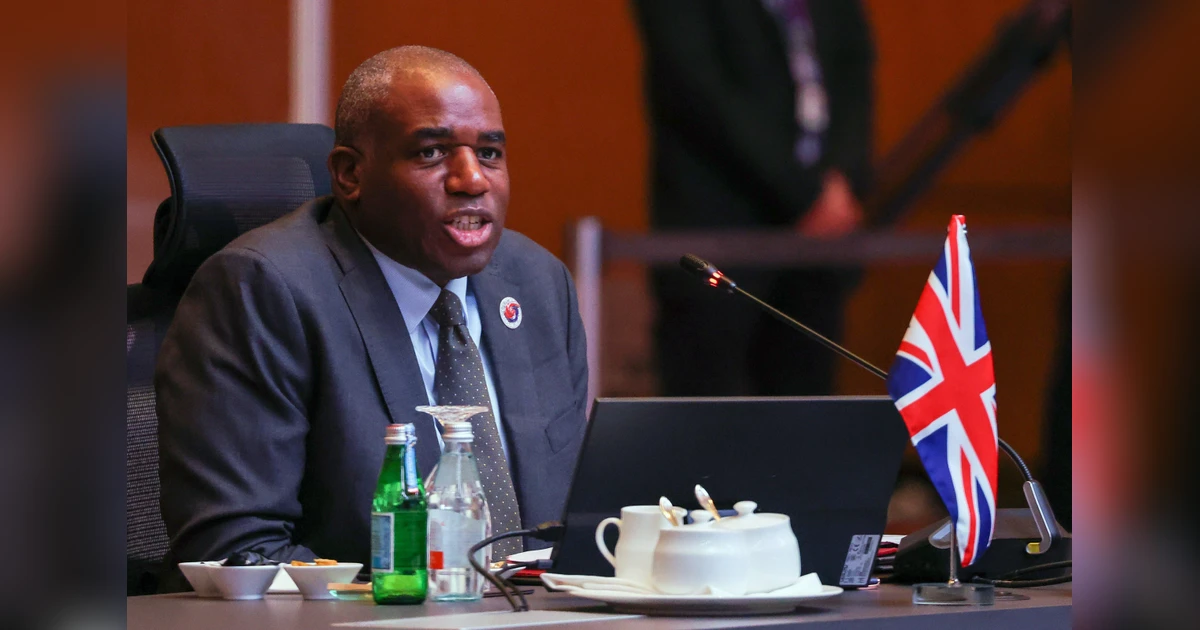
The UK delegation, led by Deputy Prime Minister David Lammy and AI Minister Kanishka Narayan, is keen to highlight how AI can improve everyday life in every corner of the world and make the case for AI as an engine of renewal that can help doctors diagnose faster, teachers personalise learning, councils deliver services in minutes and businesses create the next generation of good jobs.


“This summit is an important moment in determining how we can work together with our international partners to unlock the full benefits and potential of AI, while baking in robust and fair safety standards that protect us all,” said Lammy, in a pre-summit statement.


The Department for Science, Innovation and Technology (DSIT) said India and Britain were “natural tech partners”, with software giants like Infosys, Tata Consultancy Services (TCS) and Wipro expanding their operations across the UK.


“AI is the defining technology of our generation, and we’re determined to make sure it delivers for everyone,” said Narayan, the first Indian-origin MP from Wales.


“It can cut waiting times, transform public services, create new jobs and give hard-working communities a fresh start and that’s exactly the message we’re taking to the summit. It is central to our plans for delivering national renewal, but its benefits can’t and shouldn’t be reserved by the few,” he said.


The AI minister said the UK is “leading from the front, pushing a global vision for AI that helps people everywhere to learn more, earn more, and shape the future on their terms”.


“We are totally aligned in making sure that the people of Britain and the people of India get to not just look at AI being built by others but build AI and benefit from AI directly,” he said.


Besides Delhi, Narayan will also travel to Bengaluru to explore how India and the UK are working together to reap the benefits of breakthrough tech.


Both countries are investing tens of millions in cutting-edge research — from better batteries and next-generation telecoms for rural communities, to genomic medicine that could tackle rare diseases, the DSIT said.


India is also a vitally important market for British businesses generally, with UK firms generating more than 47.5 billion pounds in revenue from their business in India, it stated.


During the AI Impact Summit this week, the UK is expected to announce new support for an African Language Hub, enabling AI to work in 40 African languages with the aim of making the technology more inclusive and accessible for millions.


This will be one of three new initiatives being announced as part of the more than 100 million pounds AI for Development (AI4D) programme, created to ensure that developing countries benefit fully from the AI revolution.


The Asian AI4D Observatory will be geared towards supporting responsible AI innovation and governance across South and Southeast Asia, and the AI4D Compute Hub at the University of Cape Town will give African innovators the compute power they need to turn ideas into impact.


The AI Impact Summit in New Delhi has been described as the first international artificial intelligence gathering of its kind to be held in the Global South, anchored around three Sutras of people, planet and progress as India’s approach to cooperation in the field.


Source link

India placed third in global AI vibrancy index after US, China: Report

India placed third in global AI vibrancy index after US, China: Report


India ranks third globally in the Stanford Institute for Human-Centred Artificial Intelligence (HAI) list when it comes to global AI vibrancy, just after the US and China, according to a report.


The report by Hung Tran, a senior fellow at the Policy Centre for the New South, gives a weighted index score based on research and development (R&D), responsible AI, economy, talent, policy and governance, public opinion and infrastructure.


India’s total weighted index score is 21.59, significantly below that of China (36.95) and the US (78.6), but higher than countries such as the United Kingdom, Germany and Israel. Asia’s third-largest economy excelled in AI R&D and stood out for its AI talent, where it came in second after Singapore.


“It (India) has leveraged its strength in the IT services sector, in which the major corporate players have supported R&D efforts and have built data centres to promote the use of indigenous data. In particular, India has implemented policies to secure its sovereignty throughout the AI supply chain, including R&D, design, software and hardware development, and especially data,” the report said.


The report noted that India has been active in promoting open, interoperable and comprehensive domestic datasets, which are valuable for specific applications when it comes to regulatory guardrails. For example, MeitY launched AIKosha last year, which is a national depository of curated datasets and foundation models for use by start-ups and researchers.


“In short, India is an example of a balanced approach in protecting data privacy and regulating cross-border transfers, while developing interoperable and comprehensive domestic datasets, supporting AI-powered applications in various areas.”


Source link

AI Impact Summit 2026: Zepto, Swiggy to manage food at Bharat Mandapam

AI Impact Summit 2026: Zepto, Swiggy to manage food at Bharat Mandapam


As India prepares to host the biggest artificial intelligence (AI) summit this week, the organisers are laying out detailed logistics plans to manage requirements for snacks and meals.


Quick commerce platform Zepto will set up a dedicated dark store within the summit venue, while Swiggy will work closely with on-ground food kiosks to ensure seamless meal distribution for thousands of attendees.


The summit will be held from February 16 to 20 at Bharat Mandapam in New Delhi.


Both platforms, Zepto and Swiggy, have set up dedicated delivery points at the venue where attendees can collect their ordered items. Orders can be placed on the mobile applications and picked up from designated drop-off zones. The platforms will have dedicated delivery partners at the venue.


For delivery, the nearest pickup points can be chosen from the app, for instance, Hall 1, Ground Floor, or Hall 4, First Floor.


With an estimated 2.5 lakh registrations and participants expected from nearly 100 countries, the upcoming summit is set to be one of the largest gatherings on AI in the Global South.


The agenda is expected to span discussions on sovereign AI infrastructure, access to compute, AI safety, responsible deployment, public digital infrastructure, multilingual AI, and sectoral use cases across healthcare, agriculture, financial services, manufacturing and governance.


Source link

YouTube
Instagram
WhatsApp