Claude AI could worsen analyst groupthink in already volatile markets

Claude AI could worsen analyst groupthink in already volatile markets


By Parmy Olson


The past week of volatility showed how fickle and conformist financial markets are: One minute we’re in an artificial-intelligence bubble that’s about to burst, the next we’re witnessing AI disruption across multiple industries. The latter belief underpinned the latest $1 trillion rout, triggered by new legal and financial tools from AI firm Anthropic PBC. At least, that’s what the herd decided. Anthropic’s open-source legal plugin for Claude Cowork isn’t as effective as tools from legal AI specialists such as Harvey and Legora. Yet many investors saw it as an opportunity to rush to the exits on positions they were already nervous about.  


The irony is that whizzy financial AI tools like Anthropic’s could make that mob mentality worse.


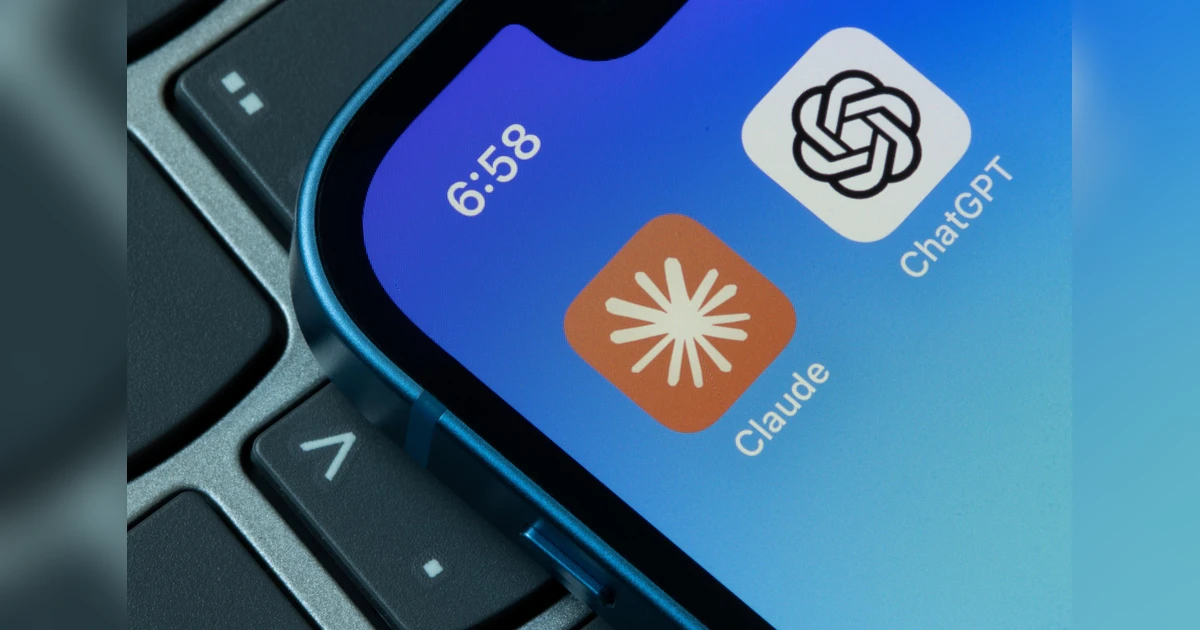
Anthropic said its new Claude Opus 4.6, unveiled on Thursday, can analyze company data, regulatory filings and market information and then generate detailed assessments that would typically take a person days to complete. That’s all well and good, but consider what would happen if a tool like Claude became as popular among analysts and investors as ChatGPT, which is now used weekly by 10 per cent of the global population. Such an ascendancy is plausible. Cloud computing is dominated by Amazon Inc., Microsoft Corp. and Alphabet Inc.’s Google, and the use of AI models is already confined to a small number of players: OpenAI’s ChatGPT and Google’s Gemini, with Anthropic’s Claude coming up swiftly from behind. 


Now imagine what happens when equity analysts — already well known for their corporate obsequiousness and pack mentality — are all listening to the same quarterly earnings report, and using the same one or two AI models to transcribe, analyze and suggest advice based on that call. If market participants are all drawing from the same models trained on largely the same historic data, it’s probable they’ll not only miss the black swan events that have never happened before, but reach similar conclusions and investment strategies. 


“It should make good analysts more productive, but it’s not going to replace the 50 analysts all vying to ‘congratulate management,’ ‘interpret’ the call, or end the conflict of interest that skew their ratings to nearly all ‘buys,’” says Richard Kramer, founder and managing director of London-based Arete Research Services LLP.


This is what Federal Reserve Governor Michael Barr meant last year when he warned that the ubiquitous use of generative AI tools by investors “could lead to herding behavior and the concentration of risk, potentially amplifying market volatility.”


Anthropic says its new model’s so-called context window has expanded to 1 million tokens from 200,000, meaning it can digest thousands of pages of financial documents in one pass, which is genuinely impressive. But it could also accelerate the concentration problem. Claude, just like ChatGPT, is still a probabilistic text generator designed to predict the most likely next word, not the most original one. This means its outputs tend to echo what’s already familiar. So when one model becomes the obvious choice for complex financial research, an increasing number of firms will find their strategies resembling each other even more. 


We’re already seeing a similar phenomenon with content on the Internet, in the form of a linguistic and cultural flattening. When Tim Berners-Lee invented the World Wide Web in 1989, he envisioned an “anarchic jumble” of wild ideas. That’s precisely what first emerged: gloriously weird pockets of content that were all discoverable, from a teenager’s Buffy fan page on GeoCities to Usenet groups debating Tolkien linguistics, hamster care or stock picks. But the rise of large online platforms and search engine optimization wrung out much of that initial creativity; generative AI tools look set to homogenize it further as more people use ChatGPT to write their LinkedIn posts, blogs, marketing material and more. 


A 2024 study in Science Advances found that while stories co-authored with GPT-4 were more polished, they bore “uncanny resemblances to one another, lacking the unpredictable edge that human-only stories often contain.” That should come as no surprise when models are picking the most statistically familiar token. 


A healthy financial market is one underpinned by a diversity of opinions. That helps keep pricing honest and panic at bay. So it’s ironic that in adopting AI to steal a march on their rivals, market participants could now make themselves even more likely to follow the crowd, developing a kind of market monoculture. That could set them up to inflate the same bubbles and miss the same systemic vulnerabilities —  at least more than they already do. So much for that competitive edge.   
(Disclaimer: This is a Bloomberg Opinion piece, and these are the personal opinions of the writer. They do not reflect the views of www.business-standard.com or the Business Standard newspaper)


Source link

OpenAI's first consumer device could be AI-powered earbuds: What to expect

OpenAI's first consumer device could be AI-powered earbuds: What to expect


OpenAI is reportedly preparing to launch AI-powered earbuds as it plans to move into consumer hardware space. According to a report by Mint, the company’s first device is expected to be a simpler product rather than a fully standalone AI gadget. The company is said to be planning an announcement later this year, while shipments are reportedly scheduled for early 2027. Meanwhile, the more advanced, smartphone-like AI device is reportedly facing delays due to component shortages and rising costs, prompting OpenAI to prioritise a simpler product first.


OpenAI’s AI-powered earbuds: What to expect


The earbuds are said to be referenced in a patent filing in China that has been linked to OpenAI.


OpenAI’s first consumer device is being developed in collaboration with former Apple design chief Jony Ive, and the project moved into the prototyping stage in 2025. Ive has previously said that the device could arrive in “less than” two years. OpenAI CEO Sam Altman has also said that the latest prototype feels “simple and beautiful,” after earlier versions failed to feel intuitive or easy to use. Both have indicated that the overall design direction has been finalised.


OpenAI is reportedly considering launching a basic pair of earbuds before moving on to a more advanced AI device. This approach could help the company enter the hardware market with lower costs and fewer technical challenges.


As per the report, the earbuds would mainly serve as a hands-free interface to OpenAI’s AI models. Rather than acting as a full computing device, the earbuds could allow users to interact with AI through voice commands, offering real-time assistance and responses while on the move.


By focusing on audio and voice interaction, OpenAI could position the earbuds as a practical extension of its existing software capabilities. This approach would reportedly help the company understand how users engage with AI-powered hardware in daily life before moving on to more complex products.


While OpenAI has not officially confirmed these plans, the report by The Mint suggested that the earbuds could act as a stepping stone toward more advanced AI hardware in the future. For now, the company appears to be taking a measured approach as it prepares for its first product for consumer devices.


The report aligns with earlier coverage, which suggested that OpenAI’s first product would focus more on voice and ambient interaction rather than traditional screens. The device is not expected to replace smartphones or laptops, but instead work alongside them by offering contextual assistance throughout the day, indicating that OpenAI may begin its hardware push with audio-focused wearables such as AI-powered earbuds.


Advanced device delayed


As reported, a more complex AI device, similar to a smartphone and capable of processing data on its own, could face delays. This is reportedly due to a shortage of high-bandwidth memory (HBM), which has made components more expensive and increased production costs. Because of this, OpenAI may choose to release a simpler device in 2026 and push the launch of a more advanced version to a later date, once supply issues ease and manufacturing becomes cheaper. If this turns out to be true, it would reportedly follow a common industry approach, where companies introduce entry-level products first before moving on to more advanced hardware.


Source link

Affordable 5G fuels India smartphone market despite 1% dip in 2025: Report

Affordable 5G fuels India smartphone market despite 1% dip in 2025: Report


Indian smartphone market underwent structural change in calendar year 2025 as demand for affordable 5G phones skyrocketed and it sustained for premium models even as overall shipment declined by 1 per cent year-on-year (YoY), noted CyberMedia Research’s (CMR) India in its Mobile Handset Market Review for CY2025.


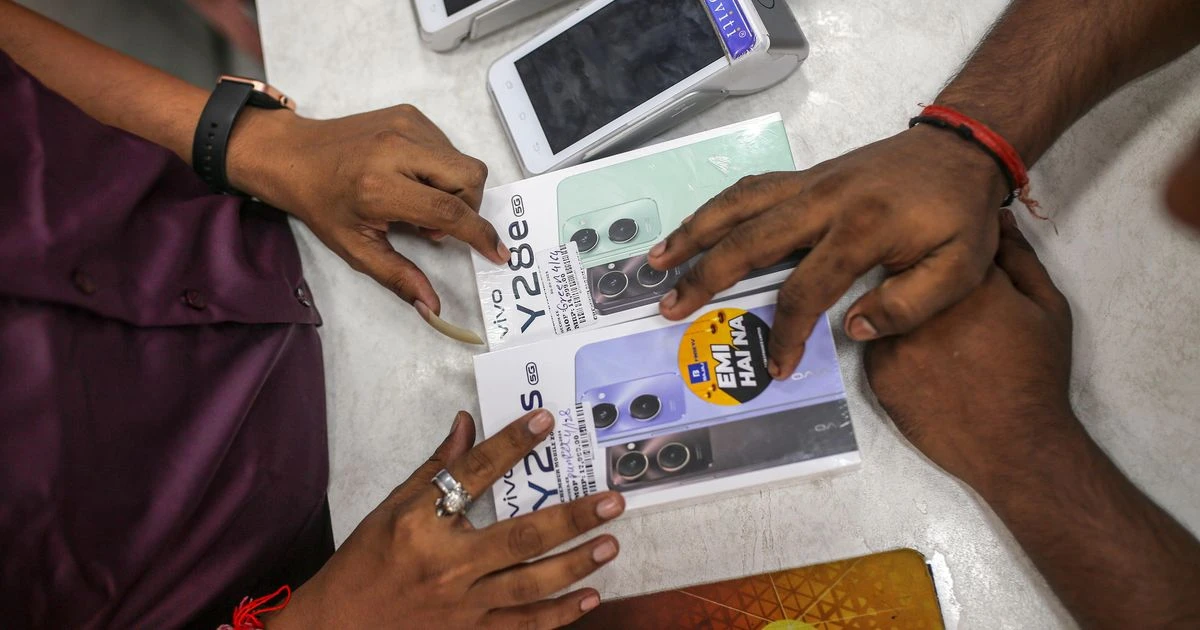
According to the report, shipments for budget 5G smartphones in the Rs 6,000–8,000 price bracket surged over 1,900 per cent compared to 2024, contributing significantly to the overall 88 per cent share of total 5G smartphone shipments in the country – up 12 percentage points from 2024. The shift underscores the democratisation of 5G, likely driven by aggressive pricing, improved availability of entry-level 5G chipsets and expanding nationwide 5G network coverage.


“CY2025 was a year of recalibration rather than contraction for India’s smartphone market. While overall volumes softened marginally, the fundamentals remained strong. The rapid scaling of affordable 5G, resilient premium demand, and the rise of challenger brands point to a market that is evolving structurally, not weakening,” said Menka Kumari, senior analyst – Industry Intelligence Group (IIG), CMR.


Which brands led India’s smartphone market in 2025


Vivo led the overall market in 2025 with a 19 per cent share, followed by Samsung with a 16 per cent share. OPPO and Xiaomi each held 13 per cent share, while Realme accounted for 10 per cent, according to the report.


Vivo and OPPO recorded growth in shipments in 2025 among the top five brands, while Samsung, Xiaomi and Realme saw declines. Xiaomi emerged as the worst performer among the top brands, with shipments falling 27 per cent, even after including POCO volumes, the report said. 
ALSO READ: iPhone 16 tops the charts in major reset of India smartphone market


Apple growth despite missing top five


Apple did not feature in CMR’s top five brands for 2025, but the report highlighted a strong 25 per cent growth compared with 2024, bringing its market share close to 9 per cent in India. According to the report, Apple’s iPhone 16 and iPhone 15 series together accounted for 81 per cent of the company’s shipments in CY2025.


Fastest-growing smartphone brands in 2025

The report pointed to a 32 per cent year-on-year decline in OnePlus shipments, while emerging brands such as iQOO and CMF by Nothing posted strong growth of 81 per cent and 78 per cent, respectively, in CY2025. 
“2025 marked a structural inflection point for India’s smartphone market. Explosive growth in affordable 5G and resilient premium demand reshaped the competitive landscape, with brands such as Motorola, iQOO and CMF emerging as clear growth outperformers. These structural tailwinds decisively outweighed the marginal 1 per cent decline in overall market volumes,” said Prabhu Ram, vice-president, Industry Research Group, CMR. 


Lava records growth in flat market


Home-grown brand Lava also recorded 8 per cent year-on-year growth in CY2025, standing out as one of the few brands to expand in an otherwise flat market. The growth was driven by steady traction in the value and affordable smartphone segments, the report noted.


Source link

Sony may launch WF-1000XM6 flagship earbuds on Feb 12: What to expect

Sony may launch WF-1000XM6 flagship earbuds on Feb 12: What to expect


Sony has released a teaser video for its next set of wireless earbuds, confirming that the company will unveil its “next generation of earbuds” on February 12. While Sony has not named the product in the teaser, a report by 9To5Google said that the upcoming launch is expected to be the company’s next flagship true wireless earbuds, likely the WF-1000XM6, which would succeed the WF-1000XM5 that debuted in 2023.


The teaser video, posted on Sony’s official YouTube channel, offers only a brief glimpse of the product. It shows the silhouette of an open charging case with one earbud visible inside, giving a partial look at the new design. The video ends by confirming the launch date and time, but does not reveal any specifications or features.


Sony WF-1000XM6: What to expect


The Sony WF-1000XM6 earbuds are expected to bring a revised design for both the buds and the charging case. The earbuds will likely carry an IPX4 rating for water resistance and are expected to be available in at least two colours, including black and silver. 


According to a report by NotebookCheck, specifications of the Sony WF-1000XM6 have also appeared online. The new model is expected to use a QN3e processor and will likely work alongside eight adaptive microphones, up from six on the WF-1000XM5, with the aim of improving noise cancellation performance.


The audio hardware is also expected to be updated, with a new driver, an improved DAC, and a better amplifier. The earbuds are said to support Hi-Res Wireless audio via LDAC, along with DSEE Extreme upscaling and a 10-band equaliser. Other features could include 360 Reality Audio with head tracking, adaptive sound control, and multiple ambient sound modes.


For calls, the earbuds are said to use a combination of beamforming microphones and bone conduction sensors, along with wind noise reduction and AI-based processing. Battery life is expected to be rated at up to eight hours on the earbuds, with an additional 16 hours provided by the charging case. The case is also said to support fast charging and wireless charging.


Source link

YouTube introduces new features across web, mobile, TVs, and YouTube Music

YouTube introduces new features across web, mobile, TVs, and YouTube Music


YouTube introduces new features across web, mobile, TVs, and YouTube Music


YouTube is rolling out an array of updates that include features such as fine-tunable playback speed, allowing adjustments in increments of 0.05, improved browsing in landscape mode (coming later this year for iOS users), larger thumbnails, and bigger text. These updates have started to roll out across web, mobile, TVs, and YouTube Music. Here are the details:


Improved Miniplayer for multitasking


YouTube now allows users to browse on the mobile phone while watching a video with the new improved miniplayer. Users can resize and move the miniplayer within the YouTube mobile app.


Collaborative YouTube playlists


Users can create playlists with friends and family by inviting others to collaborate using a specific link. Soon, users will also be able to use a QR code to add to a playlist on TV.


YouTube is introducing a new customisation tool for playlists, enabling users to design their own custom thumbnails using their photos or by creating new ones with generative AI. To create a custom thumbnail, users need to select an image and personalise it with text, filters, or stickers. To generate an AI thumbnail, users can tap on “Create with AI,” select a theme, and choose from the creations generated by AI.


Users will also be able to vote on videos in playlists, allowing creators to let their audience rank their favourite content.


Sleep timer


YouTube is introducing a sleep timer, enabling users to set a timer that automatically pauses videos after a specified time.


Badges


YouTube is adding badges to the YouTube and YouTube Music apps on mobile devices. Initially, there will be a few badges that can be earned by achieving YouTube milestones, such as being a top listener of an artist. The badges will start rolling out in the upcoming weeks and can be found in the “You” tab.


Upgraded YouTube on TV


The visual updates being launched on web and mobile will also be available in the YouTube app on TV. The new user interface provides continued interaction with the content while watching Shorts.

First Published: Oct 16 2024 | 5:21 PM IST


Source link

YouTube
Instagram
WhatsApp