Realme GT 6 smartphone, Buds Air 6 Pro wireless earbuds launched: Details

Realme GT 6 smartphone, Buds Air 6 Pro wireless earbuds launched: Details


Realme has launched the GT 6 smartphone in India. Powered by Qualcomm Snapdragon 8s Gen 3, the performance-focused smartphone is offered with a suite of artificial intelligence powered features related to imaging. Alongside the smartphone, the Chinese smartphone brand also launched the Buds Air6 Pro wireless earbuds. Here are the details:


Realme GT 6: Price and variants


  • 16GB RAM + 512GB storage: Rs 44,999

  • 12GB RAM + 256GB storage: Rs 42,999

  • 8GB RAM + 256GB storage: Rs 40,999


Realme GT 6: Availability and offers


The Realme GT 6 smartphone is now available for pre-orders till June 24 on Realme’s official website, e-commerce platform Flipkart, and at select offline stores, First sale begins from June 25.


As for the introductory offer, customers can avail a discount of Rs 4,000 on ICICI, HDFC and SBI bank cards on the 8GB+256GB and 16GB+512GB variants. On the 12GB+256GB variant, customers can avail a bank discount of Rs 3,000.


Realme is offering a bonus of Rs 1,000 on top of the exchange value in trade-in deals. There is also an option for an equated monthly instalment plan (EMI) up to 12 months.


Bank offers and exchange bonus offers are only applicable on online purchases. However, customers getting their smartphones from mainline stores will still get six-month screen damage protection and Realme Buds Air 5 at no additional cost.


Realme GT 6: AI features

The Realme GT6 smartphone packs AI-powered tools for camera, media editing and productivity. These include AI night vision mode for enhancing low-light video recording capability. The AI smart removal feature allows users to select “passersby,” “clutter” in images that are then automatically removed while the empty space in the background is filled using generative AI. Another notable inclusion is the AI Smart Loop feature that can identify the content selected and dragged by the user on the screen, allowing for quick sharing to third-party apps.


Realme GT 6: Specifications


  • Display: 6.78-inch AMOLED, FHD+, 120Hz refresh rate, 6000nits peak brightness, HDR10+, Dolby Vision

  • Processor: Qualcomm Snapdragon 8s Gen 3

  • RAM: 16GB / 12GB/ 8GB (LPDDR5x)

  • Storage: 512GB / 256GB (UFS 4.0)

  • Rear Camera: 50MP Primary (Sony LYT-808) (OIS) + 50MP ultra-wide (Sony IMX355) + 50MP telephoto camera with 2x zoom (Samsung JN5)

  • Front camera: 32MP

  • Battery: 5500mAh

  • Charging: 120W SUPERVOOC wired

  • OS: Android 14 based realmeUI 5.0


Realme Buds Air 6 Pro: Price and availability


Price: Rs 4,999


The wireless earbuds are set to go on sale starting June 27 on the company’s official website, e-commerce platform Flipkart and select offline stores. As for the introductory offer, the company is offering a discount of Rs 500 for a limited time period. Customers can also avail a discount of Rs 300 on select bank cards.


Realme Buds Air6 Pro: Details


The Realme Buds Air 6 Pro features active noise cancelling (ANC) technology up to 50dB. The wireless earbuds feature a 6-mic set-up and dual drivers for improved audio quality. The Buds Air 6 pro features an 11mm main driver for bass production alongside a 6mm micro-planar tweeter. The buds also offer support for high-resolution Bluetooth codecs such as Lossless Digital Audio Codec (LADC) that offers audio experience along with 360-degree spatial audio effect. As for the battery, the company claims up to 40 hours of playback time.

First Published: Jun 20 2024 | 3:28 PM IST


Source link

Snapchat introduces Gen-AI advancements for enhanced AR experience: Details

Snapchat introduces Gen-AI advancements for enhanced AR experience: Details


Snap-owned social media platform Snapchat has introduced a generative artificial intelligence suite, which is part of the new Lens Studio 5.0 release. This on-device AI model will power the augmented reality (AR) experience for users. Snapchat said it is previewing Snap’s real-time image model that “can instantly bring your imagination to life in AR”. Using AI, Snapchat will allow users to type in an idea for a transformation and generate vivid AR experiences in real time.


With the new AI features, Snapchat said that users will be able to change surroundings in their videos. The update will ensure that the changes align with the light and colours in the video and offer a seamless experience, said Snapchat. The new on-device AI model will utilise the text prompt by the user to generate a custom lens.


Snapchat is also launching a suite of AI tools to let creators enhance the AR experience. The recently announced update to Snapchat’s developer platform, Lens Studio includes features like new face effects and Immersive ML. New face effects lets creators change the user’s face based on written prompt or uploaded image whereas Immersive ML transforms face, body and surrounding of the user in real time. The update also offers an AI assistant to help developers build 3D models.


Previously, Snapchat users could only do basic addition to the video but with this new update, the special effects added to the image are expected to appear more realistic.


Soon users of Snapchat will also be able to generate 3D assets using text or image prompts. For example, a 3D character head will imitate expressions of the user and also create face masks and textures.


Access to the new model will be available in the upcoming months for users and late in the year for creators.


Earlier, Snapchat launched ChatGPT-powered AI chatbot and allows subscribers to share AI-generated snaps with friends.

First Published: Jun 20 2024 | 2:07 PM IST


Source link

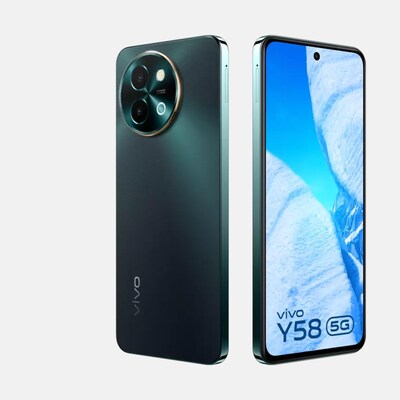
Vivo Y58 5G smartphone with 6000mAh battery launched in India: Price, specs

Vivo Y58 5G smartphone with 6000mAh battery launched in India: Price, specs


Expanding its Y-series portfolio in India, Chinese smartphone maker Vivo on June 20 launched the Vivo Y58 5G. The mid-range smartphone boasts a segment leading 6,000 mAh battery. Moreover, it sports an artificial intelligence enhanced camera system. The smartphone is offered in Himalayan Blue and Sundarbans Green colours. Check the details below:


Vivo Y58 5G: Price and variants


Priced at Rs 19,499, the Vivo Y58 5G smartphone comes with 8GB RAM and 128GB on-board storage.


Vivo Y58 5G: Availability and offers


The Vivo Y58 5G smartphone is now available for purchase in India through the company’s e-store, e-commerce platform Flipkart, and select retail outlets. As for the introductory offer, customers can avail a cashback of Rs 1,500 from select bank cards, including those from SBI, Yes Bank, Bank of Baroda, IDFC First, and IndusInd bank.


Vivo Y58 5G: Details


The Vivo Y58 5G smartphone sports a 6.72-inch FHD LCD display of 120Hz refresh rate and a peak brightness level of 1024 nits. Additionally, the display is certified by TUV Rheinland for low blue light production. In the imaging department, the smartphone boasts a 50MP primary camera and a 2MP bokeh camera on the rear. On the front, the smartphone features an 8MP camera sensor. Vivo said the smartphone supports AI imaging features such as “AI Low Light”, which it said improves shooting capability in ambient lighting. The smartphone is powered by a 6000mAh battery and supports 44W fast wired charging.


Vivo Y58 5G: Specifications


  • Display: 6.72-inch FHD LCD, 120Hz refresh rate, 1024nits peak brightness

  • Processor: Qualcomm Snapdragon 4 Gen 2

  • RAM: 8GB

  • Storage: 128GB

  • Rear camera: 50MP + 2MP

  • Front camera: 8MP

  • Battery: 6000mAh

  • Charging: 44W wired

  • Protection: IP64

First Published: Jun 20 2024 | 1:11 PM IST


Source link

Why does the rise of Nvidia and AI remind people of the dot-com boom?

Why does the rise of Nvidia and AI remind people of the dot-com boom?


Jensen Huang, Founder, President and CEO, NVIDIA | Image: NVIDIA

Nvidia surged to the forefront of the tech world, becoming the most valuable publicly listed company on Tuesday, driven by the escalating demand for its artificial intelligence (AI) chips. This landmark achievement is reminiscent of the tech boom at the turn of the century, highlighting the transformative potential of AI, similar to the World Wide Web over two decades earlier.


Nvidia: Background on tech company


Nvidia Corporation is an American semiconductor company based in Santa Clara, California. Founded in 1993, it has solidified its position as a dominant player in the semiconductor industry, commanding nearly 80 per cent of the global market share in graphics processing unit (GPU) semiconductor chips as of 2023.


Nvidia’s GPUs have been pivotal in advancing AI and machine learning. Unlike general-purpose central processing units (CPUs), GPUs are optimised to accelerate graphics-intensive applications such as video games, editing, and 3D rendering, as well as AI and machine learning (ML) workloads.


The company’s products have become essential tools in the development of sophisticated AI systems.


Who is the founder of Nvidia?


Jen-Hsun ‘Jensen’ Huang, co-founder, president, and CEO of Nvidia, has been instrumental in the company’s rise to prominence. Born in Tainan, Taiwan, on February 17, 1963, Huang moved to Thailand at a young age before relocating to the United States. He completed his undergraduate degree in electrical engineering at Oregon State University in 1984 and earned a master’s degree in electrical engineering from Stanford University in 1992.


In 1993, at the age of 30, Huang co-founded Nvidia. Under his leadership, the company has not only pioneered GPU technology but also expanded into AI and other high-tech areas.


As of June 2024, Forbes estimated Huang’s net worth at $118 billion, making him the 11th richest person in the world.


Nvidia’s role in the AI revolution


Nvidia’s AI chips have become a pivotal tool in developing advanced AI systems. These systems are capable of generating coherent text, images, and audio with minimal input, driving investor confidence.


The last time a major computing infrastructure provider held the top spot was in March 2000, when Cisco was the most valuable US company during the dot-com boom.


Nvidia market valuation and investor excitement


Nvidia’s stock closed at $135.58 on Tuesday on Nasdaq (one of three US stock market indices), pushing its market valuation to $3.335 trillion, just surpassing Microsoft’s $3.317 trillion. This marks a significant milestone as Nvidia has leapfrogged from being the fifth largest by market valuation a year ago and tenth two years ago.


Its rapid ascent to the top highlights investors’ excitement about AI’s potential to revolutionise productivity and the global economy.


Reasons behind Nvidia’s rise


The scramble among tech giants like Microsoft, Meta, and Amazon to lead in AI development has led to a surge in demand for Nvidia’s chips, propelling the company’s revenue to unprecedented levels.


In its latest quarter, Nvidia reported $26 billion in revenue, more than triple the same period a year ago. The company’s stock has more than tripled in value over the past year, and its market value hit $3 trillion just months after reaching the $2 trillion mark.


AI vs dot-com boom


The enthusiasm around AI today mirrors the late 1990s and early 2000s internet boom. According to a report by the Wall Street Journal, John Chambers, former CEO of Cisco, noted that while there are similarities, the dynamics of the AI revolution are distinct. The market opportunity for AI is seen as combining the scale of the internet and cloud computing, with a faster pace of change and a different stage of value creation.


What was the dot-com boom?


The dot-com boom was ignited by the 1993 release of Mosaic, one of the first widely used web browsers. This, along with subsequent web browsers, made the World Wide Web accessible to the general public, significantly boosting internet usage. The reduction of the digital divide, advancements in connectivity, and increased computer education all contributed to the growing number of internet users.


Between 1995 and its peak in early 2000, investments in the Nasdaq composite stock market index soared by 800 per cent. This period was marked by exuberant investment in tech companies, particularly those with “.com” in their names, reflecting a widespread belief in the transformative power of the Internet. However, this speculative bubble was unsustainable.


How did the dot-com bubble burst?


In 2000, the bubble burst. By October 2002, the Nasdaq had plummeted by 78 per cent from its peak, erasing all the gains made during the boom. The crash resulted in the failure and closure of many online shopping and communication companies that had thrived on speculative investments without achieving profitability.


Larger, more established companies like Amazon and Cisco Systems also suffered significant losses, with Cisco losing 80 per cent of its stock value.


Despite these setbacks, some companies managed to survive and even thrive in the aftermath. Online retailers such as eBay and Amazon eventually became highly profitable, demonstrating the long-term potential of the Internet economy despite the short-term turmoil.


Future prospects of Nvidia AI technology


CEO Jensen Huang has positioned the company as a key player in what he calls the new industrial revolution powered by AI. Nvidia’s innovative “AI factories” are designed to process data and produce intelligence, underpinning the future of AI-driven technologies. Despite concerns about potential market bubbles and competitive pressures, Huang remains confident, recently announcing new AI chip developments set for 2026.


Market dynamics and investor caution


Significant investments in AI chips contrast sharply with the relatively modest sales figures for generative AI startups, suggesting potential market imbalances. Experts warn that the current enthusiasm bears the hallmarks of a bubble, which could lead to significant market corrections in the future, one report by Business Insider noted.


Lessons and risks


While Nvidia’s rise has been meteoric, investors should remain cautious about the sustainability of the AI boom.


The dot-com era serves as a reminder that while technological revolutions bring transformative change, not all companies driving these changes will succeed.


Many internet companies from the dot-com boom went bankrupt, and a similar fate could befall some AI companies.


Recent examples like Byju’s in the edtech industry and FTX in the cryptocurrency market are examples of the volatility and risks associated with high valuations based on emerging technologies.


Source link

ASUS ROG Zephyrus G14 (2024) gaming laptop launched in India: Check details

ASUS ROG Zephyrus G14 (2024) gaming laptop launched in India: Check details


ASUS ROG Zephyrus G14 (2024)

ASUS has launched in India the ROG Zephyrus G14. The gaming laptop from Taiwanese PC maker is powered by AMD Ryzen 9 8945HS processor, which features a dedicated Neural Processing Unit (NPU) for handling artificial intelligence workloads. Additionally, the ROG Zephyrus G14 PC is offered with up to NVIDIA GeForce RTX 4060 graphic processing unit (GPU) for gaming as well as media editing.


ASUS ROG Zephyrus G14: Price and availability


Priced at Rs 1,74,990 onwards, the ASUS ROG Zephyrus G14 is available online on ASUS e-shop and e-commerce platforms Amazon India and Flipkart. The gaming laptop is also available at ASUS exclusive stores, ROG stores and select multi-brand retail outlets such as Reliance Digital, Croma, and Vijay Sales.


ASUS ROG Zephyrus G14: Details


ASUS said that ROG Zephyrus G14 makes its way into the era of artificial intelligence leveraging the AMD Ryzen 9 8945HS processor. The processor comes with built-in AMD Ryzen AI (NPU) that is capable of executing up to 39 trillion operations per second (TOPs) for improved AI performance. This is in addition to the 31 TOPS from the CPU and its integrated Radeon 890M graphics. ASUS said that leveraging these capabilities, the new Zephyrus G14 stands ready for running AI-enabled applications, including Windows Copilot tools.


The ROG Zephyrus G14 sports an OLED panel in 16:10 aspect ratio that offers 3k resolution and 120Hz refresh rate. Additionally, ASUS said that the display is VESA DisplayHDR True Black 500 certified for improved high dynamic range. The laptop is offered with 16GB of LPDDR5X RAM and is powered by a 73Wh battery.


ASUS ROG Zephyrus G14: Specifications


  • Processor: AMD Ryzen 9 8945HS

  • GPU: up to NVIDIA GeForce RTX 4060

  • Display: 14-inch ROG Nebula Display, OLED, 3K resolution, 120Hz refresh rate, VESA DisplayHDR True Black 500, Pantone Validated, Dolby Vision

  • RAM: 16 GB (8GBx2) LPDDR5X 6400 on-board

  • Storage: 1TB PCIe 4.0 NVMe M.2 SSD

  • Audio: Stereo speaker, Dolby Atmos, Two-way AI Noise cancelling

  • Connectivity: Wi-Fi 6E, Bluetooth 5.3

  • Ports: 1x Type C USB 4 support DisplayPort / power delivery, 1x USB 3.2 Gen 2 Type-C support DisplayPort, 2x USB 3.2 Gen 2 Type-A, 1x card reader (microSD) (UHS-II)

  • Battery: 73Wh

First Published: Jun 20 2024 | 12:14 PM IST


Source link

YouTube Music tests 'Ask for Music' AI feature: What is it and how it works

YouTube Music tests 'Ask for Music' AI feature: What is it and how it works


YouTube Music Photo: Shutterstock

YouTube Music is testing an artificial intelligence-powered feature called “Ask for Music”, which will allow users to search for music through verbal prompts and voice commands. The user could also search by describing the music videos or asking for similar music to a song or from an artist. Compared to the existing search by voice command, the AI-powered feature will make search more conversational in nature. Moreover, it is anticipated that the new AI feature could replace the voice search feature currently in use.


References to this new feature were spotted in the YouTube Music app for Android (version 7.06.53) by online consumer technology news publication Android Authority. The code accessed by Android Authority also has a disclaimer stating that AI generated responses are experimental.


This feature could be an addition to AI-generated playlist cover, the only AI feature currently available on YouTube Music. Google has been trying to incorporate natural language support in its products and this also appears to be a step in that direction.


The feature has not been officially announced and there is no certainty about when it would be introduced. Users might be able to use the features in the coming days.


The YouTube Music app might also appear with new launch animation in the upcoming days just like the YouTube app.


Earlier, YouTube Music received a new feature that lets you find a song even if you do not remember the lyrics or the name. Called “hum to search” the feature is now rolling out in staggered manner and would soon be available to everyone on Android app. With this feature, Google’s audio streaming platform allows users to search songs by humming, whistling or singing the tune. Moreover, you can play a recorded audio of the song to let the app identify it.

First Published: Jun 20 2024 | 11:34 AM IST


Source link

YouTube
Instagram
WhatsApp




