AI would be the game-changer for PC segment: HP's Ipsita Dasgupta

AI would be the game-changer for PC segment: HP's Ipsita Dasgupta


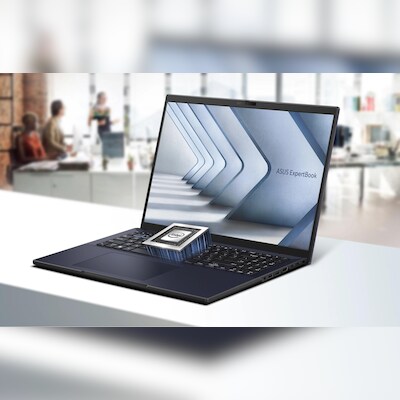
At a time when India’s personal computer (PC) market has begun to show signs of recovery after a year of sluggish demand and declining shipments, global PC maker HP believes that artificial intelligence could well be the game changer for this segment.


The recently appointed managing director and senior vice president of HP India, Ipsita Dasgupta feels that AI would be a “game changer” in creating more consumer demand.


“As AI becomes a significant part of everything we do, the AI-enhanced PC plays an enormous role in what is going to be the most transformational thing that’s happened since telephony,” Dasgupta told Business Standard.


She added that the opportunity for growth in India is massive, given the low PC penetration rate of around 20 per cent. “We believe, in the next five years, the total addressable market (TAM) will double,” she said.


HP, on Wednesday, announced the launch of its AI-enhanced OMEN Transcend 14 laptop series in India, crafted for gamers who indulge in both playing and creating content.


The company’s next phase of growth is expected to come from segments like education, and SMBs.


“There was softness in the market last year, and much of it was in the consumer segment… The opportunity, when there is softness, is to think of the future. And there is no question that the future is going to grow,” said Dasgupta.


HP is also looking to expand into tier 3 and beyond regions. To cater to consumers in smaller cities, the company has been ramping up its offline retail presence. It currently has over 770 exclusive HP World stores, and around 4,000 retail outlets in 425 cities. Of the 770 exclusive HP World stores, 100 were added in 2023.


India’s PC market, which includes desktops, notebooks, and workstations, declined 6.6 per cent year-on-year to 13.9 million shipments in the calendar year 2023, according to data from the International Data Corporation (IDC).


Shipments across both commercial and consumer segments saw a sharp decline primarily due to slowing demand, low market sentiment and reduced procurement by enterprises and SMEs.


HP, which has maintained its top spot in the PC market since 2016, led the market with a share of 31.5 per cent last year, with a strong showing in both the consumer and commercial segments.


The company has also witnessed a strong start to the new year, Dasgupta added.


“We saw quite a bit of pickup in the first quarter in the government segment. But this will go down significantly as the elections are coming up. We have, however, anticipated that and prepared for it,” she said.


The PC market rebounded in the second half of last year, with 12.9 per cent YoY growth after a weak first half. However, the decision on import regulations, improving market sentiment, and an aggressive push from vendors ensured a market recovery in the second half of 2023, according to analysts.


HP is also among many other PC makers vying to expand its manufacturing footprint in India via the IT Hardware PLI 2.0. The company is expected to begin local production under the PLI mid-next year. 

First Published: Apr 03 2024 | 8:41 PM IST


Source link

Generative AI emerges as strategic focus for tech services companies

Generative AI emerges as strategic focus for tech services companies


Nitin Bhatt, Technology Sector Leader, EY India


Generative Artificial Intelligence (GenAI) has fast become a top strategic priority for technology services companies. According to a recent EY study, 55 per cent of Indian tech-services companies’ CXOs report that GenAI will have a high impact on their businesses; 15 per cent state that the implications are existential. While executives believe that the technology provides new opportunities for revenue growth, cost reduction and productivity improvement, only a third of the respondents rate their organisation’s readiness to benefit from GenAI as “high.”


Adoption challenges include unclear use cases, converting pilot projects into production-grade engagements, and unwillingness of many customers to sign up given concerns around accuracy, misinformation, bias, security and privacy. This has led some leading experts to suggest that GenAI’s potential may have been overhyped and may soon push stakeholders into a trough of disillusionment.

This assertion, however, is unwarranted. Like previous disruptive technologies, GenAI will realise its true potential only through experimentation and iteration. However, even as the technology evolves and matures, tech-services companies can focus on key opportunity areas that will serve as building blocks to harness the long-term value of GenAI.


Data governance – Good governance enhances data usability, reliability, security and regulatory compliance. It also focuses on privacy protection, given that personally identifiable information and intellectual property can find their way into large language models (LLMs) through training data or through text generated from user inputs or prompts. Well-governed training data enables repeatability, explainability and greater value-extraction from GenAI use cases as well. Unfortunately, less than 20 per cent of executives trust their enterprise data, and less than 10 per cent of companies have the data and cloud maturity required to deploy AI at scale. These present key opportunities for technology services companies.

Specialised models – Organisations seeking to leverage GenAI for addressing sector-specific challenges are evaluating the costs and benefits of open-source models trained and fine-tuned on their internal datasets. They often need help in building private LLMs which offer contextual relevance, or in building small language models that cost less and produce comparable quality content for narrowly defined bespoke solutions. For example, a tech services provider is assisting a global bank in leveraging GenAI for fraud prevention by early detection of deepfakes in the know-your-customer process. In addition, some tech companies are building proprietary models trained on domain-specific data residing in their knowledge repositories. They are also engaging in discussions to create Large Action Models that transform LLMs into actionable tools capable of completing tasks, including handling variations, without human intervention. These and other IP-led solutions, accelerators and assets can be monetised by the tech companies.


Delivery productivity – GenAI can significantly accelerate the software development life cycle, especially across the development, testing and deployment phases. Early pilots suggest that the value generated can be significant: 20-50 per cent for application development and support, 20-30 per cent for infrastructure managed services and 40-50 per cent for application modernisation and cloud migration. In addition to helping organisations do more with less, GenAI can amplify human potential by freeing up time for creativity and innovation.


Customer experience – Despite the proliferation of AI-powered chatbots that work alongside human agents, many contact centres struggle to improve customer satisfaction scores. High attrition rates impede sustainable performance improvements. GenAI can offer a better self-service experience through the LLMs’ advanced multi-modal classification and summarisation capabilities. This can be a game-changer for personalised customer interactions, knowledge management and content creation. Consider the case of a GenAI-based business process management (BPM) company in the US. It offers customer support which can have seamless phone interactions, lasting over thirty minutes, and sound like a real human. With the ability to remember contexts, it can perform tasks across hundreds of applications automatically, without any training or supervision. It is not surprising that BPM players are reinventing themselves on a war footing.


Analysts expect GenAI-related enterprise spends to grow exponentially over the next decade. Realising this opportunity would require technology services players to rapidly develop relevant market offerings, revisit delivery models and talent priorities, and ensure that risk management, ethics and trust are at the heart of all GenAI initiatives.


Nitin Bhatt is the Technology Sector Leader at EY.

Disclaimer: These are personal views of the writer. They do not necessarily reflect the opinion of www.business-standard.com or the Business Standard newspaper

First Published: Apr 03 2024 | 7:41 PM IST


Source link

OnePlus joins AI smartphone club, announces AI Eraser image editing feature

OnePlus joins AI smartphone club, announces AI Eraser image editing feature


Chinese smartphone maker OnePlus on April 3 announced “AI Eraser”, an image editing feature, for its smartphones. This feature, inspired by Google’s Magic Eraser, is designed to enhance the user experience in photo editing by allowing users to remove unwanted elements from images. OnePlus said the feature is powered by its proprietary large language model.


“Empowering users with advanced, practical technology is what we live for at OnePlus,” said Kinder Liu, President and COO of OnePlus. “We believe that the potential for generative AI on mobile devices is enormous, with the power to completely transform productivity and creativity. As OnePlus’ first feature based on generative AI technology, AI Eraser represents the first step in our vision to liberate user creativity through AI and revolutionize the future of photo editing, empowering users to create remarkable photos with just a few touches. This year, we plan to introduce more AI features, and we look forward to their upcoming availability.”


Starting in April, the AI Eraser will be rolled out gradually to OnePlus devices, including the OnePlus 12, OnePlus 12R, OnePlus 11, OnePlus Open, and OnePlus Nord CE 4.


OnePlus said the AI Eraser is the result of a substantial R&D investment that it has undertaken with a commitment to ensuring the accuracy and reliability of AI-generated content. According to OnePlus, the proprietary LLM behind the new feature has been trained on a vast dataset that allows it to comprehend complex scenes. Through this advanced visual understanding, AI Eraser can intelligently substitute unwanted objects with contextually appropriate elements that naturally elevate the photo’s appeal, empowering users with the ability to make high-quality photo edits anywhere and at any time.


OnePlus AI eraser sample (Image: OnePlus)


Beyond AI Eraser


OnePlus’s AI initiatives do not stop at photo editing. Earlier this year, the company introduced several AI-powered features for OnePlus 12 and OnePlus 11 smartphones. These features included AI Summarizer, Article Summaries, and AI GC Remover. Additionally, OnePlus has developed Breeno Touch, which scans the screen content and suggests related services based on the user’s search. All these features, however, remain exclusive to China only. For a global audience, AI Eraser is the first AI-powered feature that OnePlus introduced.


Future of OnePlus AI


OnePlus’s general manager of AI products, Nicole Zhang, said that all OnePlus AI features are built from genuine user needs. The company plans to continue investing in developing more revolutionary AI-based features that align with its vision for a more convenient future for all.


“Greater convenience and efficiency driven by the fusion of AI and smartphones will empower people to spend more time doing the things they love,” said Nicole Zhang, General Manager of AI Products at OnePlus. “All OnePlus AI features are built from genuine user needs, and we will continue to invest heavily in developing more revolutionary AI-based features that move us closer to our vision for a more convenient future for all.”

First Published: Apr 03 2024 | 6:02 PM IST


Source link

HCLTech to enable 25,000 engineers on Gemini to scale GenAI solutions

HCLTech to enable 25,000 engineers on Gemini to scale GenAI solutions


C Vijayakumar, CEO & MD, HCLTech


IT major HCLTech on Wednesday announced that it has expanded its partnership with Google Cloud to create industry solutions and drive business. As part of this, HCLTech will enable 25,000 engineers on Google Gemini. 


By enabling engineers on Google Cloud’s latest GenAI technology, the company aims to better support clients at different stages of their AI projects, including the development of new use cases and capabilities for HCLTech platforms and product offerings, it said in a press release.

“This collaboration will bring to market HCLTech’s innovative GenAI solutions using Google’s most capable and scalable Gemini models. We believe this helps us to bring even more value to global enterprises through HCLTech’s differentiated portfolio,” said C Vijayakumar, CEO and Managing Director, HCLTech.


Initially, the company will focus on bringing gen AI capabilities to clients in manufacturing, healthcare, and telecom.


HCLTech also said that it will use Gemini models to strengthen and expand the portfolio of industry solutions built out of its dedicated Cloud Native Labs and AI Labs, which focus on accelerating client innovation and are staffed by AI experts and engineers.


“Both labs will enable clients to better scope, manage and refine gen AI projects on Google Cloud’s infrastructure,” said the company.


HCLTech recently launched HCLTech AI Force, a pre-built GenAI platform that optimises engineering lifecycle processes from planning through development, testing and maintenance. 


“Gemini for Google Cloud can enhance many areas of enterprise work, such as helping developers build applications more quickly and improving how financial analysts report on their businesses,” said Thomas Kurian, CEO, Google Cloud. 


“By enabling 25,000 engineers on Google Cloud’s latest generative AI technology, HCLTech can provide the expertise and technical skills that clients need to successfully deploy and manage gen AI projects at scale,” he added. 

First Published: Apr 03 2024 | 5:41 PM IST


Source link

'Samsung India's 70% of appliances sales to be from smart products by 2025'

'Samsung India's 70% of appliances sales to be from smart products by 2025'


Bespoke appliances in India have products including refrigerators, ACs, microwave and washing machine, which are now powered by AI. Photo: Reuters


Artificial Intelligence-powered and internet-connected smart appliances would contribute 70 per cent to India sales of Samsung, a top official of the leading appliances and consumer electronics goods maker said.


Encouraged by the rising adoption of AI-powered devices in India, the company is adding more AI-powered products to its portfolio of appliances such as washing machines, refrigerators, microwaves and residential air conditioners.


There is an increasing trend and people are seeing value while buying these connected appliances, said Samsung India Senior Director, Digital Appliances Saurabh Baishakhia.


Earlier it was limited to just one category but now with the launch of a new ‘Bespoke’ range of AI-powered products, Samsung is aggressively extending this technology to several other categories, he said.


“We are looking at having 70 per cent of our sales by 2025 through AI-powered appliances,” said Baishakhia.


From quarter to quarter, Samsung is taking this AI technology to all of its appliances, he said adding this would also increase the company’s share in the fast-growing premium appliances segment.


“People are ready to pay a premium for these products. Affordability is not a question now,” said Baishakhia, adding “We are very confident” and it is a “doable” target.


Around 25-30 per cent of Samsung India sales come from connected smart range of appliances currently, he said.


According to ROC filings, in FY23 Samsung India’s total revenue was Rs 98,924.40 crore, in which its appliances’ share was Rs 11,844 crore and a large portion was from its mobile phone business.


Samsung on Wednesday introduced a ‘Bespoke’ range of appliances, which are powered by AI, demonstrating the future of connected and sustainable homes.


Bespoke appliances in India have products including refrigerators, ACs, microwave and washing machine, which are now powered by AI.


These products would be manufactured in India, he added.


Samsung Southwest Asia President & CEO JB Park said Bespoke AI, is the next big innovation in home appliances which will ensure smarter living for Indian homes and reduce energy consumption, contributing to a greener planet.


“With the transformative power of AI, we are confident that Bespoke AI will strengthen our leadership in the digital appliances market in India,” he said.


Most of the tech features of the AI for the appliances business are developed in India by Samsung at its three R&D centres – one in Bengaluru and two at Delhi NCR, said Samsung Research India Bengaluru Managing Director Dipesh Shah.


“Both at Delhi and Bengaluru, there are several engineers who are working on AI features for the Indian market,” he said adding products are developed “by understanding the Indian consumers’ needs here.


These Bespoke appliances through AI algorithms based on usage patterns also help in saving energy and reducing CO2.


“AI Energy mode can give up to 10 per cent energy savings in refrigerators, up to 20 per cent in Air conditioners and up to 70 per cent in washing machines,” Samsung claimed.


When asked whether Samsung will have a preferred network partner for its internet-connected AI devices working on cloud computing, as in some other global markets, he said it will work on available wifi systems.


Moreover, every Bespoke product will be secured from Knox security solution and whenever their operating system is updated, there will be no compromises on data privacy.


“The company has something called Knox Matrix in which every device on the network gets to know the security status of each item. If any device gets compromised, the other devices on the platform can inform about the breach,” he said.


All Samsung’s Bespoke AI appliances will also have Bixby AI Voice Assistant feature.

(Only the headline and picture of this report may have been reworked by the Business Standard staff; the rest of the content is auto-generated from a syndicated feed.)

First Published: Apr 03 2024 | 4:43 PM IST


Source link

Xbox AI chatbot: Microsoft testing AI-powered agent to handle support tasks

Xbox AI chatbot: Microsoft testing AI-powered agent to handle support tasks


Representative Image: Xbox Series S

Microsoft is reportedly testing an AI-powered chatbot for the Xbox platform. According to a report by The Verge, the American technology giant has been testing an “embodied AI character” that animates when responding to users’ queries. The AI powered chatbot for Xbox would likely be integrated into the Xbox platform and services in the coming months and it would likely respond to support queries.


According to the report, the Xbox AI chatbot will have access to Microsoft’s support documents for the Xbox network and ecosystem and it would be capable of generating responses to questions related to the service. Additionally, the chatbot is said to have the ability to process game refunds from Microsoft’s support website.


In a statement to The Verge, General Manager of gaming AI at Xbox, Haiyan Zhang confirmed that the company is working on an “Xbox Support Virtual Agent”. Detailing on the functionality of the AI chatbot, Zhang said that the virtual agent is currently “an internal prototype of an animated character” that can answer support related queries with voice or text. “The prototype makes it easier and quicker for players to get help with support topics using natural language, taking information from existing Xbox Support pages,” he added.


According to the report, Microsoft’s prototype Xbox chatbot is part of the company’s broader plan to integrate new AI-powered features and tools to the Xbox platform and developer tools. Microsoft is also said to be developing dedicated Copilots for safety and moderation tasks, including content moderation on the Xbox platform.


First Published: Apr 03 2024 | 4:36 PM IST


Source link

YouTube
Instagram
WhatsApp