Xiaomi 14 to launch in India on March 7: Know expected specs and more | Tech News – Business Standard

Xiaomi 14 to launch in India on March 7: Know expected specs and more | Tech News – Business Standard


Xiaomi 14 smartphone is set to launch on March 7 in India. In a post on social media platform X (formerly Twitter), the official handle of Xiaomi India confirmed that the smartphone will launch in the Indian market next month.


Earlier, the Chinese smartphone brand confirmed that the 14-series will launch globally on February 25, just a day ahead of the Mobile World Congress 2024 (MWC). 


The Xiaomi 14-series is already available in the company’s home country and encompasses two models- Xiaomi 14 and Xiaomi 14 Pro. However, the company has only confirmed the launch of the vanilla model in India.


Xiaomi 14: Specifications (China)


The smartphone is powered by the Qualcomm Snapdragon 8 Gen 3 processor and boots Xiaomi’s new “HyperOS”, based on Android 14, out of the box. 


The Chinese variant of the smartphone sports a 6.36-inch OLED display with 1.5K resolution and refresh rates up to 120Hz. For Imaging, the Xiaomi 14 features a 50MP primary sensor alongside a 50MP telephoto lens, capable of 3.2X zoom at optical quality. A 50MP ultra-wide angle camera completes the rear camera setup. On the front, it sports a 32MP sensor for taking selfies and more.  


  • Display: 6.36-inch 1.5K OLED display, 120Hz refresh rates, 3000nits peak brightness

  • Processor: QualcommSnapdragon 8 Gen 3

  • RAM: 8GB/12GB/16GB LPDDR5X

  • Storage: 256GB/512GB/1TB UFS 4.0

  • Rear Camera: 50 MP (OIS) + 50MP Telephoto (3.2x zoom) + 50MP Ultra-wide

  • Front Camera: 32MP

  • Battery: 4610 mAh, 90W charging

  • OS: Xiaomi HyperOS based on Android 14

First Published: Feb 19 2024 | 2:51 PM IST


Source link

Reddit signs content licensing deal with AI company ahead of IPO: Report | Tech News – Business Standard

Reddit signs content licensing deal with AI company ahead of IPO: Report | Tech News – Business Standard


Reddit has signed a contract allowing an Artificial Intelligence (AI) company to train its models on the social media platform’s content, Bloomberg News reported, citing people familiar with the matter.


Reddit, which is eyeing an initial public offering (IPO) launch, has told prospective investors that it signed the deal, worth $60 million on an annualized basis, earlier this year, the report said.


The details of the AI deal could change as talks over the Reddit IPO launch, which could come in March, continue.


The content licensing deal comes at a time when interest in AI is at an all-time high.


Reddit declined to comment.


The agreement, signed with an “unnamed large AI company”, could be a model for future contracts of a similar nature, Bloomberg reported.


Reddit’s IPO, which has been in the works for over three years now, would be the first IPO of a major social media company since Pinterest’s (PINS.N) debut in 2019.


The San Francisco-based company was valued at about $10 billion in a funding round in 2021.

First Published: Feb 19 2024 | 1:03 PM IST


Source link

Android 15 now available in developers preview: What is new in Google's OS? | Tech News – Business Standard

Android 15 now available in developers preview: What is new in Google's OS? | Tech News – Business Standard


Google has released “Developer Preview” of its Android 15 operating system for smartphones. In the preview, the company has added new features and performance-and-security improvements that it plans to bring with the next version of the Android operating system. Here is everything new that Google could bring to Android powered smartphones this year:


In-app camera controls


With the Android 15 system update, Google plans to add new extensions for more control over the camera hardware. Google would allow developers to adjust the brightness level of the camera preview with low-light enhancements. Additionally, developers also gain controls to adjust the flash intensity in both single and torch modes.


Performance control


For performance intensive apps and games that require power and thermal system capability, Android 15 will add new options including a power-efficiency mode. The power-efficiency mode will let developers know that a specific line of code should prefer power saving over performance. It is said to enhance the overall experience of the app and allow better background workload management.


Other notable capabilities include the feature that would let developers know the possible thermal throttling status. Essentially, it would allow developers to know if their program would make the device overheat and cause performance degradation. 


Updates to existing functions


Health Connect, a platform for managing and sharing collected data related to health and fitness, would get an update with Android 15. The update would enable support for new data types within the fitness and nutrition section. 


The partial screen sharing capability, which was introduced in one of the Android 14’s beta versions, would be included in Android 15. It would let users record a screen partially or just the content within the app, rather than the whole screen. Google has also mandated that the user consent will be required for each recording session. 


Privacy and Security


Google would improve user’s privacy and security with the Android 15 update. An upgrade to the “File Integrity Manager” would allow developers to protect files using custom cryptographic signatures, ensuring that the files do not get tampered with or corrupted.


Similarly, Android 15 would incorporate the latest version of its Privacy Sandbox, which is an initiative by Google to find ways for applications to leverage targeted ads that align with user privacy policies.

First Published: Feb 19 2024 | 12:52 PM IST


Source link

PrimeBook Wi-Fi review: Android-powered laptop good for learning and work | Tech Reviews – Business Standard

PrimeBook Wi-Fi review: Android-powered laptop good for learning and work | Tech Reviews – Business Standard


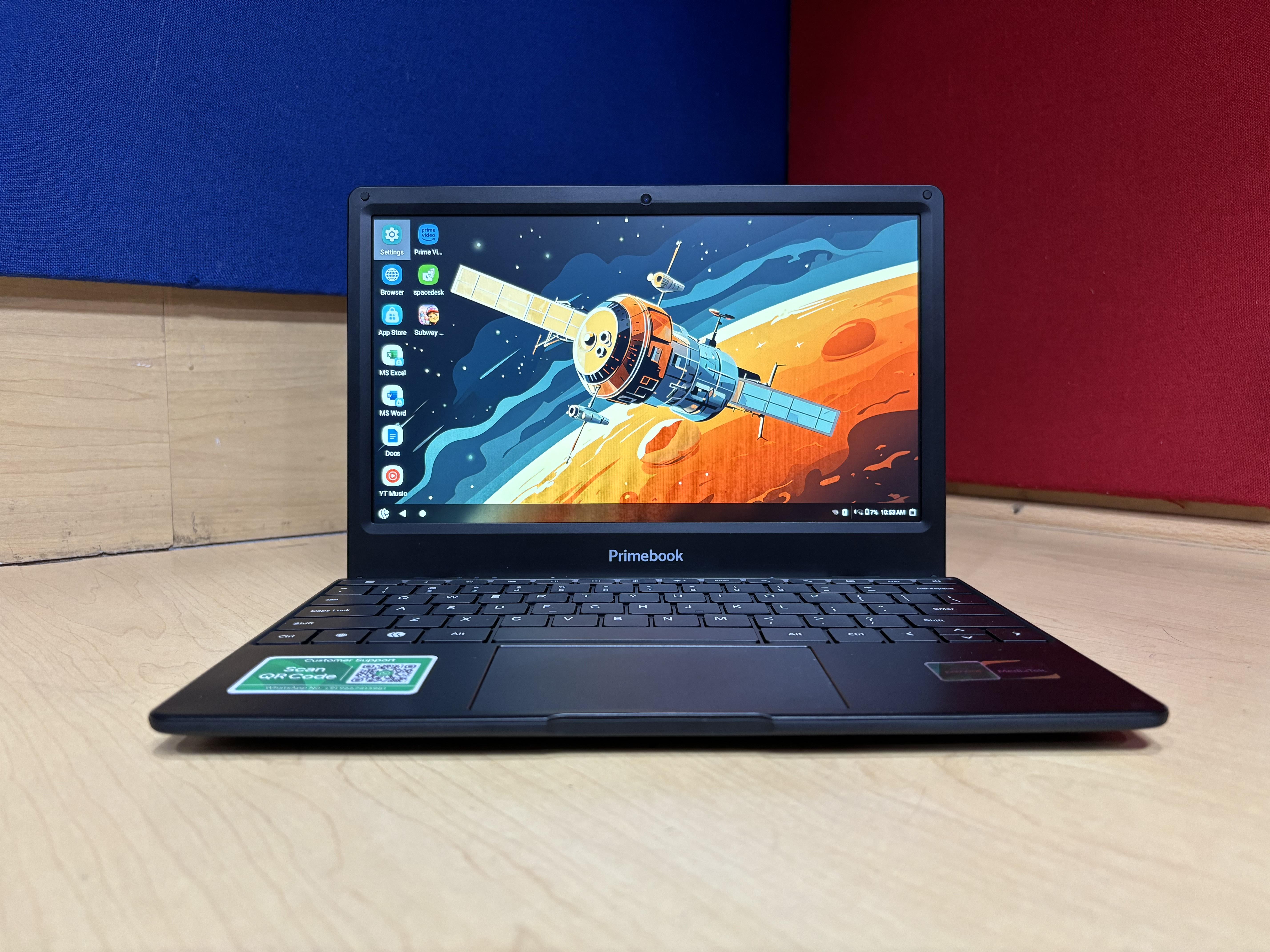
Indian startup Primebook’s inaugural device offers a distinctive experience. Based on the Android platform, the device is an ultra-portable laptop with keyboard and touchpad hooked in. Others have tried similar recipes before, but struggled since Android is primarily a smartphone OS. Primebook turned the challenge into opportunity by tailoring Android apps for keyboard functionality. The efforts translated into a device that has a form factor of an ultra-portable laptop and the operating system that most people are verse with – Android. Is it a winning formula? Let us find out:


Design


The Primebook Wi-Fi has a thin and compact form factor, and plastic construction. It feels sturdy and offers a matte finish that lends a soft touch sensation. For stability, the laptop has rubber grips on the underside. Since the device has a fan-less design, there is no visible air vents.


Like traditional laptops, there are ports available on both left and right side on the lower body. Speaking of ports, there are 2x USB-A, 1x micro HDMI, 1x USB-C, 1x microSD, and 1x 3.5mm headphone.


As for the display, there is an 11.6-inch panel of 16:9 aspect ratio flanked by thick bezels on all sides. On the top bezel area, the laptop has a front-facing camera for video calls and more. On the bottom bezel, there is a Primebook insignia elevating the profile.


The lower half of the laptop houses a spacious keypad with generously sized keys and a sufficiently large trackpad. Positioned above the keypad is a dual microphone setup, marked with mic icons for reference. Besides, there are LED indicators for power, caps lock, and trackpad lock.


Measuring 19.3mm in thickness and weighing just over a kilogram, the Primebook is an ultra-portability device. However, the soft-touch top panel, while luxurious, can feel slippery and prone to fingerprint smudges, necessitating periodic cleaning. Additionally, some users may notice slight flexing in the front panel. However, this does not compromise the laptop’s overall durability.


Display and audio


The Primebook laptop boasts an 11.6-inch HD IPS LCD panel stretched in a 16:9 aspect ratio. The display offers ample brightness, ensuring comfortable readability in outdoor settings. Adding to this, an anti-glare coating minimises reflections, enhancing visibility in bright conditions. Operating at a standard 60Hz refresh rate, the display maintains smoothness without feeling sluggish.


While the display may lack vibrancy, it manages to reproduce most colours and retains sharpness for most content. However, for viewing high-resolution content, some details may be slightly lacking.


In the audio department, the Primebook Wi-Fi impresses with its dual-speaker setup positioned at the bottom near the front. These speakers deliver good sound with adequate volume levels, ideal for usage in any setting. Despite clarity, the speakers are susceptible to picking up reverb due to their placement, though this is only noticeable during music playback.


Camera and microphone


The Primebook Wi-Fi has a built-in 2MP camera positioned at the top of the display, enabling video recording at 30 frames per second. While the picture quality is satisfactory for video calls at this price point, it is only advised to be used in well-lit environments. Furthermore, due to the device’s compact form factor, users may need to consider elevating the laptop for better positioning during video calls.


For audio input, the dual microphones excel at capturing clear speech in relatively quiet environments, making them suitable for video calls and meetings. In noisy settings, users can opt for an external microphone via the audio jack or Bluetooth connectivity for improved performance.


Keyboard and Trackpad


The Primebook Wi-Fi boasts a standard QWERTY keyboard, albeit without a dedicated number pad. The keys are generously sized, which minimises the likelihood of mistyping. Remarkably, despite its compact size, the spacing between keys is sufficient, allowing for comfortable typing even at higher speeds. Though the key travel is minimal, users still receive satisfactory tactile feedback while typing. Notably, the absence of backlighting is understandable given the device’s price point.


As an Android laptop, certain key functions have been reconfigured to facilitate easier navigation. For instance, the traditional escape button has been replaced by a dedicated back button reminiscent of those found on Android smartphones. Similarly, the Windows or Start button has been repurposed to open the app drawer, while the Function key has been replaced by a dedicated browser launch button.


The laptop’s touchpad, built from durable plastic, is surprisingly spacious, almost comparable to that of a standard 15.6-inch laptop. It boasts responsiveness and supports multi-finger gestures such as double-finger swipe for scrolling. Furthermore, Primebook has provided the flexibility to adjust trackpad sensitivity in settings.


Primebook WiFi laptop


Software


The Primebook Wi-Fi operates on the Android 11 platform with the company’s own PrimeOS UI layered on top. While it harnesses the power of Google’s Android ecosystem, it diverges by featuring a distinct App Store in lieu of the traditional Google Play Store. This proprietary store facilitates the installation of compatible Android apps. Notably, popular productivity tools such as Google Workspace and Microsoft Office are readily available and adeptly optimised for the laptop interface. The company has admirably tailored all available Android applications to suit the laptop format, ensuring a cohesive user experience.


Furthermore, essential streaming apps including YouTube, Amazon Prime Video, and Netflix are seamlessly accessible. However, due to the device’s modest 64GB storage capacity (review unit), users may opt to utilise browser-based versions of certain apps like YouTube, the optimisation of the web versions of these platforms may not match that of dedicated applications.


Critically, the Primebook Wi-Fi distinguishes itself with a clean UI devoid of bloatware, fostering intuitive navigation reminiscent of Android smartphones. Overall, the device delivers a fresh user experience without sacrificing ease of use.


Performance


The Primebook Wi-Fi laptop is powered by the MediaTek MT8183 chip paired with 4GB LPDDR4 RAM. It smoothly handles everyday tasks like working on Google Docs, streaming videos, and web browsing. While app launches are not lightning-fast, they are sufficiently quick to avoid inconvenience. However, multitasking poses some challenges for the Primebook Wi-Fi. For instance, launching apps feels slower and less responsive when multiple browser tabs are open in the background.


In terms of battery performance, the Primebook impresses. Its 4,000mAh battery easily provides five hours of usage for document work or web browsing. More demanding activities like video streaming or gaming consume more battery but still offer a minimum of three hours of usage. Charging the device with the provided charger does take slightly longer than anticipated, at around one hour and forty minutes to reach full capacity from a five percent battery level. Nevertheless, the device’s ability to charge via the Type-C port adds to its versatility.


Verdict


The Primebook Wi-Fi offers a unique software experience without compromising functionality. Its decent performance, paired with an impressive battery life, provides an appealing alternative for those in search of a device that’s both user-friendly and affordable. Furthermore, its compact and lightweight construction further solidifies its position as a viable alternative to budget Android-powered tablets and smartphones. 


Source link

Phone (2a): Nothing's CEO turns Carl Bhai in a push to woo Indian consumers | Tech News – Business Standard

Phone (2a): Nothing's CEO turns Carl Bhai in a push to woo Indian consumers | Tech News – Business Standard


Nothing’s CEO Carl Pei has changed his name on social media platform X (formerly Twitter) to “Carl Bhai”. Nothing India official X handle followed the trend and is now named “Nothing India Bhai”. This comes after the British consumer technology brand announced that they have signed a brand ambassador, reportedly Bollywood actor Ranveer Singh, for promoting its upcoming Phone (2a) smartphone in India.


An X user, in the comments asked the need for a brand ambassador in India to which the CEO replied with “We want to sell more phones bhai“. Following this, Nothing launched an endorsement campaign asking its community members to change their name on X with a postfix “Bhai”.


Replying to comments under his post, Pei also confirmed that the upcoming Nothing Phone (2a) will be manufactured in India. Nothing has been manufacturing its flagship Nothing Phone (2) in India.


Earlier, Nothing confirmed that the company will be hosting an in-person launch event in India for the Phone (2a). The event will kick-off at 5 PM on March 5 at Dwarka, Delhi. The company also announced that the tickets for the launch event are available on PayTM Insider for Rs 999.


Nothing Phone (2a) launch event: Details


  • Date: March 5

  • Time: 5:00 pm

  • Venue: Yashobhoomi, Sector 25 Dwarka, Bharthal, Delhi, 110061, India

  • Ticket price: Rs 999

  • Available on: PayTM Insider


Nothing Phone (2a): What to expect


The company has confirmed that the upcoming smartphone “leverages some of the most loved Phone (2) features, while ensuring a clear upgrade compared to Phone (1) on every front.”


According to media reports, the Nothing Phone (2a) will likely sport a dual 50MP camera set up at the back with a 50MP Samsung S5KGN9 1/1.5-inch main sensor and a 50MP Samsung S5KJN1 1/2.76-inch ultra-wide-angle sensor. Both these camera sensors have been used in previous smartphones from the brand. On the front, the Nothing Phone (2a) is expected to get a 32MP Sony IMX615 camera sensor.


  • Display: 120Hz AMOLED (1084 x 2412 resolution)

  • Processor: MediaTek Dimensity 7200

  • RAM: up to 8GB

  • Storage: up to 128GB

  • Camera: Dual 50MP

  • Front camera: 32MP (Sony IMX615)

  • OS: Android 14 based Nothing OS 2.5

First Published: Feb 19 2024 | 10:47 AM IST


Source link

Tech firms sign effort to fight artificial intelligence's poll interference | Tech News – Business Standard

Tech firms sign effort to fight artificial intelligence's poll interference | Tech News – Business Standard


A group of 20 tech companies have announced they will work together to prevent deceptive artificial-intelligence content from interfering with elections across the globe this year.


The rapid growth of generative artificial intelligence (AI), which can create text, images and video in seconds in response to prompts, has heightened fears that the new technology could be used to sway major elections this year, as more than half of the world’s population is set to head to the polls.


Signatories of the tech accord, which was announced at the Munich Security Conference, include companies that are building generative AI models used to create content, including OpenAI. Other signatories include social media platforms that will face the challenge of keeping harmful content off their sites, such as Meta Platforms, opens new tab, TikTok and X, formerly known as Twitter.


The agreement includes commitments to collaborate on developing tools for detecting misleading AI-generated images, video and audio, creating public awareness campaigns to educate voters on deceptive content and taking action on such content on their services.


Technology to identify AI-generated content or certify its origin could include watermarking or embedding metadata, the companies said. The accord did not specify a timeline for meeting the commitments or how each company would implement them, Reuters reported.


“I think the utility of this (accord) is the breadth of the companies signing up to it,” said Nick Clegg, president of global affairs at Meta Platforms. “It’s all good and well if individual platforms develop new policies of detection, provenance, labeling, watermarking and so on, but unless there is a wider commitment to do so in a shared interoperable way, we’re going to be stuck with a hodgepodge of different commitments,” Clegg said.


Generative AI is already being used to influence politics and even convince people not to vote. In January, a robocall using fake audio of US President Joe Biden circulated to New Hampshire voters, urging them to stay home during the state’s presidential primary poll.


Despite the popularity of text-generation tools like OpenAI’s ChatGPT, the tech companies will focus on preventing harmful effects of AI photos, videos and audio, partly because people tend to have more skepticism with text, said Dana Rao, Adobe’s chief trust officer, in an interview.


Several political leaders from Europe and the US also joined Friday’s announcement. European Commission Vice President Vera Jourova said while such an agreement can’t be comprehensive, “it contains very impactful and positive elements.” She also urged fellow politicians to take responsibility to not use AI tools deceptively and warned that AI-fueled disinformation could bring about “the end of democracy.”


The deal on Friday at the German city’s annual security meeting comes as more than 50 countries are due to hold elections in 2024. Bangladesh, Taiwan, Pakistan and most recently Indonesia have already done so.

First Published: Feb 18 2024 | 9:45 PM IST


Source link

YouTube
Instagram
WhatsApp