The growing popularity of generative AI systems like ChatGPT are also drawing increasing scrutiny from regulators on both sides of the Atlantic (Photo: Bloomberg)
Italian regulators said they told OpenAI that its ChatGPT artificial intelligence chatbot has violated European Union’s stringent data privacy rules.
The country’s data protection authority, known as Garante, said on Monday that it notified San Francisco-based OpenAI of breaches of the EU rules, known as General Data Protection Regulation.
The watchdog started investigating ChatGPT last year, when it temporarily banned within Italy the chatbot that can produce text, images and sound in response to users’ questions.
Based on the results of its fact-finding activity,” the watchdog said it concluded that the available evidence pointed to the existence of breaches of the provisions in the EU privacy rules.
OpenAI has 30 days to reply to the allegations. It didn’t respond immediately to a request for comment. The company said last year that it fulfilled a raft of conditions that the Garante demanded to get the ChatGPT ban lifted.
The watchdog had imposed the ban after finding that some users’ messages and payment information were exposed and because ChatGPT didn’t have a system to verify users’ ages, allowing children to get answers from the AI tool that were inappropriate for their age.
It also questioned whether there was a legal basis for OpenAI to collect massive amounts of data used to train ChatGPT’s algorithms and raised concerns that the system could sometimes generate false information about individuals.
The growing popularity of generative AI systems like ChatGPT are also drawing increasing scrutiny from regulators on both sides of the Atlantic.
The US Federal Trade Commission opened an inquiry last week into the relationships between AI startups OpenAI and Anthropic and the tech giants that have bankrolled them Amazon, Google and Microsoft. Competition regulators in the 27-nation EU and Britain, meanwhile, are also examining Microsoft’s OpenAI investments.
AI systems also face broader oversight in the EU, which is finalising its groundbreaking AI Act, the world’s first comprehensive rulebook for artificial intelligence. The bloc’s 27 member states are expected to give their approval in a key vote on Friday.
(Only the headline and picture of this report may have been reworked by the Business Standard staff; the rest of the content is auto-generated from a syndicated feed.)
Elon Musk’s social media platform X has restored searches for Taylor Swift after temporarily blocking users from seeing some results as pornographic deepfake images of the singer circulated online.
Searches for the singer’s name on the site Tuesday turned up a list of tweets as normal.
A day earlier, the same search resulted in an error message and a prompt for users to retry their search, which added, “Don’t fret it’s not your fault”.
Users, however, had been able to get around the block by putting quote marks around her name.
Sexually explicit and abusive fake images of Swift began circulating widely last week on X, formerly known as Twitter, making her the most famous victim of a scourge that tech platforms and anti-abuse groups have struggled to fix.
“Search has been re-enabled and we will continue to be vigilant for any attempt to spread this content and will remove it if we find it,” Joe Benarroch, head of business operations at X, said in a statement.
Earlier, he said the company had taken “temporary action” to stop the searches and that it was “done with an abundance of caution” as it prioritised safety.
At least one search term Taylor Swift AI was still apparently blocked. Unlike more conventional doctored images that have troubled celebrities in the past, the Swift images appear to have been created using an artificial intelligence image-generator that can instantly create new images from a written prompt.
After the images began spreading online, the singer’s devoted fanbase of ‘Swifties’ quickly mobilised, launching a counteroffensive on X and a #ProtectTaylorSwift hashtag to flood it with more positive images of the pop star. Some said they were reporting accounts that were sharing the deepfakes.
(Only the headline and picture of this report may have been reworked by the Business Standard staff; the rest of the content is auto-generated from a syndicated feed.)
American technology giant Apple has recently announced changes it is bringing to iOS, Safari, and the App Store to comply with the Digital Markets Act (DMA) in the European Union (EU). Coming in March with iOS 17.4 update, the changes would allow iPhone users to install third-party app marketplaces, change default web browsers, and set preferred payment methods other than Apple’s own.
While the changes were expected to be welcomed by app developers, Apple has faced criticism by major app makers and service providers since its announcement. Developers that have criticised Apple in the past for its unfair commission policy on iOS app development have called the new changes not good enough to uphold the new regulations.
Spotify CEO and founder, Daniel Ek, in a post on X (formerly Twitter) said that Apple’s new changes in the EU is a “monopoly under a different mask.” He further added that “by inventing a new tax system to replace the old, Apple mocks the spirit of the law and the lawmakers who wrote it.”
After sitting with our legal team to parse through the fine print of Apple’s DMA announcement (that took a while), which is, at best vague and misleading, I wanted to share my thoughts.
While Apple has behaved badly for years, what they did yesterday represents a new low, even…
Reposting Daniel’s post, Microsoft’s Xbox president said that Apple’s new policy “ is a step in the wrong direction.” She added that Apple should listen to feedback on their proposed plan and work towards more inclusivity.
We believe constructive conversations drive change and progress towards open platforms and greater competition. Apple’s new policy is a step in the wrong direction. We hope they listen to feedback on their proposed plan and work towards a more inclusive future for all. https://t.co/mDRI5KPJf6
Similarly, Epic Games founder and CEO Tim Sweeney posted that Apple is forcing developers to choose between App Store exclusivity and the store terms, which will be illegal under DMA regulations.
“Epic has always supported the notion of Apple notarization and malware scanning for apps, but we strongly reject Apple’s twisting this process to undermine competition and continue imposing Apple taxes on transactions they’re not involved in,” wrote Sweeney.
Apple’s plan to thwart Europe’s new Digital Markets Act law is a devious new instance of Malicious Compliance.
They are forcing developers to choose between App Store exclusivity and the store terms, which will be illegal under DMA, or accept a new also-illegal anticompetitive…
Mozilla spokesperson Damiano DeMonte in an interview with The Verge stated that the company is “extremely disappointed” with Apple’s proposed plan to restrict the newly-announced BrowserEngineKit to EU-specific apps. DeMonte said that the effect of these changes would force independent browsers like Firefox to build and maintain two separate browser implementations.
Apple in its proposed changes said that iOS app developers will be able to select two additional payment processing options on its App Store in the EU. Developers can either choose Payment Service Providers (PSPs), letting users complete transactions within their app, or they can redirect users to an external webpage to complete a transaction. However, developers who choose PSPs and link-out processes will have to pay a commission to Apple for using the App Store platform.
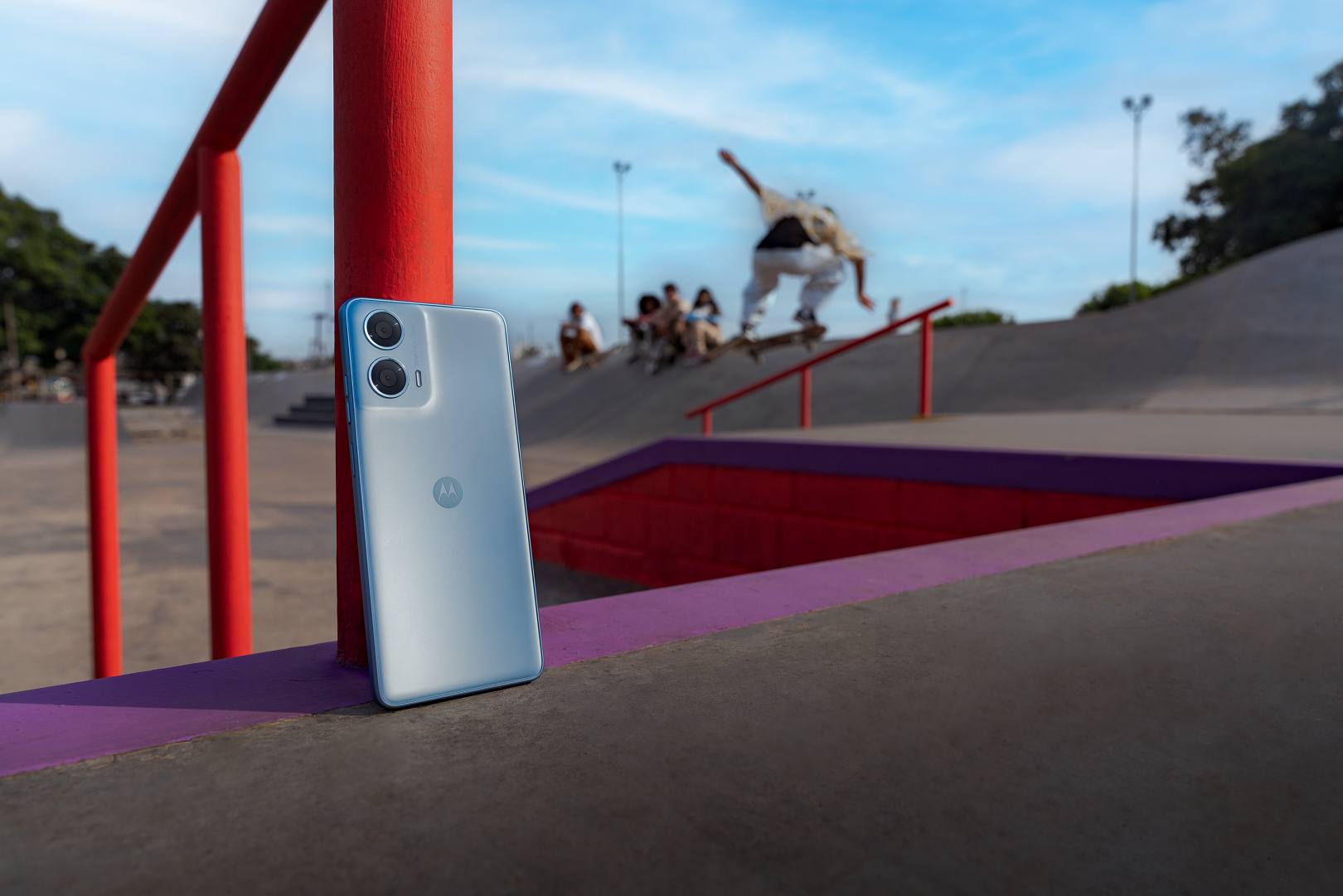
Lenovo’s smartphone brand Motorola on January 30 launched in India the Moto g24 Power. Starting at Rs 8,999, the smartphone features a 6,000mAh battery and Android 14 operating system. Powered by the MediaTek Helio G85 chip, the Moto g24 Power is offered in up to 8GB RAM and 128GB storage configuration. The smartphone has a 3D acrylic glass finish on the back and it is offered in Ink Blue and Glacier Blue colour options.
Moto g24 Power: Pricing
4GB RAM + 128GB storage: Rs 8,999
8GB RAM + 128GB storage: Rs 9,999
Moto g24 Power: Offers and availability
The Moto g24 Power will be available on Motorola online store, e-commerce platform Flipkart, and offline at select retail outlets from February 7. As for the introductory offers, the company is offering an exchange bonus of up to Rs 750 on trade-in deals.
Moto g24 Power: Specification
The Motorola Moto g24 Power sports a 6.56-inch IPS LCD display of 90Hz refresh rates. Motorola said the refresh rate is not fixed, but adaptive and it switches between 60Hz and 90Hz in auto mode to ensure power efficiency. Audio is covered by a stereo-speaker system with support for Dolby Atmos.
For imaging, the Moto g24 Power has a 50-megapixel main sensor with Motorola’s Quad-Pixel technology that it said improves low-light performance. The dual-rear-camera setup is completed by a 2MP macro lens for depth sensing. On the front, the smartphone hosts a 16MP camera in a punch hole design.
Apple is set to overhaul iOS for iPhone by integrating generative artificial intelligence at the operating system level. According to Bloomberg’s Mark Gurman, iOS 18 is going to be the biggest software update in iPhone history.
“I’m told that the new operating system is seen within the company as one of the biggest iOS updates — if not the biggest — in the company’s history,” noted Gurman in his weekly newsletter on Bloomberg.
According to Gurman, Apple is expected to incorporate generative AI into iOS 18 and that it “should improve how both Siri and the Messages app can field questions and auto-complete sentences.” The American tech giant has been exploring ways to add gen-AI features to other apps across its platform, such as Apple Music, Pages, Keynote, and more.
New York Times earlier reported that Apple has contacted major news and publishing organisations, seeking permission to use their material to train its generative AI systems. The news organisations contacted by the company include Conde Nast, publisher of Vogue and the New Yorker; IAC, which owns People, the Daily Beast and Better Homes and Gardens; and NBC News.
While the iOS-related announcements are expected at Apple’s developers conference later this year, the company is currently preparing to refresh its iPad and MacBook line-up. Gurman in his previous newsletter said that several new iPads and the next batch of MacBooks with M3 chips are expected to launch in March. According to Gurman, Apple is expected to introduce new accessories for the iPads too, including new Magic Keyboards and Apple Pencils.
The upcoming iPad Pro model is expected to come in two display sizes – 11-inch and 13-inch. The 2024 model would likely be the first to feature an OLED display panel. The iPad Air will also likely sport a larger 12.9-inch panel, getting upgraded from 10.9-inch on its predecessor. For the upcoming MacBook Air, Apple will likely upgrade it to M3 chipset and add support for Wi-Fi 6E.
OnePlus 12 is set to go on open sale in India on January 30, starting 12 pm. The premium flagship smartphone in the dual-flagship OnePlus 12 series will be available in up to 16GB RAM and up to 512GB on-board storage configuration at Rs 64,999 onwards. The smartphone boasts Qualcomm Snapdragon 8 Gen 3 system-on-chip, Hasselblad camera system, and Android 14-based OxygenOS 14 interface. The other smartphone in the series, the OnePlus 12r, will be available for purchase, together with Buds 3 wireless earbuds, from February 6.
OnePlus 12: Variants and pricing
12GB RAM + 256GB storage: Rs 64,999
16GB RAM + 512GB storage: Rs 69,999
OnePlus 12: Availability and offers
The OnePlus 12 smartphone will be available on OnePlus India website, OnePlus store mobile app and e-commerce platform Amazon. Offline, the smartphone will be available in OnePlus Experience stores, Reliance digital, Croma, and select other retail stores.
OnePlus is offering discounts of up to Rs 2,000 on ICICI Bank cards. Besides, there is an exchange bonus of up to Rs 10,000 offered by the company on trade-in deals.