Nothing Phone 1, Phone 2 get ChatGPT voice assistant in quick settings

Nothing Phone 1, Phone 2 get ChatGPT voice assistant in quick settings


ChatGPT voice assistant on Nothing Phone


British consumer electronics brand Nothing has added support for OpenAI’s ChatGPT voice assistant through the quick settings option on its Phone (1) and Phone (2). Nothing CEO Carl Pei on his X (formerly Twitter) social media handle posted a video previewing the ChatGPT voice assistant on Nothing smartphones.


Nothing Phone (1) and Phone (2) users can experiences ChatGPT’s voice assistant feature through the quick settings option by installing its Android app from the Play Store and using the voice chat feature within the app at least once. When completed, users will be able to add the voice assistant button to their Quick Settings panel. Expanding the panel and tapping on the ChatGPT’s shortcut button will launch the voice chat feature without having to open the app. Users can then ask queries and prompt the chatbot to produce relevant responses.


Additionally, Nothing Phone users can also access the voice assistant feature directly from their home screen by using the Quick settings widget, available on the Nothing OS. Responding to the comments on his post, Pei said that the ChatGPT’s integration to the Nothing Phone is much more responsive than what he initially expected.


In related news, OpenAI is reportedly working for users to add ChatGPT as their default assistant on Android smartphones. According to media reports, the function’s early preview is available on the ChatGPT’s latest beta version app. AI chatbot’s voice assistant is expected to get activated in a similar manner to how Google’s Assistant launches on Android smartphones, by long pressing the device’s home button.

First Published: Jan 31 2024 | 12:53 PM IST


Source link

Samsung Galaxy AI to offer 'powerful AI features' in paid tier: Report

Samsung Galaxy AI to offer 'powerful AI features' in paid tier: Report


Samsung Galaxy Unpacked 2024

Samsung has confirmed that the Galaxy AI features, introduced with the Galaxy S24 series launch, will only remain free until 2025. In an interview with ET Telecom, President of Samsung’s mobile division, TM Roh said that the company only plans to provide AI features for free on its devices until 2025. He added that Samsung has not yet decided the availability plan for the same beyond next year.


In his interview with ET, TM Roh indicated more powerful AI features on Samsung’s smartphone, for which the company may necessitates subscription.

“According to our analysis, there are various needs for mobile AI. So, there will be consumers who will be satisfied with using the AI capabilities for free. Then there could also be customers who wish for even more powerful AI capabilities, and even pay for them,” said Roh. He added “the company will take all these factors into consideration before making any decisions in the future regarding their AI features.”

READ: Samsung’s profits decline for 4th straight quarter on uneven chip demand


Disclaimers from the Galaxy S24 series page on Samsung’s official website says that the Galaxy AI features will be only provided for free until the end of 2025 on supported Galaxy devices.


This suggests that AI features on the Galaxy S24 series such as Circle to Search which is powered by Google’s Gemini model may remain available to users for free even if Samsung decides to charge for other AI capabilities on its smartphones.

First Published: Jan 31 2024 | 12:42 PM IST


Source link

Tata Group, Texas Instruments among bidders for SCL Mohali revamp: Report

Tata Group, Texas Instruments among bidders for SCL Mohali revamp: Report


Photographer: Qilai Shen/Bloomberg


Nine companies have sent their bids to overhaul the government’s Semiconductor Laboratory (SCL) in Mohali, Punjab. According to a report by The Economic Times (ET), citing people aware of the matter, the list of bidders includes the Tata Group, US-based Texas Instruments and Israel’s Tower Semiconductor.


Set up in 1976, SCL Mohali began chip manufacturing in 1984. It is the only chip manufacturing unit in India that makes chips for defence and strategic purposes. Earlier, chips from the lab were used in the Chandrayaan mission.


It currently manufactures 180 nm node chips, which have only limited uses. To enable SCL to manufacture modern chips, starting with 40 and 65 nanometre chips, the IT ministry earmarked $1 billion for its modernisation. The expressions of interest were invited last year in September.


The development comes at a time when the Tata Group has announced its plans to set up a semiconductor manufacturing unit at Dholera soon. The commissioning is expected to start this year itself.


Tower Semiconductors also has been very keen to enter commercial chip manufacturing in India. Texas Instruments already has significant research and development (R&D) operations in the country. It was among the first ones to start R&D here. 


In its bid document, the Centre had specified that chips from SCL would continue to fulfil the needs of government agencies like the Indian Space Research Organisation (Isro). Moreover, the bidder will be required to meet the end-to-end set-up and operationalisation of the lab.


The financial bids are expected to be invited soon. 

First Published: Jan 31 2024 | 10:20 AM IST


Source link

Tata Group, Texas Instruments among bidders for SCL Mohali revamp: Report

Tata, Israel's Tower Semiconductor among bidders for SCL Mohali revamp: Rpt


Photographer: Qilai Shen/Bloomberg


Nine companies have sent their bids to overhaul the government’s Semiconductor Laboratory (SCL) in Mohali, Punjab. According to a report by The Economic Times (ET), citing people aware of the matter, the list of bidders includes the Tata Group, Israel’s Tower Semiconductor, among others.


Set up in 1976, SCL Mohali began chip manufacturing in 1984. It is the only chip manufacturing unit in India that makes chips for defence and strategic purposes. Earlier, chips from the lab were used in the Chandrayaan mission.


It currently manufactures 180 nm node chips, which have only limited uses. To enable SCL to manufacture modern chips, starting with 40 and 65 nanometre chips, the IT ministry earmarked $1 billion for its modernisation. The expressions of interest were invited last year in September.


The development comes at a time when the Tata Group has announced its plans to set up a semiconductor manufacturing unit at Dholera soon. The commissioning is expected to start this year itself.


Tower Semiconductors also has been very keen to enter commercial chip manufacturing in India. Texas Instruments already has significant research and development (R&D) operations in the country. It was among the first ones to start R&D here. 


In its bid document, the Centre had specified that chips from SCL would continue to fulfil the needs of government agencies like the Indian Space Research Organisation (Isro). Moreover, the bidder will be required to meet the end-to-end set-up and operationalisation of the lab.


The financial bids are expected to be invited soon. 

First Published: Jan 31 2024 | 10:20 AM IST


Source link

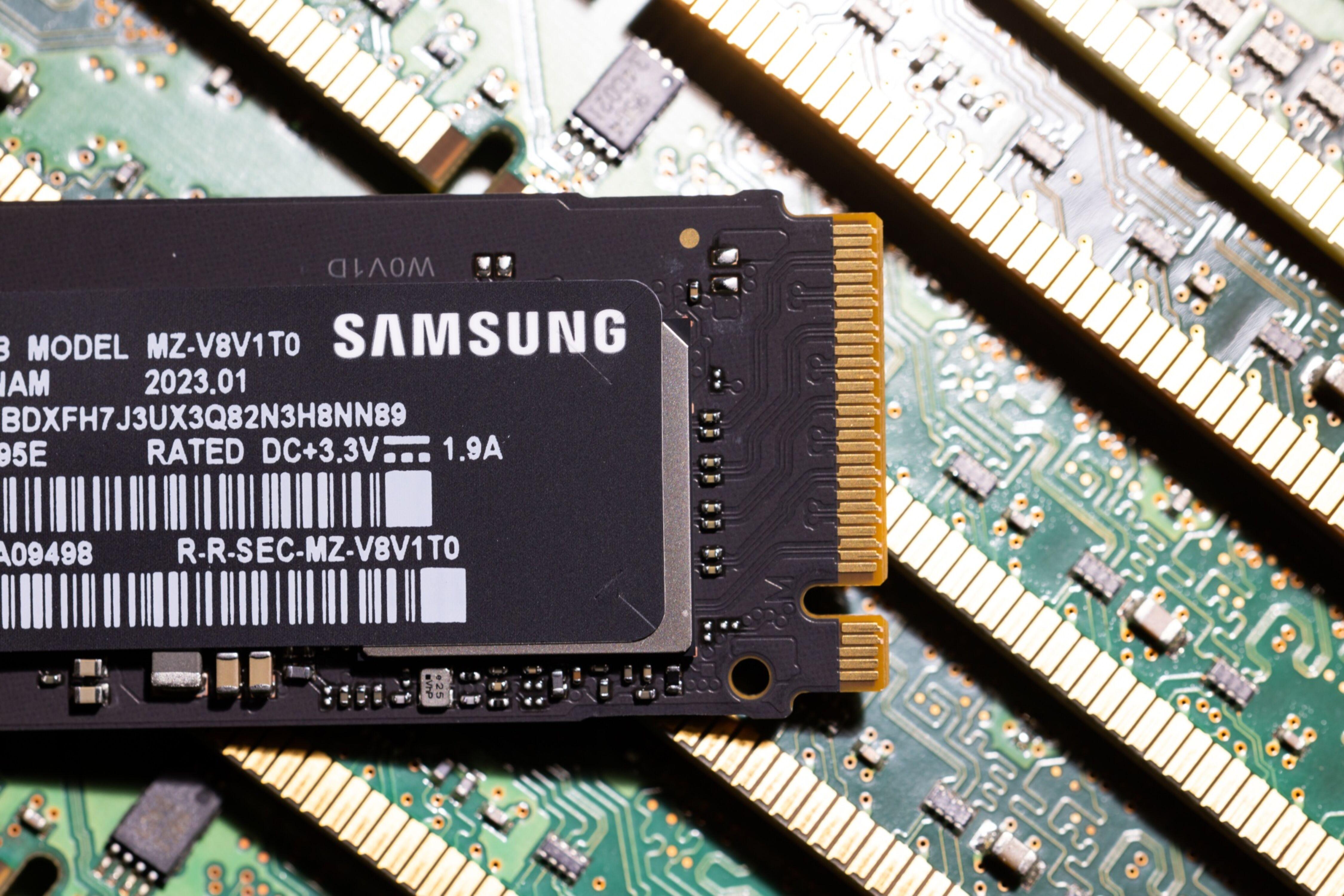
Samsung's profits decline for 4th straight quarter on uneven chip demand

Samsung's profits decline for 4th straight quarter on uneven chip demand


Samsung (Photo: Bloomberg)


By Yoolim Lee

Samsung Electronics Co. posted its fourth straight quarter of profit decline in the holiday quarter, after a long-awaited recovery in chip and electronics demand delivered few returns for the world’s biggest memory maker.


South Korea’s most valuable company said net income fell 74 per cent in the last three months of the year to 6.02 trillion won ($4.5 billion), after its mainstay chip operations posted a loss of 2.18 trillion won — bigger than what analysts projected.


A tax credit of 2.82 trillion won helped lift Samsung’s bottom line to nearly double what analysts had estimated. The company’s operating profit was 2.8 trillion won on sales of 67.8 trillion won, in line with preliminary figures revealed at the start of the month.


Shares fell as much as 1.2 per cent in early morning trade in Seoul on Wednesday, underperforming both the broader Kospi and the MSCI Asia Pacific Index. Samsung client Advanced Micro Devices Inc. gave a weaker-than-expected revenue forecast overnight, kindling concern about customers postponing purchases of PCs, servers and other IT equipment. 


“We expect the memory business to continue to recover despite volatility linked with interest rate policies, reduced industry production and other factors,” the company said in its earnings presentation.


Samsung is working to catch up to rival SK Hynix Inc. in high-bandwidth memory, or HBM, chips, which used to help Nvidia Corp.’s accelerators in training artificial intelligence, however. That has been one of the sector’s most promising markets.


“The share price is weak because its HBM lags behind SK Hynix and its foundry business is significantly behind TSMC,” said Lee Seung-Woo, an analyst at Eugene Investment & Securities, referring to Taiwan Semiconductor Manufacturing Co. “If Samsung improves on the two fronts, there may be expectations for better share price performance. But at the moment, there’s little expectation.”


Samsung said it spent 53.1 trillion won on capex last year, with 48.4 trillion of that spent on semiconductors, focusing on advanced nodes. “We will actively address the demand for premium products and secure profitability,” it said.


Samsung’s latest figures leaven optimism about a fresh surge in demand for semiconductors driven by the artificial intelligence boom. 


SK Hynix posted a surprise profit earlier this month, with executives expressing a more bullish sentiment about prices growing this year. It added to a positive outlook from contract chipmaking leader TSMC, which drove a $165 billion rally in Asian chip firms, including Samsung.


Sales of AI-related chips have been constrained by limited supply, while consumer electronics demand has yet to return to growth. Smartphone and PC industry trackers, such as IDC, expect to see a halt to years of decline, albeit with only moderate growth to come. As the provider of key components like displays, camera sensors and memory — alongside its own Galaxy device series — Samsung is directly affected by any fluctuations in global handset shipments.


Samsung expected the smartphone market to rebound in 2024 as consumer sentiment stabilizes in anticipation of a global economic recovery, leading to market growth, especially in the premium segment.

First Published: Jan 31 2024 | 7:20 AM IST


Source link

YouTube
Instagram
WhatsApp