Tech Wrap Apr 3: Gemma 4 models, Google Meet on Apple CarPlay, MAI models

Tech Wrap Apr 3: Gemma 4 models, Google Meet on Apple CarPlay, MAI models


Google has introduced its new open AI model family, Gemma 4, designed to run across a wide range of devices — from smartphones to personal computers and developer workstations. The company says the models are built for advanced reasoning and agent-based workflows, while also being efficient enough to run locally on consumer hardware. With this release, Google is targeting developers who want to build AI applications that can function both on-device and offline, without relying entirely on cloud infrastructure. Additionally, Google also detailed Gemini Nano 4 for Android, which is based on Gemma 4.


Google Meet is now coming to Apple CarPlay, allowing users to join meetings directly from their car’s dashboard. According to Google, the update lets users attend meetings hands-free, check their schedule and participate in audio calls while driving. Google said that the feature is designed to make it easier for users to stay connected on the move without needing to use their phone. Apple CarPlay is a system that lets users connect their iPhone to their car’s display to use key apps while driving more safely and conveniently.


Microsoft has announced a new set of AI models, including MAI-Transcribe-1, MAI-Voice-1 and MAI-Image-2, aimed at improving speech, voice and image generation capabilities. According to the company, these models are now available through Microsoft Foundry and the MAI Playground (US-exclusive), with a focus on faster performance, efficiency and competitive pricing. The rollout brings upgrades across transcription accuracy, voice generation and image creation, with Microsoft also integrating these capabilities into its own products.


Samsung is reportedly adding Google Cast support to its smart TVs, and the rollout is not limited to its latest lineup. According to a report by 9To5Google, the feature is being introduced across both new and some older Samsung TVs through a mix of pre-installed support and software updates. This marks a notable shift for Samsung, which has so far relied on its own ecosystem and has not offered built-in Cast functionality on its TVs. The move suggests a broader push to adopt widely used streaming standards and improve compatibility with more devices.


Google is expanding its video creation tool, Google Vids, with a set of new AI-powered features to make video creation faster and more accessible. According to the company’s blog, the update introduces free video generation, AI-generated music, and customisable avatars, along with easier recording and direct publishing tools. With these additions, Google is positioning Vids as an all-in-one platform where users can create, edit, and share videos without relying heavily on manual editing or external tools.


Rockstar Games has rolled out a new “Neighbourhood Watch” event in GTA Online, introducing law enforcement-themed content and limited-time bonuses across Los Santos and Blaine County. The update brings new police vehicles, Dispatch Work missions, and increased payouts across multiple activities. Players can also unlock outfits, access discounts on vehicles and properties, and earn additional rewards through weekly challenges and Twitch Drops, with most benefits running until mid-April.


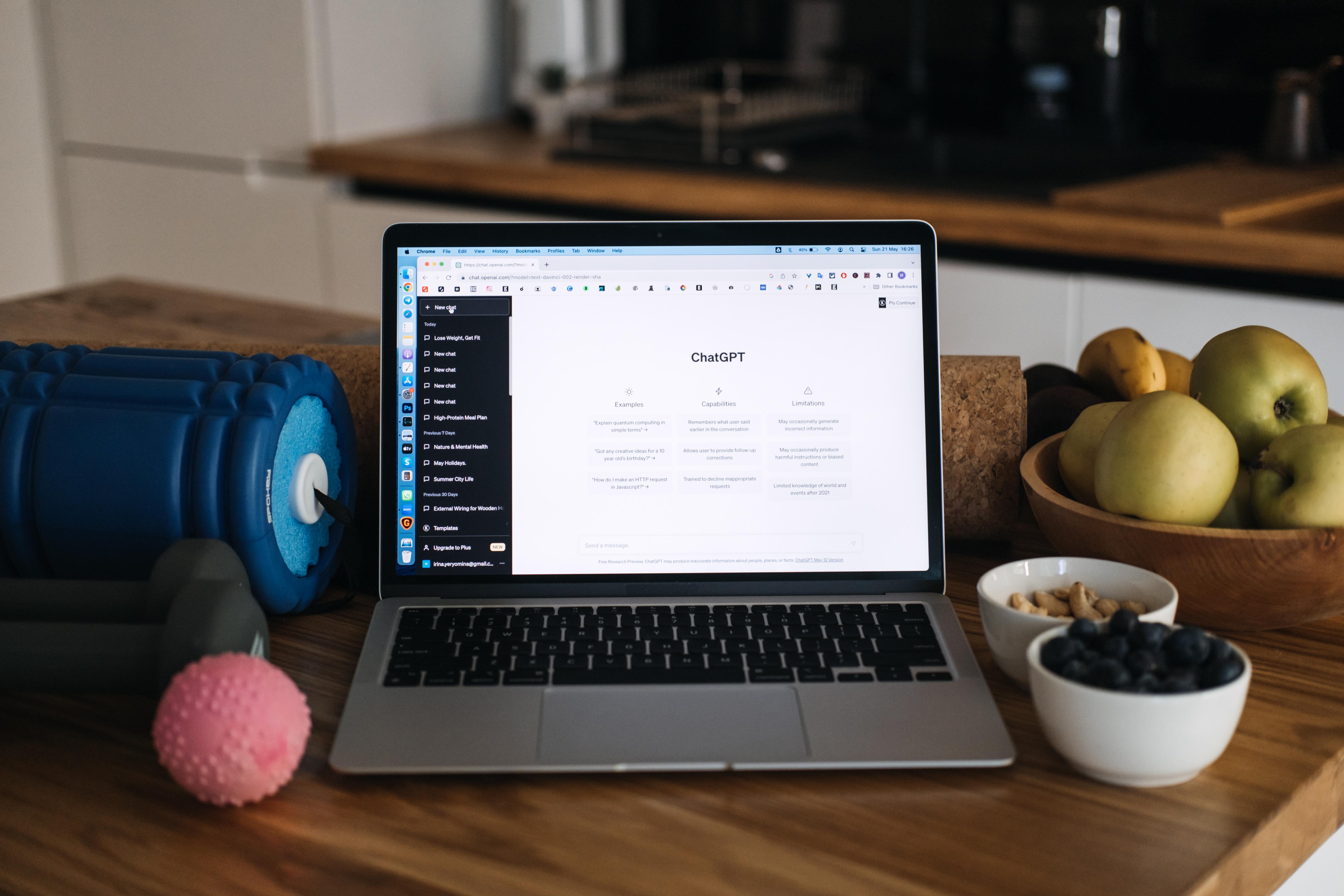
OpenAI is bringing ChatGPT to Apple CarPlay, allowing users to start voice conversations directly from their car screen while driving. According to OpenAI, the feature is rolling out to supported iPhones running iOS 26.4 or later and will be available globally across all ChatGPT plans. As per OpenAI, the integration is designed to let users start or continue conversations hands-free, access ongoing chats and projects, and interact with the chatbot without needing to use their phone, while keeping the experience simple and focused for in-car use.


Google has reportedly issued a security alert for Chrome users after confirming a new zero-day vulnerability that is already being exploited. According to a report by Forbes, the flaw, identified as CVE-2026-5281, affects the browser’s WebGPU component and could expose users to attacks. The report added that Google has started rolling out a fix, but the update may take days or weeks to reach all users globally.


Nothing is set to discontinue its CMF Watch app, nearly three years after its release on the Google Play Store. The company has confirmed that users will need to transition to the Nothing X app going forward to continue using their CMF smartwatches. The app will begin disappearing from app stores starting April 3, 2026, with a complete removal from the Play Store expected by the end of the year.


Apple is reportedly preparing to launch several new products that are expected to rely on an upgraded, AI-powered Siri. According to a report from 9To5Mac, at least four devices are currently in the pipeline that are expected to debut after Apple releases the revamped version of its digital assistant. The upcoming lineup is said to include a new Apple TV 4K, HomePod 3, HomePod mini 2 and a smart display referred to as “HomePad” or “HomePod Touch.”


The Nothing Phone 4a Pro feels like a step forward, but also a slight shift in identity. It is more premium, more refined, and more balanced than previous “a” series phones. The design feels sturdier, the performance is more consistent, the cameras are slightly better, and the overall experience is more complete. At the same time, it feels a little less bold. The transparency is toned down, the quirks are more controlled, and the phone feels closer to mainstream flagships than earlier Nothing devices did.


Microsoft said on Friday it will invest 1.6 trillion yen ($10 billion) in Japan between 2026 and 2029 to expand artificial intelligence infrastructure and deepen cybersecurity cooperation with the government.


Source link

Microsoft introduces MAI-Transcribe-1, Voice-1, Image-2 AI models: Details

Microsoft introduces MAI-Transcribe-1, Voice-1, Image-2 AI models: Details


Microsoft has announced a new set of AI models, including MAI-Transcribe-1, MAI-Voice-1 and MAI-Image-2, aimed at improving speech, voice and image generation capabilities. According to the company, these models are now available through Microsoft Foundry and the MAI Playground (US-exclusive), with a focus on faster performance, efficiency and competitive pricing. The rollout brings upgrades across transcription accuracy, voice generation and image creation, with Microsoft also integrating these capabilities into its own products.


Transcription, voice and image models


MAI-Transcribe-1: Microsoft said that this is designed for speech-to-text tasks and supports transcription across the top 25 most-used languages, based on the FLEURS benchmark. The company said that the model is built to handle real-world audio conditions and delivers batch transcription speeds that are 2.5 times faster than its existing Azure Fast offering.


MAI-Voice-1: This model focuses on voice generation, producing speech with natural tone, emotional range and consistency across longer content. Microsoft has also added support for creating custom voices using a short audio sample. The model can generate up to 60 seconds of audio in one second, with the company highlighting efficient GPU usage for cost-effective performance.


MAI-Image-2: As per Microsoft, it offers at least twice the generation speed compared to earlier systems on Foundry and Copilot, based on production data. Microsoft said the model is designed to deliver realistic lighting, accurate skin tones and clear text rendering for visual content. It is also being rolled out in phases across services such as Bing and PowerPoint.


Availability and pricing


Microsoft said all three models are available starting today on Microsoft Foundry, with MAI Playground access currently limited to users in the US. The company has positioned the models as offering competitive price-to-performance across cloud providers.


Pricing starts at $0.36 per hour for MAI-Transcribe-1, $22 per one million characters for MAI-Voice-1, and $5 per one million tokens for text input and $33 per one million tokens for image output with MAI-Image-2.


Microsoft added that these models are also being used within its own products and are available for developers to build applications and services.


Source link

CMF Watch app to get delisted, here's how you can migrate to Nothing X app

CMF Watch app to get delisted, here's how you can migrate to Nothing X app


Nothing is set to discontinue its CMF Watch app, nearly three years after its release on the Google Play Store. The company has confirmed that users will need to transition to the Nothing X app going forward to continue using their CMF smartwatches. The app will begin disappearing from app stores starting April 3, 2026, with a complete removal from the Play Store expected by the end of the year.


Migration timeline and what changes

As part of the transition, Nothing has advised users to migrate to the Nothing X app before July 19, 2026, to ensure a smoother shift. After this move, CMF Watch devices will only pair and function through the Nothing X app.


The company said most user data will carry over during migration, including workout records, daily activity, sleep data, heart rate, blood oxygen levels, stress metrics, active score and fitness goals. For users of the Watch Pro 2, training load data will also be transferred.


However, some information will not migrate automatically. Users will need to manually re-enter details such as nicknames, avatars, height, weight and female health data. In addition, watch faces created within the CMF Watch app will not be transferred.


Once the migration process is initiated, the CMF Watch app account will be deactivated. Users will no longer be able to log in or download the app again.


How to migrate


To migrate data successfully, users need to follow these steps:


  • Open the Nothing X app

  • Log in to Nothing X with the same account

  • Connect their watch

  • Select Data Migration


Source link

Nothing Phone 4a Pro review: Feels more premium, still a little quirky

Nothing Phone 4a Pro review: Feels more premium, still a little quirky


Nothing has always walked a slightly unusual line. On one hand, it wants to stand out with transparent backs, blinking lights, and software that feels like it belongs in a design studio more than a specification sheet. On the other hand, it has been quietly trying to prove that it can also make genuinely good smartphones, not just interesting ones.


The “a” series has always been where those two ideas meet. It takes the personality of Nothing’s flagship phones and tries to make it more practical, more accessible, and more usable for everyday users.


Having used a bunch of Nothing phones in the past, including last year’s Phone 3a series devices, flagship Phone 3 and the newer Phone 4a, the new Nothing Phone 4a Pro feels like a shift in approach.


This is not just a more powerful version of the Phone 4a. It feels like Nothing is trying to grow up a little, without completely letting go of what made it different in the first place.


What the Nothing Phone 4a Pro feels like

Whenever I think Nothing cannot surprise me anymore, it finds a way to do exactly that. It was not long ago that I thought the Nothing Phone 3 was as far as the company would go in terms of experimental design. And then comes the Phone 4a Pro, which feels like a different kind of experiment altogether.


For the first time, Nothing goes with a full aluminium unibody. The moment you pick it up, it feels different. More solid, more conventional, and in some ways, more “serious” than previous Nothing phones.


But then you turn it around, and it is still very much a Nothing phone.


The back is dominated by a wide camera plateau that stretches across the top, housing the cameras and the Glyph Matrix display. There is still a hint of transparency here — exposed screws, layered elements, and that small red recording light — just enough to retain that industrial, slightly geeky aesthetic.


The Glyph Matrix on the Phone 4a Pro works a bit differently than it did on the Nothing Phone 3. While it looks larger and more readable, it features fewer LEDs and does not have a dedicated control button for switching functionalities. It can show timers, notifications, volume levels, and even small visual cues that reduce the need to constantly flip the phone, but there are fewer Glyph Toys to play around with.


In hand, this is easily the most premium-feeling “a” series phone so far. The weight is noticeable, but well-balanced. It does not feel awkward to use, even with one hand, and the wider camera plateau helps reduce the usual wobble when placed on a table.


That said, there are small inconsistencies. The thin plastic border around the display slightly takes away from the otherwise premium feel, especially when you compare it to the flush finish on the Nothing Phone 3.


The design is also… divisive.


It still looks unique; there is no doubt about that. But it does feel like Nothing is dialling down its earlier transparency-heavy identity in favour of something more mainstream. It is less flashy, more controlled. Whether that is a good thing depends on what you expect from a Nothing phone.


On the front, things are more straightforward. The large AMOLED display is sharp, bright, and extremely smooth thanks to the higher refresh rate. Scrolling feels effortless, touch response is quick, and outdoor visibility is strong enough for comfortable use.


What is the experience like


Powered by the Snapdragon 7 Gen 4, Phone 4a Pro is not chasing benchmark numbers, but in everyday use, that does not really matter. Apps open quickly, multitasking feels smooth, and the phone handles regular usage without any friction. Even during extended use, it manages to stay consistent with no random slowdowns or stutters.


Gaming performance is decent, but clearly not the focus. It can handle titles like BGMI without much trouble, but longer sessions do bring some heat and minor drops in consistency. It is capable, just not built for sustained heavy loads.


The software continues to be one of the strongest parts of the experience.


Nothing OS remains clean, minimal, and visually cohesive. The monochrome design, subtle animations, and lack of unnecessary clutter make it feel lighter than most Android skins.


The Essential Space and Essential Key remain for organising things — screenshots, notes, voice recordings — and make them easier to access later.


Alongside this, the Essential apps layer continues to add a bit of personality to the experience. Similar to the Phone 4a, you can access and use widgets created by others directly on your home screen. Some of them are genuinely useful, like a sticky note widget that lets you quickly jot things down without opening an app, while others lean more towards experimentation — from system monitors to retro-style clocks. There are even a few that exist purely for the nostalgia factor.


They do not fundamentally change how you use the phone, but they add a layer of customisation and character that fits well with Nothing’s overall approach.


The camera is where things get a bit more complicated.


The main camera delivers good results in daylight. Colours look natural, dynamic range is controlled, and images feel more consistent compared to Nothing Phone 3a series devices. Meanwhile, the telephoto camera now offers 3.5x optical quality zoom shots and also makes portraits look better.


But the consistency is not always perfect. There are moments where colour tuning feels slightly off, or where detail processing becomes a bit aggressive. The ultra-wide camera still feels like the weakest link, especially when compared to the main sensor.


Low-light performance is improved, but not class-leading. It handles scenes realistically without over-brightening them, which is good, but you do lose some sharpness in the process.


Overall, it is a better camera system than before, just not one that completely stands out in this segment.


Battery life is quietly reliable. The 5,080mAh battery comfortably lasts a full day with regular use. It is not trying to break records, but it does what it needs to without creating anxiety.


Should you buy it?


The Nothing Phone 4a Pro feels like a step forward, but also a slight shift in identity.


It is more premium, more refined, and more balanced than previous “a” series phones. The design feels sturdier, the performance is more consistent, the cameras are slightly better, and the overall experience is more complete.


At the same time, it feels a little less bold. The transparency is toned down, the quirks are more controlled, and the phone feels closer to mainstream flagships than earlier Nothing devices did.


That is not necessarily a bad thing.


If you want a phone that still looks different but behaves more predictably, the Phone 4a Pro makes a strong case. It is easily one of the most well-rounded devices Nothing has made in this segment.


Source link

Upcoming Apple Products: Apple has 4 devices in pipeline waiting for AI Siri upgrade: What to expect

Upcoming Apple Products: Apple has 4 devices in pipeline waiting for AI Siri upgrade: What to expect


Apple is reportedly preparing to launch several new products that are expected to rely on an upgraded, AI-powered Siri. According to a report from 9To5Mac, at least four devices are currently in the pipeline that are expected to debut after Apple releases the revamped version of its digital assistant. The upcoming lineup is said to include a new Apple TV 4K, HomePod 3, HomePod mini 2 and a smart display referred to as “HomePad” or “HomePod Touch.” 


The report, citing Mark Gurman of Bloomberg, stated that these devices are already in the later stages of manufacturing and “sitting in warehouses,” waiting for the updated Siri rollout before they can be launched.


Apple’s upcoming products: What to expect


New Apple TV 4K


As per the previous report, Apple TV 4K stock is running low, suggesting a refresh. The upcoming model is expected to feature a more powerful A17 Pro or A18 chip, enabling support for Apple Intelligence features. 


Other expected upgrades include a new N1 wireless chip, while a built-in camera is also being explored, though it has not been confirmed.


HomePod mini 2 and HomePod 3


As per the report, Apple could soon refresh its HomePod lineup. Gurman noted that the stock of the current HomePod mini and HomePod is running low at Apple Stores, which often hints at upcoming updates. 


The next-generation HomePod mini could run on an upgraded S-series chip — possibly the S9 or S10 — giving it the ability to handle certain Apple Intelligence capabilities and support a smarter, more conversational Siri. Like the upcoming Apple TV 4K, the HomePod mini 2 is also rumoured to use the N1 networking chip for faster and more stable wireless performance, including support for Wi-Fi 7.


A new full-size HomePod is also expected, possibly with similar AI upgrades to keep it in line with the smaller model.


HomePod Touch


Earlier referred to in reports as “HomePad,” Apple’s upcoming smart home hub is now believed to be called the “HomePod Touch.” As reported by 9To5Mac, this new device will serve as a central control hub for Apple’s connected ecosystem, letting users manage and interact with all their HomeKit devices from a single interface. 


The HomePod Touch is expected to come with a 7-inch touchscreen and a front-facing camera for FaceTime calls. It may also include a rechargeable battery for portability, along with built-in speakers and optional accessories like a wall mount or a stand with integrated speakers. On the software side, the device could introduce a new operating system called homeOS, which is likely to feature a widget-based interface similar to the iPhone’s StandBy mode.


Siri delays affecting product launches: What we know


According to a 9To5Mac report, citing Gurman, these Apple products are essentially ready to launch but are being held back due to the delayed Siri features. Apple typically controls both hardware and software development, which allows it to better manage product timelines. However, the report noted that even with this level of control, delays in a single key area, in this case Siri, can still affect multiple product launches. 


Apple’s upcoming Siri upgrade has faced multiple delays. The new AI-powered features were first showcased at the Worldwide Developer Conference (WWDC) 2024 and were expected to roll out in March 2025, but that timeline slipped. Apple later stated that the delay was due to performance and reliability issues. 


The report noted that the launch window was then pushed to around iOS 26.4 in 2026. However, Bloomberg later reported that the update has been further delayed, with features now expected to arrive in iOS 26.5 or even in the iOS 27 cycle. 


It should be noted that Apple has partnered with Google and has said that it will be using Gemini AI models to power the updated Siri version.


Source link

Google releases security update following Chrome zero-day exploit: Report

Google releases security update following Chrome zero-day exploit: Report


Google has reportedly issued a security alert for Chrome users after confirming a new zero-day vulnerability that is already being exploited. According to a report by Forbes, the flaw, identified as CVE-2026-5281, affects the browser’s WebGPU component and could expose users to attacks. The report added that Google has started rolling out a fix, but the update may take days or weeks to reach all users globally.


What this vulnerability means


As per Forbes, the newly identified CVE-2026-5281 is a high-severity zero-day vulnerability, meaning attackers were able to exploit it before a patch became widely available. The flaw is described as a “use-after-free” memory issue in Chrome’s cross-platform Dawn WebGPU component.


If successfully exploited, the vulnerability could lead to data corruption or browser crashes. It may also allow attackers to execute arbitrary code through a specially crafted HTML page. Google has restricted detailed technical information for now, stating that access to such details may remain limited until a majority of users receive the fix.


The report also notes that this is the fourth zero-day vulnerability patched in Chrome so far this year, highlighting an increase compared to previous years.


Update rollout and what users can do


Google has begun rolling out a security update that addresses CVE-2026-5281 along with 20 additional vulnerabilities. However, as per Forbes, the update may not reach all users immediately due to the staged rollout process.


Users who want to install the update without waiting can manually check for it in Chrome settings. This can be done by opening the three-dot menu, navigating to “Help,” and selecting “About Google Chrome,” where the browser will automatically download and install any pending updates. Restarting the browser after installation will apply the fix.


Source link

YouTube
Instagram
WhatsApp