Tech Wrap Mar 16: JBL Grip, Instagram DM encryption, Gemini task automation

Tech Wrap Mar 16: JBL Grip, Instagram DM encryption, Gemini task automation


JBL has launched a new portable Bluetooth speaker in India, the JBL Grip. The speaker comes with JBL Pro Sound, AI Sound Boost technology and Auracast support for stereo and multi-speaker pairing. According to the company, the device offers up to 12 hours of battery life, with an additional two hours through Playtime Boost. The JBL Grip also features IP68-rated water and dust protection, along with support for the JBL Portable app.


Meta has announced that it will discontinue support for end-to-end encryption in direct messages on Instagram. According to an Instagram support page, the feature will be removed after May 8. A report by 9To5Google also stated that the company has begun notifying users about the change through an in-app pop-up.


Google has reportedly begun rolling out Gemini task automation, also referred to as screen automation, to the Samsung Galaxy S26 series in beta. The feature allows the AI assistant to carry out certain tasks inside supported apps, such as ordering food or booking rides, based on user prompts.


POCO is set to launch its X8 Pro series in India on March 17. The lineup will include two models — POCO X8 Pro and POCO X8 Pro Max. Ahead of the launch, the company has revealed several key specifications of the global variant, including details of the processor, battery and more. The Indian variants of the smartphones are expected to feature similar specifications.


OPPO is set to launch its next foldable smartphone, the OPPO Find N6, in China on March 17. The Chinese smartphone maker has confirmed the launch date of the device in its home market and has teased a global launch without announcing its date.


Chinese smartphone maker Realme has announced the launch date of its upcoming P4 Lite 5G smartphone in India. The Realme P4 Lite 5G, set to launch in India on March 19, will be powered by the MediaTek Dimensity 6300 chip and pack a 7,000mAh battery. Notably, the company also launched the P4 Lite smartphone last month with a UNISOC T7250 chip. The new model will bring 5G connectivity and several changes.


Spotify has announced a new feature called Taste Profile that lets listeners review and adjust how the platform understands their music preferences. According to Spotify, the update aims to give users more transparency and control over Spotify’s recommendation system. The feature is currently limited to select beta testers and will roll out to Premium users in New Zealand before expanding to more regions.


Meta has announced updates for Facebook, which it said will prioritise original content and reduce the reach of copied posts. The company has also introduced clearer guidelines explaining what qualifies as original content. In addition, Meta is testing updates to its existing content protection system that would allow creators to report impersonators and better protect their work. Meta said the changes are intended to improve content recommendations in Feed and Reels while reducing spam and imitation accounts on the platform.


There are two ways to think about Apple turning 50. One is as a corporate milestone for one of the world’s richest companies in terms of market capitalisation. The other is stranger and more interesting: much of the modern technology landscape now looks the way it does because Apple decided it should.


OnePlus is reportedly gearing up to launch the anticipated OnePlus Nord 6 soon. According to a report by GizmoChina, the OnePlus Nord 6 may launch next month and share a lot of similarities with the OnePlus Turbo 6, which launched in January in China. As per the report, the OnePlus Nord 6 is expected to be powered by the Qualcomm Snapdragon 8s Gen 4 chip.


Huawei is reportedly planning to launch a new device in India, likely a tablet. A microsite for the upcoming Huawei product has gone live on the e-commerce platform Flipkart, which does not mention any details. According to a report by 91Mobiles, the teaser image is believed to be of a tablet that looks very similar to the MatePad 11.5, which Huawei already sells in several other regions.


Apple’s next major iOS update may not bring major visual changes to iPhones. However, it may allow users more options to fine-tune the Liquid Glass design that Apple introduced last year with iOS 26. According to a report by 9To5Mac, citing Bloomberg’s Mark Gurman, despite notable changes in the Apple design team, there is no major visual overhaul planned for the next-generation update. The report stated that users should expect “years of gradual improvements,” rather than immediate changes.


The Galaxy S26 Ultra introduces several refinements, but the most distinctive addition remains the Privacy Display. It works well and offers genuine protection against shoulder surfing, although the reduction in brightness and contrast means it will not appeal to everyone. For users who value privacy and multimedia tools, the Galaxy S26 Ultra offers something different. For others, the experience may feel like a steady evolution rather than a dramatic leap.


Apple’s MacBook Neo, the laptop it announced last week that starts at $499 for students, is the most repairable laptop the company has released since 2012, according to an analysis released Friday by iFixit.


China’s Hua Hong Group has developed advanced chip manufacturing technologies that can be used to produce artificial intelligence chips, four people familiar with the matter said, a major milestone in Beijing’s efforts to boost tech self-sufficiency. 


Infosys unveiled its AI first value framework last month to coincide with the India AI Impact Summit. The framework is expected to help global enterprises unlock the value of AI at scale. Satish HC, chief delivery officer at the IT major, tells Avik Das how the delivery model is likely to change because of AI and the transformation in the role of a delivery manager going forward.


Source link

OPPO to unveil Find N6 foldable smartphone on March 17: What to expect

OPPO to unveil Find N6 foldable smartphone on March 17: What to expect


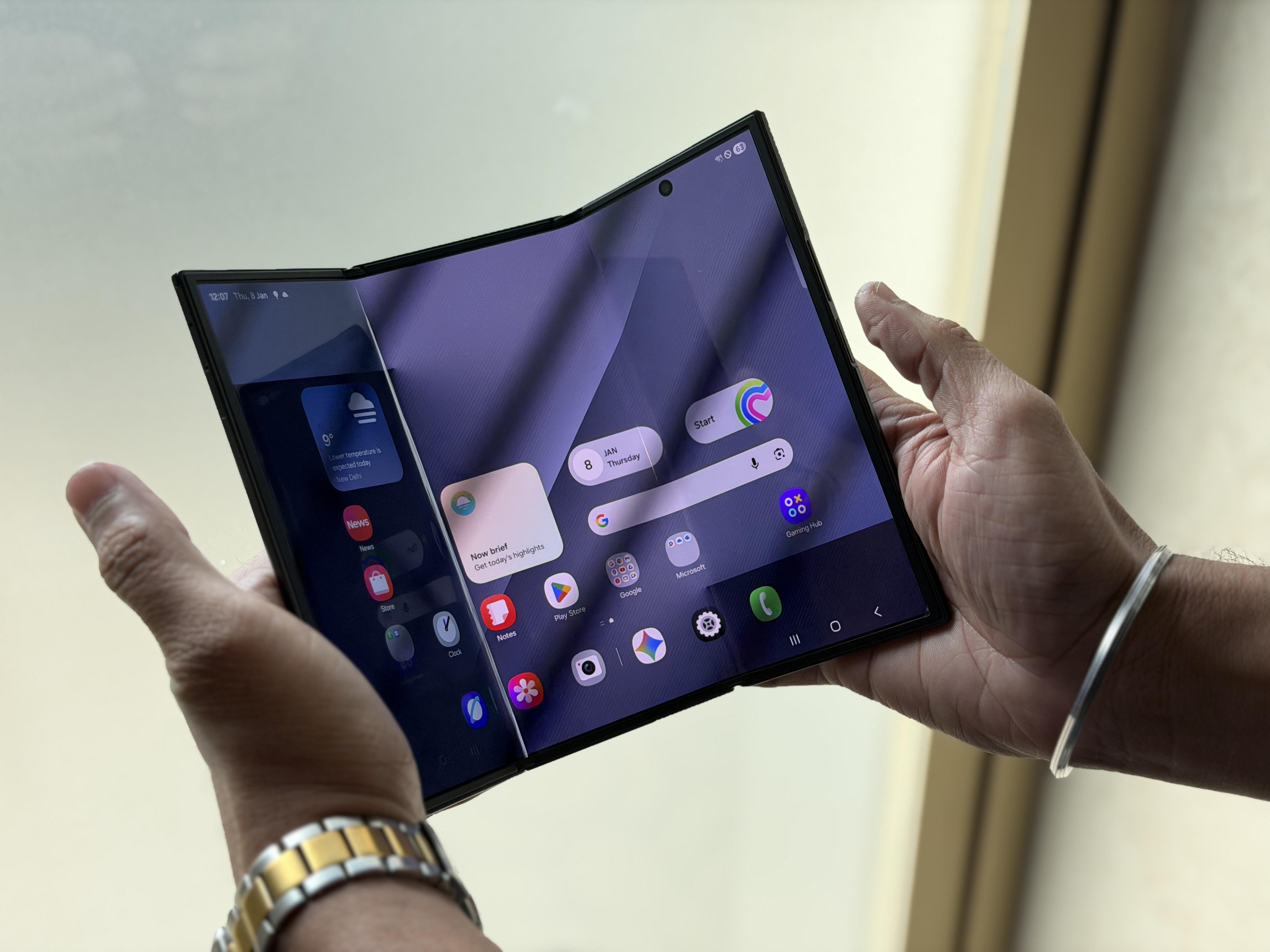
OPPO is set to launch its next foldable smartphone, the OPPO Find N6, in China on March 17. The Chinese smartphone maker has confirmed the launch date of the device in its home market and has teased a global launch without announcing its date.


It should be noted that OPPO has not introduced a book-style foldable smartphone in India so far. In the Indian market, the company has only released two generations of its clamshell-style “Flip” foldables, while its book-style foldables have remained limited to other regions.


According to OPPO’s China website, the upcoming Find N6 will feature a book-style foldable design and will be offered in three colour options: Golden Orange, Original Titanium and Deep Black. OPPO China’s pre-order page also indicates that the smartphone will be available in three configurations — 12GB+256GB, 16GB+512GB and 16GB+1TB — with satellite connectivity supported on the top-end variant.


Similar to its predecessor, the device will also include a camera system co-developed with Swedish optics brand Hasselblad.


OPPO Find N6 foldable smartphone: What do we know


OPPO has revealed that the upcoming foldable will be powered by the Qualcomm Snapdragon 8 Elite Gen 5 chip and will boast a 200MP LED rear camera system co-developed with Hasselblad. According to a report by GSMArena, the main camera is expected to be complemented by a 50MP ultrawide camera and a 50MP periscope telephoto camera. It may boast a 6,000mAh battery while sporting an 8.12-inch inner display and a 6.62-inch cover screen.


OPPO unveiled key engineering details about its upcoming Find N6 foldable smartphone in press releases, highlighting a redesigned hinge and display system aimed at significantly reducing the crease on the foldable screen. The device will feature what the company calls a “Zero-Feel Crease”, achieved through a new second-generation Titanium Flexion Hinge paired with a redesigned flexible display structure.


The hinge uses an industry-first 3D liquid printing process to smooth microscopic irregularities on the hinge surface. According to OPPO, ultra-precise laser scanning and high-resolution 3D printing are used to fill tiny gaps in the hinge structure, reducing height variance from 0.2mm to 0.05mm. The hinge also features a wider waterdrop folding design and a new pivot system that increases support force, helping reduce mechanical stress on the display during folding and unfolding.


The Find N6 will also use a new Auto-Smoothing Flex Glass designed to maintain screen flatness over long-term use. OPPO says the material is 50 per cent thicker than conventional ultra-thin glass and offers significantly improved deformation resistance and shape recovery. Combined with the new hinge, the display is claimed to maintain its structure even after extensive folding cycles. The device is also built using materials such as grade-5 titanium alloy, ultra-high-strength steel and aerospace-grade aluminium, while the outer display uses Nanocrystal Glass for improved drop resistance, and the device carries IP56, IP58 and IP59 water resistance ratings.


OPPO has also revealed new AI-driven productivity features for the upcoming Find N6 foldable smartphone, developed in collaboration with Google Cloud. The device will introduce the OPPO AI Pen, an upgraded stylus designed to enhance note-taking, organisation and creative workflows on the foldable display. It remains unclear whether it will be bundled with the smartphone or sold separately.


The AI Pen will support features such as AI Chart and AI Image, powered by Google’s AI technologies. With AI Chart, users can circle handwritten notes using the stylus to automatically convert them into clean, editable digital tables. The AI Image feature, meanwhile, can transform simple sketches or doodles into refined artwork in different visual styles based on user prompts.


OPPO has also confirmed enhanced cross-device sharing on the Find N6. The device will support Android Quick Share compatibility with Apple devices, allowing users to transfer photos, videos and files directly without installing additional apps. These capabilities will be integrated with ColorOS 16 on the Find N6, which the company says is designed to combine advanced hardware and AI features to improve productivity on the foldable smartphone.


Source link

POCO is set to launch X8 Pro series in India on March 17: What to expect

POCO is set to launch X8 Pro series in India on March 17: What to expect


POCO is set to launch its X8 Pro series in India on March 17. The lineup will include two models — POCO X8 Pro and POCO X8 Pro Max. Ahead of the launch, the company has revealed several key specifications of the global variant, including details of the processor, battery and more. The Indian variants of the smartphones are expected to feature similar specifications.


According to POCO, the global variant of the X8 Pro will pack a 6,500mAh battery, while the X8 Pro Max will pack an 8,500mAh battery. The company has also confirmed that both devices will be powered by MediaTek Dimensity chipsets.


POCO X8 Pro series: What to expect


POCO Global has confirmed that the POCO X8 Pro will be powered by the MediaTek Dimensity 8500 Ultra chipset. The smartphone will sport a 6.59-inch AMOLED display with 1.5K resolution and a 120Hz refresh rate. According to the company, the display will support up to 3,500 nits of peak brightness. The device is also expected to pack a 6,500mAh battery with support for 100W wired charging.


On the other hand, the POCO X8 Pro Max will be powered by the Dimensity 9500s processor and pack an 8,500mAh battery with support for 100W charging. According to the company, the smartphone will feature a 6.83-inch AMOLED display with 1.5K resolution, a 120Hz refresh rate and up to 3,500 nits of peak brightness.


Both smartphones are confirmed to come with IP66, IP68, IP69 and IP69K ratings for dust and water resistance. The teaser image posted by the company shows the X8 Pro in White and the X8 Pro Max in Black, both with a metal frame and dual rear cameras.


According to a report from FoneArena, the upcoming smartphones could be a rebranded version of the Redmi Turbo 5 and Redmi Turbo 5 Max.


For imaging, the POCO X8 Pro will likely get a 50MP primary camera along with an 8MP ultrawide lens. On the other hand, the X8 Pro Max will carry a 50MP Light Fusion 600 main camera with optical image stabilisation (OIS) and the same ultrawide camera as the X8 Pro. Both smartphones are expected to get a 20MP front camera for selfies, video calls and more. 


POCO X8 Pro: Expected specifications


  • Display: 6.59-inch, 1.5K AMOLED 120Hz refresh rate, 3500nits of peak brightness

  • Processor: MediaTek Dimensity 8500 Ultra

  • Rear camera: 50MP main camera with OIS +8MP ultawide

  • Front camera: 20MP front camera

  • Battery: 6500mAh

  • Charging: 100W fast charging

  • Protection: IP66, IP68, IP69 and IP69K


POCO X8 Pro Max: Expected specifications


  • Display: 6.83-inch 1.5K AMOLED 120Hz refresh rate, 3500nits of peak brightness 

  • Processor: MediaTek Dimensity 9500s 

  • Rear camera: 50MP Light Fusion 600 main camera with OIS + 8MP ultrawide

  • Front camera: 20MP

  • Battery: 8500mAh battery 

  • Charging: 100W fast charging

  • Protection: IP66, IP68, IP69 and IP69K


Source link

Huawei may soon launch MatePad 11.5 tablet in India: Expected specs, more

Huawei may soon launch MatePad 11.5 tablet in India: Expected specs, more


Huawei is reportedly planning to launch a new device in India, likely a tablet. A microsite for the upcoming Huawei product has gone live on the e-commerce platform Flipkart, which does not mention any details. According to a report by 91Mobiles, the teaser image is believed to be of a tablet that looks very similar to the MatePad 11.5, which Huawei already sells in several other regions.


Since 2020, Huawei has shied away from launching smartphones in India. However, it has been selling other devices like smartwatches and TWS through third-party distributors. It remains unclear whether Huawei is making a comeback in India this time or if it will continue to sell its products through other channels.


If indeed the upcoming product is going to be the Huawei MatePad 11.5, then here’s what consumers can expect from it:


Huawei MatePad 11.5: Details


The Huawei MatePad 11.5 tablet features an 11.5-inch TFT LCD (IPS) display with support for up to a 120Hz refresh rate. It runs on HarmonyOS 4.3 and comes with 8GB of RAM, paired with 128GB or 256GB storage options. For photography, the device includes a 13MP rear camera and an 8MP front camera. It is backed by a 10,100mAh battery, while the tablet weighs 515g.


Huawei MatePad 11.5: Specifications


  • Display: 11.5-inch TFT LCD (IPS), up to 120Hz refresh rate

  • OS: HarmonyOS 4.3

  • RAM: 8GB

  • Storage: 128GB / 256GB

  • Rear camera: 13MP

  • Front camera: 8MP

  • Battery: 10,100mAh

  • Weight: 515g

  • Thickness: 6.1mm


Why hasn’t Huawei been very active in India


Huawei has largely scaled back new product launches in India due to regulatory and geopolitical factors that intensified after the 2020 border tensions between India and China. Since then, Chinese technology firms have faced closer scrutiny in India, particularly in sectors linked to telecommunications infrastructure and digital networks, which has affected Huawei’s ability to expand its presence in the country.


Another key factor is India’s “trusted sources” framework for telecom equipment procurement, under which network operators can only buy gear from vendors approved by the government. Huawei has not received this approval, effectively keeping it out of India’s 5G ecosystem.


In addition, US export restrictions placed on Huawei have prevented the company from licensing Google Mobile Services from Google, meaning its smartphones cannot ship with core apps such as the Play Store, Gmail, and Maps. This limitation has made Huawei devices less viable in markets like India, where Google services are widely used by most Android users.


Source link

JBL launches 'Grip' portable Bluetooth speaker with AI Sound Boost: Details

JBL launches 'Grip' portable Bluetooth speaker with AI Sound Boost: Details


JBL Grip portable Bluetooth Speaker (Image; JBL)


JBL has launched a new portable Bluetooth speaker in India, the JBL Grip. The speaker comes with JBL Pro Sound, AI Sound Boost technology and Auracast support for stereo and multi-speaker pairing. According to the company, the device offers up to 12 hours of battery life, with an additional two hours through Playtime Boost. The JBL Grip also features IP68-rated water and dust protection, along with support for the JBL Portable app.


JBL Grip: Price and availability


  • Price: Rs 11,999

  • Colour options: Black, White, Purple, Red, Blue and Camo
The device is available through the company’s website, as well as through select online and offline retailers. 


JBL Grip: Details


According to the company, the JBL Grip is designed as a compact and portable speaker inspired by the proportions of a seltzer can. The device includes a rope loop on the back panel that allows users to carry or hang the speaker. The JBL logo is positioned vertically to match the upright design. The JBL Grip also includes ambient lighting on the back panel. Users can customise the lighting colour and intensity through the JBL Portable app. 


The JBL Grip speaker delivers 16W output and supports JBL Pro Sound. It also includes AI Sound Boost, a technology that the company said analyses music in real time to optimise the speaker driver and prevent distortion. The JBL Grip also supports Auracast, which allows users to connect multiple compatible speakers or pair two speakers for stereo output. 


The company claims that the speaker can offer up to 12 hours of playback on a single charge. With Playtime Boost, users can get an additional two hours of listening time. JBL said that the feature adjusts the speaker’s performance to provide a louder and “crisper” sound while extending battery life. 

For durability, the device comes with IP68-rated protection, which means it is resistant to water and dust. JBL also said that the speaker is drop-proof. According to JBL, the speaker is built using post-consumer recycled plastic and comes with FSC-certified paper packaging. 


JBL Grip: Key features


  • JBL Pro Sound with 16W output and AI Sound Boost

  • Up to 12 hours of playtime, plus two additional hours with Playtime Boost

  • Auracast support for multi-device pairing

  • Ambient light on the back panel with adjustable colour and intensity

  • IP68-rated and drop protection

  • Compatible with the JBL Portable app

First Published: Mar 16 2026 | 2:28 PM IST


Source link

Meta revises Facebook rules to curb copied content in Feed, Reels and more

Meta revises Facebook rules to curb copied content in Feed, Reels and more


Meta has announced updates for Facebook, which it said will prioritise original content and reduce the reach of copied posts. The company has also introduced clearer guidelines explaining what qualifies as original content. In addition, Meta is testing updates to its existing content protection system that would allow creators to report impersonators and better protect their work. Meta said the changes are intended to improve content recommendations in Feed and Reels while reducing spam and imitation accounts on the platform.


Meta tightens rules on copied content: What’s new


According to Meta, it has been working over the past year to reduce spam and copied content that often crowds out original creators. The company said it is now prioritising posts that are created directly by the account owner. It also noted that as the distribution of original content grows across Feed and Reels, payout opportunities for creators are increasing.


Updated guidelines for what counts as original


Meta has updated its guidelines to clarify what it considers original content on Facebook and how such posts are treated in recommendations. The company said the changes are meant to highlight genuine creator content and reduce the reach of copied or low-effort posts. Key points from the updated rules include:


Content created directly by the account owner: Videos that are filmed or produced by the creator who owns the Page or profile are treated as original content on Facebook. 


Use of third-party content with meaningful additions: Reels that include clips from other sources can still qualify as original if the creator adds something new, such as fresh information, analysis or a different perspective. However, simple reactions, watching along with a video, stitching clips together or narrating what is already shown without adding new value may be treated as unoriginal and could appear less often in Feed and Reels.


Reuploads or minor edits may be limited: Content that copies another creator’s post or makes small changes to it will likely be considered unoriginal. This includes reposting someone else’s video without involvement in creating it, or making small edits such as adding borders, captions or adjusting playback speed.


Creative transformations may get wider reach: If a creator significantly transforms content with creativity or new ideas, the video may still qualify for recommendations in Feed and Reels and could receive wider distribution.


Accounts posting mostly copied content may face restrictions: Meta said creators who repeatedly share unoriginal content could see their posts shown less often. In some cases, accounts may become ineligible for recommendations or monetisation if the pattern continues.


Appeal option available: Creators can appeal if they believe their content has been incorrectly flagged as unoriginal. Meta said it is continuing to improve how it reviews such cases. 


New tools to report impersonators


Additionally, Meta said it is improving tools that help creators protect their work. The company launched a content protection system last year that automatically detects when original Reels appear elsewhere across its platforms.


The company is now testing updates to this tool so it can also detect possible impersonation and allow creators to report it from a single place. According to Meta, the feature will soon be rolled out to more creators who have access to the content protection tool in their professional dashboard.


Source link

YouTube
Instagram
WhatsApp