OpenAI President Brockman says he’s quitting after Sam Altman ouster

OpenAI President Brockman says he’s quitting after Sam Altman ouster


By Tom Giles


OpenAI co-founder and President Greg Brockman said he’s departing from the maker of generative artificial intelligence tools just hours after the board pushed out Chief Executive Officer Sam Altman.


“I’m super proud of what we’ve all built together since starting in my apartment 8 years ago,” Brockman wrote in a post on the social media site X. “We’ve been through tough & great times together, accomplishing so much despite all the reasons it should have been impossible. But based on today’s news, I quit.”


Earlier, the OpenAI board said was parting ways with Altman, also a co-founder and one of the most prominent figures in the AI world, after losing confidence in him as a leader.


“Genuinely wishing you all nothing but the best,” Brockman wrote in his post. “I continue to believe in the mission of creating safe (artificial general intelligence) that benefits all of humanity.”


In one of the moves announced earlier, Brockman was due to step down from his role as board chairman but stay on at the company, reporting to the new CEO.

First Published: Nov 18 2023 | 7:35 AM IST


Source link

OpenAI interim CEO Murati urges focus, stresses Microsoft support

OpenAI interim CEO Murati urges focus, stresses Microsoft support


By Rachel Metz and Dina Bass


OpenAI Interim Chief Executive Officer Mira Murati was “honored and humbled” to step into the leadership role at the company following the ouster of Sam Altman, according to a memo she sent to staff reviewed by Bloomberg


Murati also urged employees still reeling Friday from the sudden departure of Altman, one of the most prominent figures in the artificial intelligence industry, to focus on their work. “It’s more important than ever that we stay focused, driven, and true to our core values,” she wrote.


In the immediate aftermath of the announcement, speculation was rife that Microsoft Corp., the world’s largest maker of software and OpenAI’s biggest backer, might have been involved in his removal. However, Redmond, Washington-based Microsoft didn’t orchestrate Altman’s exit, according to two people with knowledge of the matter who asked not to be identified because the information isn’t public.


The software giant had only a few minutes advanced notice about Altman’s firing, said a person familiar with the matter. 


Microsoft Chief Executive Officer Satya Nadella tried to ease any concerns Altman’s departure could hurt his company’s long-term AI plans. Microsoft Friday ended a three-day conference in which it unveiled a new AI chip that OpenAI said it is testing, as well as various new programs and updates, many of them based on the startup’s technology.


“We have a long-term agreement with OpenAI with full access to everything we need to deliver on our innovation agenda and an exciting product roadmap; and remain committed to our partnership, and to Mira and the team,” Nadella wrote in a blog post. “Together, we will continue to deliver the meaningful benefits of this technology to the world.”


Murati said that she had spoken to Microsoft’s leadership on Friday. “I spoke with Kevin and Satya earlier today who expressed their unwavering support,” she wrote in the memo, referring to Microsoft Chief Technology Officer Kevin Scott and Nadella.


OpenAI is at  a“crucial juncture where our tools are being widely adopted, developers are actively building on our platforms, and policymakers are deliberating on the best ways to regulate these systems,” Murati wrote. “This is welcome progress and an opportunity to participate in a future where AI is built and used for good.”


Murati did not mention Altman by name in the memo.


Source link

Altman ousted from OpenAI, board says it lost confidence in him as leader

Altman ousted from OpenAI, board says it lost confidence in him as leader


By Rachel Metz


Sam Altman, one of the most prominent figures in the world of artificial intelligence, is being forced out of OpenAI — the company behind the wildly popular ChatGPT chatbot he helped to create — after the board said it had lost confidence in him as a leader.


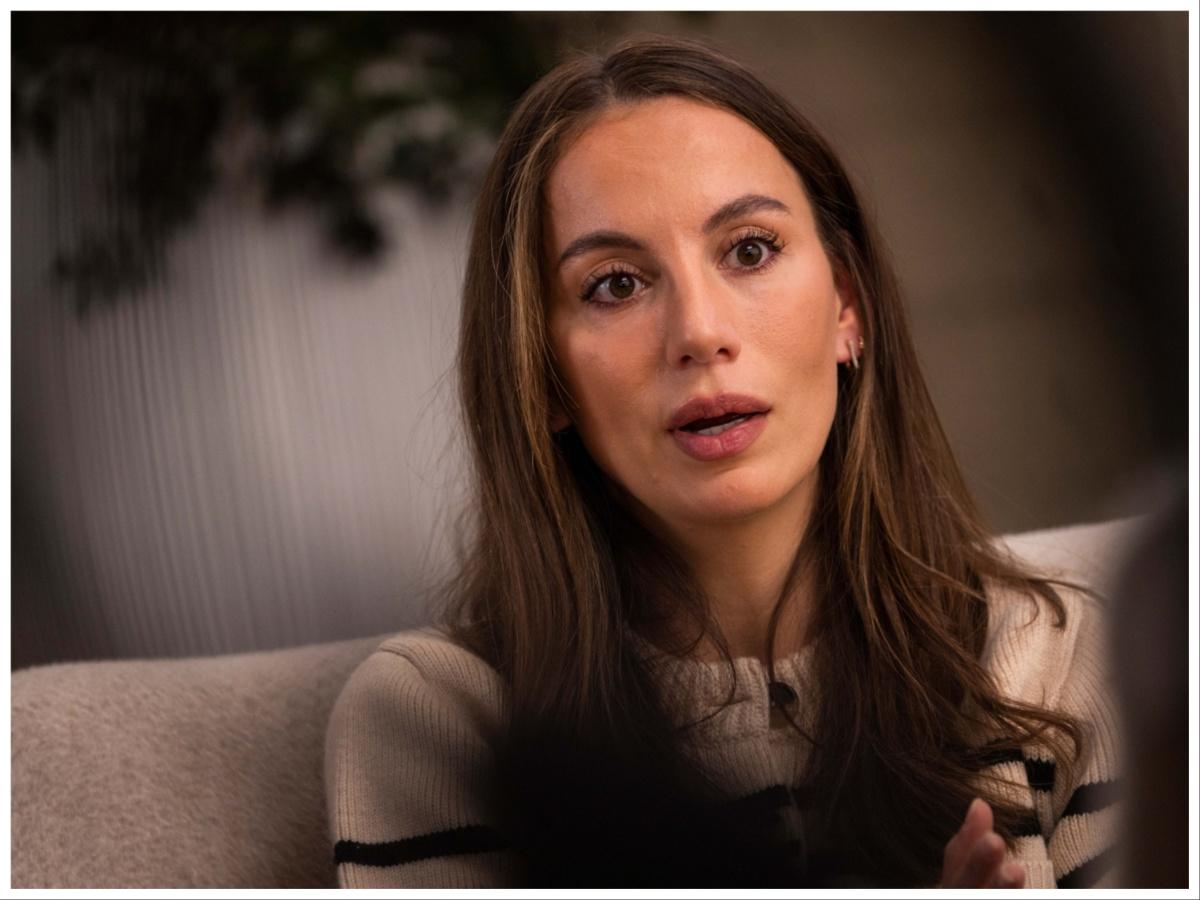
Mira Murati, an Albanian-born Dartmouth-educated engineer who helped develop some of OpenAI’s best-known products as its chief technology officer, will serve as OpenAI’s interim chief executive officer.  


“Mr. Altman’s departure follows a deliberative review process by the board, which concluded that he was not consistently candid in his communications with the board, hindering its ability to exercise its responsibilities,” the company said in a statement. “The board no longer has confidence in his ability to continue leading OpenAI.”


OpenAI’s introduction of ChatGPT to the world turned 38-year-old Altman into an instant celebrity, winning him an audience with world leaders including US President Joe Biden and UK Prime Minister Rishi Sunak. He is an outspoken figure in the AI community, aligning himself with a camp of evangelists who’ve pioneered and advanced AI technologies while simultaneously warning of their potential to end mankind. 


His departure came as a surprise to those both inside and outside of the company: Altman was still sending regular emails to employees as of late Friday morning, according to a person familiar with the matter.


“I loved my time at openai,” Altman wrote in a tweet Friday. “It was transformative for me personally, and hopefully the world a little bit. most of all i loved working with such talented people.” Altman added: “Will have more to say about what’s next later.”


As chief executive officer, Altman turned OpenAI into the most consequential AI company in the world. The company was recently in talks to sell employee shares to investors at a valuation of $86 billion. ChatGPT and OpenAI’s image generator Dall-E brought generative AI into the mainstream. Both tools leverage a technology that trains on vast swathes of digital data and can produce human-like content such as images, text and code when prompted. 


Founded in 2015, OpenAI released ChatGPT about a year ago, setting off a rush of interest in AI technology. About 100 million people use ChatGPT each week, the company said in November, and more than 90% of Fortune 500 businesses are building tools on OpenAI’s platform. The company provides its software to businesses, and is on track to have annual revenue of about $1 billion, Bloomberg reported in August.


At the same time, OpenAI is facing growing competition from well-funded rival products developed at other startups and tech giants, including at Alphabet Inc.’s Google.


In the hours following Altman’s departure, hundreds of millions of dollars of trading in closely held OpenAI shares on the secondary market have been thrown into limbo, according to people familiar with the matter. Some transactions are on hold and some have been cancelled outright, the people said.


Those inside and outside the company were left to wonder about OpenAI’s future without its longtime leader and public face. Pieter Abbeel, a professor at the University of California, Berkeley and an AI startup founder who worked as a research scientist at OpenAI in 2016 and 2017, said he was “completely baffled” to hear that Altman had been ousted from the company.


“It’s kind of crazy to think that GPT-4 would not have existed without Sam,” he said. Abbeel noted that while Altman was one of several key employees at the company, he was instrumental in leading OpenAI and raising the tremendous amount of money needed for it to build increasingly powerful AI models.


Rowan Curran, a senior analyst at Forrester who covers generative AI and machine learning, said the board’s decision to remove Altman from the CEO post should be taken as similar to other executive-level changes in the technology industry.


“Sam Altman was obviously a force at OpenAI and did a lot to bring the company where it is,” he said. “But there’s no reason at this point to think there are any underlying issues with the company or the technology or its approach, given what we know at this time.”


Greg Brockman, a co-founder of OpenAI who had been chairman of the board, is also leaving his board post but will still serve as president of OpenAI. 


Murati, who joined OpenAI in 2018, played a key role in shepherding ChatGPT and Dall-E. She was made CTO last year. “Given her long tenure and close engagement with all aspects of the company, including her experience in AI governance and policy, the board believes she is uniquely qualified for the role and anticipates a seamless transition while it conducts a formal search for a permanent CEO,” the company said in its statement.  


Murati said she was “honored and humbled” to step into the leadership role at the company following the ouster of Sam Altman, according to a memo she sent to staff reviewed by Bloomberg.


“We are now at a crucial juncture where our tools are being widely adopted, developers are actively building on our platforms, and policymakers are deliberating on the best ways to regulate these systems,” Murati wrote in the memo. “This is welcome progress and an opportunity to participate in a future where AI is built and used for good.”


Microsoft Corp., which has pumped $10 billion into OpenAI, fell as much as 2.4% on the news of Altman’s departure. The company said in a statement that it has “a long-term relationship with OpenAI and remains committed to their team as we bring this next era of AI to our customers.” In her memo, Murati said she spoke with Microsoft’s CEO and CTO, “who expressed their unwavering support.”


Source link

IBM, EU pull ads from Musk’s X as concerns about antisemitism fuel backlash

IBM, EU pull ads from Musk’s X as concerns about antisemitism fuel backlash


Advertisers are fleeing social media platform X over concerns about their ads showing up next to pro-Nazi content and hate speech on the site in general, with billionaire owner Elon Musk inflaming tensions with his own tweets endorsing an antisemitic conspiracy theory.


IBM said this week that it stopped advertising on X after a report said its ads were appearing alongside material praising Nazis a fresh setback as the platform formerly known as Twitter tries to win back big brands and their ad dollars, X’s main source of revenue.


The liberal advocacy group Media Matters said in a report on Thursday that ads from Apple, Oracle, NBCUniversal’s Bravo network and Comcast also were placed next to antisemitic material on X.


IBM has zero tolerance for hate speech and discrimination and we have immediately suspended all advertising on X while we investigate this entirely unacceptable situation,” the company said in a terse statement.


Apple, Oracle, NBCUniversal and Comcast didn’t respond immediately to requests seeking comment on their next steps.


The European Union’s executive branch said separately Friday that it’s pausing its advertising on X and other social media platforms, in part because of a surge in hate speech.


Musk sparked outcry this week with his own tweets responding to a user who accused Jews of hating white people and professing indifference to antisemitism. You have said the actual truth, Musk tweeted in a reply Wednesday.


Musk has faced accusations of tolerating antisemitic messages on the platform since purchasing it last year, and the content on X has gained increased scrutiny since the war between Israel and Hamas began.


X’s point of view has always been very clear that discrimination by everyone should STOP across the board I think that’s something we can and should all agree on, CEO Linda Yaccarino said in a tweet on Thursday.


She was hired by Musk to rebuild ties with advertisers who fled after he took over, concerned that his easing of content restrictions was allowing hateful and toxic speech to flourish and that would harm their brands.


When it comes to this platform X has also been extremely clear about our efforts to combat antisemitism and discrimination. There’s no place for it anywhere in the world it’s ugly and wrong. Full stop,” Yaccarino said.


The accounts that Media Matters found posting antisemitic material will no longer be monetizable and the specific posts will be labelled sensitive media,” according to a statement from X.


The head of the Anti-Defamation League hit back at Musk’s tweets this week, in the latest clash between the prominent Jewish civil-rights organisation and the billionaire businessman.


At a time when antisemitism is exploding in America and surging around the world, it is indisputably dangerous to use one’s influence to validate and promote antisemitic theories,” ADL CEO Jonathan Greenblatt said Thursday on X.


The group has previously accused Musk of allowing antisemitism and hate speech to spread on the platform and amplifying the messages of neo-Nazis and white supremacists who want to ban the ADL.


Musk met with Israeli Prime Minister Benjamin Netanyahu in September, with Netanyahu telling the Tesla CEO that he hopes he can find a way to roll back antisemitism and other forms of hatred within the limits of the First Amendment.


The European Commission, meanwhile, said it’s putting all of its social media ad efforts on hold because of an alarming increase in disinformation and hate speech on platforms in recent weeks.


The commission, the 27-nation EU’s executive arm, said in a statement that it is advising its services to refrain from advertising at this stage on social media platforms where such content is present,” adding the freeze doesn’t affect its official accounts on X.


European Commissioner Thierry Breton, the bloc’s digital enforcer, has taken to X to call out the platform for allowing illegal content and false information to flourish.


Brussels has been adopted a tough stance with new rules to clean up social media platforms, and last month it made a formal request to X for information about its handling of hate speech, misinformation and violent terrorist content related to the Israel-Hamas war.

(Only the headline and picture of this report may have been reworked by the Business Standard staff; the rest of the content is auto-generated from a syndicated feed.)


Source link

Nepal’s SC sets hearing on petitions against TikTok ban on Nov 20

Nepal’s SC sets hearing on petitions against TikTok ban on Nov 20


Nepal’s Supreme Court on Friday said it will hold the preliminary hearing of the writ petitions filed against the government’s decision to ban the Chinese-owned social network platform Tiktok on Monday.


The Nepal government on Monday decided to ban the popular social media platform, citing its negative effects on social harmony.


Legal practitioners filed 10 writ petitions at the apex court against the government’s decision to ban TikTok in the Himalayan nation on Friday, the first day of the opening of the courts after the Tihar holidays.


After registering the 10 writ petitions, the Supreme Court scheduled the preliminary hearing for November 20, according to a court official.


About 10 writ petitions have been registered, and a preliminary hearing is scheduled for November 20, said Spokesperson for the Supreme Court, Bhadrakali Pokharel.


He said that all registered writ petitions will be heard on Monday.


Senior advocate Dinesh Tripathi, advocate Swagat Nepal, and others have filed separate writ petitions against the government’s decision to ban TikTok.


They have demanded that the government’s decision be scrapped because the ban on TikTok has violated citizens’ freedom of opinion and expression.


The petitioners have claimed that there was no legal basis for taking such a decision.


Although freedom of expression is a basic right, a large section of society has criticised TikTok for encouraging a tendency of hate speech, the government said.


The decision to ban Toktok is another setback for the Chinese networking platform, which has come under scrutiny in various countries, including India, the US, the European Union and the UK, where the governments have banned the application from its network over security concerns.

(Only the headline and picture of this report may have been reworked by the Business Standard staff; the rest of the content is auto-generated from a syndicated feed.)


Source link

Apple may be working on graphene-based thermal components for iPhone 16

Apple may be working on graphene-based thermal components for iPhone 16


Reference Image: Apple iPhone 15 Pro Max – Natural Titanium

American technology giant Apple Inc is reported to be working on a new thermal design for its upcoming iPhone 16 series. According to a report by MacRumors, the next-generation iPhone models would likely feature a graphene thermal system along with a metal battery casing to reduce overheating.


The move appears to address the overheating issues experienced by some early iPhone 15 Pro owners who complained that their iPhone could get abnormally hot to touch. Back in October, Apple rolled out an iOS software update to address the thermal issue.


According to the report, Apple has been filing patents related to the use of graphene for heat dissipation in portable devices for the past few months, adding to the rumour. Graphene has higher thermal conductivity compared to copper, which is currently being used in iPhones.


While Apple transitioned from a black-foil casing on its watch’s battery to metal casing in 2021 with Series 7, an equivalent change on the iPhone is expected with the 16 Series.


Previously, it had been reported that the iPhone 16 could feature an additional button, purportedly solid-state-backed by its haptic engine. According to some news reports, Apple has named it “Capture Button” in its internal communications. Its functionality remains unclear at the moment, but the button is expected to be located below the power button and will likely be a capacitive button rather than mechanical.


Apple is reportedly moving the mmWave antenna responsible for operating 5G frequency waves at short distances to the left side of the smartphone to free up space for an additional button on the right side.

First Published: Nov 17 2023 | 5:38 PM IST


Source link

YouTube
Instagram
WhatsApp




