Festive cheer for smartphone shipments in India with a 6-8% rise this year

Festive cheer for smartphone shipments in India with a 6-8% rise this year


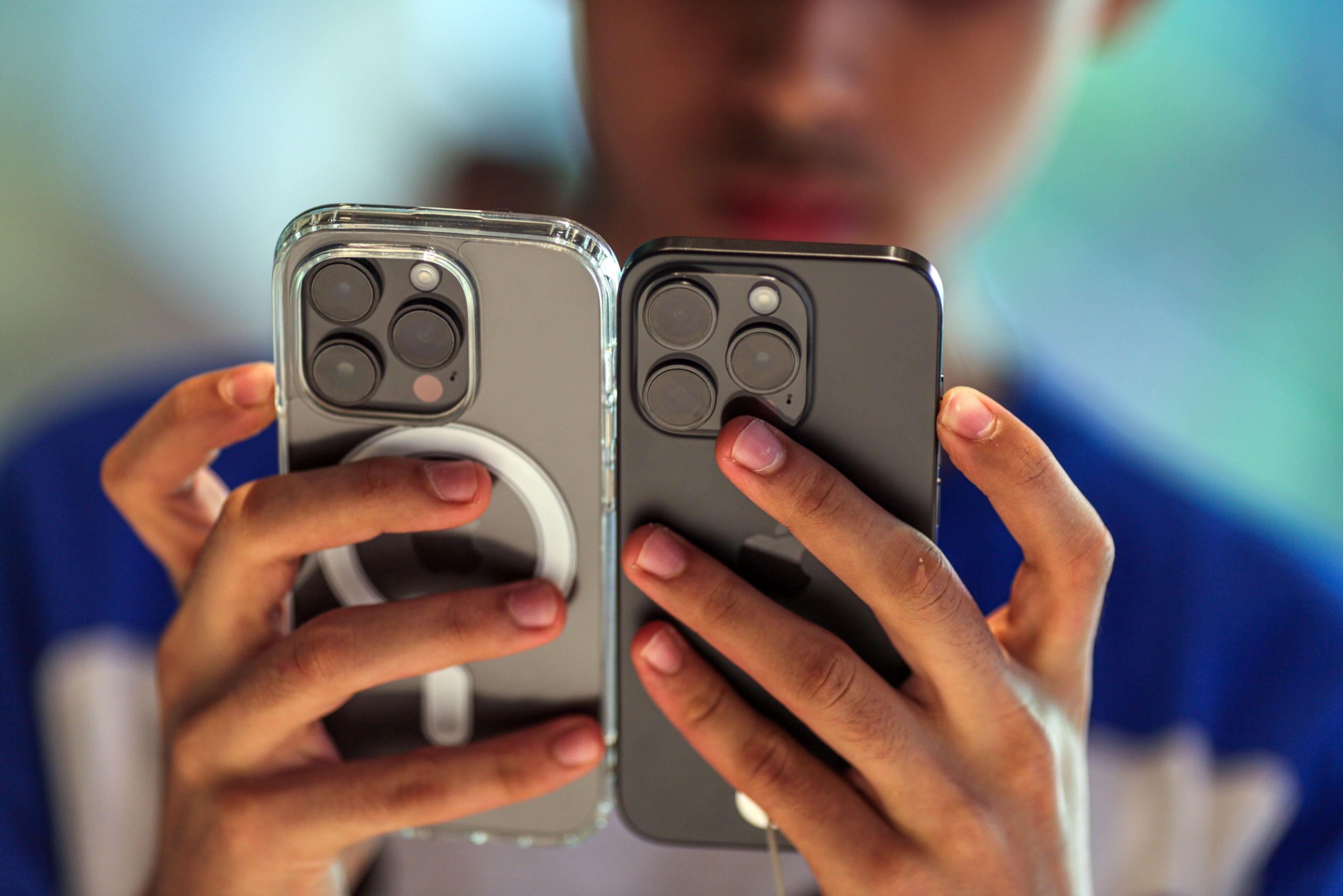
The shipment of smartphones in India has increased by 6-8 per cent during this festive season this year compared to the previous year.


Industry experts said that 5G connectivity and replacement demands were the main factors behind the majority of the sales, according to a report in The Economic Times (ET). The market share of general trade increased by 35-40 per cent, compared to about 32 per cent last year.


Tarun Pathak, research director at Counterpoint Research, a technology market research firm, said, “Diwali was better than what it was last year. We are predicting a 8 per cent increase in volume and 25 per cent growth in value during the 30-day festive season beginning from the first online sale.”


Shipra Sinha, analyst, industry intelligence group, CMR, said, “During the festive season, the affordability initiatives and EMI offers significantly influenced consumer preferences, steering them towards premium smartphones.”


E-commerce major Amazon India said that it sold 2.5 times more smartphones in the premium segment as compared to last year. The company said, “Amongst all smartphones sold, 60 per cent were 5G ready and 70 per cent of all smartphone orders came from tier-2 and below towns.”


IDC India said that there will be high levels of inventory and a cyclical dip in the fourth quarter. Upasana Joshi, research manager at IDC India, said, “October saw a spike in shipments, but November and December are going to be slow. With this, we should end a flat or a slight decline in the overall market.”


Source link

Apple brings RCS messaging to iPhones, does not give up on green bubble

Apple brings RCS messaging to iPhones, does not give up on green bubble


Apple has said that starting next year, iPhones will support RCS (Rich communication messaging) messaging standard, according to a report from 9to5Mac. RCS is the newer standard that is used by most Android devices for cross-platform support.


“Later next year, we will be adding support for RCS Universal Profile, the standard as currently published by the GSM Association,” Apple spokesperson Jacqueline Roy said in a statement. RCS messaging will work alongside iMessage on iOS devices, which will continue to be the default messaging platform for iPhones, Apple said in a statement shared with the Verge.


The news report also said that the Cupertino-based tech giant has confirmed the RCS messaging on iPhones will support reading receipts, typing indicators, high-res media sharing, and location sharing when texting between an iPhone and an Android device. However, the text threads and messages will be in green, similar to SMS messages.


Apple’s decision to adopt RCS comes after repeated criticism by other smartphone manufacturers such as Samsung and Google. Recently, Google, along with other European telecommunication companies, has written to the European Commission to label the iMessage service as a ‘core platform service’ under the EU’s new Digital Markets Act (DMA).


“Everybody should have secure and modern messaging without worrying what kind of phone they’re texting to. So glad to see Apple joining our ongoing work with the GSMA on RCS to make texting better for all”, Google SVP of platforms and ecosystems, Hiroshi Lockheimer said on X (formerly Twitter).


Earlier this week, British Consumer electronic brand Nothing has announced it will soon roll out the Nothing Chats app that will support iMessage chats on its Android flagship – Nothing Phone (2). Nothing said that its chat app will also offer RCS messaging, apart from iMessage features like live typing indicators, voice notes, and full-resolution media sharing.


What is RCS messaging?


Rich Communication Services, or simply RCS, is a revamped form of messaging that comes with more functionality and security features that SMS does not provide. 


When using RCS chats, messages are sent and received over the internet, unlike SMS or MMS, which are always sent through a mobile service carrier.


RCS chats-


  • Shows users when someone is typing.

  • Offer read receipts, which show when someone has read or received your message. 

  • Send messages over mobile data and Wi-Fi.

  • Lets users share files and high-resolution photos.


Earlier this week, British consumer electronic brand Nothing announced it would soon roll out the Nothing Chats app that will support iMessage chats on its Android flagship – Nothing Phone (2). Nothing said that its chat app will also offer RCS messaging, apart from iMessage features like live typing indicators, voice notes, and full-resolution media sharing.


Source link

Import licensing announcement pushed PC sales in India up 14% in Jul-Sep

Import licensing announcement pushed PC sales in India up 14% in Jul-Sep


The sale of personal computers (PCs) in India, including desktops and notebooks, rose 14 per cent to 4.5 million units in the quarter that ended on September 30, as compared to the same period last year, according to the latest data from the International Data Corporation (IDC).


In its Worldwide Quarterly Personal Computing Device Tracker, IDC said that the desktop category grew by 19.3 per cent while the notebooks saw a rise of 13.1 per cent. The rise in sales was attributed to higher demand for inventory owing to the Centre’s decision to impose import licenses for PCs.

“In August, the Government of India declared a mandatory requirement of import licenses for PCs from October 30. Though this decision was later put on hold, vendors shipped significant channel inventory to avoid any risks of supply shortages or price hikes, not to mention ensuring sufficient supplies for festival season sales,” said Bharath Shenoy, senior research analyst, IDC India.


Under the proposed norms, IT hardware companies will be required to register and disclose data related to their imports and the countries they import from. According to the Centre, the main reason behind the measure is to restrict imports of laptops and computers, especially since a majority of them come from China.


It was supposed to be implemented immediately but was later deferred due to objections from the industry. Now, it has been working on a new management system to give import authorisation to IT companies.  


In the PC market, the consumer segment saw healthy growth of 26.3 per cent, while demand in the commercial segment remained flat.


HP Inc continued to lead the market with a 29.4 per cent share during the quarter, up from 23.9 per cent in the same quarter last year.


HP was followed by Lenovo and Dell, with market shares of 17 per cent and 14.6 per cent, respectively. However, Lenovo’s share fell 8.8 per cent from 21.3 per cent in the July-September quarter of 2022. Dell’s share last year was 16 per cent.


Asus accounted for 12.5 per cent of all sales during the quarter and saw the highest jump in its shipments, at 43.9 per cent. Its market share last year was 9.9 per cent. “Acer pushed stock on online channels and hence had its biggest consumer quarter ever,” IDC said.


Demand for the commercial segment, especially from enterprises, is likely to remain bleak in the upcoming quarters. 


“The vendors are now focused on increasing their local assembly mix as government and education projects are expected to prefer locally assembled devices,” said Navkender Singh, associate vice president of Devices Research at IDC India, South Asia and ANZ.


“While this might give a further boost to the government and education segments, a dearth of enterprise orders is a matter of concern as the enterprise segment is expected to decline by over 20 per cent year-on-year in 2023.”


Source link

China will be at the forefront of AI, says Alphabet’s Sundar Pichai

China will be at the forefront of AI, says Alphabet’s Sundar Pichai


By Shirin Ghaffary


Alphabet Inc. Chief Executive Officer Sundar Pichai said he expects China to be “at the forefront” of artificial intelligence, and said it’s important for the US to collaborate with the Asian nation on both regulation and innovation.


The scale of AI work in China “is just astounding to see,” Pichai said at the Asia-Pacific Economic Cooperation conference in San Francisco, in an on-stage interview by Bloomberg’s Emily Chang. “In some ways, China is going to be at the forefront of AI and that’s a given.”


That’s going to require a strong working relationship, he added. “No way you make progress over the long term without China and the US deeply talking to each other on something like AI,” he said, drawing on his experience prioritizing the technology at Google. “It has got to be an integral part of the process.”


Executives from Microsoft Corp., Citigroup Inc., Tesla Inc. and other large multinationals are meeting this week with Chinese President Xi Jinping and other Asian leaders, as well as US President Joe Biden. 


Pichai compared the need for global collaboration on AI safety to the importance of working together on climate change. If something goes wrong with AI technology in one country, it goes wrong for everyone on the internet, he explained.


The CEO also talked about Google’s yet-to-be-released Gemini, a large language model trained on massive data sets that will be competitive with other state of the art models to answer prompts with natural language responses. The CEO said that right now the company is focused on getting the “1.0” version of Gemini out “as soon as possible,” before releasing more technically complex versions.


“I am extraordinarily excited for innovation coming ahead,” he said. “We built the company for this moment.”

First Published: Nov 17 2023 | 7:36 AM IST


Source link

Use of AI in media industry responsibly can be valuable asset: PCI’s Desai

Use of AI in media industry responsibly can be valuable asset: PCI’s Desai


Use of artificial intelligence in the media industry can be a valuable asset if it is used responsibly and for the greater good, Press Council of India (PCI)chairperson Justice (retd) Ranjana Prakash Desai said on Thursday.


Flagging the “potential flipside” to the use of artificial intelligence (AI), she noted that these systems acquire knowledge from various datasets and if these datasets contain biases or stereotypes, AI may replicate them in the content it generates.


“This implies that artificial intelligence may ‘potentially’ perpetuate harmful stereotypes or disseminate inaccurate information which could undermine the credibility of print media,” Desai added.


The PCI chief was addressing an event organised by the print media watchdog to mark the National Press Day.


She noted that the media landscape has transformed significantly in recent years due to the advent of advanced technology in mass communication.


News gathering, sharing and consumption have now become faster and more convenient, she added.


“We now rely on their mobile devices to quickly access information through search engines and varied platforms. While this offers the advantage of diverse sources, it can also lead to consumption of unverified news.


“This can influence our opinions, which are crucial in a democratic society,” Desai said.


Therefore, it is important for every journalist to verify sources of information and ensure that they are credible.


“This will avoid spreading of misinformation,” she added.


The PCI chief described the integration of artificial intelligence in the news media industry as “noteworthy development” and said in today’s digital age, artificial intelligence-powered tools are assuming a more multifaceted role within the print media.


These tools help in creating articles, fact checking, designing layouts and presenting news, she said.


“However, there is a potential flipside to the use of artificial intelligence as well,” Desai added.


The PCI chief underlined that the press as the fourth pillar of democracy is instrumental in upholding the values of a democratic society.


“Thus it is essential that we keep this foundational pillar out of the overwhelming influence of artificial intelligence which inherently carries the potential to mislead,” she said.


“Artificial intelligence in media industry can be valuable asset provided it is used responsibly and for the greater good, media must keep this in mind while using this technology,” she added.

(Only the headline and picture of this report may have been reworked by the Business Standard staff; the rest of the content is auto-generated from a syndicated feed.)


Source link

Project Kuiper internet satellites fully successful in testing, says Amazon

Project Kuiper internet satellites fully successful in testing, says Amazon


Amazon.com said on Thursday its two prototype satellites for its planned Kuiper internet network have been operating successfully, with the project on track to start mass production in the first half of 2024.


The Kuiper internet network will compete against billionaire Elon Musk’s Starlink, which is the world’s largest satellite operator.


The company said it had achieved a 100% success rate within the first 30 days of the satellites’ launch.


The company said it had successfully used the prototype satellites for two-way video calls and streaming a high-definition film on Prime Video.


Early partners like Vodafone and Verizon will be the first telecom firms to beta test the service in the second half of next year.


“We still have a lot of hard work ahead, and scaling for mass production won’t be easy,” Rajeev Badyal, vice president of technology for Project Kuiper, said.


The U.S. Federal Communications Commission, however, requires Amazon to deploy half of its more than 3,000-planned satellite constellation by 2026.


Amazon used a United Launch Alliance Atlas 5 rocket to launch the satellites in the first week of October. Rival Starlink uses its own in-house SpaceX rockets.


(Reporting by Zaheer Kachwala in Bengaluru and Joey Roulette in New York; Editing by Tasim Zahid)

First Published: Nov 16 2023 | 9:45 PM IST


Source link

YouTube
Instagram
WhatsApp




