OnePlus 12 to feature Sony LYT-808 imaging sensor, Qualcomm SD 8 Gen 3 chip

OnePlus 12 to feature Sony LYT-808 imaging sensor, Qualcomm SD 8 Gen 3 chip


Chinese electronic brand OnePlus has confirmed on social media platform Weibo that its upcoming OnePlus 12 smartphone will feature Sony LYT-808 imaging sensor. The Sony LYT-808 sensor on the OnePlus 12 is expected to be a variation of LYT-T808 sensor, which was featured on the OnePlus Open foldable. While the company did not share details of other camera sensors, the OnePlus 12 would likely feature a 64MP periscope zoom lens of an f/2.6 aperture with support for optical image stabilisation.


For reference, the OnePlus Open boast a triple-camera system on the rear encompasses a 48-megapixel main camera sensor (Sony Lytia-808) with optical image stabilisation, a 64MP 3x telephoto with autofocus and OIS, and a 48MP ultra-wide-angle sensor with autofocus. The camera on the main display is a 20MP sensor, and 32MP camera sensor on the cover display. The camera system is co-engineered with Hasselblad. The OnePlus Open boasts 4K 30fps videos in Dolby Vision.


The OnePlus 12 is expected to feature similar rear camera set-up and Hasselblad enhancements that the OnePlus Open has.


Last month at the display maker BOE’s event in China, OnePlus had confirmed that the OnePlus 12 will be powered by the Qualcomm Snapdragon 8 Gen 3 system-on-chip. Besides, the company showcased display related enhancements while confirming that the smartphone would feature a 2K resolution AMOLED screen. The company did not share specifics on the display but said that the display would be powered by OPPO’s first-generation display chip – Display P1. OnePlus said the display chip would allow for a high-precision pixel-level calibration algorithm for better image quality, higher brightness, and lower power consumption. According to OnePlus, the 2K resolution AMOLED display, called “Oriental screen”, has been rated A+ by DisplayMate.


According to news reports, the OnePlus 12 would launch in China in December, followed by a global launch in January 2024.

First Published: Nov 10 2023 | 11:01 AM IST


Source link

Huawei’s chipmaker warns geopolitical tensions creating global chip glut

Huawei’s chipmaker warns geopolitical tensions creating global chip glut


By Bloomberg News


Semiconductor Manufacturing International Corp. warned that a hoped-for smartphone market recovery is another year out, and that geopolitical tensions are fomenting a serious glut in global chipmaking capacity.


That outlook clashes with more upbeat comments from Samsung Electronics Co. and Taiwan Semiconductor Manufacturing Co. about mobile demand bottoming soon. China’s largest chipmaker on Thursday reported its third consecutive fall in quarterly revenue, reflecting the depth of the downturn as well as Washington’s broadening campaign to curb China’s tech sector. That result disappointed investors who’d hoped the surprise popularity of Huawei Technologies Co.’s latest smartphones would help offset lost sales.


SMIC is one of the highest-profile companies at the heart of Beijing’s ambitions to build a world-class tech sector less reliant on American innovations. It helped Huawei build the 7-nanometer processor for the Mate 60 Pro, regarded as a breakthrough for two companies the US blacklisted years ago over national security concerns. Riding nationalist fervor, the device sold out rapidly, taking business away from Apple Inc.’s iPhone. 


No analysts invoked Huawei during Friday’s post-results briefing. Instead, SMIC executives spoke about how political tensions had spurred a global build-up of domestic chipmaking capacity. They didn’t name any countries but the US, China, Japan and Europe are among those shelling out incentives to attract local manufacture.


SMIC’s shares slid as much as 6.6% Friday, their most in two months, after reporting a larger-than-projected 15% fall in revenue to $1.62 billion in the September quarter. Net income plunged 80%, also missing estimates. Smaller rival Hua Hong Semiconductor Ltd. fell more than 12% — its biggest fall in over a year — as its own management warned about a weak fourth quarter after results missed estimates.


“From a global perspective, capacity will be excessive. It will take a lot of time to digest the new capacities built in recent years,” SMIC co-CEO Zhao Haijun told analysts on a conference call.


Still, shares of SMIC had climbed roughly 40% since Huawei introduced the $900-plus Mate 60 Pro in late August — just as US Commerce Secretary Gina Raimondo — whose department oversees the complex network of restrictions on chips — was visiting China. 


Huawei itself shows signs of resuming the growth that Washington’s sanctions derailed. State-backed SMIC is projected to return to growth in the peak December quarter, but its prospects may hinge on whether the US — which last month expanded existing curbs on China’s chip sector — is contemplating further sanctions. US lawmakers have called for more restrictions, seizing on Huawei’s unexpected breakthrough.


In the meantime, executives said SMIC continues to grapple with uncertainty in China’s smartphone market — the world’s largest. 


Competition is intensifying in an arena already crowded with players from Xiaomi Corp. to Oppo and struggling to recover from a Covid-era slump. 


Smartphone shipments fell 5% in the third quarter and none of the top five players sold more phones than a year ago, according to research firm Canalys. Major Chinese smartphone makers rely on chips from Qualcomm Inc. and MediaTek Inc., but those two firms also outsource manufacturing to overseas contractors such as TSMC and Globalfoundries Inc.


“The current smartphone replacement cycle wasn’t because of new innovations,” Zhao told analysts. “The overall smartphone shipment for next year should be on par with this year.”


Longer-term, it remains to be seen whether Beijing’s overt support for SMIC and chip-related firms will prop up the bottom line.


SMIC is raising its full-year capital expenditure to $7.5 billion from an earlier guidance of roughly $6.35 billion, suggesting it too is ramping up capacity. The company expects to take delivery of some machinery earlier than scheduled after suppliers were quicker to secure shipping licenses, Zhao said.


“China’s drive toward semiconductor self-sufficiency appears to buffer SMIC against anticipated 3Q headwinds in sales and profit margins, despite broader market challenges from stagnant smartphone and consumer-electronics recoveries,” Bloomberg Intelligence analyst Charles Shum wrote in a note ahead of the results release.


Source link

Alphabet CEO Sundar Pichai to testify in Google Play trial on Tuesday

Alphabet CEO Sundar Pichai to testify in Google Play trial on Tuesday


By Malathi Nayak


Alphabet Inc. Chief Executive Officer Sundar Pichai is set to face a jury next week to defend Google Play app store policies that are at the heart of a high-stakes antitrust fight with Epic Games Inc.


Epic, which makes the popular Fortnite game, plans to call Pichai on Tuesday to testify in San Francisco federal court for the trial that began Nov. 6, an Epic spokeswoman told Bloomberg News. The fight kicked off after Epic sued Alphabet’s Google in 2020 claiming that its app store’s distribution, payment and fee policies hurt developers and raise prices for consumers.


Pichai’s testimony will be crucial as Alphabet faces claims by Epic that the company abuses its app market power and stands to lose billions in revenue if its app store policies are upended. He made a courtroom appearance less than two weeks ago on the witness stand in a landmark Washington trial over the US Justice Department’s claims that the company’s search business thwarts competition.


Epic lawyers will likely press Pichai on Google Play and Android operations, Google’s deals with developers and phone makers and the company’s agreements and relationship with Apple, among other topics, according to a court filing last month that said he could be questioned for up to an hour.


Google’s attorneys plan to question him for 30 minutes on how Google Play policies and business practices are justified as they promote competition, and on Google’s counterclaims that the game maker breached its contract and acted in bad faith when it tried to set up its own app store as an end-run around the Google Play billing system.


The trial is scheduled to run until early December and is also expected to feature testimony from Epic CEO Tim Sweeney.


Epic’s lawyers already have questioned other Google executives to try to show that the company has gone to great lengths to block rivals from competing with its marketplace and payment system, including by paying them off not to set up their own app stores to directly deal with users. Epic also claims Google has struck deals with phone makers like Samsung Electronics Co. to make sure Google Play is displayed prominently on mobile device home screens.


Google attorneys have defended the company’s actions as legitimate, arguing that offering developers certain incentives to launch their apps on Google Play is how the store competes with Apple’s App Store, in addition to the Samsung Galaxy Store and Amazon Appstore.


The case is In Re Google Play Store Antitrust Litigation, 21-md-02981, US District Court, Northern District of California (San Francisco).


Source link

Omegle shuts down operations permanently after 14 years of its service

Omegle shuts down operations permanently after 14 years of its service


A popular online chat platform, Omegle, has shut down its operations after 14 years. The platform randomly pairs users for anonymous conversations. Omegle founder, Leif K-Brooks, mentioned that the site is longer sustainable, “financially nor psychologically.”


The platform debuted in 2009 for the first time and gained popularity in no time, becoming the favourite place for people who wanted to connect with strangers online. The platform was developed in such a way as to allow users to move from one conversation to another quickly, which became an appealing place to be for new people. 


According to a BBC report, Omegle has been involved in over 50 cases involving paedophiles in different countries across the world, especially Australia, the US and the UK. Short video platform, TikTok, earlier imposed a ban on sharing Omegle links due to concern over children being involved in inappropriate behaviour on the platform.


Recently, Omegle found itself involved in facilitating online abuse and grooming. K-Brooks made an announcement that Omegle has become a target of attacks, and the platform can no longer afford to fight the misuse of its service. 


The platform has served positively, despite all the challenges. K-Brooks mentioned that Omegle has a lot of positive impact on its users, which helps them connect with people of different cultures, seek advice, and alleviate loneliness. He also expressed his gratitude to the users who responsibly used the platform.


The Omegle platform’s end will surely affect online chat, and it is worth noting what impact it will have on the industry. The legacy of the Omegle platform is a mixed one, and the issue of online safety will continue to be one of the major chat platforms in the future. 


How do users react?


The shutdown of the Omegle platform is a huge blow for its users. Since the news broke out, #RIPOMEGLE has been trending over X. Many users shared their thoughts on X (formerly known as Twitter).


One of the X users wrote, “OMEGLE STOPPED WORKING TODAY?! #RIPOMEGLE #OMEGLE”


While another mentioned, ‘Omegle has officially shut down after 14 years. Better make a meme token about it on eth.. oh wait! $OMEGLE.”


Another X user could be seen thanking the platform for its service, and he wrote, “Thank you Omegle for all the memories. It was a fun platform to interact with strangers RIP “


Source link

WhatsApp adds option to hide IP address during voice calls: Details here

WhatsApp adds option to hide IP address during voice calls: Details here


Meta-owned instant messaging platform WhatsApp has announced a new privacy feature that would let users hide IP addresses on phone calls. In a blog post, WhatsApp announced that it has started rolling out an optional feature that gives users the option to enable the “Protect IP address in calls” option through the advanced settings menu under the Privacy section.


WhatsApp establishes direct person-to-person connection between users to ensure best possible voice quality, but this also requires the connected devices to reveal their IP addresses to each other. Now, WhatsApp is adding an extra layer of security to establish a more secure and private connection during voice calls.


WhatsApp said this new privacy setting relays all calls through its servers to obfuscate users’ location, rather than connecting the phone call directly to the receiver.


In related news, WhatsApp is reportedly testing an email verification method for logging into accounts. The feature is said to be currently under beta testing for select Android users and is expected to roll out for general users in the coming months. It should be noted that the option to log into accounts using email would likely be an alternative to the default method that uses one-time password authentication via SMS.

First Published: Nov 09 2023 | 12:50 PM IST


Source link

Samsung to debut Galaxy AI mobile experience early next year: Details here

Samsung to debut Galaxy AI mobile experience early next year: Details here


Samsung on November 9 announced that it would debut Galaxy AI early next year. The South Korean electronics maker said the Galaxy AI is a comprehensive mobile AI experience, powered by both on-device AI developed at Samsung and cloud-based AI enabled by its collaborations with industry leaders.


In a blogpost, Samsung said its Galaxy AI is universal intelligence designed for smartphones that would bring novel experiences in all the places it matters most — from barrier-free communication, to simplified productivity, to unconstrained creativity.


“Mobile technology has an incredible power to enable connection, productivity, creativity and more for people around the world, but until now, we haven’t seen mobile AI ignite that in truly meaningful ways,” said Wonjoon Choi, EVP and Head of R&D, Mobile eXperience Business. “Galaxy AI is our most comprehensive intelligence offering to date, and it will change how we think about our phones forever.”


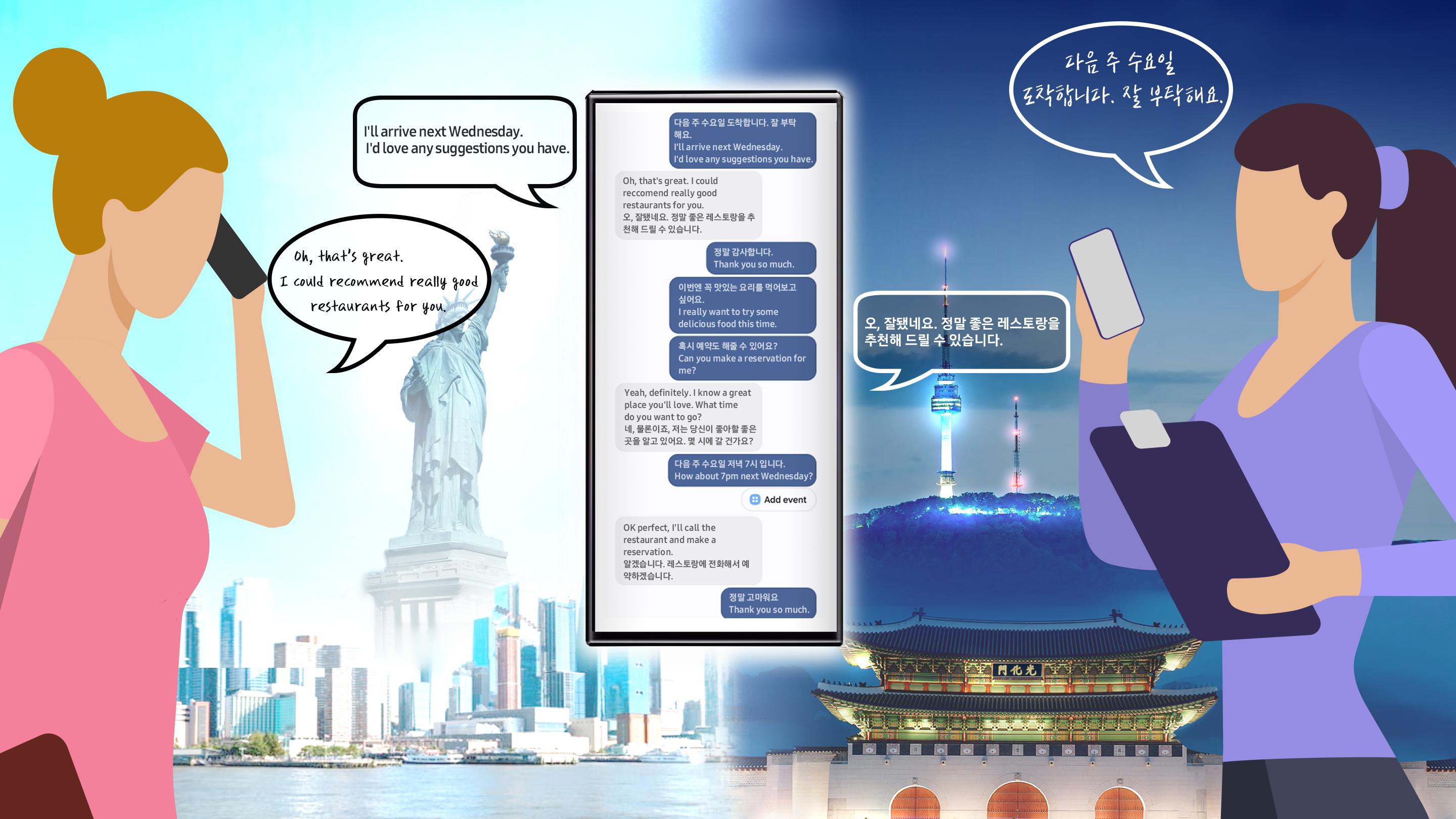
In a preview, Samsung announced the “AI Live Translate Call” feature that would be part of the comprehensive Galaxy AI experience. Samsung said the AI Live Translate Call feature will soon give users with the Galaxy AI phone a personal translator whenever they need it. It would be integrated into the native call feature, therefore, iron out the hassle of having to use third-party apps.


According to Samsung, audio and text translations will appear in real-time as you speak, making calling someone who speaks another language about as simple as turning on closed captions when you stream a show.


On privacy, Samsung said the feature would use on-device Galaxy AI and private conversations would never leave your phone.

Earlier this week, Samsung unveiled its in-house generative artificial intelligence model Gauss. Samsung said Gauss is an AI model that is capable of generating text, composing emails, editing and summarising documents, and translating languages. It added that integrating Gauss language into products would enable smarter device control. Speaking about multi-modal support, Samsung said its Gauss Image is a generative image model that is capable of generating and editing creative images and would have the feature for upscaling low-resolution images.


Source link

YouTube
Instagram
WhatsApp