Google AI Mode: Google Search's AI Mode now helps you book restaurant reservations in India

Google AI Mode: Google Search's AI Mode now helps you book restaurant reservations in India


Google has started rolling out new capabilities to its AI Mode in Search in India that focus on helping users book restaurant reservations more easily. The feature allows users to search, compare and reserve tables through a single query instead of switching between multiple apps or websites. For this, Google has partnered with the likes of Swiggy, Zomato and EazyDiner.


AI Mode in Search works as a conversational search tool, showing detailed, AI-generated responses directly on the results page while also surfacing real-time availability from different platforms.


AI Mode now helps with restaurant bookings


With the update, users can now ask more detailed and specific queries when looking to book a table. For example, instead of simply searching for “restaurants near me,” users can include multiple preferences such as number of people, date, time, location and type of cuisine.


AI Mode then processes this request and scans across different platforms to find available options in real time. It presents a list of restaurants that match the criteria, along with available reservation slots. Users are then directed to the booking page to complete the reservation. Google said that it removes the need to manually check multiple apps or websites, making the process quicker and more streamlined.


How it works behind the scenes


According to Google, the feature relies on a combination of systems working together. Google said that the feature uses its AI models along with live web browsing capabilities of Project Mariner, direct brand integrations on Search to gather up-to-date information. It also pulls data from its Knowledge Graph and integrates with services like Google Maps. In India, Google said that the system connects with platforms such as EazyDiner, Swiggy and Zomato to access restaurant listings and availability.


Expansion of AI features in India


This update is part of a broader expansion of AI-driven features in Search. Recently, Google has also introduced support for more Indian languages in its Search Live feature, including Bengali, Gujarati, Kannada, Malayalam, Marathi, Odia, Tamil, Telugu and Urdu. Additionally, the company has updated shopping features within AI Mode, making it more conversational and easier to use while browsing products.


Source link

OnePlus Nord 6 review: A balanced performer with serious battery life

OnePlus Nord 6 review: A balanced performer with serious battery life


The OnePlus Nord series has always been about finding that middle ground — delivering a smartphone that feels fast, reliable and well-rounded without stepping into flagship pricing. Over the years, that formula has worked well for OnePlus, especially for users who want a no-nonsense device that simply gets the basics right.


With the OnePlus Nord 6, the company is not trying to reinvent that approach. Instead, it focuses on refining it. On paper, the phone brings a powerful chipset, a massive battery and a high refresh rate display. But specifications only tell part of the story.


I have been using the OnePlus Nord 6 for the past couple of weeks, and here is how the smartphone performs in day-to-day use


Design


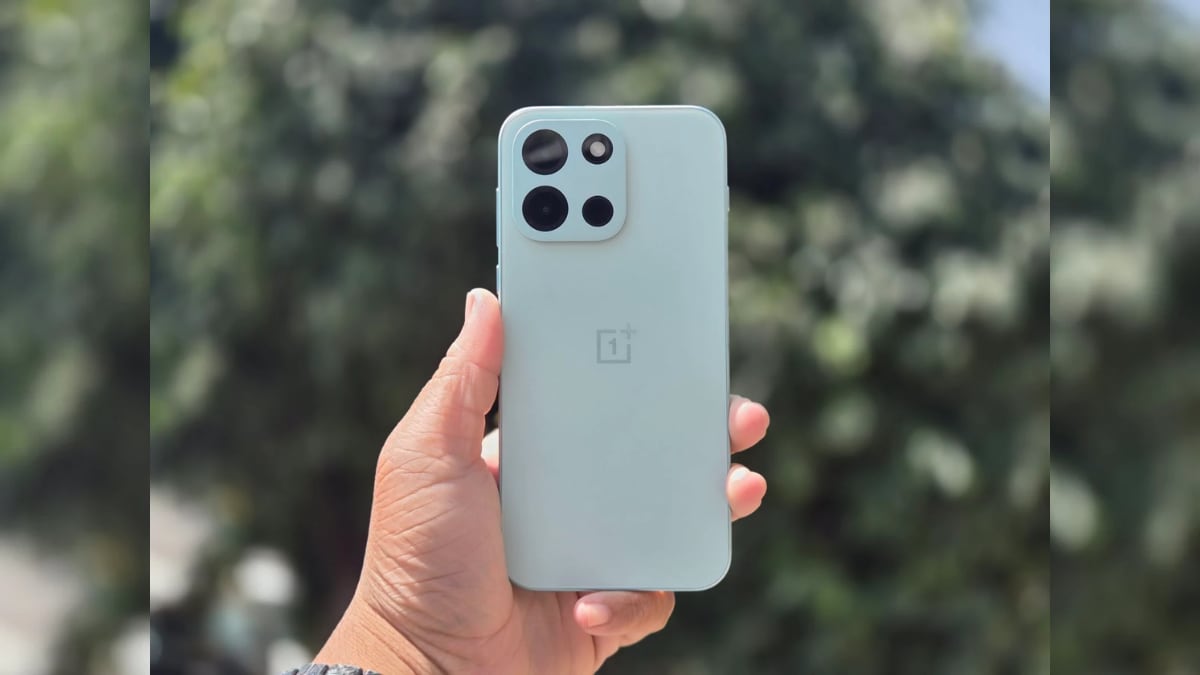
The OnePlus Nord 6 follows a clean and minimal design language. It does not try to do anything too flashy, but it still manages to look mature and sophisticated. It strikes a resemblance to the flagship OnePlus 15. The unit I used felt solid and sturdy in my hand. The weight is slightly on the higher side, which is understandable given the large battery inside, but the overall balance is well managed. It does not feel uncomfortable to hold for extended periods, although you do notice the weight after a while.


The button placement is fairly standard. The power button and volume rockers are placed on the right side, while the left side houses a customizable Plus Key. I found this button quite useful in day-to-day use, especially when assigned to quick actions like opening the camera or toggling certain settings.


At the bottom, you get the SIM tray, a USB Type-C port and a speaker grille, while the top houses an additional speaker vent and a secondary microphone. The phone also includes an IR blaster.


One thing that stands out is the durability. The smartphone survived a few drops without any dents or scratches. The Nord 6 also comes with multiple water and dust resistance ratings, including IP68 and IP69K. Though I did not take it for swimming, it did work perfectly despite splashes of water here and there.


Display and audio


The OnePlus Nord 6 features a 6.78-inch AMOLED display with a 1.5K resolution and a 165Hz refresh rate. For most of the applications, the smartphone will offer up to 120Hz of refresh rate. When I tried to check the app-specific refresh rate list, I didn’t come across any app that had an option for a refresh rate above 120Hz. This means that the display only goes above the 120Hz mark in certain scenarios, such as in certain games.


However, despite the limitation, scrolling through apps, navigating the interface or even casual gaming feels very smooth.


In terms of colour reproduction, the display performs well. Colours appear vibrant without being overly saturated. During my testing, I noticed that bright tones like reds and oranges appear slightly punchy, while overall colour balance remains fairly accurate. Blacks are handled well to a certain extent, which adds to the overall viewing experience, especially while watching content. For multimedia consumption, the experience is quite satisfying. Whether it was watching videos or browsing through content-heavy apps, the display consistently delivered a good experience.


Brightness is another area where the display holds up well. Outdoor visibility is not an issue, and the screen remains readable even under direct sunlight. At the same time, the brightness can go sufficiently low in darker environments, making it comfortable to use at night without much strain on the eyes.


Coming to audio, the phone offers stereo speakers, and the output is pretty loud and clear. I did not notice much distortion even at higher volume levels. The overall sound quality is good for casual media consumption, although it does not particularly stand out in terms of depth or richness.


Performance and gaming


The OnePlus Nord 6 is powered by the Qualcomm Snapdragon 8s Gen 4 chipset, paired with LPDDR5X RAM and UFS 4.1 storage. In everyday use, the phone feels fast and responsive.


Apps open quickly, multitasking is smooth and there are no noticeable slowdowns during regular usage. Whether I was switching between multiple apps, browsing or using social media, the phone handled everything without any issues.


Gaming performance is also strong. I tried a few demanding titles, and the phone was able to maintain stable frame rates for the most part. With all settings cranked up, I got around 80-85fps in BGMI. The overall experience felt smooth and reliable, even during extended sessions.


However, I did notice some warmth during longer gaming sessions. It was not uncomfortable, but it was noticeable if you were paying attention. Similarly, while charging, the phone tends to heat up slightly more than usual. It is not alarming, though.


Overall, performance is one of the stronger aspects of the Nord 6. It delivers a smooth and consistent experience across different use cases.


Software and AI features


The Nord 6 runs Android 16-based OxygenOS 16. The interface feels familiar, clean and easy to navigate. There are several customisation options available, allowing you to tweak the layout and appearance based on your preference.


One of the areas where OnePlus is focusing more now is AI features. The phone includes tools like AI Writer, AI Recording and other productivity-focused features. During my usage, some of these features felt useful, especially for tasks like summarising text or transcribing audio.


There is also Mind Space that allows you to save and organise on-screen information into a dedicated space. It can help keep track of things like bookings or notes, although I did not find myself using it very frequently.


Camera


The OnePlus Nord 6 comes with a dual-camera setup on the back, featuring a 50MP main sensor and an 8MP ultra-wide lens, along with a 32MP front camera for selfies and video calls.


Starting with the main camera, the phone does a good job in well-lit conditions. Pictures come out sharp, with a decent level of detail and colours that look slightly vibrant but not overly exaggerated. During my usage, I noticed that overall colour tones remain fairly balanced. The dynamic range is handled well in most situations.


Portrait shots are also handled nicely. The edge detection is fairly accurate, and the background blur is applied in a controlled manner. It does not feel overly artificial. I tried shooting portraits both indoors and outdoors, and the results were largely consistent.


Zoom is usable up to a certain point. At around 3x, images still retain decent clarity, but beyond that, the loss in detail becomes noticeable. This is not surprising, but it does limit how often you would rely on zoom beyond casual use.


Low-light photography is where things start to feel a bit limited. The night mode does improve brightness and visibility, but it takes a couple of seconds to process each shot. Even after processing, the results feel acceptable rather than impressive. There is some loss of detail, and the overall sharpness drops compared to daylight shots. It’s usable, but not something that stands out.


The ultra-wide camera feels like a step down. In daylight, it manages to capture decent shots, but the difference in detail and colour consistency compared to the main sensor is pretty evident. In low light, the drop in quality is even more noticeable, making it less reliable in such conditions.


Coming to the front camera, the 32MP sensor does a good job with selfies. It captures a good amount of detail, and during my testing, I noticed that facial features were reproduced fairly accurately. The portrait mode on the front camera also works well, with proper edge detection around the face and hair. However, in slightly dim environments, the images can appear a bit softer than expected.


For video recording, the phone supports up to 4K at 60fps on the rear camera and 4K at 30fps on the front. The video quality is stable and usable, but I did not notice a significant difference when switching to ultra-steady mode. The results felt quite similar in most situations, which makes the feature feel less impactful.


Overall, the camera system does its job decently for everyday use, but it does not particularly push boundaries. It feels reliable, but not something that would be a deciding factor for most users at this price.


Battery and charging


The OnePlus Nord 6 is powered by a 9,000 mAh battery, which is easily one of its biggest highlights. In real-world usage, the battery life is impressive. With moderate usage, the phone can comfortably last more than two days, and in some cases, even longer. During my testing, I was able to get extended screen-on time without having to worry about charging frequently. Even with heavier usage, the phone easily lasts more than a day.


Charging is handled by 80W fast charging. While it is not the fastest available, it still does a good job of topping up the battery in a reasonable amount of time. A full charge takes a bit longer due to the large battery size, but it does not feel inconvenient given the marathon battery life. It’ll complete a full charge cycle from 0 per cent to 100 per cent in around one and a half hours.


One thing to note is that the phone tends to heat up slightly while charging, especially when fast charging is enabled. Again, it is not alarming, but it is noticeable. Overall, battery life is easily one of the strongest aspects of the Nord 6 and a major reason to consider the device.


Verdict


  • 8GB RAM + 256GB storage: Rs 38,999

  • 12GB RAM + 256GB storage: Rs 41,999


The OnePlus Nord 6 gets a lot of things right without trying to overpromise. It offers a reliable camera performance in good lighting, a display that feels smooth and comfortable, and performance that remains consistent in everyday usage. The design is clean and practical, and the battery life is dependable enough for most users. It’s the kind of phone that doesn’t demand attention but quietly does its job well.


At the same time, it doesn’t completely avoid compromises. Low-light camera performance could have been better, and the overall experience, while consistent, doesn’t push beyond expectations. This is best suited for users who want a balanced, no-nonsense smartphone for daily use without focusing too much on extremes like gaming or photography. However, if you’re someone looking for standout camera performance or a more distinctive design, this may not fully meet those expectations.


Source link

Google Pixel 11 may get Samsung's latest display tech before Apple iPhones

Google Pixel 11 may get Samsung's latest display tech before Apple iPhones


Google’s next-generation Pixel 11 series could bring a notable display upgrade, with a new report suggesting the devices may use Samsung’s upcoming M16 OLED panels. According to a report by Android Authority, citing ETNews, these panels are also expected to feature on Apple’s iPhone 18 Pro models, indicating a shared shift to newer display technology across flagship devices.


The report notes that the M16 panels could deliver improvements in brightness, colour output and power efficiency compared to current-generation screens.


If accurate, the Pixel 11 lineup could be among the first smartphones to adopt Samsung’s latest display panels, given Google’s recent August launch timeline, which typically precedes Apple’s September iPhone releases. Current flagship devices such as the Pixel 10 Pro and iPhone 17 series are said to use older M14 OLED panels. Interestingly, Samsung’s own Galaxy S-series devices may adopt the newer panels later, with the Galaxy S27 lineup expected to arrive after competing devices already transition to the updated display technology.


Pixel 11 may feature an all-black camera bar


In related news, according to a recent report by Android Headlines, the Google Pixel 11 could bring subtle design changes, including an all-black camera bar on the rear, replacing the dual-tone finish seen on the Pixel 10. The LED flash is expected to sit within the same black module as the cameras, while the phone may also feature slimmer bezels. Despite these tweaks, the overall design and dimensions are likely to remain largely similar to its predecessor.


In terms of specifications, the Pixel 11 is expected to be powered by Google’s Tensor G6 chipset, possibly with a new 7-core design, and may switch to a MediaTek M90 modem. The device could retain a 6.3-inch display, while improvements are expected in areas like on-device video processing, particularly for low-light recording. The smartphone is likely to launch in August, in line with Google’s usual release timeline.


Source link

Instagram rolls out stricter restrictions for teenagers in India: Details

Instagram rolls out stricter restrictions for teenagers in India: Details


Meta has announced the expansion of Instagram’s updated Teen Accounts experience in India, introducing a revised 13+ content setting aimed at showing age-appropriate content by default. The company said teens under 18 will automatically be placed in this setting and will not be able to opt out without parental permission.


According to Meta, the update is designed to ensure that the type of content teens see on Instagram is broadly similar to what would be allowed in a movie rated for ages 13 and above, while continuing to minimise exposure to sensitive material.


The company said that the updated Teen Account features have begun rolling out gradually in India and will be made available more widely over the coming months.


Updated content guidelines based on 13+


Meta said it has refined its content policies for Teen Accounts by aligning them with widely recognised 13+ movie rating standards and incorporating parent feedback. Under the updated system, Instagram will continue to restrict or avoid recommending content such as sexually suggestive material, graphic visuals and adult-related posts.


In addition, the company said it will now further limit exposure to content featuring strong language, risky stunts and material that could promote harmful behaviour, including posts involving marijuana-related items.


Stricter controls across accounts, search and recommendations


The company said it has strengthened protections across different parts of the platform using updated technology. Teen users will no longer be able to follow or interact with accounts identified as sharing age-inappropriate content, and such accounts will also be restricted from contacting teens. Meta added that search results for a broader set of sensitive or mature terms, including topics like alcohol or gore, will be blocked, even if misspelt.


Meta said these restrictions will extend across recommendations, feeds, stories and comments. Teens will not be able to view or engage with content that violates the updated guidelines, even if it is shared by accounts they already follow. Additionally, links to such content sent via direct messages will not open for teen users. The company also noted that its AI systems have been updated to ensure responses remain appropriate for users in the 13+ category.


New ‘Limited Content’ setting for additional parental control


Alongside the updated default setting, Meta has introduced a new “Limited Content” option for parents who want stricter controls. The company said this setting will filter out more content from a teen’s experience and will also restrict interactions such as viewing, leaving or receiving comments on posts.


Source link

Vivo to launch T5 Pro 5G with 9020 mAh battery on April 15: What to expect

Vivo to launch T5 Pro 5G with 9020 mAh battery on April 15: What to expect


Vivo is set to launch the Vivo T5 Pro 5G in India on April 15. Ahead of the launch, the company has confirmed some key details, including a 9,020 mAh battery. The company also revealed that the smartphone will be powered by a Qualcomm Snapdragon processor and will be sold on the e-commerce platform Flipkart. The upcoming smartphone has been confirmed to arrive in two colour options: Cosmic Black and Glacier Blue.


Vivo T5 Pro 5G: What to expect

Vivo has confirmed that the T5 Pro 5G will pack a 9,020 mAh battery. For comparison, its predecessor came with a 6,500 mAh unit. According to a report from 91Mobiles, the Vivo T5 Pro 5G has appeared on Geekbench, suggesting that the phone could be powered by the Snapdragon 7s Gen 4 processor paired with up to 12GB RAM. 


In terms of performance, the device reportedly recorded 1,214 in single-core and 3,146 in multi-core tests. These scores are said to be lower than those seen on the previous Vivo T4 Pro in some internal testing, which may suggest that the new chip does not necessarily bring a clear performance jump, at least based on early numbers. 

The phone is expected to feature a 1.5K AMOLED display, and the Geekbench listing also pointed out that the smartphone will run on Android 16


According to a report by Gadgets 360, the Vivo T5 Pro 5G is expected to be priced under Rs 37,000 in India. The top-end 12GB + 256GB variant could cost up to Rs 36,999, while the base model is likely to be priced around Rs 30,000, indicating a higher price compared to its predecessor.


Source link

Samsung expands One UI 8.5 beta to older Galaxy devices: Check eligibility

Samsung expands One UI 8.5 beta to older Galaxy devices: Check eligibility


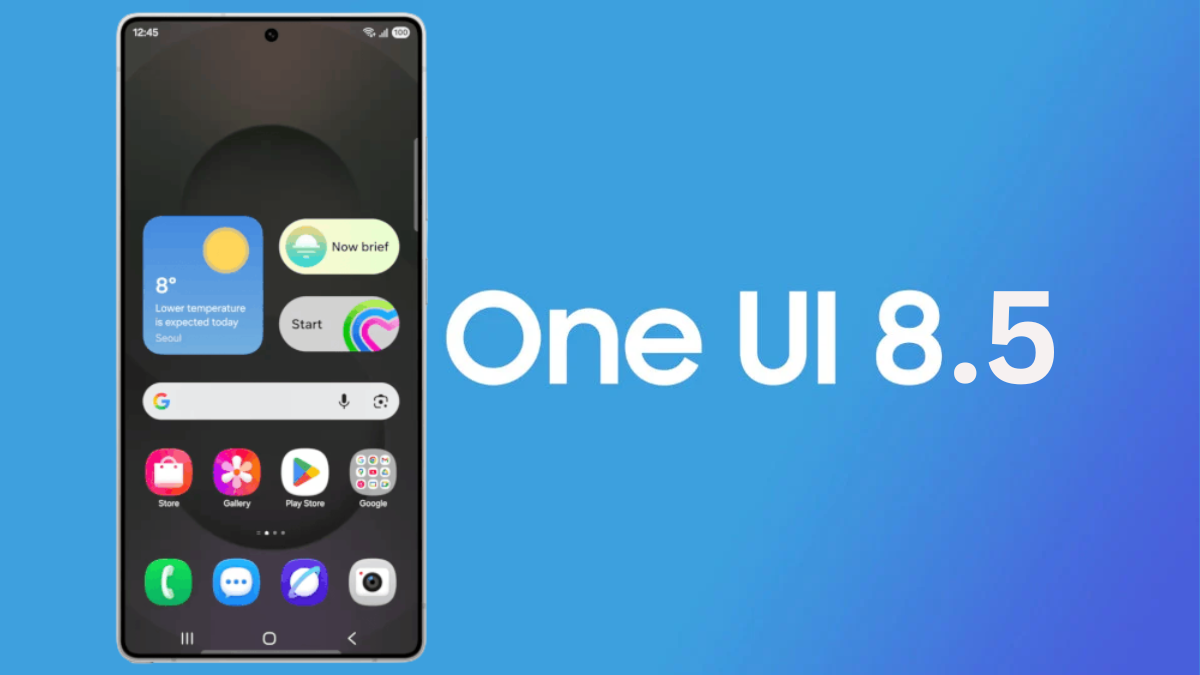
Samsung is expanding the rollout of the One UI 8.5 beta access to select older Galaxy smartphones. The South Korean consumer electronics manufacturer has now rolled out One UI 8.5 beta to the Galaxy S23 series, Galaxy S23 FE, Galaxy Z Fold 5 and Flip 5, and Galaxy A36 5G. This update has been released for the said models in India, Korea, the UK and the US. With this beta update, these smartphones now gain the ability of AirDrop through Quick Share and an updated Bixby assistant.


The company has said that the update will continue to expand to additional Galaxy devices later this month. Consumers can register for the same through the Samsung Members app.


Notably, the stable version of One UI 8.5 is available on the Galaxy S26 series and the Galaxy A57 and A37.


Samsung Galaxy devices with access to One UI 8.5 beta


  • Galaxy S25 series, S25 FE

  • Galaxy S24 series, S24 FE

  • Galaxy S23 series, S23 FE

  • Galaxy Z Fold 7

  • Galaxy Z Flip 7

  • Galaxy Z Fold 6

  • Galaxy Z Flip 6

  • Galaxy Z Fold 5 (in Korea and the US only for now)

  • Galaxy Z Flip 5 (in Korea and the US only for now)

  • Galaxy A36 5G (India only for now)

  • Galaxy Tab S11 series


What’s in Samsung One UI 8.5


One UI 8.5 introduces an easier approach to content creation, particularly through updates to Photo Assist. As per Samsung, users can generate and edit images continuously without having to save each version, making the process more fluid. Once done, all edits are stored in a history view, allowing users to revisit and select their preferred versions.


Sharing has also been improved, with Quick Share now identifying people in photos and suggesting relevant contacts for faster, more intuitive sharing. Furthermore, users with One UI 8.5 will be able to AirDrop to iOS devices with Quick Share, without needing any third-party app.


Samsung’s updated Bixby assistant in One UI 8.5 is a more conversational “device agent” that can understand natural language and interpret user intent rather than relying on exact commands. According to the company, it allows users to control phone settings simply by describing what they want, without navigating menus or knowing specific feature names. The assistant can also analyse current device settings and suggest relevant changes, while now being capable of fetching real-time information from the web directly within its interface, reducing the need to switch between apps. 


Features like Audio Broadcast allow users to share both media and voice to nearby LE Audio-supported devices using Auracast, which can be useful in group settings.


Meanwhile, Storage Share enables access to files across Galaxy phones, tablets, PCs and even TVs directly through the My Files app, making file management and transfer more unified across devices.


Samsung says One UI 8.5 brings enhanced security features aimed at improving device protection and user control over safety settings. The update introduces Theft Protection, designed to help secure data in case a device is lost or stolen. It also adds a Failed Authentication Lock feature, which automatically locks the screen after multiple unsuccessful attempts using fingerprint, PIN or password.


The company adds that Identity Check has been expanded to cover more settings, offering an additional layer of protection against unauthorised access. Together, these features are intended to strengthen overall device security while giving users clearer visibility and control over their protection options.


Source link

YouTube
Instagram
WhatsApp