Apple blocks email app BlueMail that uses ChatGPT technology; know why here

Apple blocks email app BlueMail that uses ChatGPT technology; know why here


has delayed the approval of an update to its app with AI-powered tools due to worries that it may generate inappropriate content for children, the Wall Street Journal (WSJ) reported on Thursday, citing communications between the iPhone maker and the app developer.


An update to the app, BlueMail, which uses a customized version of OpenAI’s GPT-3 language model, was blocked last week, Ben Volach, co-founder of BlueMail developer Blix Inc, told WSJ.


BlueMail’s new feature uses the ChatGPT chatbot to automate writing using the contents of prior emails and events. ChatGPT technology is used to converse in a human-like way and is capable of long-form writing.


“Your app includes AI-generated content but does not appear to include content filtering at this time,” Apple’s app-review team said last week in a message to the developer, as reported by WSJ. It also asked BlueMail to move up its age restriction to 17 and older, or include a content filtering option.


Ben Volach, however, disagrees with Apple’s decision to delay the app update and said it was “unfairly targeting” the company.


“We want fairness,” he tweeted. “If we’re re­quired to be 17-plus, then others should also have to.”


is making it really hard to bring innovation to our users,” he said. He also claimed that the request was unfair, given that other apps featuring AI capabilities are not subject to the same rules.


Earlier too, BlueMail and have been at tenterhooks. Blix supported Fortnite maker Epic Games in its legal battle against Apple. It is also one of the founding members of the Coalition for App Fairness, which was established to challenge the commission that Apple takes from the App Store.


The developer filed a lawsuit alleging that Apple’s “Sign In With Apple” feature violated one of its patents.



Source link

Musk led Twittter expands Blue services to 20 more European countries

Musk led Twittter expands Blue services to 20 more European countries


Micro-blogging platform has expanded its Blue subscription service to more than 20 countries in Europe.


The countries include the Netherlands, Poland, Ireland, Belgium, Sweden, Romania, Czech Republic, Finland, Denmark, Greece, Austria, Hungary, Bulgaria, Lithuania, Slovakia, Latvia, Slovenia, Estonia, Croatia, Luxembourg, Malta, and Cyprus, according to Twitter’s About Page.


With this expansion, the Blue subscription service is now available in more than 35 countries globally.


Last month, the micro-blogging platform expanded the Blue service to 6 countries, including Saudi Arabia, France, Germany, Italy, Portugal and Spain.


In December last year, launched its Blue subscription service with verification, costing $8 for Android users and $11 for iPhone owners per month.


Later, the company added features such as the ability to post 60-minute videos and 4,000-character tweets, as well as get priority in conversations.


Meanwhile, following a round of layoffs, the micro-blogging site has laid off Twitter product manager Esther Crawford.


Crawford led various projects at Twitter, including the company’s Blue with verification subscription and its forthcoming payments platform.


More than 50 employees were impacted by the layoffs, which were spread across several departments. Martijn de Kuijper, the creator of the now-shuttered Revue newsletter platform that Twitter acquired in 2021, was also among them, reports The Verge, citing sources.


–IANS


shs/prw/bg

(Only the headline and picture of this report may have been reworked by the Business Standard staff; the rest of the content is auto-generated from a syndicated feed.)


Source link

US FDA rejected Musk-run Neuralink’s bid to implant chip in human brain

US FDA rejected Musk-run Neuralink’s bid to implant chip in human brain


The US Food and Drug Administration (FDA) rejected Elon Musk-run company Neuralink’s bid to implant a chip in a human brain over safety risks, the media reported.


In December last year, Musk had claimed his brain-computer Neuralink’s device is ready for human trials and he is expecting to do so in about six months after experimenting it on pigs and monkeys.


Reuters now reports that FDA rejected Neuralink’s application for a human experiment over several safety concerns, like the device’s lithium battery, implant’s tiny wires and questions how the device can be removed without damaging brain tissue.


“A year after the rejection, Neuralink is still working through the agency’s concerns,” the report said, citing Neuralink’s staffers.


Musk and Neuralink did not comment on the report and the FDA declined to comment.


Neuralink had submitted most of the paperwork needed for a human clinical trial to the .


“We are now confident that the Neuralink device is ready for humans, so timing is a function of working through the FDA-approval process,” the new Twitter CEO had tweeted.


Neuralink’s goal is to create a device that can be implanted in the brain, and use it to control a computer with brain activity.


The Neuralink devices are tiny, with multiple flexible “threads” that can be inserted into the brain.


“It’s like replacing a piece of your skull with a smartwatch, for lack of a better analogy,” Musk said. He said the device can be upgraded as the time progresses.


Neuralink’s implant is designed to record and stimulate brain activity, which Musk has stated could help people address conditions such as obesity.


Musk claims that Neuralink’s brain chips will one day make humans hyper-intelligent and let paralysed people walk again.


The brain chips were recently implanted in monkeys’ brains during a series of tests at the University of California, Davis.


Since launching publicly in 2017, Neuralink has demonstrated its brain implant in pigs and monkeys.


The main aim of the project is to provide a direct connection between a brain and a computer to overcome the power of Artificial Intelligence, using a “sewing machine-like” device to stitch threads to an implanted brain chip.


–IANS


na/dpb

(Only the headline and picture of this report may have been reworked by the Business Standard staff; the rest of the content is auto-generated from a syndicated feed.)


Source link

We’re building next-gen AI to become a global powerhouse: Chandrasekhar

We’re building next-gen AI to become a global powerhouse: Chandrasekhar


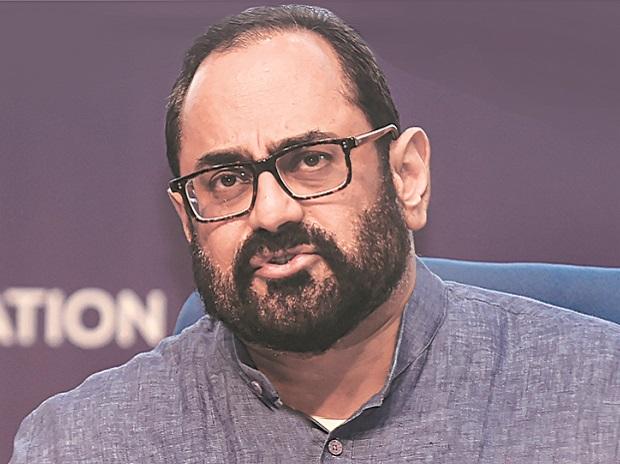
As the world goes gaga over AI chatbots, Union Minister of State for Electronics and IT has a clear vision: To make India a global powerhouse of AI which does not just stop on integrating foreign chatbots but building next-generation of AI-based innovations to empower billions of citizens.


Chandrasekhar told IANS that (AI) is a “kinetic enabler” of the and the government will infuse more of this disruptive technology into its ‘India Stack’.


“AI will certainly transform the and grow the business economy in the country. We are launching a very comprehensive programme called the INDIAai Programme and you will see more AI use cases via the India stack — Aadhaar, Unified Payments Interface (UPI), DigiLocker, CoWIN and more,” Chandrasekhar emphasised.


“AI, as I have said, is a ‘kinetic enabler’ of the and we want to be the global leader in AI,” the Minister told IANS.


This week, Chandrasekhar met Microsoft co-founder Bill Gates, and had a “good, interesting conversation about India Stack and (AI)”.


The government, in the Union Budget for FY24, announced to open three centres of excellence for (AI) at the top educational institutions, for realising the vision of “Make AI in India” and “Make AI Work for India”.


According to Chandrasekhar, the government is expanding the INDIAai initiative in partnership with homegrown tech companies, startups and academic institutions under a comprehensive AI programme.


The Bhashini team at the IT Ministry aims to build a National Public Digital Platform for languages to develop services and products for citizens by leveraging the power of AI and other emerging technologies.


It is creating a unifying architecture, underpinned by principles of open data and open source software, to enable contributions from the research initiatives and the ecosystem.


Bhashini, the natural language AI platform, “will enable automated language translation”, according to Chandrasekhar who had a three decades’ long career in the technology domain before making his foray into politics.


According to him, India Stack will become more nuanced, intelligent and sophisticated in its next avatar, as more and more enterprises and countries across the world innovate and integrate, execute, and implement digital transformation.


“Our mission as a nation is to offer India Stack or the part of the stack to those enterprises and countries across the world who want to innovate and further integrate, execute, and implement digital transformation,” said the Minister.


India currently ranks first in terms of AI skill penetration and AI talent concentration and fifth in AI scientific publications, a Nasscom report said last month.


India’s ‘AI Skills Penetration Factor’ has been reported to be 3.09 — the highest among all G20 and OECD countries.


More than 1,900 AI-focused startups are providing innovative solutions in the country, primarily in the areas of conversational AI, NLP, video analytics, disease detection, fraud prevention and deep fakes detection.


(Nishant Arora can be reached at nishant.a@ians.in)

(Only the headline and picture of this report may have been reworked by the Business Standard staff; the rest of the content is auto-generated from a syndicated feed.)


Source link

Indian short-form video market to reach up to  bn by 2030: Report

Indian short-form video market to reach up to $12 bn by 2030: Report


Indian short-form video market monetisation is at the cusp of a breakout and could potentially be an opportunity of $8-$12 billion by 2030, a report said on Friday.


Indian apps now compare well with global short-form apps and have a lead on content depth in three of the five top content genres, with significant differences in offerings around music/dance and dialogue/acting content, according to a report by Redseer Strategy Consultants.


The report projected the marketing spend on influencers to be worth $2.8-3.5 billion in 2028, from the current level of $0.35-0.4 billion.


“Currently, brands and influencers mostly engage via intermediary agencies – a model that is broken and lacks efficiency,” said Mohit Rana, Partner, Redseer Strategy Consultants.


“There is a need for a tech-enabled, transparent and scalable solution. Creator marketplaces can bridge this gap”, he added.


Globally, short-form video platforms and e-commerce platforms are increasingly focusing on video commerce to enhance customer engagement and boost sales.


In India, video commerce has just started, with short-form video platforms expected to capture 40 per cent of the $8-11 billion video commerce market in 2030.


Furthermore, the report showed that the preferred language for content consumption in metro and tier 1 cities is Hindi, followed by English and other regional languages.


It also observed that user-generated content (UGC) platforms are developing creator marketplaces that can become a centralised network for creators to connect with brands.


This can benefit both creators and brands, as it provides a platform for creators to showcase their work and for brands to find suitable creators to work with.


The report also highlighted that virtual gifting on short-form video platforms in India is expected to become $1.7 billion by 2030.

(Only the headline and picture of this report may have been reworked by the Business Standard staff; the rest of the content is auto-generated from a syndicated feed.)


Source link

Keep teens out of your metaverse dream: US Senators tell Mark Zuckerberg

Keep teens out of your metaverse dream: US Senators tell Mark Zuckerberg


US Senators have urged Meta Founder and CEO to stop plans to open its platforms to teenagers.


Meta may open access to its social virtual reality (VR) platform Horizon Worlds for users aged 13 to 17 this month as it struggles to grow its VR business.


According to TechCrunch, Senators Richard Blumenthal (D-CT) and Ed Markey (D-MA) wrote a letter to Zuckerberg urging him to halt Meta’s plans to open Horizon Worlds to teens.


“Any strategy to invite young users into a digital space rife with potential harms should not be driven by a goal to maximise profit,” the senators wrote.


“We call on you to immediately halt Meta’s plan to bring teen users onto Horizon Worlds,” they added.


Meta (formerly Facebook) lost a whopping $13.7 billion in operating losses for Reality Labs for 2022, giving its AR-VR and dream a huge jolt.


Within the Reality Labs segment, Q4 revenue was $727 million, down 17 per cent due to lower Quest 2 sales.


The app is currently available to users aged 18 and up, and the teen launch could happen as soon as the month.


Nearly a year after Zuckerberg announced his project, internal documents had revealed that the company was grappling with “glitchy technology, uninterested users and a lack of clarity about what it will take to succeed”.

(Only the headline and picture of this report may have been reworked by the Business Standard staff; the rest of the content is auto-generated from a syndicated feed.)


Source link

YouTube
Instagram
WhatsApp




