Google opens Bard chatbot to test users, plans more AI for search

Google opens Bard chatbot to test users, plans more AI for search


parent Alphabet Inc on Monday said it will launch a chatbot service and more for its search engine as well as developers, a riposte to Microsoft Corp in their rivalry to lead a new wave of technology.


The news follows the public’s rapid embrace of ChatGPT, a competing chatbot from Microsoft-backed OpenAI that produces human-like prose on command and that some expect will disrupt how consumers search for information online, key to Google’s business.


In a blog post, Alphabet Chief Executive said his company is opening a conversational AI service called Bard to test users for feedback, followed by a public release in the coming weeks. He also said plans to add AI features to its search engine that synthesize material for complex queries, like whether learning guitar or piano is easier.


Pichai said of the chatbot, “Bard seeks to combine the breadth of the world’s knowledge with the power, intelligence and creativity of our” AI.


For its part, Microsoft on Tuesday is briefing news media outlets on its own project developments with its CEO Satya Nadella, according to an invitation seen by Reuters.


Behind Google’s Bard is LaMDA, Google’s AI that generated text with such skill that a company engineer called it sentient, a claim the technology giant and scientists widely dismissed.


How aims to differentiate Bard from ChatGPT was unclear. Pichai said the new service draws on information from the internet; ChatGPT’s knowledge is up to date as of 2021.


In a demo of the service, Bard like its rival chatbot invites users to give it a prompt while warning its response may be inappropriate or inaccurate. It then bulleted three answers to a query about a space telescope’s discoveries, the demo showed.


Google is relying on a version of LaMDA that requires less computing power so it can serve more users and improve with their feedback, Pichai said.


ChatGPT at times has turned away users because of explosive growth, with UBS analysts reporting it had 57 million unique visitors in December outpacing potentially TikTok in adoption.


Google, meanwhile, plans to give technology tools, first powered by LaMDA and later by other AI, to creators and enterprises starting next month, Pichai said.


Google’s update for search, the timing of which it did not disclose, reflects how the company is bolstering its service while Microsoft is doing the same for Bing, embedding OpenAI’s capabilities in it.


(Only the headline and picture of this report may have been reworked by the Business Standard staff; the rest of the content is auto-generated from a syndicated feed.)


Source link

Samsung gets Galaxy S23 orders worth Rs 1,400 cr on 1st day of pre-booking

Samsung gets Galaxy S23 orders worth Rs 1,400 cr on 1st day of pre-booking


Electronics major has received orders for around 1.4 lakh units of its premium smartphone Galaxy S23 worth a total of Rs 1,400 crore on the first day of its pre-booking for the device, a senior company official has claimed.


India, Senior Vice President for Mobile Business, Raju Pullan told PTI that the pre-booking for Galaxy S23 is almost twofold compared to the previous version of the smartphone Galaxy S22.


“We have clocked almost 1.4 lakh units as pre-book in the first 24 hours and this is almost two times of Galaxy S22. With an average price of about a lakh of rupees, the turnover on a free book is almost Rs 1,400 crore within 24 hours,” he said.


Samsung will continue pre-booking Galaxy S23 till February 23. The launch price of Galaxy S23 series in India is in the range of Rs 75,000 to Rs 1.55 lakh per piece.


The company has announced that Galaxy S23 will be manufactured at its Noida plant. The older Galaxy S Series were manufactured at Samsung’s Vietnam factory and the company imported them for sale in India.


Samsung’s moved to make Galaxy S23 in India after Finance Minister Nirmala Sitharaman announced the removal of duty on the import of camera lenses, which is one of the key unique selling propositions of Galaxy S series .


The phone will come with a set of five cameras with sensors in the range of 12 megapixels to 200 megapixels.


Samsung has priced the Galaxy S23 series 2.7-30 per cent higher compared to Galaxy S22 Ultra smartphones.


Pullan said that the consumers have responded well to the propositions of S23 be it camera sensors in the phone, high power Snapdragon 8 Gen 2 Mobile Platform made available exclusively for Samsung and sustainability factors of using recycled plastic and other components in the device.


Samsung has slashed the price of Galaxy Watch 4 LTE and Galaxy Buds 2 by about 90 per cent from Rs 48,000 to Rs 4,999 for customers pre-booking high-end Galaxy S23 Ultra.


Pullan said that Samsung has brought in “custom affordability” by bundling Galaxy Watch 4 LTE and Galaxy Bus for Rs 4,999 as well as providing purchases in 24 instalments without any interest and also through Samsung Finance plus in 15 instalments.


“Bharat segment is growing in the premium segment faster than the Metro markets that are there,” Pullan said.


Samsung R&D Institute Bangalore (SRI-B), which is the company’s largest software R&D centre outside South Korea, has contributed to the development of the Galaxy S23 series by closely collaborating with Korea teams and other Overseas R&D centres like Samsung Research America (SRA), the company said in a statement.


SRI-B engineers contributed significantly to the development of key features in the camera, multi-device experience (SmartThings), on-device AI, and services in Galaxy S23, it said.

(Only the headline and picture of this report may have been reworked by the Business Standard staff; the rest of the content is auto-generated from a syndicated feed.)



Source link

Google unveils ChatGPT rival Bard, AI search plans in battle with Microsoft

Google unveils ChatGPT rival Bard, AI search plans in battle with Microsoft


owner Alphabet Inc on Monday said it will launch a chatbot service and more for its search engine as well as developers, an answer to Microsoft Corp in their rivalry to lead a new wave of computing.


Microsoft, meanwhile, said it planned its own AI reveal for Tuesday.


The cascade of news reflects how Silicon Valley is anticipating massive change from so-called generative AI, technology that can create prose or other content on command and free up white-collar workers’ time.


The ascent of ChatGPT, a chatbot from Microsoft-backed OpenAI that could disrupt how consumers search for information, has been one of the biggest challenges to in recent memory.


In a blog post, Alphabet Chief Executive Sundar Pichai said his company is opening a conversational AI service called Bard to test users for feedback, followed by a public release in the coming weeks.


He also said plans to add AI features to its search engine that synthesize material for complex queries, like whether learning guitar or piano is easier. Currently, Google presents text that exists elsewhere on the Web for questions where the answer is clear.


Google’s update for search, the timing of which it did not disclose, reflects how the company is bolstering its service while Microsoft is doing the same for Bing, embedding OpenAI’s capabilities in it.


Microsoft has said it plans to imbue AI into its all its products and on Tuesday plans to brief news outlets on developments it did not specify, with its CEO Satya Nadella, according to an invitation seen by Reuters. Sam Altman, the CEO of OpenAI, tweeted that he would also attend the event.


How Google aims to differentiate Bard from OpenAI’s ChatGPT was unclear. Pichai said the new service draws on information from the internet; ChatGPT’s knowledge is up to date as of 2021.


“Bard seeks to combine the breadth of the world’s knowledge with the power, intelligence and creativity of our” AI, Pichai said.


Behind the new chatbot is LaMDA, Google’s AI that generated text with such skill that a company engineer last year called it sentient, a claim the technology giant and scientists widely dismissed.


In a demo of the service, Bard like its rival chatbot invites users to give it a prompt while warning its response may be inappropriate or inaccurate. It then bulleted three answers to a query about a space telescope’s discoveries, the demo showed.


Google is relying on a version of LaMDA that requires less computing power so it can serve more users and improve with their feedback, Pichai said.


ChatGPT at times has turned away users because of explosive growth, with UBS analysts reporting it had 57 million unique visitors in December outpacing potentially TikTok in adoption.


Google also plans to give technology tools, first powered by LaMDA and later by other AI, to creators and enterprises starting next month, Pichai said.


(Only the headline and picture of this report may have been reworked by the Business Standard staff; the rest of the content is auto-generated from a syndicated feed.)



Source link

Meta to acquire VR startup ‘Within’ after favourable court ruling

Meta to acquire VR startup ‘Within’ after favourable court ruling


A federal judge has sided with Facebook parent Meta and cleared the way for the company to buy startup Within Unlimited, the maker of the popular fitness app Supernatural.


Federal antitrust regulators had sought to block the on the grounds that it would hurt competition in the emerging market.


But U.S. District Judge Edward Davila denied the Federal Trade Commission’s request for a preliminary injunction against the deal. The judge’s ruling said the agency did not provide sufficient evidence to prove its case.


Meta said it will now proceed with its of Within Unlimited.


The FTC had argued that Meta’s of the small company reminiscent of Facebook’s early purchases of Instagram and WhatsApp would hurt competition in the emerging market.


Allowing the tech giant to buy Los Angeles-based Within Unlimited, the FTC had argued, would violate antitrust laws and dampen innovation, hurting consumers who may face higher prices and fewer options outside of Meta-controlled platforms.


Meta Platforms Inc. said in a statement late Friday after the ruling was unsealed that it is pleased with the decision.


This deal will bring pro-competitive benefits to the ecosystem and spur innovation that will benefit people, developers, and the VR space more broadly, the company based in Menlo Park, California, said. “We look forward to closing the transaction soon.


The FTC had argued that Meta scrapped its own plans to enter the nascent VR fitness market in the summer of 2021 when it decided to buy Within Unlimited. Without the competitive threat of the tech giant’s entry into the market on its own, the agency asserts, innovation stalls, hurting end users.


The threat is what keeps firms going, testified economist Hal Singer, a witness for the FTC. If I know there is a chance that someone could come in and steal my lunch, he said, companies will innovate and constrain pricing.


But Meta executives including CEO Mark Zuckerberg sought to play down the notion that the company was anywhere close to creating its own VR fitness app. The Meta CEO testified that even though his company was looking at developing its own VR fitness app before deciding to acquire Within Unlimited in 2021, the business environment has changed and there is almost no chance it would start such a project today.


Under Zuckerberg’s, Meta moved aggressively into virtual reality in 2014 with its acquisition of headset maker Oculus VR. Since then, Meta’s VR headsets have become the cornerstone of its growth in the virtual reality space, the FTC noted in its suit.


Fuelled by the popularity of its top-selling Quest headsets, Meta’s Quest Store has become a leading U.S. app platform with more than 500 apps available to download, according to the agency.


Meta bought seven of the most successful virtual-reality development studios, and now has one of the largest virtual-reality content catalogs in the world, the FTC noted.


Davila’s ruling, however, says the FTC needed to provide at least circumstantial evidence that Meta’s entry into the VR fitness market by itself, not via the acquisition, would have directly and favourably affected consumers by encouraging robust competition.


Under this standard, the FTC’s evidence on this element is insufficient,” Davila wrote.


Representatives for the FTC did not immediately respond to a message seeking comment on Monday.


Davila also oversaw the trial of disgraced Theranos founder Elizabeth Holmes and her partner Ramesh Sunny Balwani. Both were sentenced to over a decade in prison for their roles in the company’s blood-testing hoax.

(Only the headline and picture of this report may have been reworked by the Business Standard staff; the rest of the content is auto-generated from a syndicated feed.)



Source link

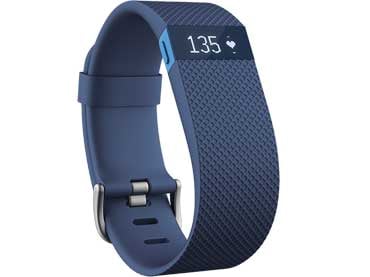
Google-owned Fitbit back after 81% users reported problems in using app

Google-owned Fitbit back after 81% users reported problems in using app


Google-owned on Tuesday said that it has fixed the issue which impacted ‘some services’.


The company tweeted from its @FitbitSupport account: “We’ve resolved the issue impacting some services and they should be working as expected. If you’re still experiencing issues, please DM us so we can look into it!”


According to outage monitor website DownDetector, over 81 per cent of people reported problems while using the application, 10 per cent while using the website, and 9 per cent while using the device.


Taking to Twitter, many users had reported the issue.


While one user said, “My entire life is tracked on Fitbit and it’s been down for an hour now and truly I may explode if none of my data matters for today.”


Another commented, “Is @fitbit down? My app won’t update and I’ve tried several things.”


After receiving many reports, the company said on Monday, “We’re aware of an issue affecting some Fitbit services and are working hard to resolve it. Thank you for your patience!”


Fitbit faced the last outage in November last year.


–IANS


aj/dpb

(Only the headline and picture of this report may have been reworked by the Business Standard staff; the rest of the content is auto-generated from a syndicated feed.)



Source link

For You tab to stay on users’ preferred timeline on Twitter on Android, iOS

For You tab to stay on users’ preferred timeline on Twitter on Android, iOS


has announced that it will now remember which timeline users were using last and default to it when they open it again, on and iOS.


The company tweeted from its @TwitterSupport account on Monday: “This is live for and iOS! Update to the latest version of the app so that ‘For you’ and ‘Following’ will default to whichever tab you had open last.”


Last month, the micro-blogging platform rolled out the same feature to its web version.


On January 21, CEO Elon Musk had announced that the upcoming update of the platform will make it less mandatory for users to use the “For You” algorithmic timeline.


“Next update will remember whether you were on For You (ie recommended), Following or list you made & stop switching you back to recommended tweets,” he had tweeted.


Later on January 29, Musk had said: “Next app update will make For You or Following choice persist.”


–IANS


aj/ksk/

(Only the headline and picture of this report may have been reworked by the Business Standard staff; the rest of the content is auto-generated from a syndicated feed.)



Source link

YouTube
Instagram
WhatsApp