New data protection law to straddle individual rights, innovation: Vaishnaw

New data protection law to straddle individual rights, innovation: Vaishnaw


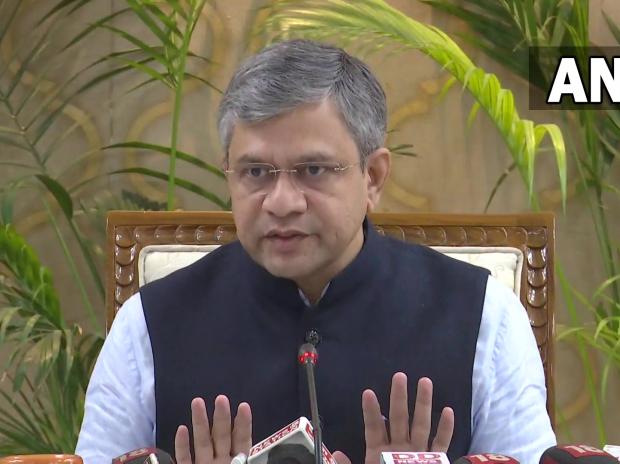
India will attempt to draw up a template for individual rights while giving innovation a leg-up through its proposed digital personal data protection law, Minister for Communications, Electronics & Information Technology (IT) said on Monday.


Vaishnaw, however, said it would not be easy to implement since every step taken may be detrimental to the other side.


“The world has been following the General Data Protection Regulation approach to the right to privacy and protection of personal data. It is robust across multiple economies over many years. But it has a huge push-back on innovation,” said Vaishnaw, at the opening session of the Business 20 (B20) India Inception meet organised by the Confederation of Indian Industry in Gandhinagar.


The has interacted with multiple stakeholders regarding the data protection Bill after releasing it in November last year. The latest version of the Bill was released after the 2019 version was scrapped, in line with the recommendation of a standing committee of Parliament.


The privacy law seeks to enforce Indian citizens’ right to privacy as a fundamental right. The draft Bill provides a legal framework for collecting and processing personal digital data in India.


The minister further said that the indigenously-developed and telecommunications (telecom) technology (tech) stack would be rolled out this year. The platform would be offered to the world from next year.


Only five countries in the world right now have end-to-end and telecom tech stacks. However, with public-private partnerships, India has developed its home-grown tech that has been tested to handle 10 million simultaneous calls.


“Our private-public partnership approach has given us a solution where the core was developed, invested by the public sector, public funds, and everything else sitting on it comes from private partners. We will be rolling out end-to-end and stacks on 50,000-70,000 towers and sites this year. We will be offering the technology for exports next year,” said Vaishnaw.


He said Prime Minister Narendra Modi has a different approach that sees India build a digital ecosystem, and divest of any Big Tech monopoly.


“I foresee that in five-six years hence. India’s example will be cited the world over,” he observed.


Source link

ChatGPT’s paid version available for  a month for some early users

ChatGPT’s paid version available for $42 a month for some early users


Some ChatGPT users on Monday posted on that they have been granted access to a “ChatGPT Professional” version which costs $42 a month.


OpenAI, the Microsoft-owned AI company that developed the sensational chatbot, was yet to confirm the pricing.


AI developer Zahid Khawaja posted the screenshot of ChatGPT pricing, showing $42 per month. He said that paid system responds faster than the free version.


However, another Twitter user posted that “I very much wanted to pay for a plan but 42$ is just too much”.


AI research organisation OpenAI has said it will soon monetise its ChatGPT platform, after seeing a mammoth response to its AI chatbot that can write poems, essays, emails and even codes.


The Microsoft-owned company said it is “starting to think about how to monetize ChatGPT” as a way to “ensure long-term viability.”


“Working on a professional version of ChatGPT; will offer higher limits and faster performance,” said Greg Brockman, President and Co-Founder, OpenAI.


ChatGPT last reported over a million users.


ChatGPT Professional will be always available (no blackout windows), fast responses from ChatGPT (no throttling) and as many messages as you need (at least 2X regular daily limit).


“If you are selected, we’ll reach out to you to set up a payment process and a pilot. Please keep in mind that this is an early experimental programme that is subject to change, and we are not making paid pro access generally available at this time,” said the company.


Meanwhile, reports surfaced that Microsoft is planning to infuse $10 billion into OpenAI that will value the company at nearly $29 billion.


–IANS


na/

(Only the headline and picture of this report may have been reworked by the Business Standard staff; the rest of the content is auto-generated from a syndicated feed.)


Source link

Amid layoffs, Indian IT professionals look for options to stay in the US

Amid layoffs, Indian IT professionals look for options to stay in the US


Thousands of Indian in the US, who have lost their jobs due to the series of recent layoffs at like Google, Microsoft and Amazon, are now struggling to find new employment within the stipulated period under their work visas following the termination of their employment to stay in the country.


According to The Washington Post, nearly 200,000 IT workers have been laid off since November last year, including some record numbers in like Google, Microsoft, Facebook and Amazon.


As per some industry insiders, between 30 to 40 per cent of them are Indian IT professionals, a significant number of whom are on H-1B and L1 visas.


The H-1B visa is a non-immigrant visa that allows US to employ foreign workers in speciality occupations that require theoretical or technical expertise. Technology companies depend on it to hire tens of thousands of employees each year from countries like India and China.


L-1A and L-1B visas are available for temporary intracompany transferees who work in managerial positions or have specialised knowledge.


A significantly large number of Indian IT professionals, who are on non-immigrant work visas like H-1B are L1, are now scrambling for options to stay in the US to find a new job in the stipulated few months time that they get under these foreign work visas after losing their jobs and change their visa status as well.


Amazon staffer Gita (name changed) arrived in the US only three months ago. This week she was told that March 20 is her last working day.


The situation is getting worse for those on H-1B visas as they have to find a new job within 60 days or else, they would be left with no other option but to head back to India.


Under current circumstances, when all IT companies are on a firing spree, getting a job within that short period, they feel is next to impossible.


Sita (name changed), another IT professional on an H-1B visa, got laid off from Microsoft on January 18.


She is a single mother. Her son is in High School Junior year, preparing for getting into college.


“This situation is really hard on us,” she said.


“It is unfortunate that thousands of tech employees are facing layoffs, particularly those on H-1B visas who are facing additional challenges as they must find a new job and transfer their visa within 60 days of termination or risk leaving the country,” Silicon Valley-based entrepreneur and community leader Ajay Jain Bhutoria said.


“This can have devastating consequences for families, including the sale of properties and disruptions to children’s education. It would be beneficial for tech companies to show special consideration for H-1B workers and extend their termination date by a few months, as the job market and recruitment process can be challenging,” he said.


Global Indian Technology Professionals Association (GITPRO) and Foundation for India and Indian Diaspora Studies (FIIDS) on Sunday launched a community-wide effort to try and help these by connecting job seekers to job referrers and informers. FIIDS will work on efforts to influence policymakers and decision-makers of US Citizenship and Immigration Services (USCIS).


“With massive layoffs in the tech industry, January 2023 has been brutal for tech professionals. Many talented folks lost their jobs. As the tech industry is dominated by Indian immigrants, they are the highest to get impacted,” Khande Rao Kand said.


The laid-off H-1B holders need to find an H-1B sponsoring job in 60 days or leave within 10 days after becoming out of status.


“This has a huge disruption on the family lives and children’s education etc on this tax-paying and contributing legal immigrant,” Khande Rao Kand from FIIDS said.


Bhutoria said it would be beneficial for the immigration process to be redesigned to better support H-1B workers and retain highly skilled talent in the US.


In deep distress, the fired Indian IT workers have formed various WhatsApp groups to find ways to have a solution to the terrible situation they are in.


In one of the WhatsApp groups, there are more than 800 jobless Indian IT workers who are circulating among themselves vacancies appearing in the country.


In another group, they have been discussing various visa options, with some immigration attorneys who have volunteered to offer their consultancy services during this time.


“These circumstances have such a devastating effect on us immigrants and are nerve-wracking. We are kinda lost,” said Rakesh (name changed) was laid off from Microsoft on Thursday. He is in the US on an H-1B visa.


Adding to the miseries of Indian is the latest decision of Google that they are pausing their Green Card processing. This is primarily because, at a time when they have fired thousands of employees, they cannot be seen arguing before the USCIS that they need a foreign IT professional as a permanent resident. Other companies are expected to follow the same.

(This story has not been edited by Business Standard staff and is auto-generated from a syndicated feed.)


Source link

Asus AMD Days sale: Deals, offers, and more on Vivobook, ROG laptops

Asus AMD Days sale: Deals, offers, and more on Vivobook, ROG laptops


has announced ‘AMD Days’ sale wherein the Taiwanese electronic manufacturer is offering deals and discounts on select AMD devices, including VivoBook 16X (M1603QA), VivoBook Pro 15 (M3500QC) OLED, ROG Strix G15 (G513IE) & G17 (G713IE). Available until January 26, the sale offers are live on Exclusive stores, ROG stores, and Eshop. Besides, the company is offering three years of accidental damage protection along with three warranty extensions. Below are the details:

VivoBook 16X

VivoBook 16X is available at a discounted price of Rs 49,990 for the 8GB RAM variant. It sports a 16-inch WUXGA anti-glare screen with 60Hz refresh rate and 300nits of brightness level. It is offered with up to 16GB DDR4 RAM, and 512GB M.2 NVMe PCIe 3.0 SSD. The laptop is powered by an AMD Ryzen 5 5600H mobile processor, paired with AMD Radeon Vega 7 Graphics. Other features include an HDMI port, USB-C port, fingerprint sensor, and a standard SD card slot.


VivoBook Pro 15 OLED

Available at a discounted price of Rs 88,990, the VivoBook Pro 15 OLED sports a 15.6-inch FHD OLED screen with 60Hz refresh rate and 600nits HDR of peak brightness level. It is powered by AMD Ryzen 9 5900HX mobile processor, integrated with AMD Radeon Graphics and NVIDIA GeForce RTX 3050 laptop GPU. It comes with 16GB DDR4 RAM and 1TB M.2 NVMe PCIe 3.0 SSD. It boots Windows 11 operating system.


ROG Strix G15

It is available at a discounted price of Rs 74,990. ROG Strix G15 is powered by a 4th Gen AMD Ryzen 7 4800H mobile processor paired with NVIDIA GeForce RTX 3050 Ti laptop GPU. It comes with 8GB DDR4 3200MHz RAM (dual SO-DIMMs) and 512GB PCIe 3.0 NVMe M.2 SSD. The laptop sports a 15.6-inch FHD anti-glare screen with 144Hz refresh rate and 250nits of brightness level. It boots Windows 11 Home operating system and is powered by a 56WH battery.


ROG Strix G17

ROG Strix G17 is available at a discounted price of Rs 75,990. It sports a 17.3-inch HD anti-glare screen with 144Hz refresh rate and 250nits of brightness level. Powered by a 56WH battery, it boots Windows 11 Home operating system. It is powered by AMD Ryzen 7 4800H mobile processor paired with NVIDIA GeForce RTX 3050 Ti laptop GPU. It comes with 8GB DDR4 3200MHz RAM (dual SO-DIMMs) and 512GB PCIe 3.0 NVMe M.2 SSD.


Source link

Samsung may unveil five Galaxy Book3 laptops at upcoming Unpacked event

Samsung may unveil five Galaxy Book3 laptops at upcoming Unpacked event


South Koran tech giant is expected to announce its Galaxy Book3 series alongside the much-anticipated Galaxy S23 lineup during this year’s Unpacked event on February 1.


According to GSM Arena, a tech news-related outlet, the laptop family will consist of five models this year, with the Ultra being the flagship, according to the latest leak.

This isn’t the first time there is talk about the Book3 Ultra, the company itself essentially confirmed it. But this report reveals some key specs and it shapes up to be a pretty solid high-end device.


It’s expected to feature a 16-inch 2880 x 1800p AMOLED screen along with 13th Gen Intel Core i9 CPU, up to 32GB of RAM, 1TB of PCIe NVMe Gen4 storage and beefy Nvidia GeForce RTX 4070 GPU.


A 76Wh battery powers all of this hardware, and the laptop comes with a 136W charger. All that will fit into a 1.8kg body that is only 17mm thick at its thickest point, which is quite impressive for a 16″ laptop. The report also mentions a S Pen holster, which is currently unconfirmed.


On the other hand, the Book3 Pro will come in two variants, 14-inch and 16-inch, with either Core i5-1340P or Core i7-1360P processors paired with 16GB RAM and 1TB of NVMe SSD.


Unlike the Ultra, the Pro will rely on the integrated Iris Xe graphics. The 14-inch option will have a 63Wh battery, while the 16-inch supposedly has the same 76Wh cell as the Ultra, as per GSM Arena.

(Only the headline and picture of this report may have been reworked by the Business Standard staff; the rest of the content is auto-generated from a syndicated feed.)


Source link

OnePlus reveals launch date for Buds Pro 2 with spatial audio support

OnePlus reveals launch date for Buds Pro 2 with spatial audio support


Chinese consumer electronics brand on Monday revealed the launch date for its upcoming truly wireless earphones Buds Pro 2. The earphones are scheduled to be launched on February 7 during the Cloud 11 event. Buds Pro 2 are developed in collaboration with Google to support spatial audio for an immersive multi-dimensional experience. “With OnePlus integrating this new framework alongside support for Fast Pair and audio switching, we’re looking forward to adding their Buds 2 Pro Series to the Android ecosystem of connected devices that all work better together,” said Erik Kay, VP of Engineering at Android.


OnePlus Buds Pro 2: Features

Equipped with Google’s signature spatial audio feature developed for Android 13, the wireless earbuds support sound output that comes from a fixed position regardless of movement, coupled with a 3D audio experience. Powered by OnePlus’ spatial rendering algorithm and IMU sensor, the audio quality is said to be backed by added stability. Besides, dedicated app expansions will also enable other applications to use the technology.


Using Android’s Fast Pair feature, the earbuds will give faster connectivity to nearby Android devices in one tap. With Android’s audio-switching feature, the Buds Pro 2 will be able to connect to two Android devices simultaneously. They would also allow a smooth transition between the connected devices without the need to change Bluetooth settings.


Additionally, considering the compatibility of most audio sources in the market, OnePlus will be offering a stereo up-mixing algorithm based on the multi-dimensional sound from mainstream audio and video apps.


Source link

YouTube
Instagram
WhatsApp




