Elon Musk pauses relaunch of Twitter’s  plan till impersonation stops

Elon Musk pauses relaunch of Twitter’s $8 plan till impersonation stops


on Tuesday announced that the relaunch of the “Blue Verified” badge has been suspended until the problem of impersonation on the platform stops. The introduction of an $8 per month blue tick verification plan led to the creation of various fake accounts on the platform.


The problem was so severe that suspended the $8 plan for iOS users just three days (on November 4) after rolling it out on November 1. Some of the fake profiles that emerged had names like “Jesus Christ” and “George Bush”. In one instance, a fake profile by the name of “Elon Musk” also appeared briefly on the platform. All of these profiles were blue tick verified.


“Holding off relaunch of Blue Verified until there is high confidence of stopping impersonation,” Musk tweeted on Tuesday.


“Will probably use different colour checks for organizations than individuals,” he added.


After Musk took over Twitter, the microblogging site has been adding and removing separate, grey checkmarks on high-profile accounts without explaining the reason.


On Monday, told employees that the company will not relaunch its paid verification subscription, Blue until they are “confident about significant impersonations not happening,” The Verge cited a recording of his remarks.


Last week, Elon Musk said that his $8 per month Blue subscription will be made available on November 29. However, in his meeting with employees, he confirmed that the timing of the launch of Blue verified was not clear, as per The Verge report.


In his meeting with Twitter employees, Elon Musk said, “We might launch it next week. We might not. But we’re not going to launch until there’s high confidence in protecting against those significant impersonations,” The Verge reported.


Elon Musk in his meeting with Twitter employees on Monday said that the company will “probably” need to give “institutions and companies” a “different colour check.” However, he did not give further details regarding the plan.


Musk stressed any platform according to him “is going to be vulnerable to bots and trolls “until there is payment introduced to increase the “cost of bots and trolls significantly.”


Meanwhile, Elon Musk in a tweet on November 22 claimed that Twitter has added 1.6 million daily active users in the past week and called it an all-time high. Musk tweeted, “Twitter added 1.6M daily active users this past week, another all-time high.


(With agency inputs)


Source link

Every fourth iPhone will be made in India by 2025, says JP Morgan analyst

Every fourth iPhone will be made in India by 2025, says JP Morgan analyst


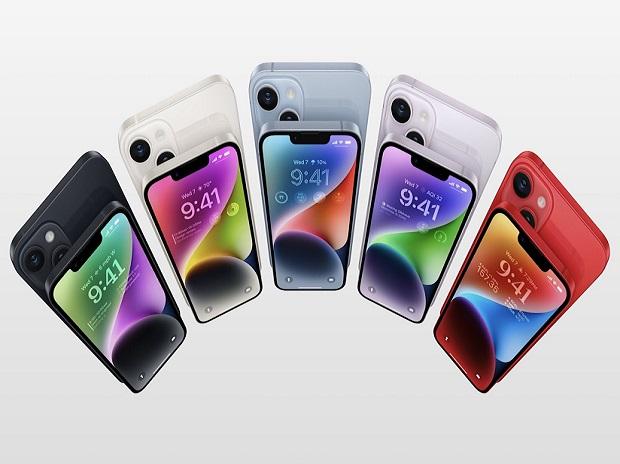
Every fourth iPhone will be by 2025 as per J.P. Morgan Analysts’ reading of the last month and recently announced its plan to produce 5 per cent of latest model – iPhone 14 this year in India is much earlier than anticipated.


It is considered that this is the tech giant’s strategy to diversify manufacturing and relocating its plant outside of China amid mounting geopolitical tensions and the global supply chain “de-risking” which is underway because of China’s “zero-Covid” policy, but India is the desired destination shows a significant milestone in the history of the company and India’s preparedness, past performance especially its remarkable resilience during and after the second wave of Covid-19 and competency as well.


It is a known fact that an overwhelming majority of the world’s electronics and electrical equipment and manufacturing has remained limited to a few select countries like China.


Apart from the well-researched factors like a cheaper and larger workforce, it has also been so because of business-friendly ecosystem in such nations. However, with the looming pandemic and supply chain constraints that were seen over the last couple of years, the detrimental effects of any industry’s overdependence on China or any one nation for that matter were clearly seen by the world.


Severely hampering the interests of the larger population, the disturbances in the lone supply chain from China has had a domino effect as well. Many countries far-off have had to pay a heavy price. Taking lessons from what the globe faced in these last couple of years, the world has been actively trying to secure other locations and countries to establish their manufacturing units and usher in a new era of electronics manufacturing and equipment as well.


Over the past few years, India has made rapid strides in the manufacturing sector as well as the electronics industry segment as part of its resolve to not remain dependent on the thin supply chain emanating from China. The hugely-successful tech and innovation giant Apple announced that their biggest unit to manufacture iPhones will be coming up in Hosur, Bengaluru employing about 60,000 people single-handedly. Of these, the first 10 per cent i.e. 6,000 employees would be tribal women from Jharkhand who have undergone training in making these select iPhone mobile devices. This further provides opportunities to not only rural folk but also the tribal sisters that has remained outside the mainstream until now.


In this context, it is not a surprise that Apple’s major supplier Foxconn has recently announced its collaboration with the Indian giant Vedanta to establish a semiconductor manufacturing unit in Gujarat. With this plant functioning, India would enter the elite club of 5 nations that have the ability to manufacture glass and semiconductors as well.


Therefore, it becomes a noteworthy milestone and indeed a revolutionary step that these global giants are finally making their presence felt instead of just seeing potential in India.


“Geopolitics and geo-economics are undergoing a sea change. The world is looking to adopt a China Plus One strategy and India is clearly in a sweet spot. This is India’s moment,” said Anil Agarwal, the Chairman of Vedanta.


Following the mounting geopolitical tensions emanating from China and the consequent cut in production of mobile devices by multiple non-Chinese tech platforms, tech and business analysts have reported that the tech giant Apple was looking for ways to move about 5 per cent of iPhone production and 25 per cent of all Apple production including of Mac, iPad, Apple Watch and Airpods, away from China towards India – the second-biggest smartphone market in the globe.


This is a result of dampened sales outlook, fears of an incoming recession as well as the efforts of tech giants to shift production towards more peaceful and stable systems like India. From an industries and manufacturing point of view, India has become much more lucrative than earlier with new-age policies and business outlook apart from reduced red-tapism and streamlined single-window clearances amidst the erstwhile bureaucratic hurdles in place. This single step would be able to create a huge ecosystem for India’s ancillary industries as well.


India, which is world’s fifth largest economy, has been striving hard to position itself as an attractive manufacturing and exports hub for multinationals.


Slashing the corporate tax rates in September 2019, India’s Finance Minister Nirmala Sitharaman had said: “If Apple and its entire ecosystem move to India, it will have a greater effect on other companies” and it happened. The rising focus on India can be attributed to India’s operating conditions and cost competitiveness in terms of value. In addition, the country has proven success in meeting outsourcing requirements that laid favourable ecosystem for MNCs. It has earned the trust of several nations around the world with true spirit of hard work, professionalism and ethical practices. It has a large domestic market and plentiful low-cost talent pool.


. has been manufacturing iPhones at Foxconn’s Sriperumbudur factory in India’s southern state of Tamil Nadu since 2017. Apple gets iPhones made by electronic giants – Foxconn, Wistron and Pegatron in India. Apple has already outsourced the making of iPhones India to Tata Electronics’ Plant in Hosur that is expanding its facility and roping in one of the contract manufacturer of iPhone. Now, India is all set to get the biggest . iPhone manufacturing unit in the same town.


In furtherance of the announcement that the workforce at the manufacturing unit would quadruple over the next couple of years, the expansion of current facilities and scaling up of production output have also been reported by various sections of the media. In turn, this is surely bound to lead to further investment and the establishment of many new ventures as well. With the potential to improve livelihoods of thousands of individuals as well as put India on the global electronics map, the government has been ramping up support for its agenda of self-reliance or atmanirbharta through many such government policies and regulations as well.


With a renewed focus on research & development in this sector, this inward-looking approach of the Indian government has ensured that our domestic manufacturing capabilities are given enough of a support to stand up and deliver in case the need so arose. Playing a significant role in innovation, this effort to develop India into a manufacturing hub with an entrepreneur-friendly ecosystem would help both the nation and the world as well.


–IANS


scor/d

(Only the headline and picture of this report may have been reworked by the Business Standard staff; the rest of the content is auto-generated from a syndicated feed.)


Source link

Google introduces new AR features to shop for beauty products, shoes

Google introduces new AR features to shop for beauty products, shoes


has introduced new ways to shop in AR (Augmented Reality) on Google, including a photo library for users to find their foundation shade and a way to see sneakers in their space.


Foundation is the most-searched category within makeup. It’s also one of the most personal products you can buy — a slight change in colour or tone can make a huge difference, said in a blogpost.


With assistance from beauty brands, Google’s new photo library features 148 models representing a range of skin tones, ages, genders, face shapes, ethnicities, and skin types.


To use this feature users will need to search for a foundation shade on across a range of prices and brands, like “Clinique Even Better Foundation”, according to the blogpost.


Users will then see what that foundation looks like on models with a similar skin tone, including before and after shots, to help them decide which one works best for them.


Moreover, the new feature also allows users to try out products in 3D and AR.


Users can spin, zoom and see the shoes in their space as they decide if the colour, laces, tread or sole fit their style.


Users will need to search for a sneaker type, like “Shop blue VANS sneakers,” and tap “View in my space”, the blogpost added.


–IANS


shs/ksk/


(Only the headline and picture of this report may have been reworked by the Business Standard staff; the rest of the content is auto-generated from a syndicated feed.)


Source link

Ahead of launch, Apple Pay receives mixed reaction in South Korea

Ahead of launch, Apple Pay receives mixed reaction in South Korea


As Apple Pay will likely land in later this month, the long-awaited arrival of the tech giant’s mobile payment service is drawing mixed views on the industrial landscape of the local mobile payment market dominated by Samsung Pay provided by Samsung Electronics.


According to industry sources, Hyundai Card, a local credit card firm under the wing of Hyundai Motor Group, will provide the Apple Pay service from the end of November under a one-year exclusive contract with Apple, reports Yonhao news agency.


Launched in the US in 2014, Apple Pay became the second-most popular digital payment system in the world with over a total of $6 trillion worth of transactions for 2021, following Visa with $10 trillion. It is available in many countries, including the U.S., Britain, mainland China and Japan.


Samsung Electronics’ digital payment service Samsung Pay, based on the magnetic secure transmission (MST) technology, was the most-used financial services app in Korea in the first quarter with 14.8 million users, according to data from Mobile Index.


According to a half-yearly report by the Bank of Korea (BOK), the daily average amount of electronic financial transactions came to 723.2 billion won ($535.8 million) in the January-June period, up 29.4 per cent from a year earlier.


Out of the total, 170.3 billion won, or 23.5 percent, worth of transactions were made through payment services by mobile phone manufacturers largely led by Samsung Electronics.


Experts expected the long-awaited mobile payment system to be a key player in breaking the supremacy of Samsung Pay in the mobile payment market, citing Apple’s decadelong experience in the global digital payment industry and Korean iPhone users that account for more than 20 percent in the country.


“It is highly anticipated that Apple Pay will play a big role in the local digital payment market,” analyst Kim Jae-woo from Samsung Securities Co. said. “It has practical skills in the global market for nearly 10 years and most iPhone users will rapidly turn into Apple Pay clients.”


But they also pointed out that the expansion of NFC infrastructure will be the key to Apple Pay’s successful arrival in .


Industry data showed that out of 2.8 million businesses offering card services in South Korea, more than 90 percent are equipped with MST technology-based payment devices, on which Samsung Pay is based. Less than 10 percent have an NFC-based terminal for Apple Pay, which reportedly costs around 150,000 won.


It may take time and money to help businesses set up new terminals for NFC payment and accept Apple Pay users, they added.


On top of that, Apple requires participating card issuers pay for the service in a commission rate of 0.1-0.15 percent of the transaction amount, while the card companies have to pay 5-10 won in royalty per payment to Visa and Mastercard.


“If the initial outcome of the Apple Pay service fails to meet the market expectations, local businesses and financial firms will become more reluctant to set up NFC terminals,” analyst Kim said. “Then, Apple Pay will struggle to make its presence felt in Korea.”


–IANS


na/

(Only the headline and picture of this report may have been reworked by the Business Standard staff; the rest of the content is auto-generated from a syndicated feed.)


Source link

Tablet PC market grows 22% in Jul-Sep quarter; Samsung leads: Report

Tablet PC market grows 22% in Jul-Sep quarter; Samsung leads: Report


The tablet PC market in India grew 22 per cent quarter-on-quarter in July-September with demand for 5G capable devices picking up the steam, CyberMedia Research said on Monday.


CMR anticipates the tablet PC shipments to record a healthy 10-15 per cent growth in 2022.


led the market with a 28 per cent market share, followed by Lenovo and Apple with 26 and 19 per cent share, respectively, during the quarter.


“The India grew 22 per cent quarter-on-quarter, with 5G-capable tablet shipments picking up steam in the run-up to the festive season,” CMR’s Tablet PC Market Report Review for Q3, 2022, said.


Shipment of tablets with 8-inch-display constituted 43 per cent of the overall shipments in the Indian market.


“Shipments of 5G tablets continued to gain strength in Q3 2022. This is driven by the recent 5G auctions and the beginning of the 5G era. The growth in 5G Tablets is consistent with the trends seen in the 5G smartphone market,” CMR, Analyst-Industry Intelligence Group, Menka Kumari said.


Tab A8 (Wi-Fi and 4G) and Tab A7 Lite (Wi-Fi and 4G) had 25 and 18 per cent market share, respectively.


shipments recorded 83 per cent QoQ growth in the third quarter of 2022,” the report said.


Lenovo was placed at the second position in the entire region, mainly driven by its commercial business and retail market.


Apple iPad 9 (Wi-Fi) and Apple iPad Air 2022 (Wi-Fi) had a 57 and 15 per cent market share, respectively, followed by Apple iPad Pro 2021 (Wi-Fi) 8 per cent and Apple iPad Air 2022 (Wi-Fi) 6 per cent in the .


“Apple iPad shipments recorded 26 per cent QoQ growth in the third quarter of 2022,” the report said.

(Only the headline and picture of this report may have been reworked by the Business Standard staff; the rest of the content is auto-generated from a syndicated feed.)



Source link

Meta introduces new privacy features for protecting its young users

Meta introduces new privacy features for protecting its young users


Meta-owned platforms and on Monday introduced a set of new features to protect their young users from online harm and to create safe, age-appropriate experiences for teens using the networks.


“Starting now, everyone who is under the age of 16 (or under 18 in certain countries) will be defaulted into more private settings when they join Facebook,” Meta said in a press note.


The new feature will encourage teens already on the app to choose more private settings such as choosing who can see their friends list, and who can see the people, pages, and lists they follow.


The young users can now also choose the people who can see posts they are tagged in on their profile and who are allowed to comment on their public posts. The users below 16 can review the posts they are tagged in before the post appears on their profile.


Alarming incidents for young users including cyberbullying, predators, scams, and being exposed to inappropriate content have previously triggered scrutiny of platforms like .


Meta introduced new age verification and parental control tools for young users in India earlier this year. The company has recently found that more than 75 per cent of people that it reported to the National Center for Missing and Exploited Children (NCMEC) for sharing child exploitative content shared the content out of outrage, poor humor, or disgust, and with no apparent intention of harm.


“We’re working with the National Center for Missing and Exploited Children (NCMEC) to build a global platform for teens that are worried intimate images they created might be shared on public online platforms without their consent. This platform will be similar to work we have done to prevent the non-consensual sharing of intimate images for adults,” the company added.


Among some of the measures Meta rolled out last year included restricting adults from messaging teens they were not connected to or from seeing teens in their ‘People, You May Know’ recommendations.


In addition to its existing measures, Meta is also now testing ways to protect teens from messaging suspicious adults they are not connected to, and not showing them ‘People You May Know recommendations’ of teen users.


A “suspicious” account, for example, belongs to an adult that may have recently been blocked or reported by a young person. As an extra layer of protection, Meta is also testing removing the message button on teens’ accounts when they are viewed by suspicious adults altogether.


Source link

YouTube
Instagram
WhatsApp



