Microsoft has added a new app called Games for Work to Teams, allowing users to play casual multi-player games together.
According to Engadget, up to 250 players can play Microsoft Solitaire, Microsoft Minesweeper, Microsoft IceBreakers, and Microsoft Wordament with each other.
Microsoft says the idea behind developing the game is to help co-workers “pause and re-energise” in a virtual office setting, according to the report.
With Solitaire, players will compete against each other to finish first, while with Minesweeper, players will work together to clear the board and each player will have a few lives.
However, Wordament is a word game. There will be a leaderboard where players can see how they fare compared with their co-workers.
In IceBreakers, players answer questions about particular topics and perhaps learn more about their colleagues in the process, said the report.
To develop Games for Work, Team Members worked with Microsoft Casual Games, an Xbox Game Studios division.
The company cites data that indicates teams that play 45-minute games together are 20 per cent more productive than those that do other types of team building.
“Research shows that gaming promotes cognitive benefits, helps foster empathy and encourages inclusion, team building and learning,” it said.
–IANS
shs/vd
(Only the headline and picture of this report may have been reworked by the Business Standard staff; the rest of the content is auto-generated from a syndicated feed.)
Chip major Qualcomm has launched the world’s first purpose-built, headworn augmented reality platform for VR/AR devices of the future.
Called Snapdragon AR2 Gen 1 which is part of the company’s extended reality (XR) portfolio, the multi-chip architecture achieves 50 per cent lower power consumption and 2.5x better AI performance, to enable high-performance, sleek AR glasses.
Snapdragon AR2 is in various stages of development with OEMs including Lenovo, LG, Nreal, OPPO, Pico, QONOQ, Rokid, Sharp, TCL, Vuzix and Xiaomi.
“We built Snapdragon AR2 to address the unique challenges of headworn AR and provide industry-leading processing, AI and connectivity that can fit inside a stylish form factor,” said Hugo Swart, vice president of XR product management, Qualcomm, during the ‘Snapdragon Summit 2022’ here.
With the technical and physical requirements for VR/MR and AR diverging, “Snapdragon AR2 represents another metaverse-defining platform in our XR portfolio to help our OEM partners revolutionise AR glasses,” he added.
Microsoft worked closely with Qualcomm on the platform requirements for Snapdragon AR2.
“Snapdragon AR2 platform innovations will revolutionize headworn AR devices that will transform immersive productivity and collaboration and we look forward to seeing the innovation that Qualcomm and its partners will bring to market,” said Ruben Caballero, Corporate Vice President of Mixed Reality, Devices & Technology, Microsoft.
–IANS
na/sha
(Only the headline and picture of this report may have been reworked by the Business Standard staff; the rest of the content is auto-generated from a syndicated feed.)
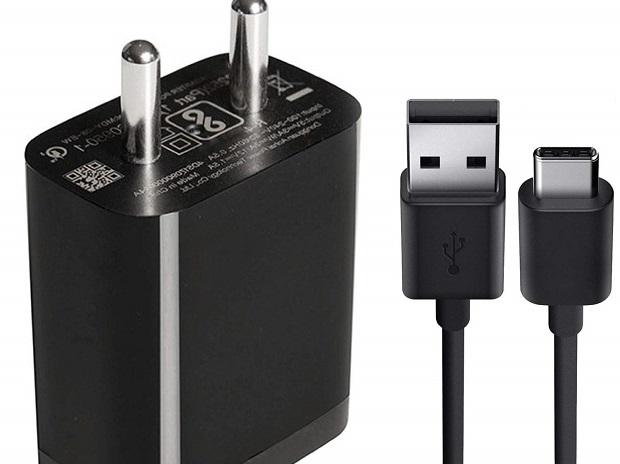
Moving a step closer to uniform charging adoption, the Department of Consumer Affairs decides to form a sub-group to examine the feasibility of uniform charging ports for wearables like earbuds and smartwatches. The sub-group will include representatives from industry bodies, educational institutions, etc.
The decision was taken on Wednesday during the central inter-ministerial taskforce meeting. The meeting was held with the stakeholders on the adoption of USB Type – C as a charging port for electronic devices such as smartphones, tablets, laptops among others.
Stakeholders have agreed to a phased roll-out of a uniform charging port for effective implementation and easy adoption so that the same can be applied by the industry and adopted by consumers harmoniously. Further, it was deliberated that a different charging port may be adopted for feature phones.
The meeting was attended by representatives from industry associations such as MAIT ( Manufacturers’ Association of Information Technology), FICCI (Federation of Indian Chambers of Commerce & Industry), CII (Confederation of Indian Industry), educational institutions including IIT Kanpur, IIT (BHU), Varanasi, and Central Government ministries including Ministry of Environment Forest and Climate Change (MoEFCC).
“Industry should overcome inertia in adopting a uniform charging port in the interest of consumer welfare and prevention of avoidable e-waste,” said Rohit Kumar Singh, Secretary Department of Consumer Affairs during the meeting chaired by him.
The MoEFCC might assess and examine the possible impact of uniform charging ports in electronic devices with regard to e-waste.
Last month, the European Union also mandated the use of USB-C ports from 2024 for a whole range of electronic devices including mobile phones, tablets, and headphones.
India is one of the first countries to adopt such a move for consumers’ ease. With successful implementation and adoption in India, consumers will no longer have to buy different chargers for new devices.
The uniformity in charging ports is a step towards the LiFE (Lifestyle for Environment) mission launched by Prime Minister Narendra Modi at COP-26 which calls for ‘mindful and deliberate utilization’ by people worldwide instead of ‘mindful and wasteful consumption’.
The LiFE mission plans to create and nurture a global network of individuals, namely ‘Pro-Planet People’ (P3), who will have a shared commitment to adopt and promote environmentally friendly lifestyles.
Nothing recently launched in India the Ear (stick) wireless earbuds at Rs 8,499. Second product in the UK-based consumer technology start-up’s audio line, the Nothing Ear (stick) is essentially the half in-ear version of the Nothing ear (1) (review). There, however, is more about these wireless earbuds than meets the eye.
Foremost is the unique charging-cum-storage case, which is unlike anything available in the wireless earbuds space. The case is a modestly sized cylindrical unit with a rollable mechanism similar to conventional lipsticks. It is a transparent case made of plastic with the main cavity coloured in white. Accentuating the design is the red accent on the side-end, surrounding the USB-C charging port.
The case looks captivating, but there are caveats from usability perspective. Its plastic body is prone to fingerprints and smudges. Besides, any lack of protection on the hard plastic makes it susceptible to scratches. It is lightweight, but the cylindrical design makes it unfit to carry in pockets. Lastly, the case rolls on flat surfaces if placed in horizontal orientation.
Coming to earbuds, these look similar to Nothing ear (1) sans the in-ear design. The earbuds offer snug fit, complemented by lightweight construction for comfortable use. These are good for regular everyday use, but look elsewhere if you need wireless earbuds that you can use during outdoor health activities such as running and jogging. This is because these earbuds do not offer secure fit. Moreover, the half in-ear design does not do well in terms of passive noise cancellations. And, there is no active noise cancellation here. Therefore, outdoor noise seeps inside.
Nothing pitches its wireless earbuds as design-centric alternatives to Apple AirPods. The Ear (stick) are no exception, and these do fare better in terms of design compared to counterparts from Apple.
Besides, there are press controls like AirPods. However, the distinct design language of the Ear (stick) could have done better with touch controls. These have rectangular stems, unlike cylindrical stems of the AirPods. Therefore, the press controls do not feel as natural as they do on the AirPods. Besides, the press controls ruin the in-ear fit. This is true even for AirPods. On a bright side, the press controls prevent accidental triggers and work precisely.
Details aside, the Ear (stick) is good for listening to music and attending calls in silent environments. Starting with audio performance, the earbuds’ sound fuller with fine mid-and-high details. The bass could have been better, but sounds fine for half in-ear earphones. As for the in-call experience, the in-built mics do well in environments with limited ambient noise. They, however, struggle in noisy environments.
Rounding up the package is a modest on-battery time of about five hours on a single charge and up to 25 hours with the case. A fully charged case and earbuds easily lasts about ten days, if used for two-three hours daily for listening to music and attending calls. There is no wireless charging here, and charging with USB-C takes about an hour.
Verdict
Despite the recent price hike, the Nothing Ear (1) white variant at Rs 7,299 is cheaper than the Nothing Ear (stick). The former offers in-ear design, ANC, and wireless charging. In direct comparison, therefore, the Nothing Ear (1) seems to be a better pick. Outside the Nothing ecosystem, both Nothing wireless earbuds pale in comparison with peers such as Samsung Galaxy Buds2 (Rs 6,999). That said, the unconventional but striking design of the Nothing Ear (stick) is the only factor to consider these earbuds.
Twitter has started working on end-to-end encryption for direct messages (DMs) on Android.
App researcher Jane Manchun Wong tweeted: “Twitter is bringing back end-to-end encrypted DMs.”
A picture of the code strings highlighting references to encryption keys was attached to Wong’s post.
Elon Musk replied to Wong’s tweet with a winked emoji, which indicates that the feature is in development.
Several users expressed their thoughts on the post.
While one commented, “Nice. What happens in DMs should stay in DMs,” while another user commented, “This is very important and scary to think DMs were missing end-to-end encryption. Thanks, Elon!”
Meanwhile, Musk had announced that the micro-blogging platform would soon allow organisations to identify their associated accounts.
In a tweet, Musk had said: “Rolling out soon, Twitter will enable organisations to identify which other Twitter accounts are actually associated with them.”
While a user commented “eventually we’ll be asking, what can’t Twitter do? Looking forward to exciting things”, another user asked: “Will any user be able to create an organisation? Or will Twitter be the arbiter of what constitutes an organisation.”
“Ultimately, I think there is no choice but for Twitter to be the final arbiter, but I’m open to suggestions,” Musk replied.
–IANS
aj/uk/
(Only the headline and picture of this report may have been reworked by the Business Standard staff; the rest of the content is auto-generated from a syndicated feed.)
Samsung’s upcoming smartphone Galaxy M54’s OLED panel is likely to be developed by Chinese display makers CSOT and BOE.
According to SamMobile, the tech giant signed up CSOT and BOE to its supply chain in an effort to reduce production costs for the mid-range, budget-friendly Galaxy M54.
The company used OLED panels for the existing Galaxy M53 from Samsung Display and BOE, the report said.
Earlier, it was rumoured that the tech giant is likely to launch Galaxy M54, this year which is expected to feature Snapdragon 888 processor along with a high-refresh-rate screen, and a big battery.
The device will feature a 6.67-inch display with Full HD+ resolution and a 90Hz refresh rate.
It will reportedly come equipped with the Snapdragon 888 processor, 8GB RAM, and 128GB internal storage.
Talking about the camera, it could feature a 32MP selfie camera, a 64MP primary rear camera, a 12MP ultrawide camera, and a 5MP macro camera.
–IANS
aj/ksk/
(Only the headline and picture of this report may have been reworked by the Business Standard staff; the rest of the content is auto-generated from a syndicated feed.)